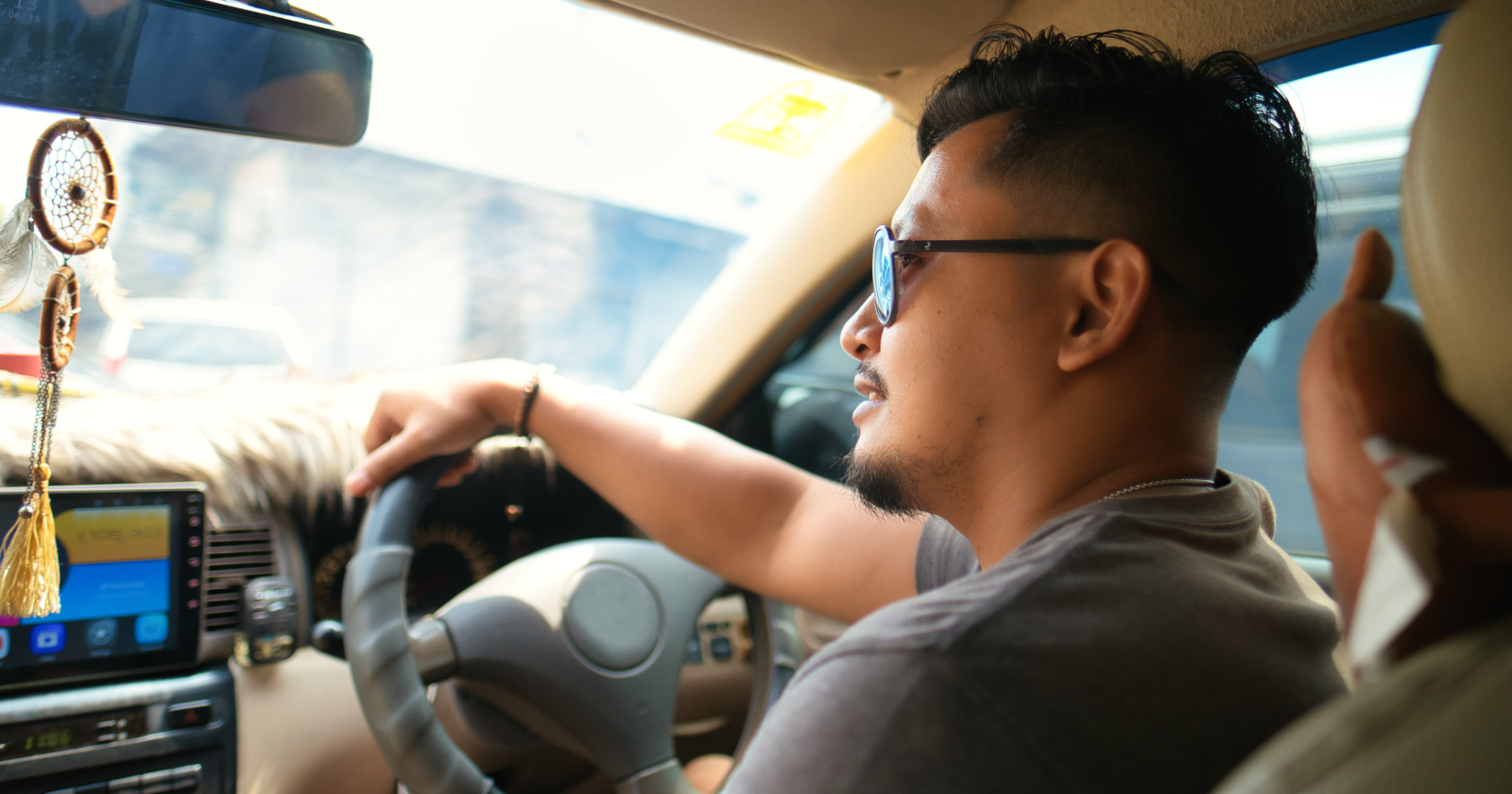
I’ve started taking long drives with no destination.
Once or twice a week, usually late in the afternoon, I get in the car, put my phone in the cupholder on silent, and drive. No errand. No route. Sometimes I’m gone forty-five minutes, sometimes closer to an hour and a half. I come home a little lighter than I left.
The scenery is genuinely nice sometimes, but it isn’t really the point. When I explained the real reason to my wife, that conversation turned out to be one of the most useful parts of the whole thing, so I want to write about both: why the drives matter, and why it helped to talk about them openly.
What the drives actually give me
I’m 37. I have a wife I love, a daughter I’d do anything for, a business I care about and a team of people who rely on me. None of this is a complaint. It’s the life I chose, and I’m grateful for it in a way I try to actually feel rather than just say.
But somewhere in the last few years the ratio shifted. The time that is clearly mine, with nothing asked of me, shrank to almost nothing. I didn’t notice it happening. I only noticed it when I started driving and realised that the feeling I got when I turned onto some unfamiliar road was relief.
Not the relief of finishing something. The relief of being, briefly, unreachable.
That’s what the drives give me. Not adventure. Not escape from my family. Just an hour where no one is waiting on an answer, and I can remember that I have thoughts of my own that aren’t tasks, questions or things I was supposed to have done already.
Why it felt hard to put into words
At first I wasn’t sure how to explain it. We have a good marriage and we talk about most things, but this need was hard to put into words.
I think it’s because the need felt odd from the inside. “I want to be away from everyone for an hour” sounds, at first, a bit like “I don’t want to be here.” And those are not the same thing at all. I love being here. I just also need some time when I’m not on.
When I’m home, I’m the dad and the husband, the person who knows where things are and handles what needs handling. When I’m at my desk, I’m the one who’s supposed to make the calls. None of these roles are burdens. They’re just always present, like a low background pressure you stop noticing until it’s gone and you realise how much effort you were putting into holding your shape against it.
I worried that naming that would sound ungrateful. It didn’t.
The conversation
One evening after a drive, my wife asked where I’d gone. I told her I’d started doing it because it was the only time in my week when nobody needed anything from me, and that I came back a better version of myself for it.
She laughed, kindly, and said she’d more or less worked that out. Then she said something I’ve thought about a lot since. She has the same need. Hers looks different. It’s a long walk on her own, or an hour in a café with a book. But it’s the same thing underneath.
From there it became practical. We talked about how to make sure we both get that time without it feeling like a favour or an escape. Now it’s just part of how our week works. She takes her time, I take mine, and neither of us has to explain it.
Talking about it changed the drives, too. They used to carry a faint edge of guilt. Now they don’t. And the time is better for it.
Why solitude matters more in this stage of life
This is the age when a lot of what you built in your twenties and early thirties is fully up and running and asking things of you. The business, the household, the people who rely on you. You wanted all of it. You still do.
But there’s a way of wanting things that doesn’t account for what it’s like to be needed in several places at once, all day. You’re useful everywhere, which is a privilege. You’re also rarely just yourself, and that slowly wears you thin.
I’ve meditated for a long time, and in Buddhist practice there’s an idea I keep coming back to: the self we perform in our roles is not the whole of who we are. The roles are fine. The problem is forgetting that underneath the husband and the dad and the founder there’s a person who needs, now and then, a bit of space where none of those labels apply.
The drives are not meditation in any formal sense. But they’re the closest thing I’ve found to a pocket in an ordinary day where no story about me is running. I’m just someone in a car on a road, going nowhere in particular.
How to build it into a busy life
If any of this sounds familiar, here’s what has worked for us.
Say what it’s for. Not “I’m going for a drive” but “I need an hour where nobody needs anything from me.” The second version gives your partner something to understand, and often something to recognise in themselves.
Make it mutual. If you need solitude, there’s a good chance your partner does too. Trading time makes it fair and takes any guilt out of it.
Put it in the week. We loosely plan it now. Knowing the time is coming makes the busy days easier, because there’s a pressure valve on the calendar.
Keep it genuinely free. The value is in having no demands. If I take calls or plan work on the drive, it stops doing its job. Phone on silent, no destination.
It doesn’t have to be a car. For some people it’s a run, a swim, a long shower, the hour after everyone’s asleep. The form changes. What matters is that it’s yours and nobody is waiting on you.
Come back properly. The point isn’t to get away from your family. It’s to come back with something to give them. I try to walk in the door ready to be present, not still half on the road.
What I’ve learnt
I used to think needing time alone said something slightly worrying about me. Now I think it’s just maintenance. You can’t keep showing up well for the people you love if there’s never a moment when you’re not showing up for anyone.
And I learnt something about honesty in a marriage. The things that feel hardest to say are often the things your partner already understands, sometimes better than you do. Saying it didn’t make the need bigger. It made it smaller, because it stopped being something I carried on my own.
So the drives continue. Most weeks, once or twice, I turn onto a road I haven’t been down before, the phone stays in the cupholder, and for the next hour nobody needs anything from me.
Then I drive home, and I’m glad to be there.