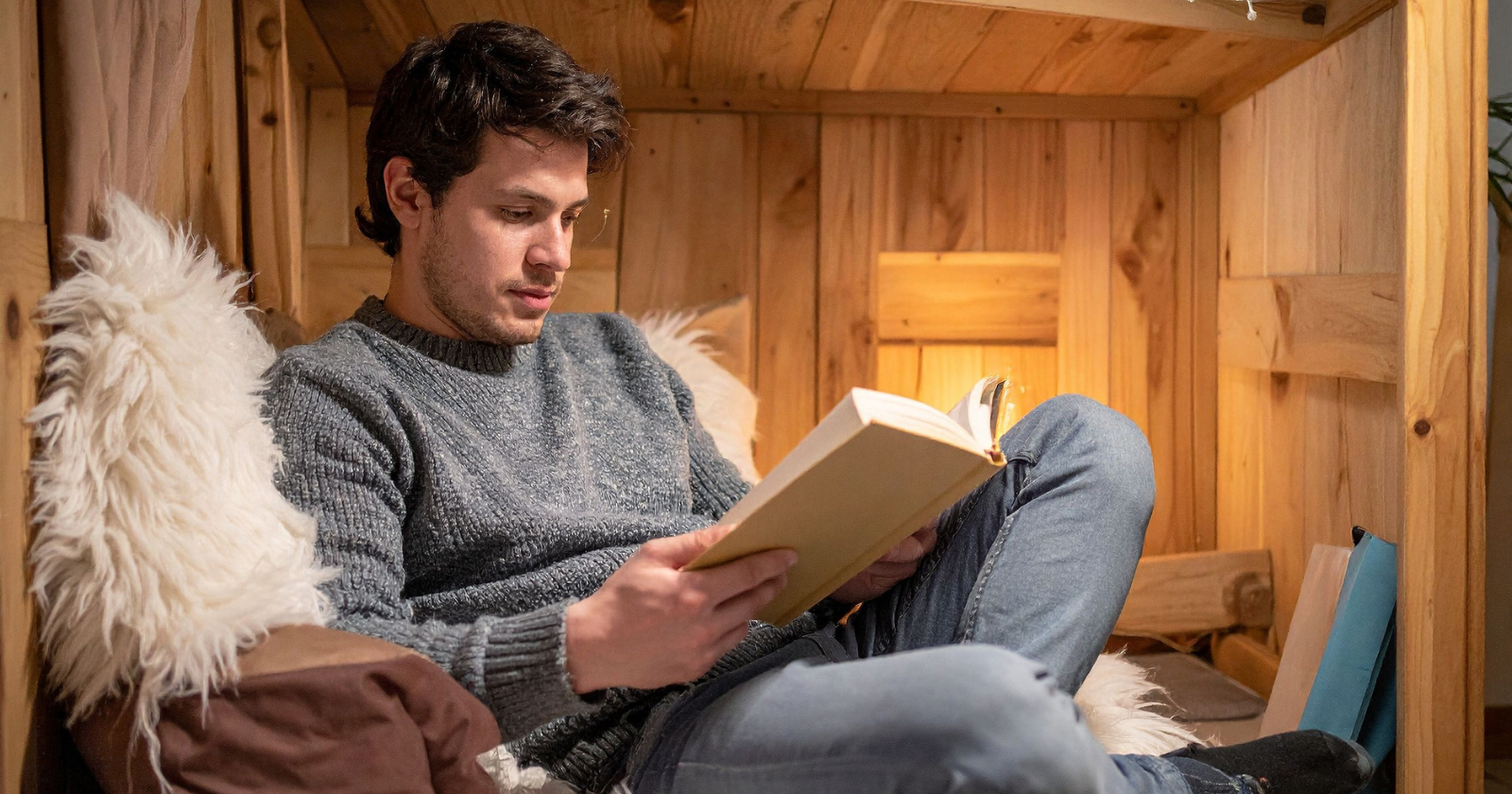
Ever been told you’re “too quiet” or that you “need to get out more”?
Yeah, me too.
For years, I bought into the idea that preferring solitude was somehow a weakness.
That real success meant being the life of the party, networking like crazy, and thriving in group settings.
But here’s what I’ve learned: if being alone energizes you more than being around people, you’re not broken or antisocial.
You actually have some serious mental advantages that extroverts might miss.
I’m talking about real, research-backed benefits that can make you more creative, more self-aware, and surprisingly, even better at relationships when you do choose to engage.
Let me share the 10 mental advantages I’ve discovered through my own journey as someone who genuinely prefers a quiet evening with a book over a packed social event.
1) You have superior focus and deep work capabilities
While others struggle with open offices and constant interruptions, you naturally gravitate toward the conditions that produce your best work.
Think about it.
When you’re alone, your brain isn’t splitting attention between the task at hand and social dynamics.
You’re not worried about how you’re coming across or what that person three desks over is thinking.
This ability to zone in completely is what Cal Newport calls “deep work” – the kind of focused effort that produces breakthrough results.
And guess what? You’ve been training for this your whole life.
I noticed this back when I was writing my first articles.
My best pieces always came from those long, uninterrupted stretches of solitude.
No coffee shop buzz, no co-working space chatter.
Just me, my thoughts, and the blank page.
2) You develop stronger self-awareness
When you spend quality time alone, you can’t help but get to know yourself better.
You’re not constantly reacting to others or adjusting your behavior to fit the room.
Instead, you’re sitting with your own thoughts, examining your reactions, and understanding your patterns.
This deeper self-knowledge is something I explore in my book, Hidden Secrets of Buddhism: How To Live With Maximum Impact and Minimum Ego.
The Buddhist concept of mindfulness thrives in solitude, where you can observe your thoughts without the noise of external influences.
Growing up as the quieter brother, I spent a lot of time observing and reflecting rather than being the center of attention.
That habit of introspection has become one of my greatest strengths as a writer and as a person.
3) Your creativity flourishes in solitude
Ever wonder why so many artists, writers, and inventors are introverts?
It’s because creativity needs space to breathe. When you’re constantly surrounded by people, your brain is busy processing social information.
But in solitude? That’s when the magic happens.
Your mind wanders, makes unexpected connections, and comes up with those “aha!” moments that seem to appear from nowhere.
Research shows that solitude actually enhances creativity by allowing for the kind of divergent thinking that group brainstorming often kills.
4) You build genuine emotional independence
Here’s something most people won’t admit: they’re terrified of being alone with themselves.
But not you.
You’ve learned to be your own best company, which means you’re not desperately seeking validation or entertainment from others.
You can sit with uncomfortable emotions, process them, and move forward without needing someone else to distract you.
This emotional self-sufficiency is incredibly powerful.
It means you enter relationships from a place of wholeness rather than neediness.
5) You develop exceptional listening skills
Counterintuitive, right? But think about it.
Because you’re not constantly fighting for airtime or planning your next witty comment, you actually hear what people are saying.
You pick up on subtleties others miss. You remember details that make people feel truly seen.
I believe relationship quality is the single biggest predictor of life satisfaction, and great relationships are built on great listening.
Your preference for observing over performing gives you this superpower.
6) Your decision-making improves without social pressure
When you’re comfortable being alone, you make decisions based on your own values and logic, not peer pressure or groupthink.
You take the time to research, reflect, and come to conclusions that align with who you really are.
This is especially valuable in our age of social media, where everyone seems to have an opinion about how you should live your life.
In Buddhist philosophy, this aligns with the concept of right action – making choices from a place of clarity rather than reactivity.
It’s something I dive deeper into in Hidden Secrets of Buddhism: How To Live With Maximum Impact and Minimum Ego.
7) You maintain stronger boundaries
Because you value your alone time, you’ve learned to say no.
No to the party you don’t want to attend.
No to the meeting that could have been an email.
No to the friend who only calls when they need something.
This ability to protect your energy isn’t selfish – it’s essential.
It means when you do show up, you’re fully present and engaged, not depleted and resentful.
8) You process experiences more deeply
While extroverts often process externally through talking, you process internally through reflection.
This means you extract more meaning from your experiences.
That conversation, that book, that documentary – they all get thoroughly digested in your quiet moments, becoming part of your understanding of the world.
From an early age, I’d get lost in books about philosophy and human behavior, and I’d spend hours afterward thinking about what I’d read.
That depth of processing has shaped everything from my writing to my relationships.
9) You’re more comfortable with uncertainty
Sitting alone with your thoughts means sitting with uncertainty, with questions that don’t have easy answers.
While others might immediately seek reassurance or distraction, you’ve learned to tolerate – even embrace – the unknown.
This makes you more resilient in the face of life’s inevitable curveballs.
10) You cultivate richer inner resources
When external stimulation isn’t your primary source of energy, you develop a rich inner life.
Your imagination, your thoughts, your ability to entertain yourself – these become well-developed muscles.
You’re never truly bored because you always have your mind as a playground.
This is why finding quiet spaces in busy cities has become such an essential skill for me.
I value quality time over quantity, and presence matters more than hours logged.
A few minutes of genuine solitude can be more rejuvenating than hours of surface-level socializing.
Final words
If you’ve ever felt like something was wrong with you for preferring your own company, I hope this changes your perspective.
Your need for solitude isn’t a bug – it’s a feature.
It’s given you mental advantages that are increasingly valuable in our hyper-connected, always-on world.
The key is to own it.
Stop apologizing for needing alone time.
Stop forcing yourself into social situations that drain you. Instead, embrace your nature and use these advantages to create a life that actually energizes you.
Remember, being someone who recharges in solitude doesn’t mean you’re antisocial or that you don’t value relationships.
It just means you approach life differently – and that difference is your strength.