

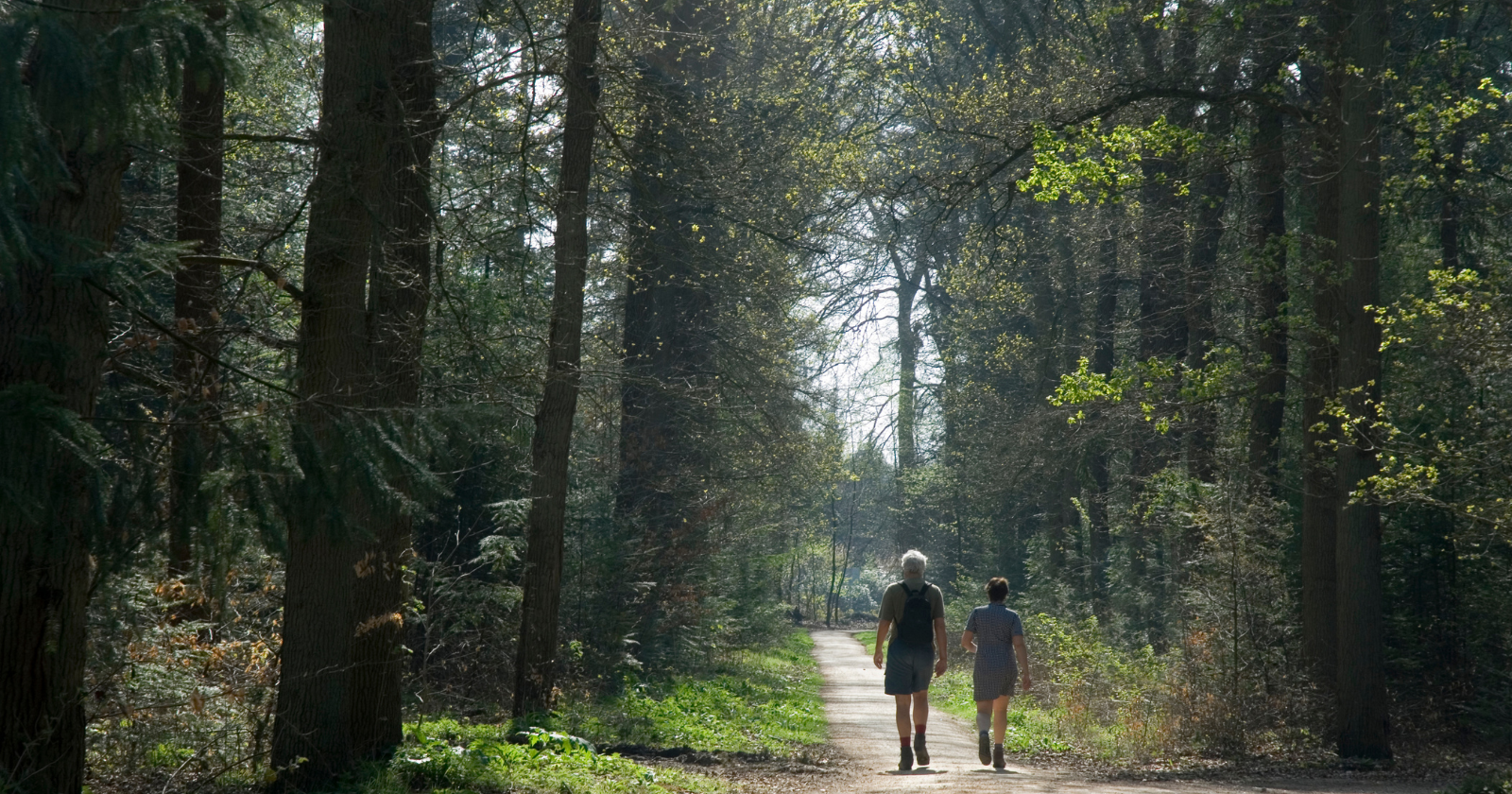
Some people come back from two days in the hills looking like a different animal. Not tanned, not simply well-slept. Reset, as though a technician went in overnight and defragmented the hard drive.
The people around them usually find this funny. There are jokes about the walking boots by the door, the third weekend away this quarter, the way they go flat and monosyllabic by Thursday afternoon of a heavy week. The words that get used are escapist. Precious. A bit much.
The research is less kind to the people doing the joking. A sizeable slice of the population takes in more of its surroundings than everyone else does, constantly, with no volume knob. Cities were not designed with that slice in mind.
The trait has a name, and it is more common than assumed
Psychologist Elaine Aron labelled it sensory processing sensitivity in the late nineties. Four features define it: unusual depth of processing, a tendency to become overstimulated, stronger emotional reactions, and a knack for noticing detail that other people walk straight past. In plain English, the brain does more work per unit of incoming information.
The numbers back this up. Analysis by Francesca Lionetti and colleagues splits people into three sensitivity groups: roughly 29 per cent low, 40 per cent medium, and 31 per cent high. Call it one person in three.
A major review led by Corina Greven adds an important caveat: the trait is heritable, evolutionarily conserved, and it cuts both ways, amplifying bad environments and good ones alike. The same wiring that makes an open-plan office feel like a fire alarm makes a good meal, a piece of music or a decent conversation land harder than it does for most.
The built world charges a tax most people never notice
Stephen and Rachel Kaplan’s attention restoration theory starts from a simple observation: the effortful focus that gets someone through a spreadsheet is finite, and it runs down.
Marc Berman and colleagues tested this directly. Urban environments, they argued, are full of stimulation that seizes attention dramatically and then demands more effortful attention to override it: dodging the car, ignoring the advertisement. Participants who walked in a natural setting performed measurably better afterwards on attention tasks than those who walked through traffic.
Everybody pays that tax. The bill just arrives in different sizes.
An experience sampling study tracked 139 adults five times a day for a week and found that overstimulation climbed through the afternoon into the early evening, rose in the company of other people, and bit hardest when someone was already tired or in a low mood. The colleague who is sharp at nine and struggling by six is running on a smaller reserve than everyone assumes.
Nature does not ask for a performance
The technical term is soft fascination. Leaves shifting, water moving, light changing. It occupies involuntary attention gently, with no follow-up demands.
The part that rarely gets said out loud is the social one. A great deal of daily exhaustion is not stimulus at all, it is admin: monitoring the room, adjusting the tone, appearing unbothered when the strip lighting is buzzing at a frequency nobody else seems to hear. A hillside has no opinion on how someone is coming across. There is no face to read and no mood to manage.
Annalisa Setti and colleagues ran two studies and found that higher sensory processing sensitivity predicted stronger connectedness to nature. The pull towards green space looks like people gravitating towards the one environment that does not draw on that reserve.
The dose is smaller than most people assume
A team led by Mathew White at Exeter examined 19,806 adults in England and found a threshold at 120 minutes of nature contact a week. Below two hours, outcomes looked much the same as zero. At or above it, people were significantly more likely to report good health and high wellbeing. Benefits peaked between 200 and 300 minutes, then flattened.
It also made no difference whether the two hours came as one long Sunday walk or several short ones stitched across the week. Most visits in the survey happened within a couple of miles of home. This was observational research, so it shows an association rather than proving cause, but the practical shape of it is hard to ignore: under twenty minutes a day, in a park, near the house.
Nobody needs a fjord. A canal path will do.
Working with the wiring instead of apologising for it
Put it on the calendar as a fixed weekly block, the same way gym sessions or dentist appointments get locked in, so it survives a busy week rather than getting bumped first.
Front-load the demanding work. If overstimulation reliably peaks in the late afternoon, that is not the hour for the difficult negotiation or the four-person brainstorm.
Take the longer green route home. Twenty minutes through a park beats fifteen alongside six lanes of traffic, and it counts towards the total.
Build recovery into social plans in advance rather than as an afterthought. A quiet Sunday morning after a loud Saturday night is simply the schedule working as intended.
And when explaining it to someone, keep the language flat and factual. A couple of hours outdoors a week is what keeps the rest of the week working. That sentence is much harder to tease than a vague claim about needing space.
The trait shows up early, runs in families, and does not respond to willpower. Two hours of green space a week, in any combination, is the maintenance schedule that keeps the rest of it running.
