

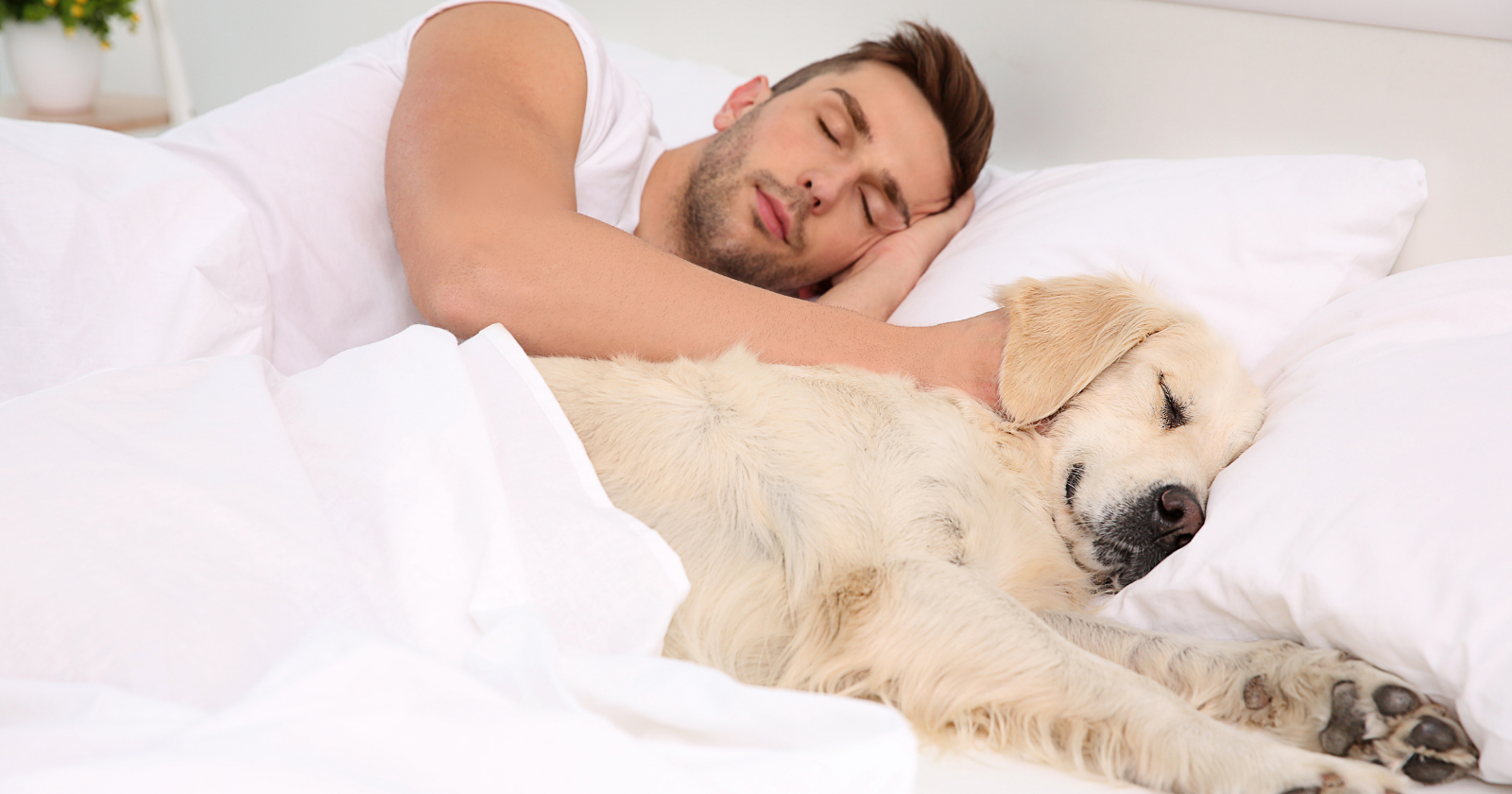
Somewhere between the pillow and the edge of the mattress, a nightly negotiation over territory takes place. More often than not, the pet wins.
The assumption that follows tends to be unkind. Sharing a bed with an animal gets read as a symptom: loneliness, arrested development, someone who could not sustain a human partnership and settled for something with fur. The psychology says otherwise, and says it plainly. Pets can function as genuine attachment figures, and their presence at night can measurably change how comfortable and secure a person reports feeling.
The bed is more crowded than anyone admits
Start with how ordinary this is. In a Mayo Clinic survey of 150 sleep-centre patients, more than half the pet owners let their animals sleep in the bedroom. One in five called the arrangement disruptive. Two in five described their pets as unobtrusive or actively helpful.
A larger and more recent picture comes from a nationally representative study of 1,591 American adults published in 2024. Just under half reported co-sleeping with a pet. Among those who did, roughly six in ten rated their animal’s effect on their sleep as positive or very positive, and more than eight in ten said the same about their health and wellbeing generally.
A pet can be a real attachment figure
Attachment theory started with infants and caregivers, and the jargon has since spread far enough to lose most of its meaning. Stripped back, it describes two things a close relationship provides: a safe haven, meaning somewhere to retreat when things go wrong, and a secure base, meaning the confidence to go out and take on the world because something steady is waiting behind you.
Researchers have tested whether animals actually deliver these. In a pair of experiments with dog and cat owners, participants were assigned to have their pet physically present, on their mind only, or absent altogether. In one experiment, involving a distressing task, having the pet present reduced blood-pressure reactivity. In the other, a goal-setting exercise, that same presence increased both the number of goals people generated and their confidence in reaching them. Both functions, haven and base, showed up.
That does not make a pet interchangeable with a person. A survey of 975 dog owners found that while owners turned to their dogs for several attachment functions, the safe haven role was the least prominent of them. Nobody is claiming a dog substitutes for a marriage. What the research supports is narrower: the bond is real, and it can perform some of the same attachment functions as other close relationships.
Comfort is real even when the sleep data is unflattering
Here is where the honest version gets complicated. That 2024 study found that people who co-slept with pets reported poorer sleep quality and more severe insomnia symptoms than those who did not. It also tested whether animals buffered the effect of stress on sleep, and found no evidence that they did.
An actigraphy study tracking twelve women and their dogs across 124 nights found the same split from the other direction. The movement data showed dogs disturbing their owners; dog movement was a strong predictor of human movement throughout the night. Yet the owners’ own sleep diaries mostly failed to identify the dog as the cause. Across those 124 nights, they recalled being woken by their dog only 22 times.
Two things are true at once. The animal can cost sleep, and the animal can provide comfort. Nobody is lying about the second just because a wrist monitor recorded the first. Felt security and measured sleep efficiency are different variables.
Dogs and cats are not the same bed partner
Species matters more than people expect. A survey of 962 American women asked who shared the bed and how that felt. Dogs scored higher on comfort and security than human partners did, and higher than cats. Dogs were also rated less disruptive than human bedmates. Cats managed to be as disruptive as the humans while providing less of the reassurance, which is roughly what any cat owner would predict.
The 2024 study’s own exploratory analysis pointed the other way, with dog co-sleeping linked to worse outcomes and cat co-sleeping to slightly better perceived sleep efficiency. Those were secondary analyses, and the authors flag them as hypotheses rather than findings. Treat them as a question worth asking.
Intensity of the bond is not the problem
If the over-attachment theory were correct, the people most bonded to their animals should be sleeping worst. They were not. The same researchers measured how strongly participants felt about their pets and found no relationship between that and any sleep outcome. Number of pets predicted more insomnia symptoms. Depth of feeling predicted nothing.
This quietly weakens the over-attachment theory. A person who sleeps beside a dog is not displaying a pathology of excessive closeness. They are doing what large numbers of people do, for reasons that hold up under examination, at a cost that varies enormously.
When it is worth rethinking
None of this means the arrangement suits everyone. Broken sleep carries a real health cost.
A useful middle ground is the bedroom rather than the bed. A small Mayo Clinic study of forty dog owners found that owners slept less efficiently with the dog on the bed than with the dog merely in the room. Same animal, same presence, much less kicking.
Worth checking honestly: whether allergies are being quietly tolerated, whether night-time restlessness signals something a vet should look at, and whether the sleep debt is being paid somewhere less obvious during the day.
Beyond that, the arrangement stands on its own merits and needs no further defence. Something warm sleeps at the end of the bed, and for many people its presence makes the room feel safer.
