

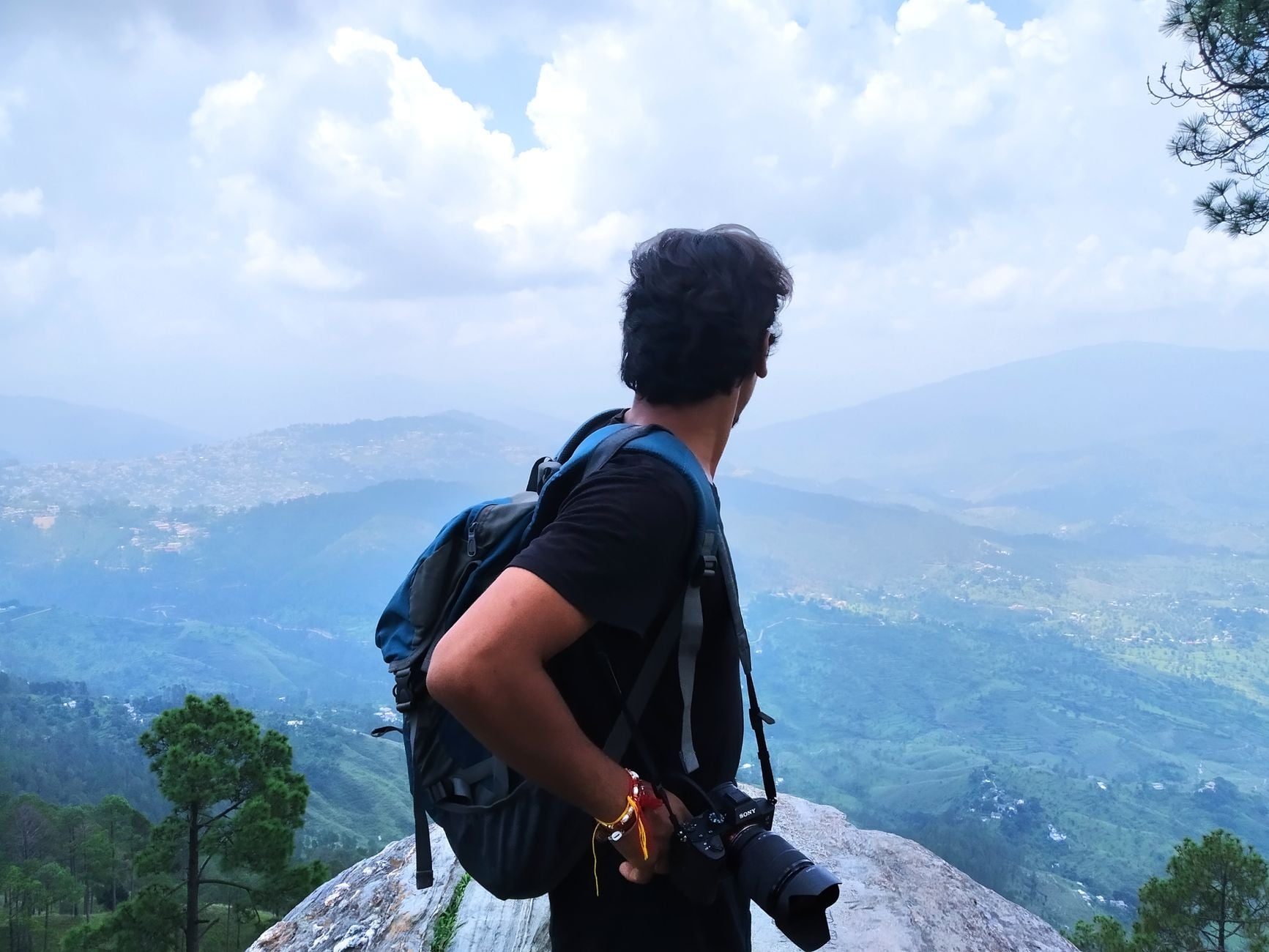
Solo travel is one of the travel industry’s favourite growth stories, and it is easy to be a little cynical about a trend so heavily marketed and so thoroughly photographed. But behind the hashtags sits something more solid than a fashion. The rise is real, and it rests on two firm foundations: a genuine structural change in how people live, and a clear set of reasons the research shows solo travellers are actually chasing. Both are worth taking apart rather than waving away.
More people travel alone because more people are alone
The single largest reason more people travel alone is the least glamorous one: more people simply are alone, at least in the way their households are arranged. As Our World in Data sets out, the share of one-person households has climbed steadily, from under a tenth of all households at the start of the twentieth century to roughly 28 percent by 2018, and it is projected to keep rising toward about a third by mid-century, higher still in the Nordic countries, where it approaches half.
Importantly, this is not only a story about young professionals in cities. The trend is driven strongly by older adults too, particularly the widowed and the divorced. The consequence for travel is straightforward. When fewer people have a partner or a household to coordinate with, the practical choice becomes travelling alone or not at all, and a growing number are choosing to go. Solo travel is, to a large extent, simply the holiday expression of solo living.
What solo travellers are actually after
Structural conditions explain the opportunity, but not the appeal, and here the tourism research is unusually clear. In a 2016 study in the International Journal of Tourism Research, Cristina Bianchi found that for solo holidaymakers, the internal push factors mattered far more than the pull of any particular destination. What drew people were freedom, independence, self-discovery, and, tellingly, the chance to meet new people, which travelling alone paradoxically makes easier. The satisfactions they reported afterward were about personal feelings of freedom, relaxation, and discovery, and about human contact, rather than about the sights.
In other words, a rising share of people now travel alone not because they cannot find company, but because the solitude is much of the point. There is the freedom to follow your own itinerary without negotiation, the quiet self-knowledge that comes from managing in a strange place on your own, and the openness to strangers that a familiar companion tends to close off. These are durable attractions rather than a passing enthusiasm, which is part of why the trend has legs.
Why the desire became a mass trend now
Two further forces have turned a longstanding wish into a visible movement. The first is technology and infrastructure. Smartphones, offline maps, translation apps, reviews, and frictionless booking have stripped much of the fear and fumbling out of arriving alone somewhere unfamiliar, and a whole ecosystem of hostels, small-group tours, and online communities now exists specifically to let solo travellers find company at the moments they want it and privacy at the moments they do not.
The second is a shift in norms and visibility. Solo travel, and solo female travel in particular, has been steadily normalised by a decade of social media portraying it as ordinary and aspirational rather than lonely or risky, which both reflects the trend and accelerates it. What was once faintly pitied, the table for one, the holiday without a plus-one, is now widely read as a sign of confidence and independence. When a behaviour stops looking like a consolation and starts looking like a choice, more people make it.
What the picture does and does not settle
A few honest points belong here. The growth is real, but it is also a story the travel industry has strong commercial reasons to tell and to inflate, so the more breathless figures deserve some scepticism. Solo travel is not equally available to everyone, either; it leans on disposable income, a passport with reach, and a level of personal safety that is very unevenly distributed. Bianchi’s own research is candid that safety is the single biggest source of dissatisfaction among solo travellers, a concern that falls disproportionately on women and shapes where and how they can go.
And solitude is not universally the appeal. Plenty of people travel alone reluctantly rather than by preference, and plenty who could go alone would still rather not. Within those limits, though, the trend stands on firmer ground than a marketing campaign. More people live alone than at any point in modern history, and when they travel they are pursuing something the research keeps confirming: freedom, discovery, and an openness to the world that is simply easier to find without a companion at your side. A structural cause married to a genuine appeal is why solo travel looks less like a phase and more like one of the settled ways a growing share of people now choose to see the world.
