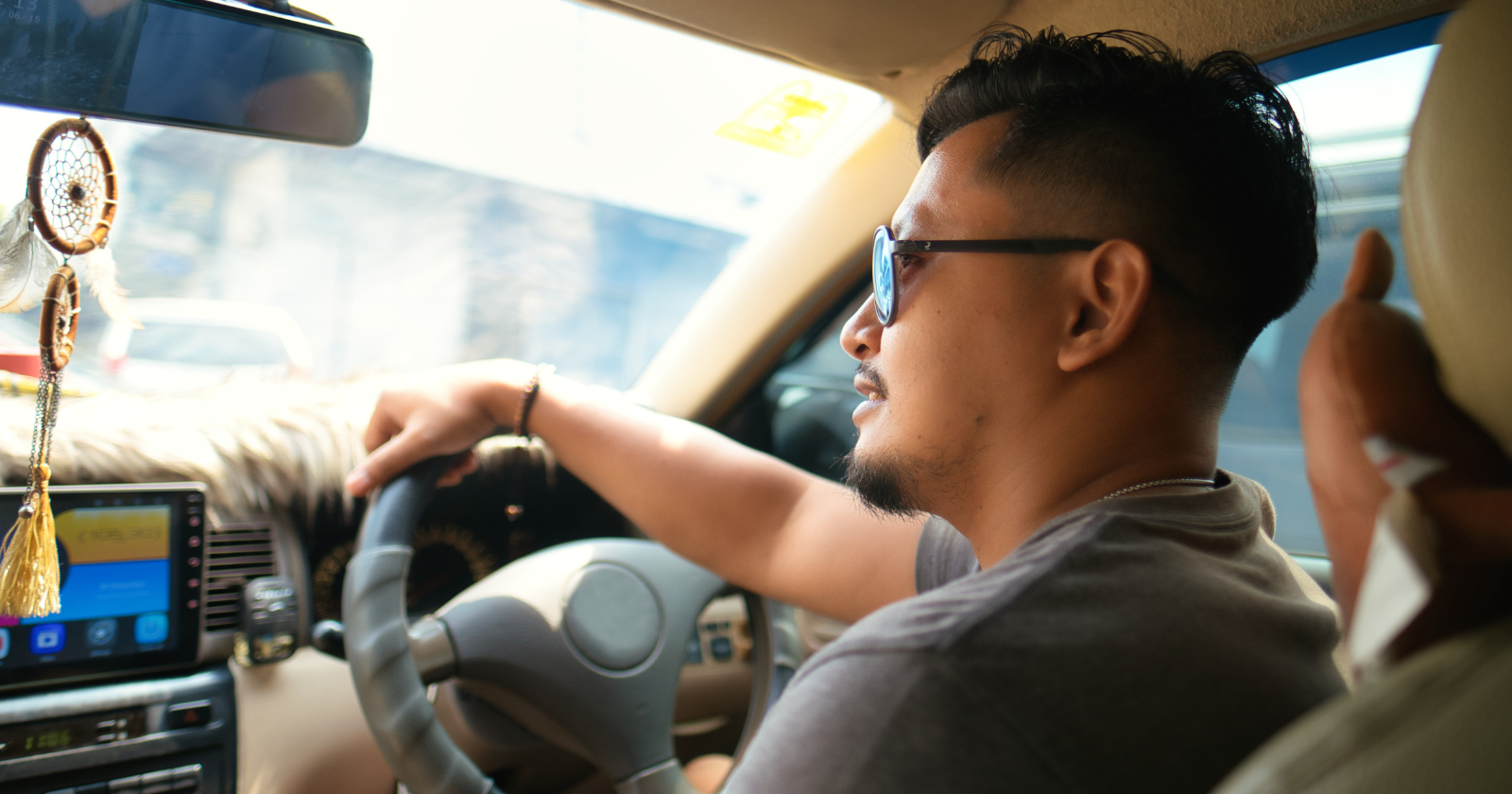
I’ve been taking long drives with no destination.
I tell my wife it’s for the scenery. She believes me, or she believes me enough not to ask. And there is scenery, technically, but that’s not what I’m going for. What I’m going for is the forty-five minutes or the hour and a half when nobody needs anything from me and the phone is sitting in the cupholder and for the first time all day I remember that I have thoughts of my own, separate from tasks and questions and things I was supposed to have done already.
I’m 37. I have a wife I love, a daughter I would do anything for, a business that needs me, a team of people whose livelihoods are partially tied to my attention. None of this is a complaint. I want to be clear about that. The life I have is the life I chose and I’m grateful for it in a way that’s become something I try to sit with rather than just say.
But somewhere in the last few years the ratio shifted. The time that is clearly mine and only mine has compressed to almost nothing. And I didn’t fully notice it was happening until I started taking these drives and realized that the feeling I get when I turn off down some unfamiliar road is relief. Not the relief of having finished something. The relief of having temporarily become unreachable.
What the research says about needing to disappear
I’ve written enough about psychology to know that the instinct I’m describing has a name and a body of evidence behind it. Researchers studying solitude, specifically the kind that is chosen and purposeful rather than the kind that’s imposed, have found that time alone has a measurable deactivating effect on the nervous system. A series of studies by Thuy-vy Nguyen, Richard Ryan, and Edward Deci, published in Personality and Social Psychology Bulletin, found that solitude reduces both high-arousal positive and negative emotions, producing a state of lower-intensity, more regulated affect. What that means in plain language is that being alone, when you choose it freely, turns down the volume on everything. The agitation and the excitement and the noise of a day that belongs entirely to other people starts to recede.
The key word in all the research is autonomous. Solitude that is chosen, that you enter into on your own terms, does something different than solitude that is forced on you. A 21-day diary study tracking people’s daily patterns of solitude and socializing found that when solitude was autonomous, the detrimental effects of being alone were nullified. The peace was real. Not a coping mechanism, not a sign of something wrong, but a genuine state of restoration available to people who choose their alone time rather than have it chosen for them.
I choose these drives. Nobody knows they’re anything other than scenic. That’s what makes them work.
The lie is small but the need it’s covering is not
I told my wife it’s for the scenery, and I think about that framing sometimes while I’m driving. Why the cover story? We have a genuinely good marriage. I could say: I need some time by myself, I’m going to drive for an hour with no particular destination, I’ll be back before dinner. She would say okay. She might even be glad to have the house to herself for a while.
But I don’t say that, and I think the reason has something to do with how the need feels from the inside. It doesn’t feel like a reasonable request. It feels like a secret, like something that could be misread as not wanting to be here. Which is not the same thing at all. I love being here. I just need there to also be times when I’m not on.
There’s a word for what I’m avoiding, and it’s availability. The particular tax of being someone who is relied upon is that your presence carries an implicit obligation. When I’m home, I’m the dad, the husband, the person who knows where things are and who handles the things that need handling. When I’m at my desk I’m the founder, the decision-maker, the one who’s supposed to have the vision. These roles aren’t burdens exactly. They’re just always there, like a slight background pressure that you stop noticing until you remove it and suddenly realize how much muscular effort you were using just to hold your shape against it.
The drives remove the pressure. Not permanently, not in any way that changes anything structurally. Just for an hour. Just enough to feel, for a little while, like a person without an appointment or a function.
What this is actually about
A large study involving 2,035 people across the lifespan, examining what time alone actually offers people at different life stages, found that midlife adults consistently described solitude in terms of restoration and freedom from demands. Self-determined motivation for solitude — going alone not because you have to but because you’ve recognized you need to — was one of the strongest predictors of well-being in solitude rather than loneliness or depletion.
I read research like this and feel something between vindication and mild embarrassment. Vindicated because the drives are not a symptom of something going wrong. Mildly embarrassed because it took me this long to realize I had quietly engineered a practice for meeting a need I’d never articulated to anyone, including myself.
I’m 37, which means I’m at the age where a lot of what you built in your twenties and early thirties is now fully operational and making demands. The business, the family, the lease, the staff who depend on me, the readers of Hack Spirit who send me emails about their lives. I wanted all of this. I still want it. But there is a version of wanting things that doesn’t account for what it feels like to be the structural load-bearing wall in multiple systems simultaneously. You are necessary everywhere, which is a form of power, and you are never purely yourself, which is a form of disappearance.
The drives are where I go to remember that I exist outside of my usefulness to other people.
The Buddhist framing I keep coming back to
In Buddhist practice there’s a concept I’ve returned to throughout my adult life: the idea that the self we perform in social roles is not the self, just a temporary construction we use to navigate particular contexts. The problem isn’t having roles. The problem is forgetting that the roles are not you, that underneath the husband and the founder and the dad there is a person who existed before any of those designations and who needs, occasionally, some space that doesn’t require performing any of them.
The drives are, in their way, a form of this. Not meditation exactly, not spiritual practice in any formal sense. But they’re the closest thing I’ve found to creating, within an ordinary day, a pocket where no story about me applies. I’m just a person in a car going somewhere with no particular purpose, which is about as close to formlessness as I get anymore.
I think most people in midlife have some version of this practice, some way of creating the experience of being temporarily unavailable to their own lives. For some people it’s exercise. For others it’s the shower that goes longer than necessary, or the errand that takes twice as long as it should, or the late-night hour after everyone is asleep when they finally get to exist on their own terms. The form changes. The function is the same: a small pocket of autonomous time that belongs entirely to you, during which nobody is waiting for anything and the phone could go unanswered and the world would continue regardless.
What I’m not ready to say out loud yet
Here’s the part I haven’t figured out: whether the drives are enough, or whether they’re evidence of something that needs to be addressed more directly.
If I genuinely need an hour a week of being unreachable in order to feel like a full person, the question is whether I can just build that in honestly, or whether there’s something about the structure of the life that needs to shift. Not dramatically. Not in any way that would require blowing anything up. But maybe in ways that acknowledge the real cost of being load-bearing in too many systems at once, rather than managing that cost in secret with scenic drives.
I don’t have a clean answer to that yet. The drives continue. The scenery is genuinely nice sometimes. My wife is understanding about a lot of things, and I think if I told her what the drives are actually for, she would understand this too.
I’m not ready to find out. Not because I think she’d react badly. Just because naming it makes it more real, and making it more real means having to decide what to do about it.
For now, I turn left onto a road I’ve never been down, and the phone stays in the cupholder, and nobody needs anything from me for the next forty-five minutes, and that has to be enough.