
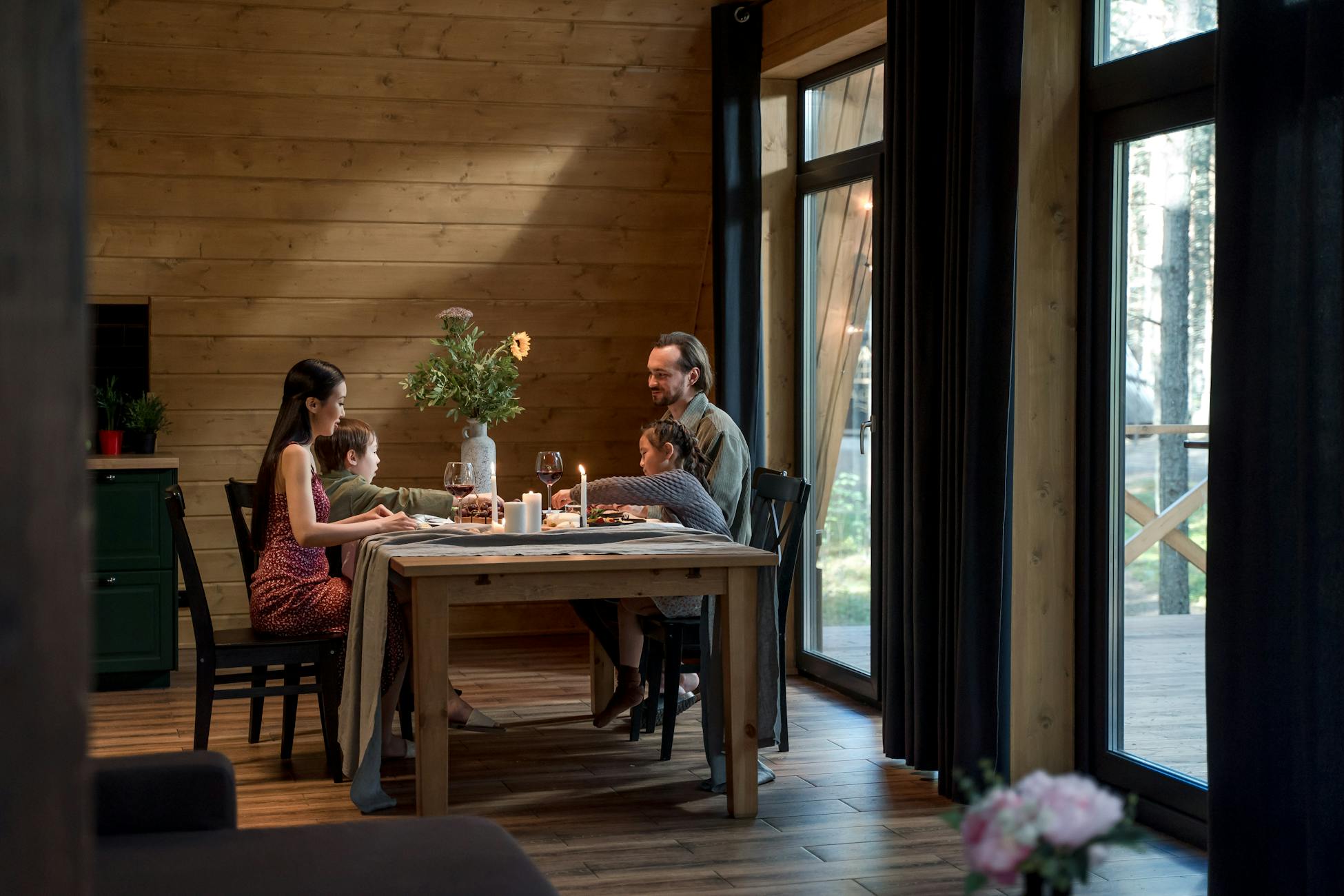
I noticed it last spring at a long lunch in Melbourne, sitting around a table with people I’ve known since I was fifteen. Good people. Still good people. But somewhere between the second bottle of wine and the dessert nobody really wanted, it hit me that nobody at that table had asked me a real question in about eleven years. Not a hostile silence. Just the quiet of being related to as a character they already had memorised. I left that lunch feeling worse than I had in a long time, lonelier than I’d ever felt in the years I lived on my own.
That’s the thing nobody warns you about. The empty apartment isn’t where loneliness does its real damage. The damage happens at the dinner table on a Sunday afternoon, surrounded by the people who watched you grow up, who can list every job you’ve had and every city you’ve lived in, and who somehow have not asked you a real question in over a decade. That is the loneliness that splits people open. Not the silence of an empty room, but the specific silence of being unrecognised inside a familiar one.
Look, most people assume loneliness is a problem of absence. Fewer friends, fewer texts, fewer invitations. The whole language we use around it points toward emptiness, like loneliness is just a hole that gets filled by adding more people, more events, more proximity. But anyone who has sat at a long family table feeling completely invisible knows the math doesn’t work that way. You can be surrounded and still starving. The conventional wisdom says connection is a numbers game. It isn’t. It’s a recognition game, and the cruelest version of loneliness happens when the numbers are perfect and the recognition has quietly disappeared.
The arithmetic that doesn’t add up
That lunch wasn’t the first time it happened, just the first time I actually clocked it. They weren’t being cruel. They were relating to a version of me that no longer existed, and they hadn’t noticed the substitution. Honestly, I don’t think I’d noticed mine of them either, which is the embarrassing part nobody likes to admit.
That afternoon was when I understood that solitude and loneliness are completely different animals. Solitude has a floor. Loneliness in a crowd has no floor at all.
The research backs this up in ways that surprise people. The National Academies’ work on social isolation draws a careful distinction between objective isolation (how many people are around you) and perceived loneliness (whether you feel known by them). The two correlate less than you’d think. People with thick social calendars score high on loneliness all the time. People who live alone often don’t. What predicts loneliness more reliably than headcount is whether the people in your life are still updating their picture of you. When they stop, the relationships continue, but you start grieving inside them.
Why familiar rooms hurt more than empty ones
There’s a particular ache that only shows up among long-term company. The brain processes social exclusion in regions that overlap with physical pain. But the form of exclusion that registers most sharply isn’t being left out. It’s being included on terms that no longer fit.
Being kept in the group as a museum piece, the funny one, the smart one, the easy one, the steady one, is a kind of soft erasure. You’re there. You’re loved. You’re also frozen in a year that’s long gone, and any attempt to move past the costume gets gently corrected with suggestions that your new behaviour doesn’t match who you used to be. Of course it doesn’t. It’s the new me. Nobody asked.
This is why people leave gatherings full of old friends and feel a hangover that isn’t from drinking. It’s the Don Draper problem, basically. Everyone’s responding to a guy who doesn’t quite live there anymore. That’s the part that makes the drive home so quiet. Not that you weren’t seen. That what was seen was a version you’d outgrown a decade ago.
The unupdated portrait
Every long-term relationship contains a portrait of you in the other person’s mind. In good relationships, that portrait gets revised. New brushstrokes go on. The picture moves. In stagnant ones, the portrait was finished sometime around the third year and has been hanging untouched ever since.
The horror of a stagnant portrait isn’t that it’s wrong. It’s that it’s close enough to feel real. People around you are responding to something that genuinely was you, once. So when you try to introduce the current version, the doubts you didn’t used to have, the interests you’ve grown into, the parts of yourself that surprised you, you get gentle resistance. Comments suggesting you’re exaggerating or being overly dramatic. Suggestions that your new interests don’t match your true self. Reminders about the role you’ve always played in the group dynamic. The corrections feel like love. They’re not. They’re a request to please return to the portrait.
I’ve watched this happen across cultures. Vietnamese family structures are tighter and more multigenerational than what I grew up with in Australia, and the recognition problem looks different there, more about role rigidity than about emotional distance, but the pattern is the same. The longer people have known you, the less likely they are to register that you’ve changed.
Why warmth becomes a cage
The most common version of this loneliness shows up in the people who are easiest to love. The warm ones. The agreeable ones. The reliable ones. There’s a particular kind of loneliness that only hits people who are well-liked, because warmth gets read as self-sufficiency. If someone seems okay, nobody asks. If they always seem okay, nobody ever asks.
So you sit in the room. You laugh at the right moments. You ask everyone else how they’re doing, and you do it well, because you’ve had decades of practice. And the entire time, an unmet question is sitting in your chest. Nobody’s going to ask it back. They’ve assumed the answer. They’ve been assuming it for years.
This is what makes group loneliness heavier than solo loneliness. When you’re alone in a quiet house, the absence of being known is at least honest. The room is empty. Of course nothing is reaching you. But in a full room where nothing reaches you, the gap between what looks like connection and what actually is connection becomes a kind of slow vertigo.
The performance problem
One of the things I’ve come back to repeatedly in my own writing is that chronic loneliness in adulthood usually isn’t about lacking people. It’s about being surrounded by relationships where you were never allowed to stop performing long enough to be actually known.
Every group has a role for you. The clown. The fixer. The smart one. The level-headed one. The one who’s doing well. These roles get assigned early, often by accident, and they harden. After fifteen or twenty years, the role is the only thing the group can see. You become a function in their lives rather than a person.
And honestly, the cruelest part: the more skillfully you play the role, the lonelier it gets. Every successful performance reinforces the idea that the role is the truth. Nobody breaks character to ask if there’s someone behind it.
There’s a useful study from Oregon State that linked heavy social media use with worse loneliness in adults, which sounds counterintuitive until you realise that social media is just performance scaled up. More feedback, less recognition. More audience, fewer witnesses. The platforms have just digitised what already happens in extended families and old friend groups: a constant low-grade theatre where the actor is exhausted and the audience thinks they know who the actor is.

The cost of staying invisible
This isn’t only an emotional issue. Chronic loneliness carries significant health risks, cognitive decline, disrupted sleep patterns, and cardiovascular problems that compound over time. And the kind of loneliness that does the most damage isn’t the dramatic, isolated kind. It’s the steady, low-grade ambient kind that lives inside relationships people assume are working.
Greater Good Science Center has covered this carefully, that connection requires recognition, not just contact, and that substitutes for recognition (including the technological ones being marketed to lonely people right now) miss the actual mechanism. The thing that heals loneliness is being met. Not being entertained, distracted, or kept company. Met. Which is why a phone full of group chats can sit beside someone who feels completely alone. The contact is there. The recognition isn’t.
What changes when someone actually sees you
I’ve started paying attention to the moments where someone actually breaks through this. They’re rare, and they’re almost always small. A question that goes one layer deeper than expected. A friend who notices you’ve been quieter lately and asks about it without making it a whole thing. A sibling who registers that something you said last year doesn’t fit with how they used to talk about you, and instead of correcting you, gets curious.
These moments don’t look like much from the outside. From the inside they feel like oxygen. The body relaxes in a way you didn’t know it was tensed. You realise how much energy you’d been spending holding up a version of yourself that wasn’t quite yours anymore.
The reason group loneliness is heavier than solitary loneliness is that solitary loneliness has an obvious solution, find people. Group loneliness has a much harder one. You have to risk telling the people who already love you that they’ve been loving an out-of-date version of you, and that the gap between what they see and who you’ve become is starting to hurt. Most people don’t take that risk. They keep playing the role, smile through the lunch, drive home in silence. The relationships continue. The portraits stay unupdated. And the specific weight of being unrecognised in familiar company keeps doing its slow, quiet work.
The smaller, more honest move
I don’t think the answer is dramatic. You don’t have to blow up the friend group or have a confessional conversation with every relative. Most of the time, the way out is much smaller. You answer one question more honestly than you usually would. You say the thing that doesn’t fit the role. You let one person see something they weren’t expecting to see, and you watch what they do with it.
Sometimes they flinch and steer back to the script. Fine. You learned something about that relationship. Sometimes they pause, look at you a little differently, and ask another question. That’s the beginning of an updated portrait, one brushstroke at a time.
I don’t have the full answer to any of this. I’m still figuring out how to be a less convincing performer at my own family lunches, which is harder than it sounds when you’ve been good at the role for thirty years. But I think the move is just the small one. Stop performing for one minute. See if anyone notices. If they don’t, you’ve lost a minute. If they do, something might shift, quietly, in a way that doesn’t announce itself until you’re driving home and realise the silence in the car feels different than it usually does. That’s about as much as I’ve got. The empty house was never the problem anyway.