


Social starvation and social performance can coexist in the same body, at the same dinner party, on the same Tuesday night when you drove forty minutes to bring a bottle of wine you couldn’t afford to a gathering you didn’t want to attend. The loneliness that most people recognize — the empty apartment, the phone that never rings, the holidays spent alone — accounts for only a fraction of the isolation that’s actually circulating through modern life. The version that does the most damage is often wearing a smile, carrying a gift, and already planning what funny thing to say next.
Most people believe that loneliness correlates with social contact. More friends, more invitations, more group chats means less isolation. The logic feels airtight. But what I’ve found, both from years of reading the research and from the particular kind of exhaustion that comes with building companies across multiple countries, is that the correlation breaks down completely once you distinguish between social activity and social satiation. Two people can attend the same event, talk to the same number of people, and leave with entirely different feelings about whether they were actually seen. One goes home nourished. The other goes home starving.
That gap is where the real crisis lives.
The Performer’s Paradox
There’s a specific type of person who becomes indispensable in social groups. They remember your birthday. They ask follow-up questions about the thing you mentioned three weeks ago. They text first. They organize. They show up early and leave late. From the outside, they look like the connective tissue holding the group together, and from the inside, they’re running a calculation they can barely articulate: if I stop doing this, will anyone notice? If I stop reaching out, will anyone reach back?
That calculation is the loneliness.
The conventional framing treats loneliness as an absence — of people, of contact, of proximity. But the kind of loneliness described in the title of this piece is a presence. A constant, thrumming awareness that the version of you that people enjoy is a curated performance, and the version of you that actually needs something has no audience at all. The laughter is real. The warmth is real. The care for other people is genuine. And underneath all of it sits a hunger that none of it touches.
I’ve written before about how psychological research suggests that early experiences can shape patterns where people learn to be functional before they process their emotions, and this pattern follows the same structural logic. The person who becomes the social glue often learned early that their role was to manage other people’s emotional states, and they became fluent in reading rooms, anticipating needs, calibrating tone. What looks like generosity in adulthood frequently started as a survival strategy: make yourself useful so you won’t be left alone.
The problem is that the strategy works. People do keep you around. But they keep around the performance, not the person.

Why Connection Fails to Connect
Research on loneliness has evolved considerably over time. The field used to focus primarily on measuring social network size, counting contacts and tracking frequency of interaction. More recent work recognizes something more uncomfortable: you don’t have to be socially isolated for loneliness to become dangerous. The subjective experience of disconnection carries its own biological weight, regardless of how many people you had dinner with last week.
This matters because it means the standard interventions — join a club, volunteer more, get out there — can actually deepen the problem for people experiencing this particular strain of loneliness. Every event you attend that fails to reach the part of you that’s hungry reinforces the conclusion: something is fundamentally broken in how I connect. More contact without more depth just generates more evidence for the prosecution.
Social isolation has been a growing concern in the United States, and was only accelerated by the pandemic. But the particular loneliness I’m describing here predates smartphones, predates social media, predates any of the usual technological suspects people love to blame. This is a structural pattern in how certain people learn to relate. The technology amplifies it, sure. A person who already curates their personality in real life will absolutely curate it harder online. But the technology didn’t create the wound.
What the Body Already Knows
The physical consequences are not abstract. Social isolation increases the risk of premature death, rivaling the risks of smoking and obesity. This data point gets cited frequently, but what rarely gets discussed is that perceived loneliness and the felt sense of disconnection carries comparable health risks even when the person has objectively robust social ties.
Your body doesn’t care how many people came to your birthday party. Your body cares whether any of those interactions registered as safe, as mutual, as real.
I’ve been tracking this distinction for years, partly because of my academic training in how systems shape individual behavior and partly because moving to Singapore three years ago gave me an unexpected laboratory for studying social connection across cultures. There’s a particular kind of professional friendliness in expat communities — warm, efficient, transactional — that looks exactly like connection from the outside and feels like nothing from the inside. Everyone is new. Everyone is performing competence. Everyone goes to the same networking events and barbecues. And the person who organizes them, who sends the follow-up messages, who becomes the social hub, is often the loneliest person in the room.
They just also happen to be the last person anyone would check on.
The Drive Home
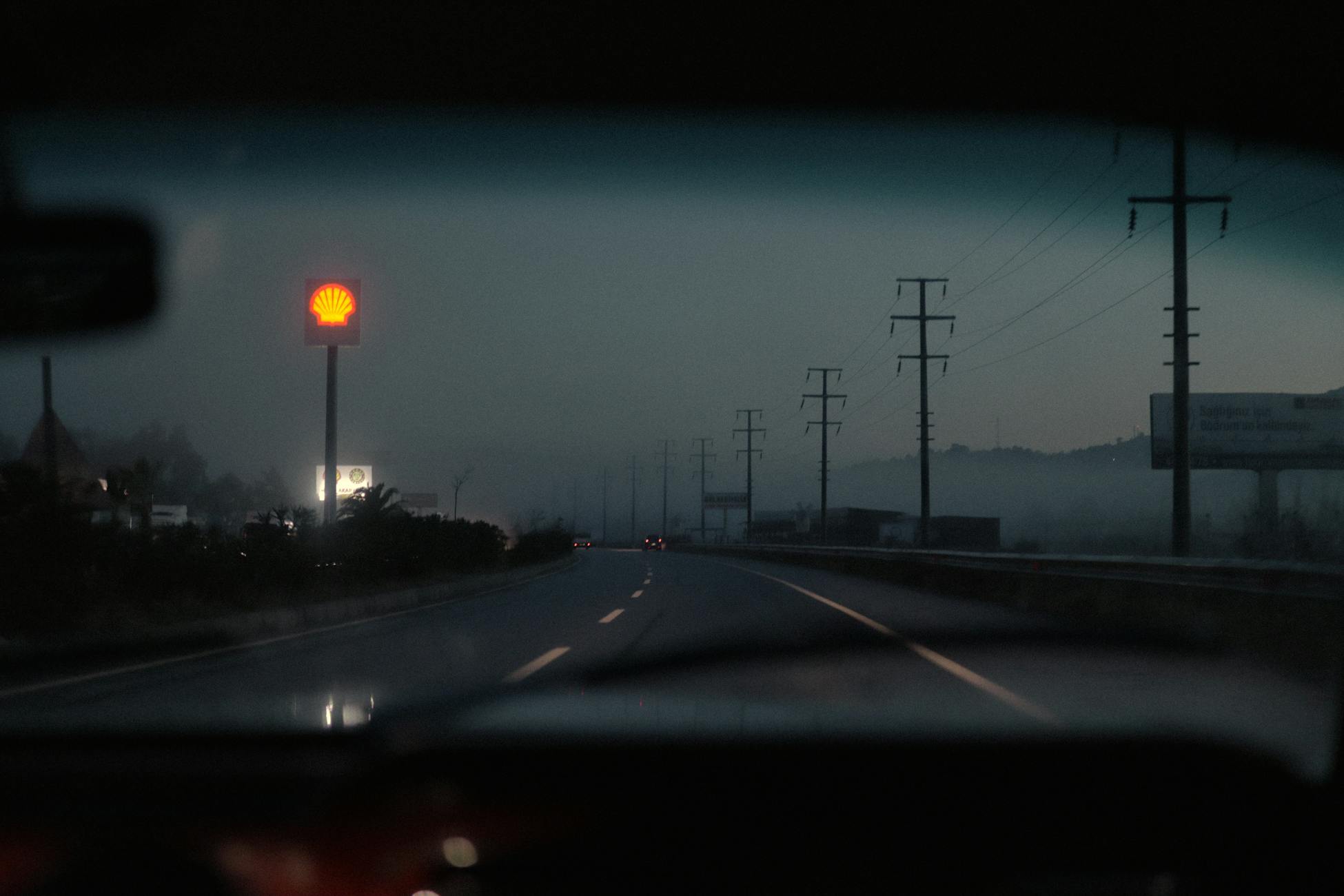
The title of this article describes a specific moment: the drive home. The silence after performance. The gap between being around people and being with them. That moment in the car when the social mask drops and the person is left with the raw question of why being liked and being known feel like completely different experiences.
The answer, when you sit with it honestly, usually involves some version of the same realization: the parts of yourself that people enjoy are the parts you learned to export, and the parts that need connection are the parts you learned to keep locked away. I’ve written about the particular kind of pride that belongs to people who built their self-reliance so well they lost the key to their own locked door. The loneliness described here is the other side of that same door.
Receiving requires vulnerability. Vulnerability requires trusting that someone will still be there when they see the version of you that doesn’t have a joke ready, that doesn’t know what to say, that is genuinely uncertain and afraid. For people who grew up learning that usefulness equals safety, that’s a terrifying proposition. So they keep giving. Keep performing. Keep driving home in silence.
The Structural Trap
Here’s where it becomes a systems problem, not just a personal one.
Modern social life rewards the exact behaviors that produce this loneliness. The person who organizes, who remembers, who shows up, who makes others feel good — that person is socially valued. They get invited. They get praised. They accumulate what looks like deep social capital. But the structure of that capital is one-directional. It flows out. The system incentivizes giving connection without ever requiring that connection be reciprocated at the same depth, and this is precisely why the loneliness I described earlier — the kind that looks like a full calendar and sounds like laughter — can persist for years without anyone, including the person experiencing it, naming it for what it is.
This is why loneliness persists even in a hyper-connected world. The connections aren’t fake, exactly. They’re just structurally shallow. They operate at the layer of personality — humor, warmth, reliability — without ever reaching the layer of personhood: fear, need, confusion, desire. People who are well-liked often suspect that everyone knows their personality but nobody knows their mind. That suspicion is usually correct.
And the cruel feedback loop: the more you perform, the more people rely on the performance, and the harder it becomes to break character, and the more convinced you become that the real you wouldn’t be wanted. Evidence accumulates. Years pass. The performance calcifies into identity.
I’ve explored this tension before in a different context — the person who protects their freedom while tolerating their loneliness, holding both without admitting to either. The mechanism is similar here. You can hold social abundance and emotional starvation simultaneously, and neither cancels out the other. They just coexist, unresolved, in the silence of the car.
What Would Actually Help
The instinct is to offer solutions. Join deeper communities. Be more vulnerable. Tell someone the truth. These aren’t wrong, exactly, but they miss the structural issue. The person experiencing this loneliness already knows how to connect. They’re extraordinarily good at it. What they don’t know how to do is stop managing the connection long enough to actually inhabit it.
That distinction matters. The problem isn’t a lack of social skill. The problem is an excess of social vigilance and a nervous system that won’t stop scanning for signs that the interaction is going well, that people are comfortable, that nothing has gone wrong. That vigilance consumes the bandwidth that would otherwise be available for the simple act of being present without agenda.
So the work isn’t about adding more connection. It’s about changing the terms of the connection you already have. And that work, in practice, looks like a series of small, specific, terrifying experiments.
First: stop initiating for a defined period and observe what happens. Not as a punishment. Not as a test of who your “real” friends are. But as information. Many people trapped in the performer’s role have no idea what their social life looks like when they stop engineering it, because they’ve never stopped. Two weeks of not texting first, not organizing, not filling the gaps — not to prove that nobody cares, but to discover who reaches toward you without being managed into it. The results are often painful. They’re also clarifying. And clarity, even uncomfortable clarity, is the foundation of something more honest.
Second: practice what I think of as incomplete responses. When someone asks how you’re doing, resist the performance. You don’t have to trauma-dump. You don’t have to deliver a monologue about your inner life. But instead of “I’m great, what about you?” try “honestly, I’m kind of tired today. Not sure why.” That’s it. A sentence that isn’t optimized for the other person’s comfort. The point isn’t the content. The point is breaking the pattern of curating every exchange. You’re training your nervous system that an unpolished response doesn’t automatically trigger abandonment.
Third: identify the one or two people who have already tried to go deeper and whom you deflected. They exist. Almost always. Someone asked you a real question once and you turned it into a joke. Someone noticed you seemed off and you reassured them so efficiently they dropped it. Go back to those people. Not with a grand confession, but with a small act of honesty: “You asked me something a while ago and I gave you the easy answer. The real answer is more complicated.” That’s an invitation. It costs almost nothing to say, and it opens a door that performance keeps locked.
I went pretty deep on this in a video recently about how the obsession with being unique actually creates the exact loneliness we’re trying to escape — turns out the armor we wear to stand out is the same thing keeping everyone at arm’s length.
Fourth: notice the physical experience of being helped. The next time someone offers you something — a meal, a ride, their time, their attention — instead of deflecting or immediately reciprocating, just receive it. Feel the discomfort. Don’t manage it away. For most social performers, receiving without immediately giving back triggers a kind of panic, an imbalance that the nervous system reads as debt or danger. Sitting in that discomfort, letting it be there without resolving it, is how the system slowly recalibrates. It’s how you learn that you can be on the receiving end of care and the relationship doesn’t collapse.
These aren’t dramatic gestures. They’re micro-permissions. And they feel, to the person attempting them, like stepping off a cliff.
Because they are. They’re stepping off the cliff of being useful and into the open air of being known. Those are not the same thing, and the distance between them is where the loneliness lives.
What Remains
The empty room version of loneliness has a clear remedy: add people. The populated version — the laughing, birthday-remembering, event-attending version — has a much harder one: subtract performance. What remains after the performance drops away is the actual self, unmanaged and unpolished, and the terrifying question of whether that self is enough to hold someone’s attention without earning it.
I won’t pretend there’s a clean resolution here. Some people begin this process and discover that certain friendships were, in fact, built entirely on the performance and when the performance shifts, the friendship dissolves. That’s real loss. It’s also information. A relationship that can only survive your curated best isn’t a relationship that can hold your actual life. Grieving that is part of the work.
But other relationships deepen in ways that surprise you. When you stop managing every interaction, some people step forward. They meet you in the unpolished space. They stay when you’re uncertain. They don’t need you to be funny or useful or the person holding the room together. They just need you to be there, actually there, not performing there. And that experience, the first time it happens, is so disorienting for the social performer that they often don’t recognize it as the thing they’ve been starving for.
What I can’t tell you is whether that disorientation ever fully resolves, or whether the pattern is installed so deeply that every moment of genuine connection still carries a faint hum of surveillance underneath it, the old system running in the background and scanning for the moment the other person realizes they preferred the performance. I suspect the answer is different for different people, and I suspect most of the people reading this already know which version they are. The drive home might get quieter over time, or it might just change what the silence is about. Either way, the hunger doesn’t vanish the first time someone sees you clearly and stays. It just learns, slowly and without any guarantee of completion, that being seen was always the risk it couldn’t afford to take and the only one that ever had a chance of mattering.
