


In an industry-funded study of 100 healthy adults, about 40% of participants produced significant circulating levels of urolithin A after drinking pomegranate juice, while the remainder were low producers or non-producers. The study, published in the European Journal of Clinical Nutrition, was designed to measure differences in urolithin A production and compare juice with a purified supplement; it did not test anti-ageing outcomes from eating pomegranate.
The difference was not in the fruit. It was in the gut bacteria the drinkers happened to be carrying.
Urolithin A has been studied for its role in mitophagy. A small 2022 randomized trial of 66 older adults tested 1,000 mg a day of purified urolithin A, not pomegranate. It found improvements in secondary muscle-endurance measures and some biomarkers, but no significant improvement in its primary measures of six-minute walk distance or maximal ATP production. Several authors were employees of Amazentis, which supplied the product and funded the trial.
Gut microbes convert ellagitannins from foods such as pomegranate into urolithins, and people vary considerably in how much urolithin A they produce. That variation does not mean non-producers receive no nutritional benefit from the fruit.
The bacteria doing the work
Pomegranates, walnuts, raspberries and strawberries contain ellagitannins and ellagic acid. Gut microbes can transform these compounds into several urolithins, but the amount and type produced vary between people.
In people who produce urolithin A, ellagitannins reach the colon and are transformed through a multi-step microbial process involving species including Gordonibacter urolithinfaciens and Gordonibacter pamelaeae. A strain called Ellagibacter isourolithinifaciens was first described in 2018.
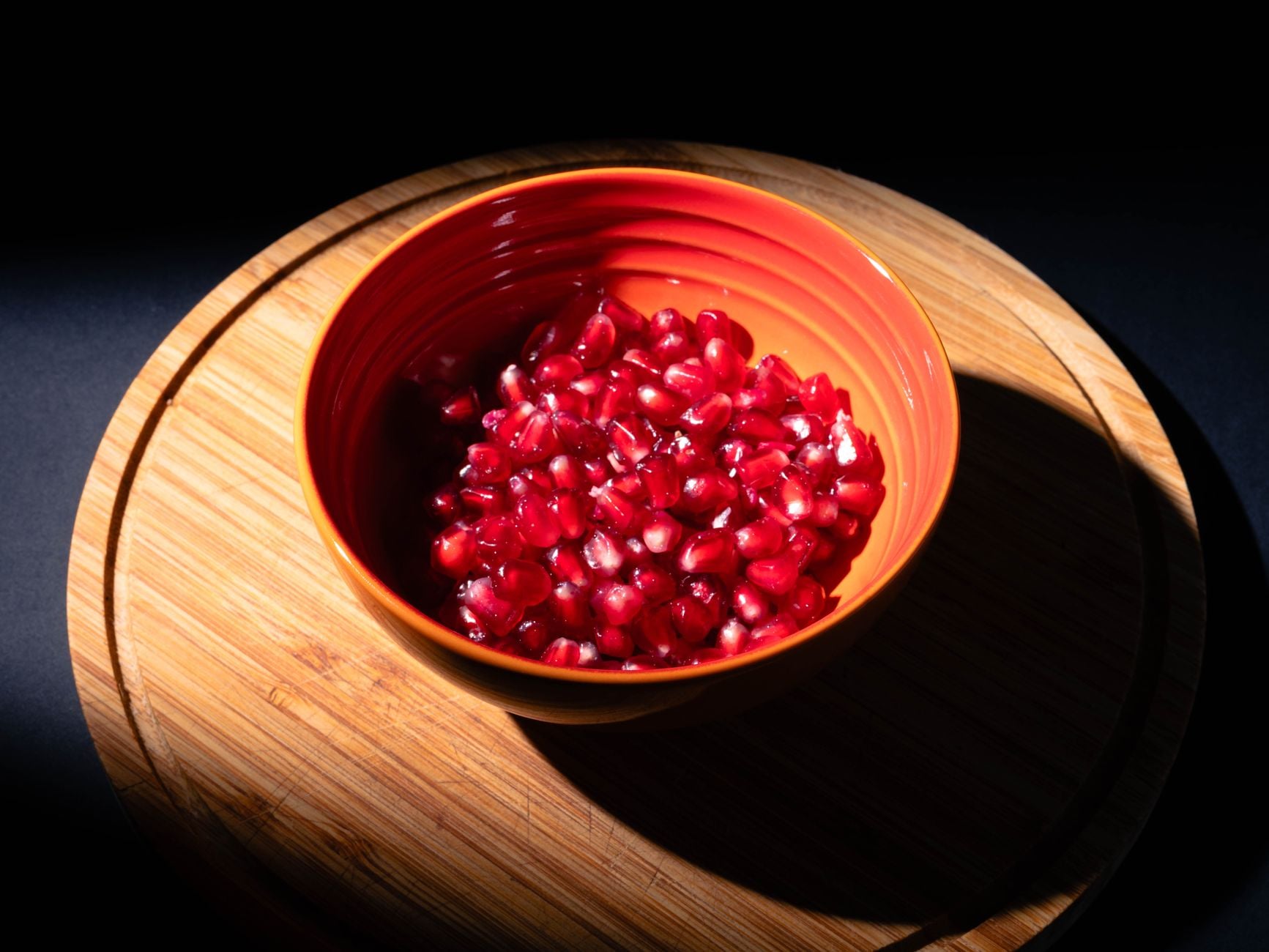
People who produce little or no detectable urolithin A still receive the fibre, vitamins and other compounds in the fruit. The juice study did not measure mitophagy or clinical health outcomes after pomegranate consumption.
Three metabotypes, one bowl of fruit
Researchers at CEBAS-CSIC in Murcia, Spain, led by food scientist Francisco Tomás-Barberán and biochemist Juan Carlos Espín, spent years mapping who converts what. They found the human population sorts into three urolithin metabotypes. Metabotype A produces urolithin A. Metabotype B produces a mix of urolithin A, isourolithin A and urolithin B. Metabotype 0 — a substantial minority that grows larger with age — produces essentially nothing.
Urolithin metabotypes vary with age, geography and diet. Researchers are still determining how stable they are and whether changing a person’s diet can reliably change producer status.
Two people can therefore eat the same food and show different circulating urolithin profiles afterward. The clinical importance of that difference has not been established.
Why the microbes vary so wildly
The gut microbiome is shaped by birth mode, breastfeeding, antibiotic history, geography, diet and cohabitation. Two siblings raised in the same house diverge within years. A course of antibiotics in childhood can wipe out a species that never recolonises.
The PREDICT-1 study, which fed identical meals to more than a thousand adults in the United Kingdom and measured what happened in their bloodstream over the next few hours, found enormous differences from person to person in how they responded to the same food — with gut microbiome composition explaining more of the variance in the fat response than the macronutrients of the meal itself. The urolithin story is the same principle in miniature — a single functional pathway that either exists or does not exist in a given person’s colon.
The gut microbiome is shaped by many interacting influences, and current evidence does not establish a simple diet that reliably restores a missing urolithin-producing community.
What supplement trials have actually found
Mitophagy sounds abstract until you see the physiology. Mitochondria accumulate damage over decades — bent membranes, leaky electron transport chains, mutations in their tiny circular DNA. In young cells, damaged mitochondria are tagged and eaten by the cell’s own recycling machinery, and replaced with fresh ones. In old cells, this clearance slows down. The dysfunctional mitochondria pile up. They leak reactive oxygen species. They stop making enough ATP. Muscles get tired faster. Neurons fire less reliably.
Trials of purified urolithin A supplements have reported changes in some muscle-endurance measures and mitochondrial biomarkers. In the 2022 trial, the primary functional outcomes were not significantly better than placebo, and the authors said larger studies were needed. These supplement results cannot be assumed to apply to ordinary servings of pomegranate.
The evidence therefore supports variation in urolithin A production, not a demonstrated anti-ageing effect from eating pomegranate.
The supplement workaround
Because many people produce little or no detectable urolithin A after particular foods, Amazentis developed a synthesised urolithin A supplement called Mitopure. It delivers a standardised dose without relying on gut conversion, but its long-term effects are still being studied.
It remains uncertain whether diet can reliably shift a non-producer into a producer or whether producer status translates into a meaningful long-term health difference.
The wider lesson hiding in a pomegranate
The urolithin research is a useful example of how metabolism can vary between people, but it does not justify treating foods or supplements as proven longevity interventions.
Turmeric’s curcumin is barely absorbed without piperine and fat. Soy isoflavones are converted to the more active equol only by people whose gut hosts Adlercreutzia equolifaciens and its relatives — roughly 25 to 30 percent of Westerners, up to 60 percent of some East Asian populations. Green tea catechins are metabolised differently depending on the same microbial variables.
A superfood list on a magazine cover is, in this sense, a list of raw materials handed to a factory whose workforce varies from person to person. The seeds do not care who eats them. The bacteria decide what happens next.
Popular health advice often turns out to be less universal than it sounds, and personalised nutrition is where that pattern is now being stress-tested at the molecular level.
What it feels like from the outside
Two people may produce different amounts of urolithin A after the same serving. What that means for their health years later remains unknown.
Pomegranate remains a nutritious food regardless of producer status. The studies cited here do not support using a consumer microbiome test, a supplement or a particular food as an anti-ageing guarantee.
Correction, 17 September 2026: The original version conflated production of urolithin A after pomegranate juice with outcomes reported in separate trials of a purified urolithin A supplement, and described possible long-term anti-ageing effects as established. The headline, summary and relevant passages have been corrected. The cited trials were industry-funded and do not show that eating pomegranate produces those outcomes.
