

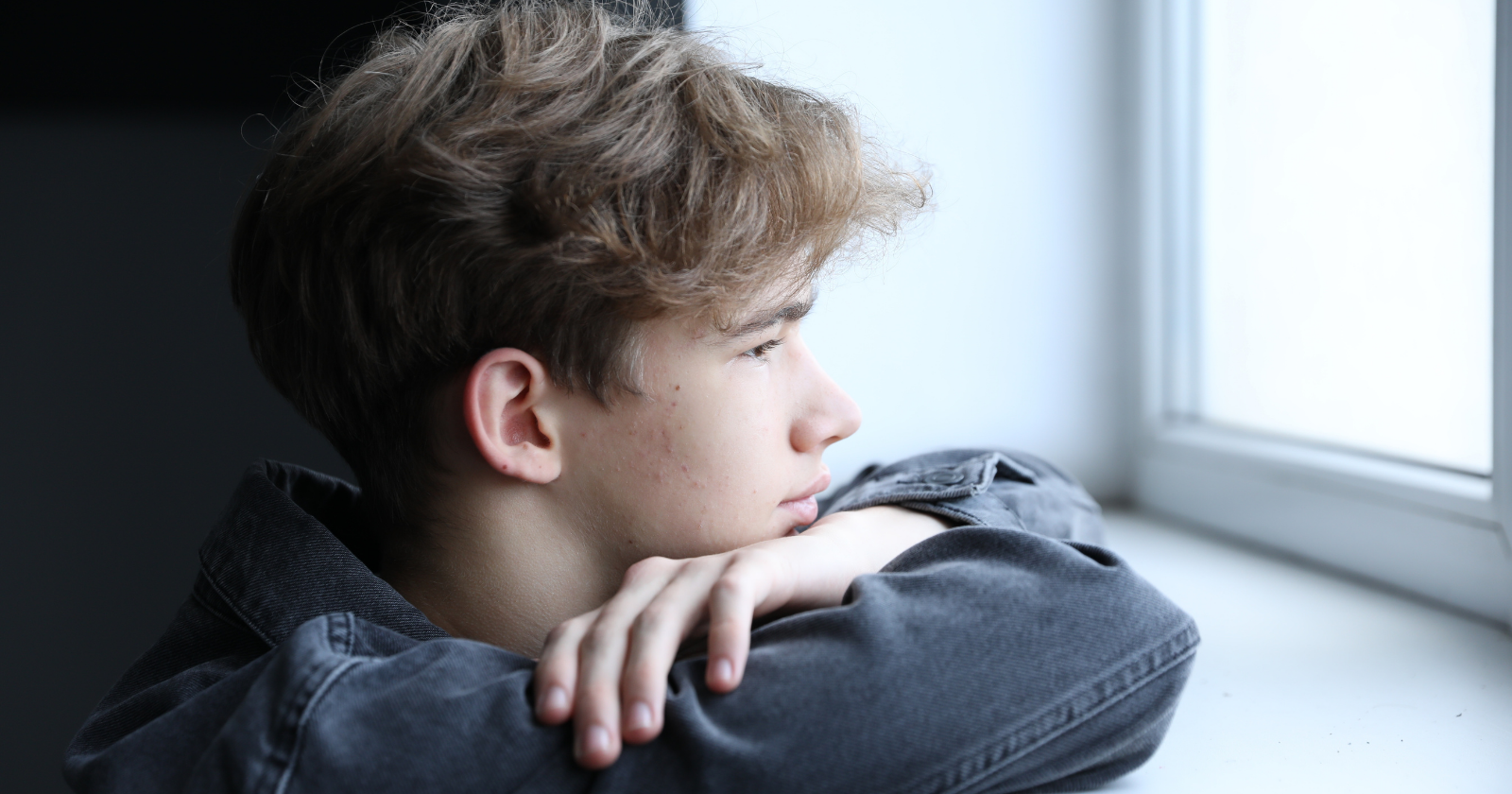
The popular claim in the title, on close inspection of the psychological literature it draws from, is more grounded than internet wisdom usually is. There is an actual body of peer-reviewed research on why certain children get labelled too sensitive, too intense, too much, or too odd, and why a large proportion of them go on to become adults whose colleagues use words like perceptive, thoughtful, observant, creative, and unusually good with people. The research isn’t quite universal in its findings. But the core pattern the title describes is real. And the reason it’s real is worth understanding, because it explains something otherwise puzzling about why so many capable adults report having felt out of place as children.
The starting point for this line of research was work by the American clinical psychologist Elaine Aron, who in the mid-1990s began investigating whether some children were born with a temperament trait that made them process the world more deeply than others did. Her hypothesis, developed at Stony Brook University with her husband Arthur Aron, was that between fifteen and twenty per cent of the general population possesses what she called sensory processing sensitivity. Children with the trait notice more of what’s happening around them. They process it more thoroughly. They form deeper emotional responses to art, music, other people’s moods, and their own inner experiences. They also get overwhelmed by loud noises, chaotic environments, and social overstimulation more easily than their peers, and they need more downtime to recover.
What the childhood label actually captures
According to the landmark 1997 paper by Elaine and Arthur Aron, published in the Journal of Personality and Social Psychology under the title “Sensory-Processing Sensitivity and Its Relation to Introversion and Emotionality”, the Aron team ran seven consecutive studies across diverse samples, developed the twenty-seven item Highly Sensitive Person Scale that has since been validated in dozens of independent studies, and demonstrated that sensory processing sensitivity is a distinct temperament trait rather than a variant of shyness, introversion, or neuroticism. In children who possess it, the trait shows up as noticing subtleties adults think a child that age shouldn’t notice, becoming overwhelmed in busy environments, forming intense emotional attachments to books or animals or ideas, needing time alone to recover from stimulation, and reacting strongly to what others say and do. Which is, more or less, the profile of the child that ordinary school environments tend to label as sensitive, difficult, or too much.
If you were the odd one out growing up, there’s a good chance the very things that made you strange to everyone else were early signs of a mind that simply worked differently. This video explains more:
The adult outcomes for these children turn out to be exactly the ones the popular narrative celebrates. Adults with high sensory processing sensitivity are, in Aron’s decades of follow-up research, disproportionately represented among artists, writers, therapists, gifted teachers, exceptional physicians, high-empathy managers, and creative professionals across virtually every field where noticing what other people miss is genuinely useful. The same trait that made them cry when the other children didn’t, and want to leave the classroom when the fluorescent lights were too bright, and read the emotional undercurrents in the room before anyone else did, turns out to be a genuine asset in adult life once the environment stops actively punishing it. What looked like fragility in a nine-year-old often looks like unusual perceptiveness in a thirty-five-year-old, because it was, in both cases, the same underlying trait. The child was just being asked to operate in an environment that didn’t reward it.
Why the trait produces the outcome
The mechanism connecting the two is what the developmental psychologist Jay Belsky and colleagues at Birkbeck, University of London have spent two decades documenting under the label of differential susceptibility. According to a 2009 review paper by Jay Belsky, Charles Jonassaint, Michael Pluess, Michael Stanton, Beverly Brummett and Redford Williams, published in the journal Molecular Psychiatry under the title “Vulnerability Genes or Plasticity Genes?” and hosted in full text on the National Institutes of Health’s PubMed Central archive, the same children who are more affected than their peers by adverse environments are also more affected by supportive ones. The metaphor sometimes used by the researchers is that some children are dandelions, meaning they grow reasonably well anywhere, while others are orchids, meaning they flourish spectacularly in supportive conditions. Which turns out to be why these particular children keep appearing in the successful-adult populations that inspire the popular narrative. The trait that made them difficult in the wrong environment made them exceptional in the right one. And a considerable number of them, over the course of adulthood, eventually found or built environments better suited to what they actually were.
The Belsky team’s own research has documented this repeatedly using genetic markers, parenting interventions, and controlled longitudinal designs. Children carrying certain gene variants long labelled as risk alleles turn out to be, when raised in supportive conditions, unusually competent and well-adjusted rather than unusually vulnerable. Meta-analyses across dozens of studies now support the interpretation that many of the temperamental traits previously understood as childhood liabilities are actually markers of high environmental plasticity. Which produces exactly the pattern the popular claim describes. The child who was called too sensitive was, in a fair proportion of cases, unusually responsive to their environment. When that environment eventually improved, whether through adulthood, through a change of circumstances, through therapy, or through simply escaping a school system that punished the trait, the same responsiveness produced measurable adult capability rather than measurable adult struggle.
Which is, roughly, why the popular narrative persists across decades of internet wisdom. The pattern is genuinely there in the research. Adults who spent their childhoods being told they were too much for the environments they were in often turn out, as the environments change, to have been exactly the right amount for something else. What looked like a personality flaw was, in a large proportion of cases, a temperament trait that just needed a different setting to become an asset. The traits that got them teased were, on the peer-reviewed evidence, the ones the surrounding culture hadn’t yet worked out how to use.
Which is worth naming clearly, because it changes what a difficult child actually needs. The popular claim tends to be read as reassurance that the child will grow into their strengths on their own. The underlying research says something more specific and considerably more useful. The child will grow into their strengths, or fail to, depending almost entirely on whether the environment around them stops punishing the trait long enough for the trait to develop into what it can eventually become. Which is a job for the adults in the child’s life, not something the child will do on their own.
A brief note on scope. This piece describes what the peer-reviewed research supports for the largest group of children who fit the popular “strange, difficult, or too much” description, meaning children with the temperament trait Aron identified. It doesn’t apply universally. Some children called difficult in childhood have persistent difficulties in adulthood. Some struggles are unrelated to the sensitivity trait. And even for children with the trait, the adult outcomes depend heavily on the developmental environment. The claim in the title is real for a substantial subgroup. It’s not a promise for everyone. Anyone reading this because it describes their own child, or a child they know, should treat the underlying research as a specific frame for how to help rather than as a guaranteed outcome that will happen without their involvement.
