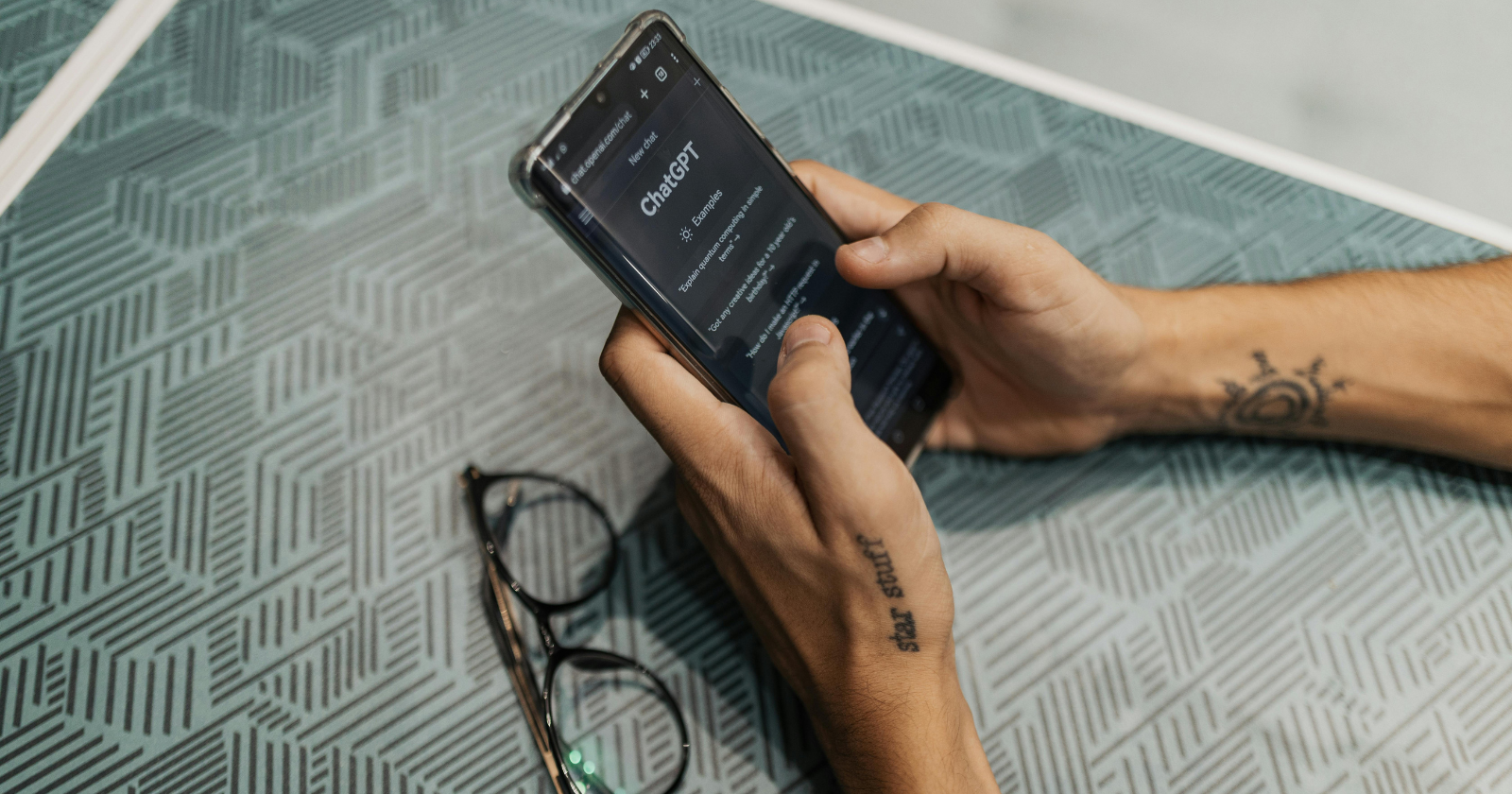
Picture someone at the end of a long day. The apartment is quiet. They open ChatGPT, not to draft an email or debug a script, but to say something close to: here is how I am feeling, tell me I am not crazy. The reply comes back warm and patient, with no delay or sigh or glance at the clock.
And the next night, a little earlier, they open it again.
I am not inventing that person from nothing. I have been a version of him. In the past few months, I ran an extended self-audit by asking ChatGPT for an honest read on myself in different areas, and shared some of my findings in my writing.
So when a study comes along suggesting that the people who lean on this thing most are also lonelier, I do not get to stand outside it as a detached observer. I am inside the phenomenon.
I am not a psychologist or a clinician, and nothing here is advice about your own mind. This is one reader thinking out loud about one early study, and population-level patterns are never a diagnosis of any individual person.
In March 2025, OpenAI and the MIT Media Lab released a pair of parallel studies on what they call affective use of ChatGPT. The Media Lab arm was a randomized controlled experiment with nearly 1,000 participants who used the chatbot daily over four weeks. Alongside it, OpenAI ran an automated analysis of nearly 40 million interactions.
The headline that traveled was the uncomfortable one. The Media Lab reported that higher daily usage “correlated with higher loneliness, dependence, and problematic use, and lower socialization”.
But let’s take a step back. Read it slowly and you notice what it does not say. It does not say the chatbot makes you lonely.
The researchers were careful about this, and so should we be. This is one early study and the relationship is correlational. It is unclear whether the tool deepens loneliness or whether lonely people simply reach for it more.
Pat Pataranutaporn, a co-author and postdoctoral researcher at MIT, made a point I keep returning to. ” what is really critical, especially when AI is being deployed at scale, is to understand its impact on people” he said. The interesting part is the human reaching for the machine, not the machine itself.
OpenAI’s own framing of its product is worth quoting precisely. Their post notes that “ChatGPT isn’t designed to replace or mimic human relationships, but people may choose to use it that way given its conversational style and expanding capabilities.” That second clause is where I think the company is quietly letting itself off the hook. Intent does not control use, and a product team optimizing for engagement knows perfectly well that a warm, always-available conversational partner will be recruited for warmth. Building it and then noting that people “may choose to use it that way” is not a neutral observation. It is a design outcome.
And the comfort it offers may feel real, which is exactly what makes it a trap rather than an obvious mistake. A friend might be tired, or busy, or have their own day weighing on them. The chatbot is never any of those things. It gives you the response a primate has been trained over millions of years to want: full attention, no friction, no cost.
I have watched my own social world contract in slow motion. In my first year in Vietnam I had a big group I would see almost every week. By year five I was down to about five people I would actually meet up with. That arc was not the chatbot’s fault, it predates my heavy use of it. But I can see exactly how a thinning social world and an always-available substitute would find each other. The substitute may not cause the thinning, but by making the thinning more bearable it removes the pressure that might otherwise have driven you to fix it.
What to do with this, if anything
I am wary of turning one correlational study into a rule for living, and I will not.
What it has done for me is sharpen a question I now ask before I open the app for the soft, emotional reasons rather than the practical ones. Am I reaching for this because it helps me think, or because it is easier than calling someone who might not pick up?
Occasionally the answer is the second one. The self-audit I mentioned earlier genuinely helped me name a few things I had been carefully not naming. But a mirror, however good, is still a mirror. It reflects you back to yourself. It does not sit across a table from you.
And here is the part I cannot tie off neatly. I know the mirror is a mirror. I know the difference between a tool that helps you feel less alone and a life in which you are less alone. I will still, almost certainly, open the app tonight for a reason that is closer to the first than the second. Noticing that has not stopped me. It has only made me a more self-aware version of the person the study was describing, which may be the smallest possible win, or no win at all.