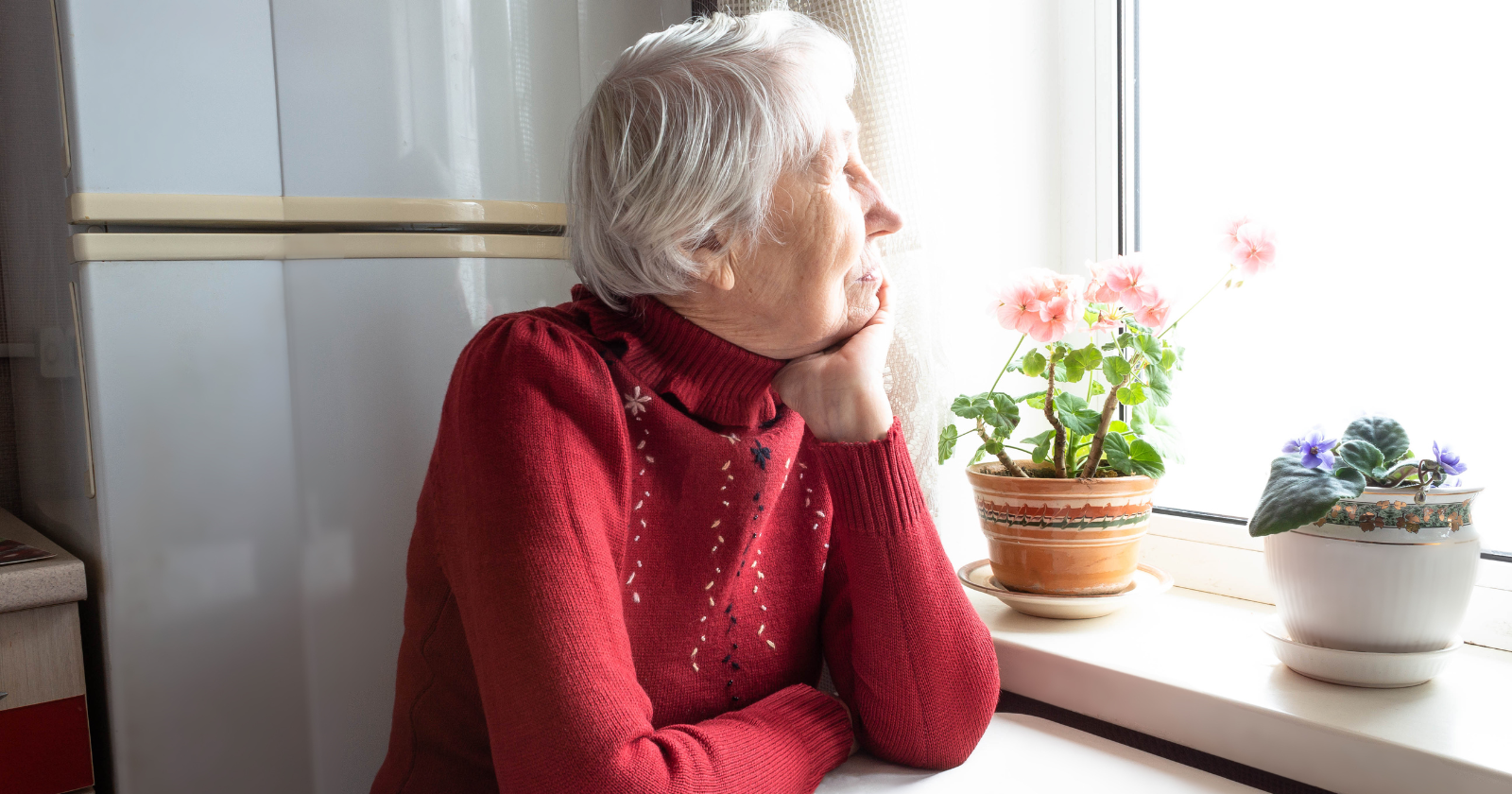
There is a particular person in almost every family. You know the one. They’re the first phone call when something goes wrong. They hold it together at the funeral when everyone else falls apart. They give advice without needing any in return. They fix things, arrange things, absorb things. They never seem to crack.
For decades this role feels like a gift. It makes a person useful, important, the gravitational center of the people around them. It shapes how they understand themselves: I am the one who handles things. I am the one who doesn’t need handling.
What nobody tells them, and what the research is increasingly documenting, is that being the strong one for long enough becomes one of the most reliable pathways to profound loneliness later in life. Not because the strength was wrong, or the love behind it wasn’t real. But because a role built entirely on giving, and never on receiving, leaves a person with no infrastructure for the one thing aging eventually requires: allowing yourself to need something.
The rules built around a lifetime
Strong ones operate by unspoken rules. You don’t complain. You don’t burden. You keep moving. When your own needs surface, you note them and redirect your attention to whoever actually needs help. This isn’t martyrdom, or at least it rarely starts as such. It’s a role that formed early, usually out of genuine necessity, and calcified into identity so gradually that it became invisible. The person stopped noticing they were doing it because it stopped feeling like a choice.
The psychological cost of this accumulates in a way that only becomes legible much later. Research examining emotion suppression and its relationship to loneliness found a significant positive correlation between suppressing emotional expression and experiencing loneliness. People who habitually conceal their inner emotional states, which is the defining skill of the strong one, experience deeper social isolation over time. Not because they are unloved. Because the version of them that other people know is partial. You cannot truly connect with the edited version of a person, and the strong one has often been performing an edited version of themselves for so long that they’ve lost access to the unedited one.
By the time this catches up with someone, the infrastructure that held the role in place is shifting. The children have grown and moved on. The career has ended or is ending. The body is beginning to have opinions about things. And the person is sitting inside a life that was organized entirely around other people’s needs, which means that when those people’s needs diminish or change, there is very little structure left that was ever designed for them.
Why men are particularly vulnerable, but not alone
The dynamic exists across genders, but the research on older men illuminates it with particular clarity. A UK study of community-dwelling men examining how they experience and cope with loneliness found that traditional masculine ideals of strength, stoicism, and self-reliance directly complicated their ability to seek help or even acknowledge their loneliness to others. The stigma attached to needing support and the social expectation that men should be self-sufficient thwarted their attempts to speak about distress. Notably, many of the older men in the study avoided speaking to their adult children about their loneliness because it would contradict their established role as the father figure, the one who held things together.
Think about the full weight of that. Men who had spent their lives being the anchor for their families could not tell their families they were drowning, because doing so would have required abandoning the very identity the relationship was built on. The strong one cannot, without extraordinary courage, become the vulnerable one. The whole system is oriented against it.
Women who occupied this role face a version of the same trap. The mother who was always fine, always coping, always the calm center of a chaotic household. The sister or daughter who handled the logistics of illness and death while others fell apart. These women arrive at later life having given so much for so long that asking for support feels foreign, almost transgressive, like breaking a rule so deeply internalized they’ve forgotten it was ever a rule at all.
The strength that was never supposed to be permanent
Here is the particular cruelty of this pattern: the strength was often exactly what the situation called for. The family needed someone to hold it together. The children needed a stable parent. The crisis needed someone who didn’t panic. The strength was real and it was earned and it genuinely helped. The problem isn’t that it happened. The problem is that it became the entire identity, rather than one mode among many.
Psychologists who study help-seeking behavior have found that men who adhered to ideals of being emotionally stoic and self-reliant were significantly more likely to delay or avoid seeking mental health services, even when experiencing severe distress. This reluctance, which research connects to deeply ingrained social norms rather than personal weakness, means that the loneliness compounds quietly and invisibly for years. Nobody flags it because the strong one doesn’t flag it. The strong one keeps a functioning surface, keeps showing up, keeps answering the phone when needed. The loneliness lives underneath, unnamed.
A University of Bristol study examining older men’s experiences of loneliness noted that many participants struggled to identify anyone they could confide their feelings in, and were reticent about doing so even when such a person existed. Men’s discussions about their loneliness often wavered between social inertia, not knowing what to do, and a kind of forced self-reliance, getting on with it, both positions rooted in the same fundamental discomfort with need. Neither position leads anywhere good.
What loneliness actually does to the body
This is not simply an emotional problem. The US Surgeon General’s 2023 report on the loneliness epidemic made clear that chronic loneliness increases the risk of premature death by nearly 30 percent, with associated increases in stroke, heart disease, depression, and cognitive decline. Those with poor social relationships had a 32% greater risk of stroke and 29% increased risk of heart attack. High levels of loneliness have been linked to a roughly 50% increase in the risk of developing dementia.
These numbers are relevant precisely because the strong one often believes that managing alone is fine. That not needing much is a form of strength. That the loneliness, if they notice it at all, is something to push through. The body, it turns out, does not agree with this framing. The body experiences chronic loneliness as a stressor, activating the same physiological responses as physical danger, sustained over time in a way that wears down immunity, cardiovascular health, and cognitive function. The strength of the strong one, ironically, does not protect them from this. It just prevents them from getting the thing that would.
What the family doesn’t see
From the outside, the strong one often looks fine. This is the mechanism’s most dangerous feature. They’ve been performing fineness for so long that fineness is what the family registers. The adult children check in and hear a steady voice. The siblings assume everything is handled because it has always been handled. Nobody asks the strong one how they’re really doing because the strong one trained everyone, years ago, not to ask.
This isn’t anyone’s fault, exactly. It’s systemic. The family learned to relate to the strong one in the way the strong one taught them to. And the strong one taught them, without meaning to, that they were the person who didn’t need things. Undoing that lesson requires initiative from both sides, and it requires the strong one to do the hardest thing they’ve ever done: be seen as someone who is struggling.
Research consistently shows that perceived social support, the belief that help is available if needed, is one of the strongest buffers against loneliness and its health consequences. But the strong one has spent a lifetime constructing exactly the opposite perception. They’ve built an identity around not needing support, and in doing so, they’ve made it extraordinarily difficult for support to reach them even when it’s available.
The path forward isn’t weakness
If you recognize yourself in this pattern, or someone you love, the first thing to understand is that vulnerability is not the opposite of strength. Psychology research has long established that the capacity to ask for help, to admit need, to let others contribute to your wellbeing, is itself a form of psychological resilience. It takes more courage to say “I’m lonely” than to say “I’m fine.”
The second thing to understand is that this shift doesn’t happen all at once. The strong one doesn’t need to have a dramatic breakdown or a tearful confession. What they need is to begin, in small and manageable ways, letting the edited version of themselves relax. Mentioning that something was hard. Accepting an offer of help without deflecting. Telling someone, even once, that they miss having company.
For family members, the work is equally important. Don’t wait for the strong one to ask. They won’t. They’ve been trained not to, and they’ve trained you not to expect it. Instead, offer specific, low-stakes invitations. Don’t ask “Do you need anything?” because the answer will always be no. Say “I’m coming over Saturday” or “Tell me something that’s been on your mind lately.” Create the opening because the strong one will not create it for themselves.
The loneliness of the strong one is one of the quietest forms of suffering there is. It doesn’t announce itself. It doesn’t make a scene. It lives inside a person who spent their whole life making sure everyone else was okay, and who never built, or was never allowed to build, the equivalent architecture for themselves. Recognizing this pattern is the first step. Acting on that recognition, with gentleness and persistence, is the one that actually changes things.