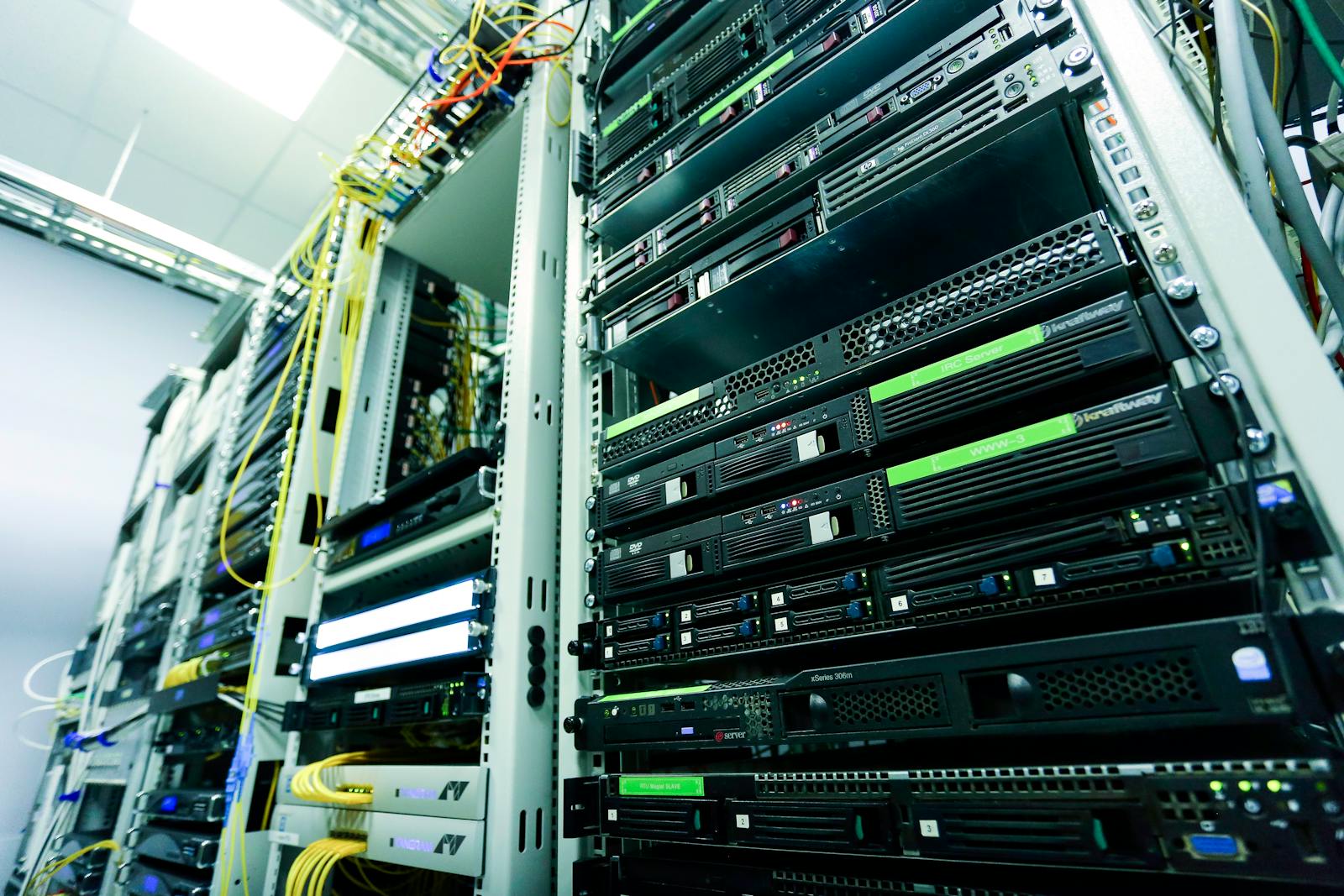
FBI Director Kash Patel confirmed in March 2026 that the bureau had resumed buying access to Americans’ location data from commercial brokers. Reporting on the testimony described how government agencies can purchase commercially available data without using the process required to obtain equivalent information directly from a communications provider. The disclosure shows that important surveillance questions predate the current AI boom. The report underscores an uncomfortable reality: the surveillance infrastructure most privacy advocates fear in the future is substantially operational today, built not from exotic technology but from mundane data aggregation, legal grey zones, and institutional inertia.
What makes this report significant isn’t any single revelation. It’s the framing. The public discourse around surveillance has been hijacked by AI anxiety — fears of facial recognition run amok, predictive policing algorithms, and autonomous monitoring systems. Those fears are legitimate. But they’ve created a blind spot. The FBI’s current capabilities, assembled from commercial data brokers, telecommunications metadata, financial transaction records, and cooperative arrangements with other federal agencies, already constitute a mass surveillance apparatus. AI would make it faster and more automated, yes. But the architecture is already there.
This distinction matters because it changes where the pressure needs to go. Regulating AI in law enforcement is important work. But treating AI as the primary threat lets the existing system — one built from procurement contracts, data-sharing agreements, and deliberately ambiguous legal interpretations — continue operating without scrutiny. The FBI doesn’t need a breakthrough algorithm. It needs a spreadsheet and a subpoena.

The data broker backdoor
The most revealing element of investigative reporting on FBI surveillance is the role commercial data plays in the FBI’s surveillance capabilities. US agencies have purchased commercially available location and other consumer data from private brokers. The precise legal requirements vary by the type of information and method of acquisition, so the original version was too broad in implying that every listed category would otherwise require a warrant.
This isn’t a loophole. It’s the business model. The entire commercial data ecosystem, from apps that harvest location pings to loyalty programs that track purchasing behavior, functions as an outsourced surveillance network. Companies collect data for advertising purposes, then sell it to whoever pays — including government agencies. The legal framework hasn’t caught up because the data was “voluntarily” shared by users who clicked “Accept” on a terms-of-service agreement they never read.
The scale here is staggering. Privacy researchers have noted that the tension between data privacy and surveillance is intensifying precisely because the volume of commercially available personal data has made traditional warrant requirements almost quaint. Why go through a judge when you can go through a vendor?
The DHS amplification effect
The FBI doesn’t operate in isolation. Reporting on DHS procurement plans described planned spending on tracking, AI-enabled analysis and device-extraction tools. When you combine the FBI’s existing database access with DHS’s expanding technical infrastructure, you get something that looks less like targeted law enforcement and more like a distributed monitoring system with no single point of accountability.
This is the pattern that should concern people. No single agency has built a panopticon. Instead, multiple agencies have each built pieces of one — immigration databases, financial surveillance systems, telecommunications intercept capabilities, commercial data repositories — and the seams between those pieces are getting thinner every fiscal year. Interagency data-sharing agreements, often classified or buried in memoranda of understanding, stitch together what no single agency could legally build on its own.
The structural incentive is clear. Each agency can point to its limited mandate. The FBI investigates federal crimes. DHS handles border security and immigration. The NSA does foreign intelligence. But when data flows freely between them, the practical effect is comprehensive domestic surveillance with distributed deniability.
Why the AI fixation is a strategic distraction
There’s an irony in how the AI conversation has unfolded. Some have asked whether AI will “supercharge surveillance” — a reasonable question that nonetheless misses the point recent reporting makes. The surveillance is already supercharged. The fuel isn’t algorithmic. It’s structural.
AI makes excellent theater for congressional hearings and think-tank panels. It’s visible, novel, and easy to campaign against. But the foundational problem — that the Fourth Amendment’s protections against unreasonable search and seizure have been functionally neutralized by the third-party doctrine and commercial data markets — doesn’t require AI to be devastating. It just requires volume. And volume is already here.
When concerns have emerged about technology companies’ relationships with government agencies, the alarm has been about what advanced AI systems could enable. That concern is valid. But it obscures what’s already enabled by systems that are profoundly dumb — queries across linked databases, bulk data purchases, pattern matching that a competent analyst could do with commercial software from 2018.
Focusing exclusively on AI gives legislators and agencies an out. They can propose AI-specific regulations, hold hearings about algorithmic bias, and create oversight bodies for machine learning in law enforcement — all while leaving the underlying data infrastructure completely untouched. The most sophisticated surveillance doesn’t need to be smart. It just needs access.

The physical world isn’t immune
This isn’t only a digital story. The surveillance apparatus is extending into physical infrastructure in ways that further blur the line between monitoring and daily life. Reports indicate that new vehicle safety technologies are being developed that embed monitoring capabilities directly into vehicles. The stated purpose involves safety and impaired-driving detection. The practical effect is another data stream — location, behavior, biometrics — available to government agencies through the same commercial and legal channels the FBI already uses.
The pattern repeats. Technology enters daily life framed as safety or convenience. The data it generates becomes commercially available. Government agencies purchase or subpoena it. Citizens never consented to surveillance, but they consented to a product that happens to enable it.
Privacy organizations have urged lawmakers to think more carefully before going all-in on police surveillance technology, noting the asymmetry between the speed of technology deployment and the pace of policy deliberation. That asymmetry isn’t accidental. It’s the operating principle. Deploy first, debate later, and by the time the debate happens, the infrastructure is entrenched and the data has already been collected.
The global template
The FBI’s approach isn’t uniquely American. It’s a template being replicated — and in some cases, exceeded — around the world. Reports suggest that governments in Southeast Asia, the Middle East, and parts of Africa have built comparable data-aggregation systems, often with fewer legal constraints and less public scrutiny. Commercial spyware vendors sell to anyone who can pay. Telecom metadata is hoarded by authoritarian and democratic governments alike.
What distinguishes the American case is the contradiction between stated values and operational reality. The U.S. positions itself as a champion of digital rights and privacy protections in international forums, while its domestic agencies quietly purchase the same commercial surveillance data that it criticizes other nations for collecting. The gap between rhetoric and practice isn’t hypocrisy in the conventional sense — it’s structural. Different parts of the government operate under different mandates, and the procurement system doesn’t require moral consistency.
For countries in the Global South building their own digital infrastructure, the lesson is instructive but grim. The mere existence of data creates surveillance potential. The commercial incentive to collect it is overwhelming. And the legal frameworks designed to protect citizens were written for a world where surveillance required effort — wiretaps, physical tailing, informants — not a world where it’s the default output of normal economic activity.
What consent actually means now
At the core of this story is a philosophical question masquerading as a legal one. What does it mean to consent to data collection? The third-party doctrine — the legal principle that information voluntarily shared with a third party (a bank, a phone company, an app) loses its Fourth Amendment protection — was established in an era when sharing information with a third party was a deliberate, discrete act. You chose to tell your bank about a transaction. You chose to make a phone call.
Now, sharing data with third parties is a condition of participation in modern life. Your phone broadcasts location data continuously. Your car will soon do the same. Your financial transactions, browsing history, and social connections are captured, packaged, and sold before you finish your morning coffee. “Voluntary” has lost its meaning when the alternative is total withdrawal from the digital economy.
This is what recent investigative reporting is really about, beneath the specifics of FBI capabilities. The entire information architecture of modern life has been built in a way that makes mass surveillance not just possible but trivially easy. AI doesn’t create the problem. It accelerates it. And focusing on acceleration while ignoring the underlying velocity is a category error with real consequences for billions of people worldwide.
What to watch
Three developments will determine whether this story gets better or worse. First, watch the commercial data broker market. The most consequential privacy regulation won’t target AI or law enforcement directly — it will restrict the sale of personal data from brokers to government agencies. If that pipeline stays open, everything else is cosmetic.
Second, watch interagency data-sharing agreements. The most significant expansions of surveillance capability in the next two years will come not from new technology deployments but from new memoranda of understanding between agencies, allowing data collected for one purpose to be used for another. These agreements are rarely public and almost never debated.
Third, watch what happens with mandatory vehicle surveillance technology in the coming years. If location and behavioral data from automobiles enters the commercial data market — and there’s every incentive for it to do so — the physical-world surveillance gap that currently exists will close rapidly. Location data from connected devices can expand what investigators or data purchasers are able to infer, depending on what is collected, retained and legally accessible.
The most effective surveillance systems aren’t the ones that are sophisticated. They’re the ones that are boring — mundane, bureaucratic, embedded in the infrastructure of everyday commerce and quietly expanding while the public debate fixates on the wrong threat. Investigative reporting has named the machine. The question is whether anyone will bother to look at it before AI gives it wings.
Feature image by Sergei Starostin on Pexels