At twenty-five, the fear of an ordinary life often runs louder than any other fear. At sixty, in the accounts of people who have lived long enough to compare the two, ordinariness turns out to have been the thing quietly worth wanting.
Both statements can be true. Neither cancels the other.
This is an observation about how the fear of being ordinary changes shape across a life, not a prescription for how anyone should feel about their own. It draws on developmental psychology, patterns observed in well-being among older adults, and the older cultural pattern of misremembering how straightforward adulthood used to be.
The twenty-five-year-old version of the fear
At twenty-five, ordinariness feels like a verdict. It arrives as the suspicion that the job is fine, the flat is fine, the relationship is fine, and that fine might be the ceiling rather than the floor.
The years from the late teens through the twenties are widely understood as a distinct phase of identity exploration, marked by trying on roles, testing beliefs, and delaying the traditional markers of adult status. The psychologist Jeffrey Arnett, who coined the term “emerging adulthood” to describe this life stage, frames it as a period of self-focus and instability in which people negotiate who they are against what the culture expects of them.
Inside that negotiation, ordinary is the enemy. Ordinary means the exploration stopped too early. Ordinary means the self did not get fully assembled before the door closed.
The fear is not vanity. It is developmental. At twenty-five, the internal question is still who am I becoming, and any answer that looks too much like everyone else feels like a failure of the assignment.
Why the assignment has got harder
Part of what makes the fear sharper now is that the older map has become unreliable. The historian Steven Mintz, writing in Psychology Today, notes that the traditional markers of adulthood have shifted considerably. The average age of first marriage has risen, rates of homeownership among young adults have declined, and many of the stable pathways into adult roles that existed in the postwar period have become less reliable.
Mintz argues that the postwar template of a fast, uniform passage into adulthood was a historical fluke, dependent on particular economic and social conditions that no longer hold. Take away those conditions and the passage lengthens.
He also points out something worth holding onto: a prolonged, anxious transition into adulthood is not new. The specific shape of the fear is new. The fear itself is old.
What the fear is actually protecting against
The fear of being ordinary at twenty-five is often described as ambition. Read against the developmental material, it looks more like a fear of prematurely closing the identity question before enough options have been tried.
There is a related habit worth naming here: preparing for conversations that never happen, rehearsing a future self in private because the current self does not yet feel finished. The twenty-five-year-old rehearses a life the same way. The extraordinary version of that life is the one that seems to justify all the rehearsal.
An ordinary life, by contrast, would mean the rehearsal was for nothing in particular.
That reading is uncomfortable. It is also, on the developmental evidence, closer to what the fear is doing than the ambition reading.
What actually changes by sixty
The relief many older adults describe when they look back is not a claim that ordinariness is objectively better. It is a shift in what the identity question is asking.
By late middle age, the question is no longer who am I becoming but something closer to what do the days I actually have feel like from the inside. The material that answers that question turns out to be small and repeatable: relationships that have held, work that means something to the person doing it, a sense of purpose, and the physical capacity to enjoy any of it.
A study using data from the English Longitudinal Study of Ageing, covered by Medical News Today, looked at middle-aged and older adults in England and how their diet related to positive psychological well-being. The researchers separated well-being into three domains: eudemonic (sense of purpose, positive relationships), affective (positive emotions like happiness), and evaluative (overall life satisfaction).
Higher fruit and vegetable intake was linked to greater eudemonic well-being. Higher fish intake was linked to greater happiness. This is one observational study, not settled consensus, and it cannot establish whether the food produces the well-being or well-being produces the food choices. The authors are direct about that.
What the study is useful for here is smaller than a dietary recommendation. It is a picture of what predicts well-being at that stage of life. The variables that mattered were not extraordinary achievements. They were purpose, relationships, and the ordinary substrate of eating reasonably well.
The extraordinary version of the life is not what shows up in the model.
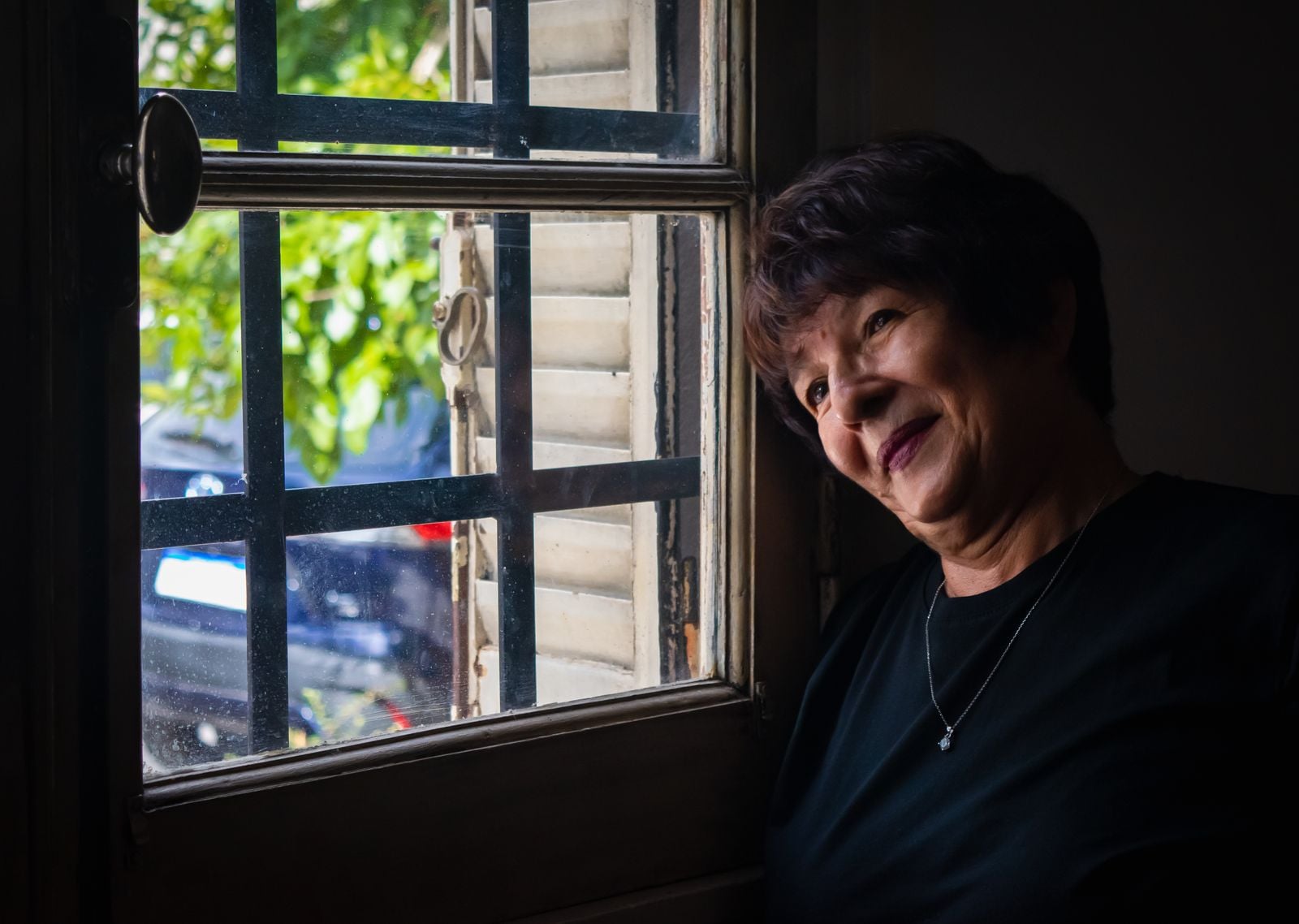
 Photo by Greta Hoffman on Pexels
The relief is not resignation
It is easy to misread the sixty-year-old relief as giving up. It usually is not.
The people who describe being quietly relieved they were ordinary are rarely describing a life without ambition. They are describing a life in which the ambition eventually stopped requiring the ordinary parts to justify themselves. The Tuesday that used to feel like evidence of failure now feels like the point.
The lessons that become harder to ignore with age tend not to be grand ones. Time is finite. People cannot read each other’s minds. A particular Tuesday deserves more attention than a distant, perfect future. None of that reads as ambitious at twenty-five. Most of it reads as obvious at sixty.
The shift is not that the older person has stopped wanting things. It is that the older person has more evidence about which wanting was structural and which was borrowed.
What twenty-five does not have yet
The twenty-five-year-old is not being foolish. The twenty-five-year-old is missing information that only accumulates.
They have not yet watched a peer achieve the extraordinary version of the life and be miserable inside it. They have not yet watched an unglamorous friend build something small and durable and be quietly content. They do not yet have the base rates.
Without base rates, the fear of being ordinary is rational. It is the fear of a bad outcome without any data on how often the bad outcome actually feels bad.
By sixty, the data has arrived. It usually shows that ordinariness, as a category, contained a much wider range of felt experience than the twenty-five-year-old assumed. A great deal of it was fine. Some of it was very good. The extraordinary category, similarly, turned out to be more mixed than advertised.
What the two statements do to each other
Held together, the twenty-five-year-old fear and the sixty-year-old relief are not a contradiction to be resolved. They are the same person at two stages of a long identity project.
The younger self needs the fear because the identity question is still open and any early closure feels like defeat. The older self can afford the relief because the identity question has resolved into something the earlier version could not have accepted as an answer: a life whose shape is ordinary and whose interior is not.
Neither one is wrong about their own moment. They are just answering different questions.
If there is anything to draw from this, it is probably not advice for the twenty-five-year-old to stop being afraid. The fear is doing work. It is closer to a note for the sixty-year-old: the relief is not a betrayal of the earlier ambition. It is what the ambition was, eventually, for.