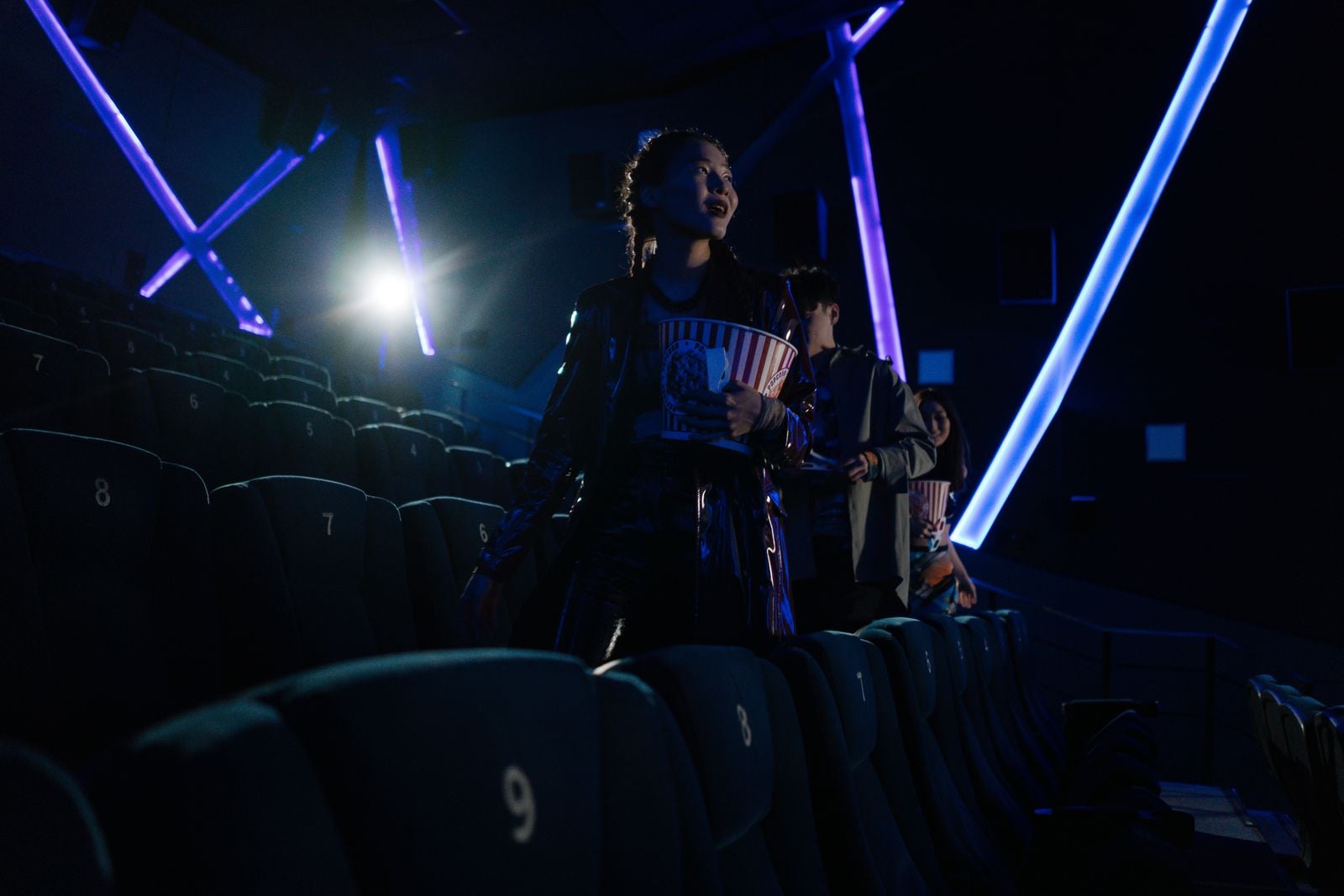
The lab evidence is clear that the human brain’s underlying capacity to concentrate has not measurably declined in the last thirty years. And yet many adults report feeling that their attention span is shorter than it used to be, and most could name the exact moment in a two-hour film when they reached for the phone that was face-down on the sofa cushion. Both things are true at once, and the gap between them is where the interesting question lives.
The instinct is to call this distraction. A buzz, a notification, a bright screen pulling the eye away from a slower one. But the word distraction implies something is being taken from you against your will, and the more honest description is something else entirely: a slow, self-directed erosion of the willingness to stay with anything that does not immediately reward the staying.
What the research actually says about attention capacity
The conventional story is that phones have rewired the brain and shrunk the attention span to something shorter than a goldfish’s. That claim, endlessly recycled, traces back to a 2015 marketing report by Microsoft Canada, not to peer-reviewed neuroscience. The actual research picture is more careful. Large-scale studies of attention performance show no decline in how children score on standardized tasks, and if anything a slight improvement in adult performance over recent decades.
Monica Rosenberg, a psychologist at the University of Chicago, put it plainly to Scientific American: there is a huge disconnect between what people feel is happening to their attention and what is actually happening. The capacity has not gone. The tolerance has.
These are different things, and the difference matters. Capacity is what a brain can do under controlled conditions when there is nothing else on offer. Tolerance is what a person is willing to do when the alternative is a screen glowing in their pocket that promises novelty, social validation, and an end to whatever mild discomfort has settled into the current minute.
The film is the honest test
A film is one of the few remaining experiences in ordinary life that requires roughly two uninterrupted hours of forward attention. It cannot be paused productively. It does not reward skimming. It refuses to hand out little rewards every eight seconds. And it asks, quietly, that you sit with a stretch of screen time that is entirely someone else’s pace.
People who reach for the phone thirty-five minutes in usually explain it as distraction. Something buzzed. A thought arrived. But if you press a little, the honest version is that the film had entered a slower passage, and the slower passage produced a low-grade restlessness that felt intolerable in a way it would not have felt ten years ago.
That restlessness is the interesting datum. It is not a signal that the brain cannot pay attention. It is a signal that the brain has been trained to expect, at short intervals, a shot of something more stimulating than whatever it is currently receiving.
Why the environment changed even if the biology didn’t
Measurements of how long office workers stay on a single screen task before switching have shown a consistent decline over the past two decades. In the mid-2000s, the average was about two and a half minutes. By the 2010s, it had fallen to roughly 75 seconds. By the early 2020s, it was around 47 seconds.
The key finding is not that people are being interrupted more. It is that people are about as likely to interrupt themselves as to be interrupted from outside. When external interruptions decrease, internal ones rise to fill the gap. The habit has moved inward.
If the alternatives available at any moment are highly rewarding, it becomes very hard to focus on something that requires more subjective effort. The competing pulls are not neutral. They are engineered.
Notifications, feeds, and short-form video are designed to deliver bursts of novelty, social confirmation, and small emotional payoffs at exactly the frequency that trains a nervous system to expect them. The brain learns, quickly, that stimulation of a certain intensity is always available. Anything below that intensity begins to feel like waiting.
The tolerance loss, described honestly
What has quietly gone is not concentration. It is tolerance. Tolerance for slowness. Tolerance for the middle third of a film, where the plot has been set up but not yet resolved. Tolerance for a long paragraph in a novel that does not immediately declare its purpose. Tolerance for a conversation with someone whose sentences do not arrive with the compression of a caption.
People who used to read a novel through in a weekend now report reading four pages and reaching for the phone. The eyes work. The brain works. Something in between has changed, and it is not neurological in the sense of damaged tissue. It is habitual in the sense of a nervous system that has learned a new baseline for what a minute is supposed to feel like.
This is worth naming precisely, because the moral panic version of the story assumes something has been broken. What has actually happened is closer to a recalibration. The floor for what counts as engaging has risen, and everything that used to sit comfortably above that floor now sits below it.
The cost is not obvious in the moment
The tricky thing about tolerance loss is that it is invisible during the loss. Each individual glance at the phone during a film feels harmless. It is the aggregation that shows up somewhere else, later.
Frequent switching between tasks carries a measurable cognitive cost. People make more errors. Tasks take longer. Stress rises. And the deeper faculties, the ones that require sustained attention to activate, get less exercise. Reflection, deliberation, and working memory all rely on being held in one place long enough to do their work. Fragmented attention starves them.
The ability to control attention is linked to structural differences in grey matter in regions of the frontal cortex. This capacity, like a muscle, may need to be used to be maintained. Exercise it, and it stays. Don’t, and it may shrink.
None of this proves that phone use is degrading the brain. What it does suggest is that a person who has stopped practising sustained attention is, in the most literal sense, out of practice.
Why films in particular expose it
Some experiences reward fragmented attention. Scrolling. Grazing an inbox. Half-listening to a podcast while doing something else. These accommodate the new tolerance level fine.
Films do not. Neither do concerts, long walks without music, sit-down meals with one other person, or the kind of book that requires you to hold a character’s earlier decision in mind while you read their later one. These experiences ask for the older kind of attention, the kind that functions as a habit rather than a biological capacity. The habit is the thing that has changed, and the more hopeful implication is that habits are reversible.
You notice the loss most acutely in the experiences that refuse to compress. A film is honest in a way a feed is not. It will not shorten itself for you. It sits there, at its own pace, and either you can stay with it or you cannot, and the phone in your hand is a fairly reliable indicator of which.
When it isn’t only habit
There is another layer to this, one that gets left out of most attention-span coverage. For some people, the inability to sit still through anything slow is not only about training. It sits on top of a restlessness that is already there before the film starts.
For someone who arrives at the sofa already keyed up, a slow scene is not neutral. It is an opening, and an uneasy mind tends to fill an opening with whatever is closest to hand. The phone is not really being used to check anything. It is being used to bring a restless, unsettled feeling back down to something familiar.
This does not contradict the tolerance-loss argument. It complicates it. For some people the phone is a habit picked up from an environment. For others it is a way of settling themselves that happens to have latched onto the same device. Either way, the behaviour, and the underlying erosion of sustained attention, look the same from the outside.
What actually helps
The advice in most articles on this subject tends toward the mechanical: turn off notifications, put the phone in another room, use an app that blocks other apps. These help. They also miss the harder point, which is that the tolerance itself has to be rebuilt, and rebuilding tolerance requires spending time on the wrong side of comfort.
Practices that deliberately train sustained focus, including simple breath-based attention exercises, work because they ask the mind to stay with something unrewarding on purpose, and to notice, without punishment, when it drifts. The drift is not the failure. The noticing is the practice. Over time, the interval between drifts lengthens.
The design of social platforms and increasingly of AI-driven feeds is moving in the opposite direction, toward interactions calibrated to keep the user engaged in ever shorter cycles. The individual solution and the environmental problem are not the same size, and pretending otherwise sets people up to blame themselves for a nervous system that has been trained, quite effectively, by systems more powerful than their willpower.
The quiet grief in the recognition
The thing worth sitting with, at the end of all this, is not the neuroscience. It is the small private admission that a certain kind of attention used to feel like the baseline of being a person, and now it feels like an achievement.
Being able to sit through a two-hour film without reaching for a phone is not a superpower. It used to be the default. The fact that it now requires deliberate effort is not a moral failure, but it is a change, and it is fair to name the loss as a loss rather than dressing it up as multitasking or efficiency.
The good news, if there is any, is what the lab data keeps showing. The underlying machinery still works. The capacity has not gone. What has gone is the willingness, and willingness can be practised back into place, slowly, one uninterrupted stretch at a time. Not with a wooden helmet. Just with the small, quiet decision to leave the phone on the other side of the room, and to let the middle third of the film be as slow as it wants to be.