

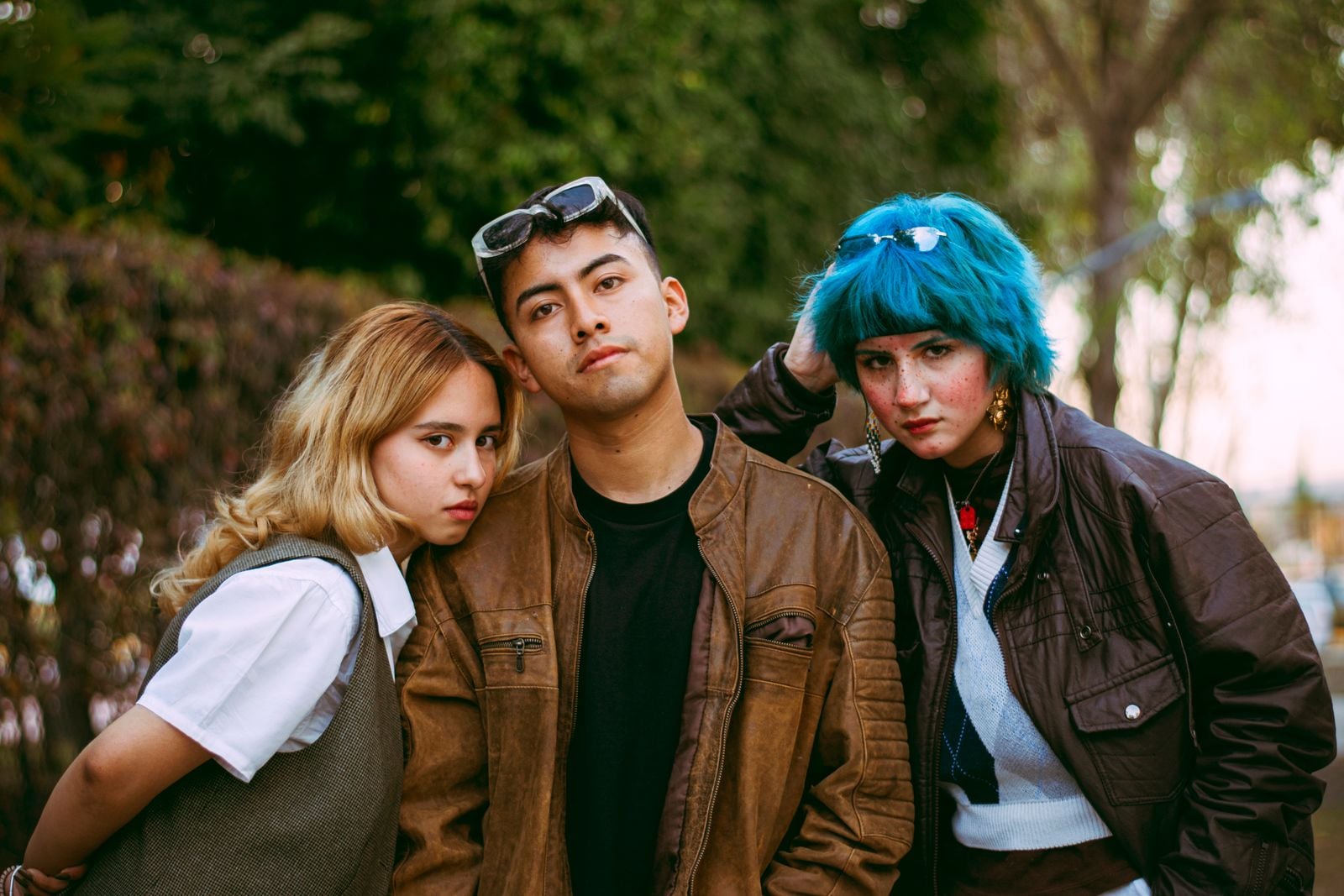
At almost every gathering, there is a small cluster of people who drift toward the back when a phone comes out. They don’t refuse the picture. They just go still, arrange their face into something approximating pleasantness, and wait for the moment to be over.
To anyone holding the camera, this looks like shyness. It rarely is.
What’s usually happening is quieter and more principled. The person being photographed has noticed that the instruction to smile or look happy is asking their face to move faster than their feelings can catch up. And they’d rather not put a lie into an image that might outlive the afternoon.
The gap between the cue and the feeling
Emotions are slow. Not by much, but by enough. A joke lands and the amusement takes a second or two to build. A reunion registers as warmth only after the first awkward seconds of standing near someone you haven’t seen in a year.
A photograph asks for none of that lag. It wants the peak expression on demand, held for the count of three, repeated if the first attempt didn’t take.
For a lot of people, that request is fine. They have a socially rehearsed smile ready to go, and they don’t feel any particular tension between what their face is doing and what they’re actually feeling in that half-second.
For others, the gap is loud. The instruction produces a small internal snag: the face is being asked to advertise a state the body hasn’t arrived at yet. Complying feels like counterfeiting.
Why the snag is real, not fussy
There’s a psychological principle about the discomfort of holding two things that don’t line up. Cognitive dissonance is the aversive state that shows up when your behaviour and your inner cognition point in different directions, and the mind works hard to reduce it — through attitude change, trivialising the mismatch, or quietly avoiding the situation that caused it. A recent synthesis in Nature’s index of the field notes that dissonance also emerges in anticipation of a choice, not only after it. The wince you feel a beat before the phone clicks is that anticipation doing its job.
The photograph, then, is not neutral. It is a small choice: perform a feeling you don’t have, or stand there honestly and look, to the group, like you’re being difficult.
Most people take the performance. It’s easier. It gets everyone home.
But some people, having taken the performance a hundred times, start to notice something they can’t unsee. The picture that comes back doesn’t look like them. It looks like a version of them that agreed to be someone else for a second.
Not the same as being camera-shy
It’s worth separating this from social anxiety, which is a distinct and clinical thing. Social anxiety is an intense fear of being judged, negatively evaluated, or rejected in social or performance situations, and it can trigger racing heart, breathlessness, and the urge to leave the room. Many American adults live with social anxiety disorder, and for them a group photo can be genuinely difficult in a way that has nothing to do with philosophical objections to performed smiles.
The people this article is about are different. They can pose. They just don’t want to pose falsely. The resistance isn’t fear of the lens. It’s a small, private ethics about what their face is for.
Sometimes the two overlap. Someone can be introverted, mildly anxious in crowds, and unwilling to fake a feeling. But the quietness during group photos is often the third thing, not the first two.
Why images feel different from moments
A moment passes. A photograph doesn’t.
That’s the crux of it. A forced laugh at a dinner table dissolves into the next sentence. A forced smile in a photograph gets uploaded, printed, framed, and looked at ten years later by someone trying to remember what the day was like.
People who go quiet during group photos have usually noticed, at some point, that they can’t tell from an old picture whether they were actually happy that day or just did what they were told with their mouth. The image has erased the difference.
That erasure bothers them. Not the photograph itself — the falsification of memory the photograph makes possible.
The strange freedom of unposed pictures
There’s a reason candid photos tend to land harder than posed ones. In a candid, the face is doing whatever it was actually doing. The smile, if there is one, arrived on its own. The picture is a record of a real second, not a staged approximation of one.
The way people see themselves in images often shifts when the frame captures something genuine rather than something performed. Genuine moments produce genuine expressions — the kind that feel true when you look back at them years later.
That’s the kind of image the quiet-in-photos person is holding out for, whether they’d articulate it that way or not. Not a better smile. A truer one.
The instruction is the problem
Notice how much of the resistance disappears when nobody says anything. Hand someone a camera at a party without announcement, and the people who usually retreat during group shots often don’t. They’re mid-conversation. Their face is already doing something. The picture catches them being themselves.
The trouble starts with the verbal cue. Everybody smile. Look happy. One more, big smiles.
Those phrases don’t request a photograph. They request a facial expression, on a deadline, for public display. And they treat the expression as separable from any actual feeling, which for some people is precisely the thing that makes complying feel dishonest.
The photographer isn’t wrong to ask. The person going quiet isn’t wrong to bristle. They just have different definitions of what a photograph is of.
What the quiet ones are actually doing
Watch closely and you’ll see it isn’t withdrawal. It’s calibration.
They’re trying to find, in the two seconds before the shutter, something real to bring to their face. A memory of something funny that happened earlier. Genuine affection for the person next to them. The pleasure of the weather. Something — anything — that will make the expression they produce match a feeling they actually have.
Sometimes they find it, and the picture is fine. Sometimes they don’t, and the picture shows a slightly absent person standing in a row of grinning ones. That’s the picture that gets described later as you look weird in this, why didn’t you smile.
The honest answer, if they gave it, would be: the feeling didn’t arrive in time, and I didn’t want to fake it.
Why this reads as coldness to everyone else
Group photographs are a social ritual. They confirm that everyone was there, that everyone was pleased to be there, and that the event was a success. The smile is less about the person’s inner state than about the group’s collective narrative.
Refusing to fully participate in that ritual, even mildly, reads as refusing the narrative. It looks like you’re saying the day wasn’t good, or that the people weren’t loved, or that the celebration didn’t count.
None of which is what the quiet person means. They usually love the day and the people fine. They just don’t want to sign their name to a specific claim about their face that isn’t quite true.
That distinction is almost impossible to explain in the ninety seconds before the picture is taken. So it doesn’t get explained. It gets misread.
The long half-life of a single image
Here’s the part that makes the whole thing feel high-stakes rather than fussy. Photographs now travel. They get posted, tagged, resurfaced by algorithms years later, used in memorial slideshows, printed onto cards.
A performed smile at a specific dinner in 2019 can end up representing an entire era of someone’s life. If the smile was hollow at the moment it was taken, that hollowness compounds every time the image is used to stand in for something real.
People who go quiet during group photos are, in a small way, protecting themselves from that compounding. They’d rather appear slightly off in one image than let a fake smile become the shorthand for a year they actually felt complicated about.
What to do if you’re the one holding the camera
Stop announcing the shot. Take it when the conversation is already good.
Take more than one, without narrating each attempt. The person who couldn’t produce a smile on cue at frame one will often be laughing genuinely by frame four, at something someone said between the clicks.
And accept that some faces just don’t perform on demand. That isn’t a flaw in the person. It’s information about what their face is doing when it’s telling the truth.
What to do if you’re the one going quiet
Nothing, really. The instinct is reasonable. The picture will be what it is.
Anne Lamott has a line, that almost everything will work again if you unplug it for a few minutes, including you. The face that can’t produce a smile on demand isn’t broken. It’s just been asked to switch on faster than it switches on. Give it the beat it needs. If the beat doesn’t come in time for the photo, that’s fine.
The people who love you already know what your real smile looks like. They’ve seen it in the moments nobody thought to photograph.
Those are the images the mind keeps anyway.
