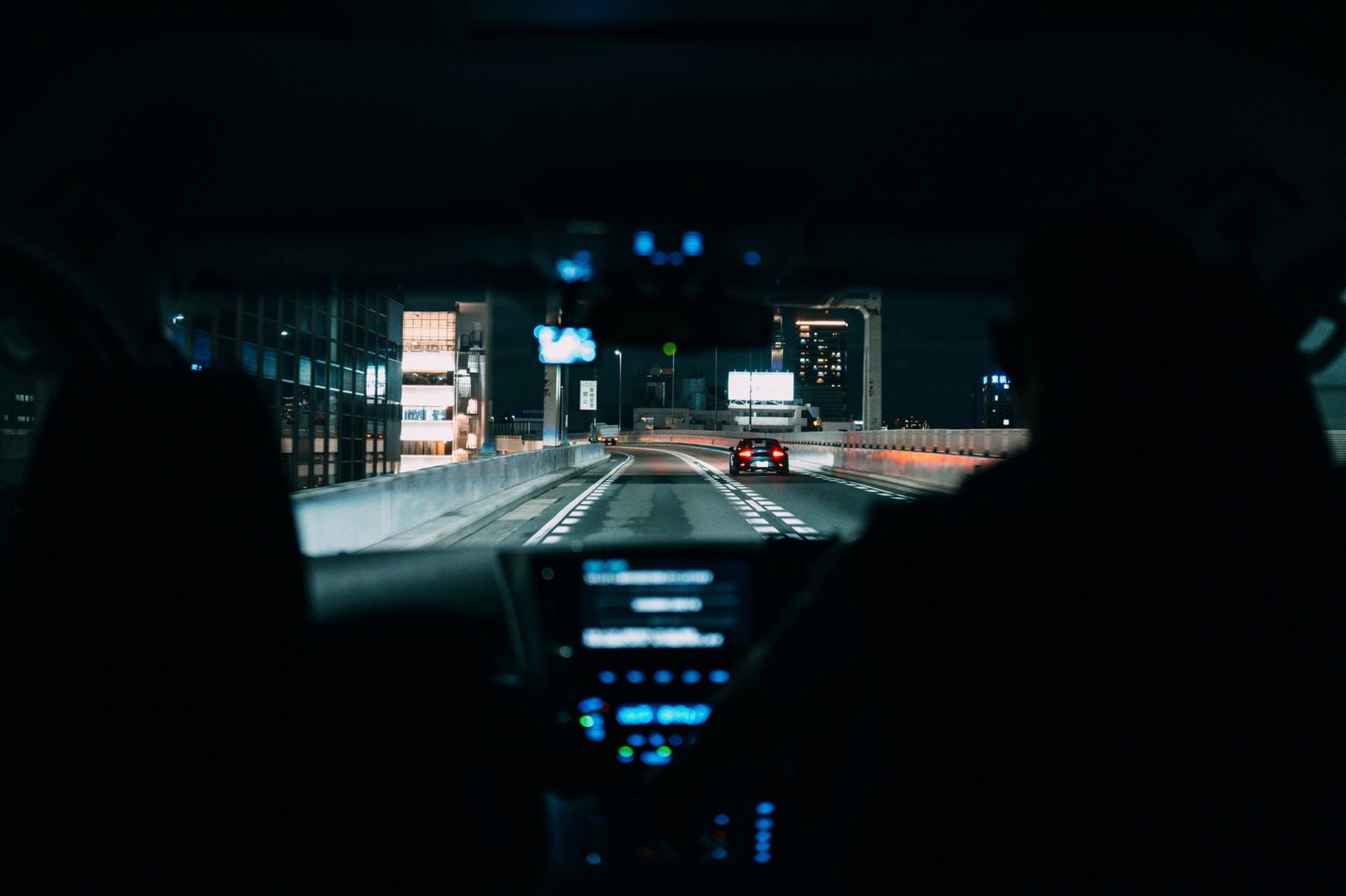
The journey home can be one of the last relatively unstructured spaces in a working adult’s day. For some people, no colleague needs an answer, no household task has begun, and no social role requires immediate attention.
That is why even on particularly tiring evenings, some people take the longer route. The detour may look inefficient from the outside, but it can function as a deliberate pause between one demanding part of the day and the next.
Conventional wisdom says an exhausted person should get home as quickly as possible. Research on boundaries and chosen solitude offers another possibility: a short period of separation may help someone arrive home feeling less mentally entangled with work.
The commute as a third place
Work and home are usually treated as the two main territories of adult life. The journey between them can become a temporary third space where a person is not yet performing either role.
For many commuters, the car, train carriage, bicycle route, or walk from the station provides a physical boundary that the working day itself no longer supplies. It is an enclosed stretch of time in which the person is moving somewhere, but has not yet been asked to become anyone else.
Research into work-family boundary management dynamics distinguishes between segmentation, which keeps professional and personal roles relatively separate, and integration, which allows them to overlap. Neither approach is automatically superior, but effective boundaries can support psychological detachment, recovery, and a stronger sense of control over where work ends.
A longer route can serve as a small segmentation ritual. It creates a visible gap between closing the laptop and opening the front door.
What the mind does during familiar routines
Familiar activities can sometimes leave small pockets of mental space, provided the person remains attentive to what they are doing. Walking, showering, washing dishes, and driving a familiar route can all allow thoughts to surface without requiring someone to sit down and deliberately analyse the day.
This does not mean attention should drift away from the road. It means that during ordinary, low-intensity moments, thoughts can move more freely than they do during a meeting, a conversation, or a task filled with notifications.
An analysis of 2025 mind-wandering research notes that people may spend up to half their waking hours in this semi-dreamlike state. The study it discusses found that spontaneous mind-wandering could improve probabilistic learning and the ability to detect hidden patterns, even while reducing performance on the immediate visuomotor task.
That finding does not prove that a longer commute processes emotions or solves personal problems. It does, however, help explain why an undemanding stretch of time can allow connections to appear that were harder to notice during the crowded part of the day.
The particular weight of a working adult’s day
Pandemic-era research into solitude found that working adults were especially likely to describe worsening mood and poorer well-being when their normal routines collapsed. The finding challenged the assumption that adults in midlife would automatically adjust more easily than younger or older groups.
The same study, summarised in an article about the benefits and drawbacks of solitude, found an important difference between chosen and imposed time alone. Participants who experienced solitude as self-directed described greater autonomy, competence, efficacy, and self-reliance, while prolonged isolation could also produce loneliness and alienation.
The long way home is not the same as pandemic isolation, and the research did not study scenic commutes. The relevant connection is choice: a person may experience fifteen voluntary minutes alone very differently from fifteen minutes of unwanted delay.
Why tired evenings may matter most
The instinct to skip a detour when exhausted is understandable. Yet the hardest evenings may also be the ones on which a clear transition is most useful.
The extra drive is not necessarily a reward reserved for successful days. For some people, it is a buffer that allows frustration to settle before they enter another environment where patience and attention will be required.
People in emotionally demanding jobs often spend much of the day responding to other people’s needs. Teachers, nurses, managers, carers, hospitality workers, and parents may reach the end of a shift without having had a private moment in which no one expects reassurance, instruction, or composure.
A car or solitary walk can briefly become that private room. A difficult feeling can surface without immediately becoming part of another conversation, although the person’s attention must still remain on the road and surroundings.
Without some form of transition, a person may arrive home while still mentally carrying the workplace. The people waiting there then meet the version of them that has had no opportunity to change pace.
The people who build transition rituals
Many adults quietly construct small rituals around the need for time that is not claimed by a job, household, or relationship. They may sit in a parked car for several minutes, walk around the block before going inside, listen to one final song, or stop briefly at a familiar place.
These behaviours can look unnecessary when measured only in minutes. Their value lies in marking the end of one role before the next one begins.
The ritual itself does not need to be profound. Repetition is often what gives it meaning, because the mind learns that a particular road, song, or walk signals that work is finished.
The problem created by remote work
Remote and hybrid work made the importance of transitions easier to see. When the office is also the kitchen table or spare bedroom, there may be no train ride, walk, or physical threshold separating professional time from personal time.
During the pandemic, workers experimented with new boundary practices, including changing technology settings, renegotiating availability, relocating work equipment, and physically leaving the house at the beginning or end of the day. Some remote workers began using short walks as artificial commutes, not because they needed to travel, but because they needed a visible beginning and ending.
This does not make every commute beneficial. Long, expensive, or unreliable journeys can create genuine stress, but the complete removal of travel also revealed that a manageable commute sometimes performed psychological work that had previously gone unnoticed.
The identity that exists in transit
There can be a version of a person that appears only while they are travelling between roles. It is not the professional version, the parent, the partner, or the colleague, but simply the person choosing the music and deciding which road to take.
When every hour is assigned to a responsibility, that unperformed version of the self receives very little time. The other roles can then begin to feel heavier because nothing interrupts them.
A previous Silicon Canals article about unhappy men in midlife examined a related pattern. The problem was not always an absence of achievement, but the absence of any part of the day that felt self-directed rather than attached to a role.
The long way home can become a small resistance to that condition. It is a modest decision that says the fastest route is not always the only useful one.
Why people hesitate to admit it
People often describe these behaviours apologetically because they appear unproductive. Taking twenty minutes to complete a journey that could take ten can sound wasteful in a culture that treats efficiency as an unquestioned good.
Yet chosen solitude can support feelings of autonomy, competence, and self-reliance. Those qualities are not proof that every detour improves well-being, but they help explain why voluntarily protected time can feel restorative rather than empty.
The person taking the longer road may simply be creating a small stretch of unclaimed time. In a day divided among deadlines, messages, errands, and other people’s expectations, that choice can carry more weight than its duration suggests.
The economics of a fifteen-minute detour
Fifteen extra minutes on five working days per week adds up to about sixty-five hours over a year. That is a meaningful amount of time, although it is spread across hundreds of brief transitions rather than taken in one block.
Whether that exchange is worthwhile depends on the person, the route, the cost, and the safety of the journey. For someone who arrives home more patient and present after a short decompression period, the calculation may still feel reasonable.
The people who take the long way home are not necessarily wasting time. They may have noticed that a life in which every minute is allocated can leave very little space that feels personally chosen.
The road itself is not special. What matters is that for a few minutes, nobody is waiting for an answer, and the person travelling home has not yet been asked to become their next role.