

Crouch down in the understory at Pando and the story is in the soil. Aspen suckers, finger-thin and pale, push up from the root mass and are immediately bitten off at ankle height. Then the next one. Then the next one. The cropped stubs are everywhere, a graveyard of attempts under a canopy of trunks that are themselves growing old.
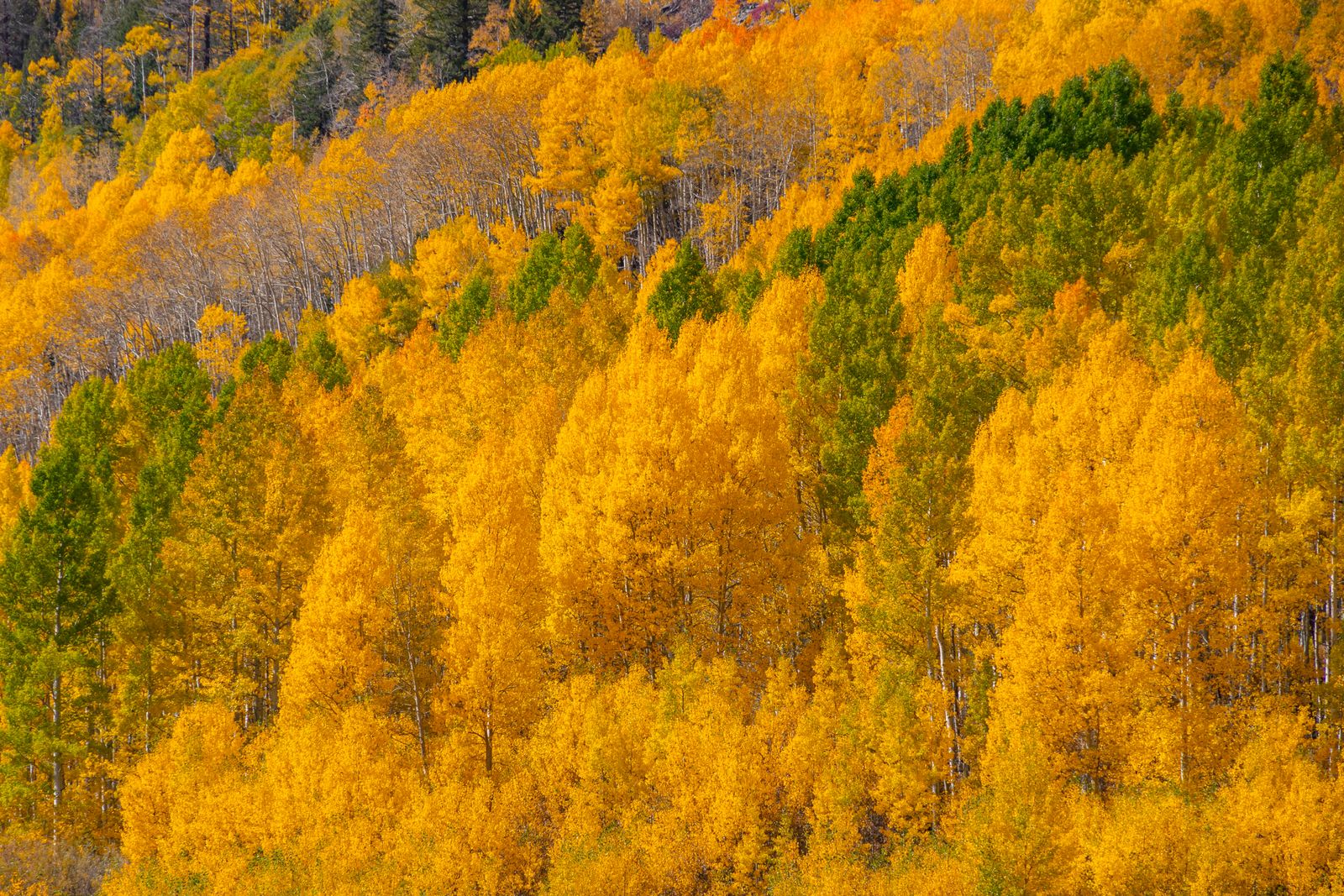
The canopy belongs to a single organism. On a ridge above Fish Lake in south-central Utah, a quaking aspen has been alive, by some estimates, since the end of the last ice age. It covers 106 acres and weighs roughly 6,000 tons. Above ground, it looks like a forest: about 47,000 trunks, each one shimmering pale green in summer and going gold in October. Below ground, every one of those trunks is connected to the same root system, sharing the same genome, behaving as a single male organism.
Its name is Pando, Latin for “I spread,” and it is now being chewed, stem by stem, into oblivion by mule deer.
One tree, 47,000 trunks
Pando is a clonal colony. Each visible tree, a ramet, is a genetically identical shoot rising from a single shared root mass, the genet. The whole thing reproduces through root suckering, sending vertical stems up from lateral roots that snake just beneath the soil. Quaking aspen (Populus tremuloides) use this strategy across boreal and temperate North America, but Pando is the extreme case. Its individual stems live for roughly 130 years. The organism beneath them has been at it, possibly, since woolly mammoths still walked the continent.
The 14,000-year figure is a high-end estimate. Other researchers put the colony’s age in the range of several thousand years. Either way, the trunks visible today are great-great-great-grandchildren of trunks that grew when the pyramids were being built.
The math of a 6,000-ton plant
Pando sits in the Fishlake National Forest, about 200 miles south of Salt Lake City, in a place where the Wasatch Plateau meets the high desert. Its 106 acres is roughly the footprint of 80 American football fields. Its 6,000-ton mass, measured by combining the weight of every stem with the estimated biomass of the root network, is heavier than 30 blue whales. By total weight, it is among the most massive single living organisms ever documented, edged out in some accounting by certain fungal mats but unmatched among plants.
The individual trees are not impressive on their own. A mature Pando trunk is perhaps 80 feet tall and a foot or two across. Modest by aspen standards, ordinary by forest standards. What’s extraordinary is what they share. Cut into the bark of any of them and the cambium reads as the same individual. Genetic sequencing confirmed it: one genome, one sex, one continuous living thing.
How a forest decides it is one organism
Aspen are unusual among large trees because they hedge their reproductive bets. They produce wind-dispersed seeds, but seedling establishment is rare and demanding. It generally requires bare mineral soil, steady moisture, and an opening in the canopy. So most of the work is done underground. When a stem dies, the root system simply pushes up another. When fire sweeps through and kills the visible forest, the roots survive the burn and respond by sending up thousands of fresh shoots within a single growing season.
That is how Pando has held its ground for millennia. Aspen dynamics are tightly linked to disturbance regimes (fire, drought, and herbivory) that reset stand structure and trigger rapid sucker emergence. Each disturbance is, for the genet, a kind of pruning. The roots store carbohydrates. The above-ground forest regrows. The organism continues.
The deer problem
The disturbance regime is the problem now. For Pando to persist, it needs new stems to keep replacing old ones. Walk the grove today and the math doesn’t work. The mature trunks are still there, some of them already past the back end of their natural lifespan. But the suckers, the fresh young shoots the roots keep sending up, are being eaten the moment they break the surface.
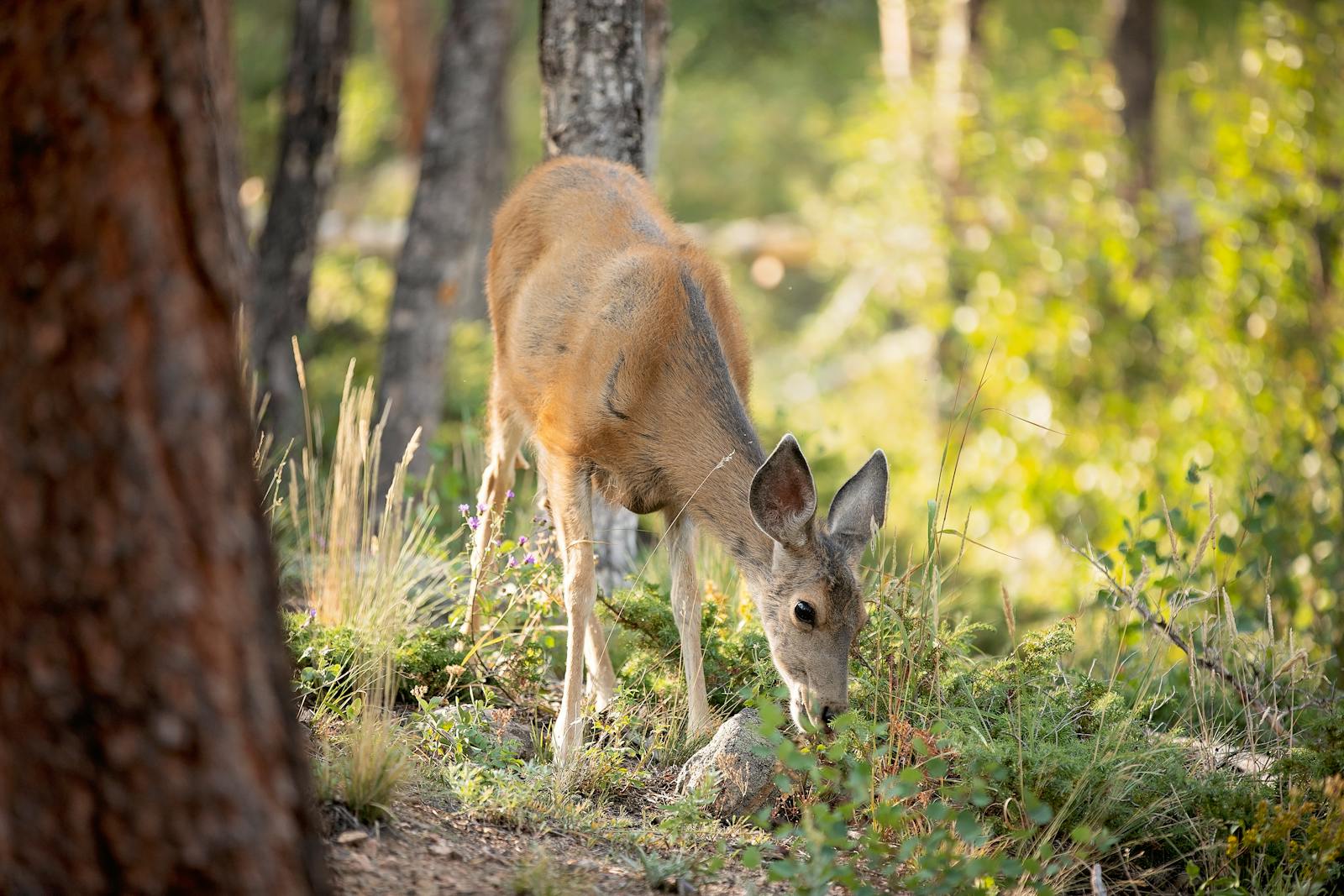
The culprits are mule deer, with a smaller assist from cattle. In the absence of wolves and mountain lions, which have been largely removed from the Fishlake region over the past century, deer populations have grown and concentrated. Aspen suckers are exactly what they want to eat: tender, protein-rich, available in spring when other forage is sparse.
Over decades, this means the canopy gets older and older with nothing behind it. Long-term surveys of the colony describe a forest that is, demographically, collapsing from below. The roots are still alive. The roots may be capable of pushing up shoots for centuries more. But if every shoot dies in its first year, the visible Pando eventually goes with the last mature stem.
What fences reveal
Parts of the colony have been fenced. Inside the fence, where deer can’t reach, young aspen shoot up in dense, shoulder-high thickets within a few seasons. Outside the fence, the ground is open, the understory grazed flat, the floor pocked with cropped stubs of would-be trees. The contrast is so sharp it functions as an accidental experiment: the root system is fine. The browsing pressure is the variable.
The fences themselves are imperfect. Sections have failed. Deer find ways through. Some enclosures protect the suckers but exclude the fire and openness aspen also need. Managers have tried prescribed burns, selective removal of conifers that are slowly encroaching on the colony’s edges, and culling deer. None of it has yet restored healthy recruitment across the full 106 acres.
A herbivore story playing out everywhere
Pando’s predicament is a sharp local example of a global pattern. When large predators are removed, mid-sized herbivores expand. When mid-sized herbivores expand without check, regeneration of long-lived plants stalls. The aspen of Utah and the oaks of New England and the broadleaf forests of central Europe are all running variants of the same story.
Work published in Nature Plants in May 2025 makes the inverse case in Europe: forests there have lost the open, light-rich character that millions of years of bison, elk, and wild horses once maintained. The analysis of 917 native forest plant species across central and western Europe found that more than 80 percent prefer high-light conditions, conditions historically produced by large grazers. According to the study, when large herbivores disappear from an ecosystem, forests tend to become denser and more closed in. The study found that many light-demanding plants struggle to survive in these denser, closed forest conditions.
The European problem is too few herbivores. The Utah problem is too many of one kind, with the predators gone. Both fit into a broader picture of large-herbivore communities being reshaped over deep time, with knock-on effects that ripple into every layer of the plants beneath them. Pando, in this sense, is not a freak case. It is a 14,000-year-old organism caught in a regulatory failure of its own food web.
What dying slowly looks like
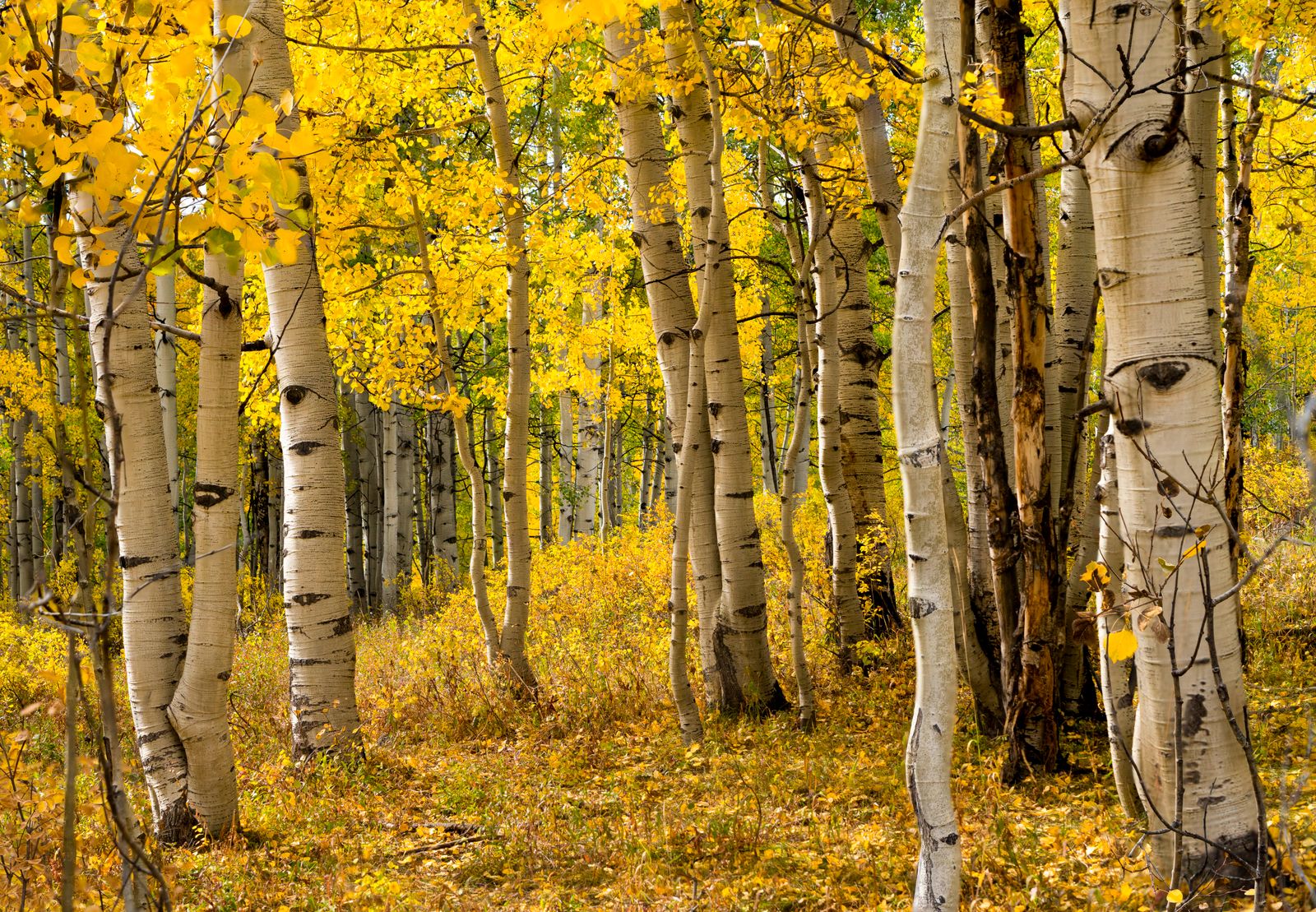
Walking through Pando in mid-summer, you wouldn’t immediately know any of this. The leaves still flutter on their flattened stalks. That trembling gives the species its name, caused by a petiole shaped to catch the slightest air movement. The bark is still chalk-white, marked with the dark eye-shaped scars where lower branches once attached. Wind through an aspen grove sounds like rain falling on a tin roof.
But the floor tells the other story. Where you’d expect a thicket of young saplings competing for light, there is grass and bare soil and the cropped, bonsai-like remnants of stems that tried. The age structure is inverted. A healthy aspen clone looks like a mixed-age city: seedlings, teenagers, adults, elders. Pando looks like a retirement community.
Carbon, water, and the long memory of roots
The root system itself, which no one has fully mapped, is the part of Pando that has actually lived the millennia. The visible trunks turn over constantly. The roots persist, storing carbon, moving water, integrating decades of climate signal into a single organism’s physiology. Light availability at the seedling stage is one of the principal drivers of forest regeneration, and Pando’s roots have been reading the canopy gaps above them for longer than human agriculture has existed.
That deep memory is also what makes the current crisis difficult to reverse. The root mass can keep pushing up shoots. It cannot make the deer stop eating them. And it cannot, on its own, replace the wolves that once kept the deer moving.
A forest that is a single sentence
Most living things have a clear edge. A blue whale ends where its skin ends. A redwood ends at the cambium of its single trunk. Pando is harder to bound. If you stand at the western edge and walk east for a quarter mile, you do not leave the organism. The trunks around you are the same individual as the trunks behind you. The mycorrhizal fungi binding the roots, the squirrels nesting in the canopy, the deer eating the suckers: all of it is happening on the body of one plant.
What happens next is genuinely unsettled. The fences could be extended across the full 106 acres, which would mean turning a wild colony into something closer to a managed enclosure, a 14,000-year-old organism kept alive behind wire. The deer herd could be cut down, which would mean a sustained kill program in a national forest that draws hunters and tourists in roughly equal numbers. Wolves could return, which is its own decades-long political fight. Or none of it happens at scale, the mature stems keep aging, and the visible Pando winds down while the roots wait underground for conditions that may not come back.
The 14,000 years is an estimate, possibly wrong by orders of magnitude in either direction. The 6,000 tons is a calculation, not a weighing. The 106 acres is the only number anyone has measured directly. The harder number is how much trouble a single organism has to be in before the people standing inside it decide what it is worth.
