

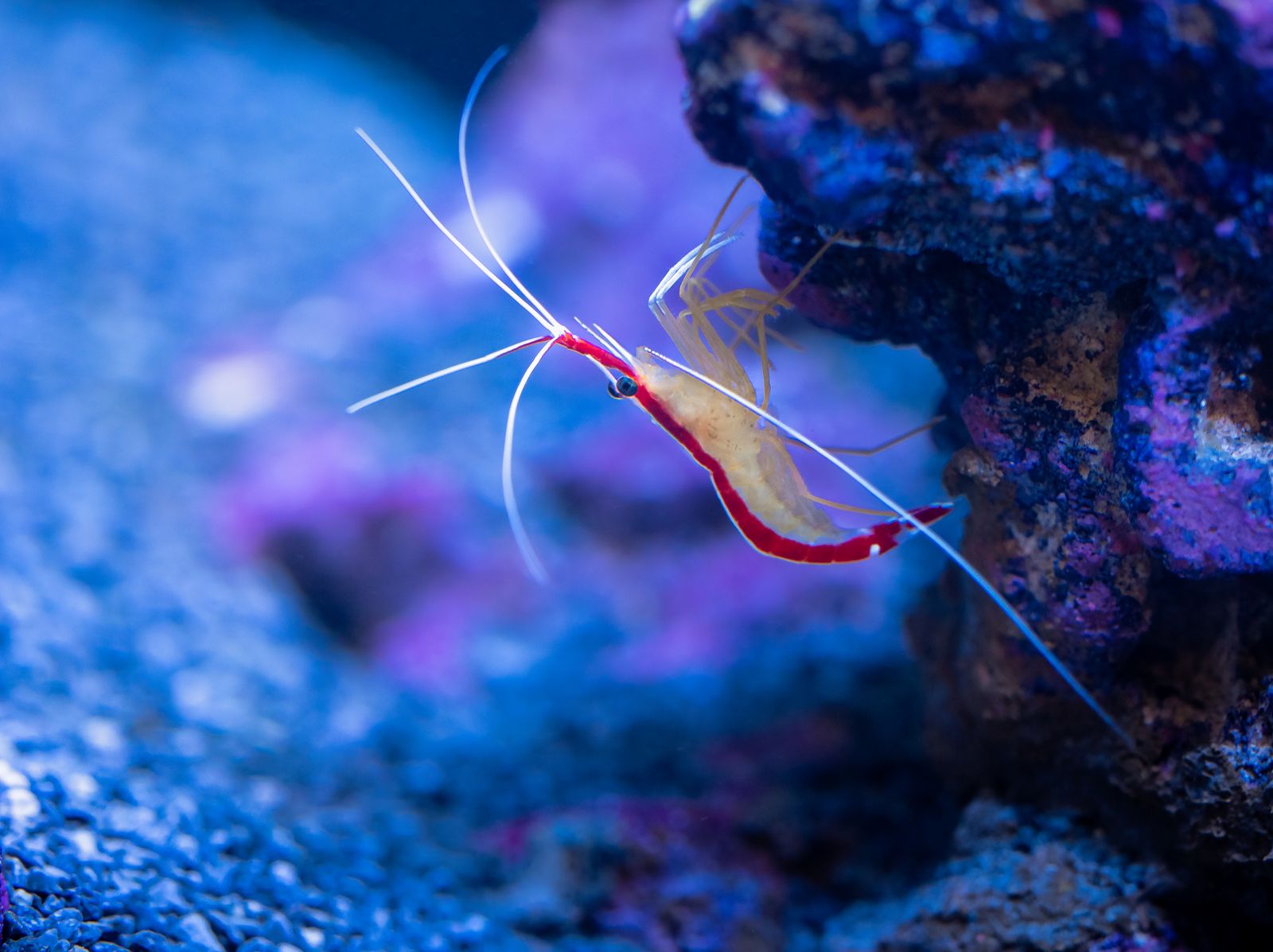
A snapping shrimp’s enlarged claw drives a fast jet of water that creates a cavitation bubble. The bubble’s collapse produces a pressure pulse, a sharp sound and, under suitable conditions, a tiny flash of light.
The weapon is the shock wave
A 2017 study of the physical mechanism describes cavitation and shock-wave generation. The pressure disturbance can stun or kill prey; the light is not the demonstrated stunning mechanism.
The brief flash indicates extreme conditions within a collapsing bubble. It does not mean that the shrimp, surrounding seawater or prey is maintained at thousands of degrees. A precise 4,700°C value should not be treated as a thermometer reading from every snap.
Small shrimp can snap too
The previous article said juveniles could not fire. A 2023 Journal of Experimental Biology account describes high-speed recordings of tiny juvenile snapping shrimp producing cavitation. Their small size does not prevent the mechanism.
Keep effects and functions separate
A flash accompanying a successful strike is not evidence that light caused the prey’s response. Likewise, the existence of a brief, dim flash does not establish what the shrimp’s own visual system can perceive.
The distinction makes this animal interesting on firmer terms. A biological movement creates a fluid effect; the fluid effect generates pressure capable of affecting another animal. Light can accompany the same event without being its useful weapon.
Understanding that chain also matters when discussing engineering inspired by shrimp. An industrial application requires evidence about a working device and its performance, rather than an assumption that every proposed use has already reached a semiconductor factory.

Correction, 3 October 2026: The earlier headline incorrectly assigned prey stunning to the light flash, and the body said juveniles could not snap. The shock wave is the relevant mechanism, and juvenile snapping has been documented. Unsupported claims about visual perception, an exact temperature for every snap and deployed industrial devices have been removed.