
For most of the twentieth century, the dominant behaviorist school insisted that human beings were, functionally speaking, sophisticated response machines. Stimulus in, response out, with conditioning as the only real variable. B.F. Skinner’s work suggested that what people experienced as inner freedom might be better understood as complex conditioning, and that recognizing this could lead to more systematic approaches to shaping behavior. Then a Viennese psychiatrist who had survived Nazi concentration camps, including Auschwitz, quietly dismantled that entire premise with a single observation: between what happens to a person and what they do about it, there is a gap. That gap is where a human being actually lives.
Viktor Frankl’s philosophy emphasized that humans retain the freedom to choose their response to any situation, a central theme in his work Man’s Search for Meaning. This idea is often paraphrased as the notion that between what happens to us and how we respond lies our power of choice. The sentence has become one of the most quoted lines in self-help literature. Which is a problem, because the more a sentence is quoted, the less it tends to be understood. Whether or not Frankl wrote these exact words, the idea captures the essence of what he observed and wrote about extensively in his work: that even in the most constrained circumstances, a gap exists between what happens to us and how we respond.
The gap Frankl actually described
Frankl watched men in the camps who had every reason, by any behaviorist calculation, to become identical. Same starvation. Same brutality. Same statistical odds of survival. Yet their responses diverged wildly. Some gave away the last of their bread. Others stole from the dying. Some found a reason to keep going in the memory of a wife they did not yet know was already dead. Others collapsed inward within days.
The stimulus was constant. The response was not. Somewhere between the trigger and the behaviour, something was happening that no external theory could fully account for. Frankl called that something the last of the human freedoms: the ability to choose one’s attitude in any given set of circumstances.
This is the part the motivational posters tend to drop. Frankl did not claim the space was large. He claimed it existed. He also did not claim it was easy to reach. Most of the book that emerged from his experience, Man’s Search for Meaning, is about how narrow that space becomes under duress, and how much practice it takes to enter it deliberately rather than being dragged through it by instinct.

Why the space is so hard to find
Modern neuroscience has been catching up to what Frankl described experientially. The amygdala’s initial response to a threat occurs within milliseconds, while conscious awareness of an emotional trigger takes considerably longer. In the interval, a cascade of hormonal and motor responses is already underway. The “space” Frankl pointed to is not a comfortable pause. It is a biological interruption that has to be actively cultivated, because the default setting of the nervous system is to skip it entirely.
People who have spent time in therapy for anger, trauma, or addiction know this intimately. The gap between the trigger and the drink, between the insult and the shouted reply, between the humiliation at work and the door slammed at home — that gap is often measured in fractions of a second. Widening it by even one breath is real, hard-won psychological work.
This is why the Frankl quote gets misused. Read casually, it suggests that everyone always has a choice, and that failing to choose well is a moral defect. Read carefully, it says something almost opposite: the space is thin, the pressure to skip it is enormous, and the practice of stepping into it is one of the most difficult things a person can learn to do.
The research on why the space matters
Psychologists have been quietly measuring something adjacent to Frankl’s space for decades, though they call it by a different name. Julian Rotter introduced the concept of locus of control in the 1960s, distinguishing between people who believe their actions shape their outcomes and those who believe outcomes are shaped by fate, luck, or powerful others. The construct sounds abstract. Its effects are not.
Adults with an internal orientation report better decision-making, higher motivation, and more resilient interpersonal relationships. They are more likely to persist through setbacks, and more likely to interpret adversity as information rather than verdict. What they share, functionally, is a habitual willingness to occupy the space Frankl described — to treat the moment after a stimulus as territory that belongs to them.
The evidence sharpened during the pandemic. Research on health locus of control found that adults with an internal orientation reported lower rates of anxiety and depression than those who attributed outcomes to chance or powerful others. The pattern held across multiple contexts: internal beliefs appeared to buffer psychological stress, while external beliefs amplified it.
None of this proves that people should feel in control of everything. Much of life is genuinely outside anyone’s hands. What the research does suggest is that the belief in a workable gap between what happens and what one does next has measurable protective effects on mental health.
Freedom is not the same as options
One of the quieter cruelties of contemporary life is the confusion between freedom and choice. A person with fifty streaming services and no meaningful control over their working hours is not free. A person with almost no external options who can still decide how to meet the day may be. Frankl’s freedom was of the second kind, and it is the kind that survives circumstance.
Recent work on autonomy suggests that unlimited external choice can actually undermine well-being. Work exploring the relationship between freedom and social connection points out that when people are given too much latitude without structure, meaning, or relational grounding, autonomy can become isolating rather than liberating. The freedom that heals is the freedom that comes with responsibility for one’s response, not the freedom of infinite consumer selection.
This tracks with what researchers studying workplace psychology have found. Work on autonomy in professional settings shows that employees who feel a genuine sense of agency over how they meet demands report higher engagement and lower burnout — even when the external pressures on them are considerable. The pressure is not the deciding factor. The perceived space to respond is.
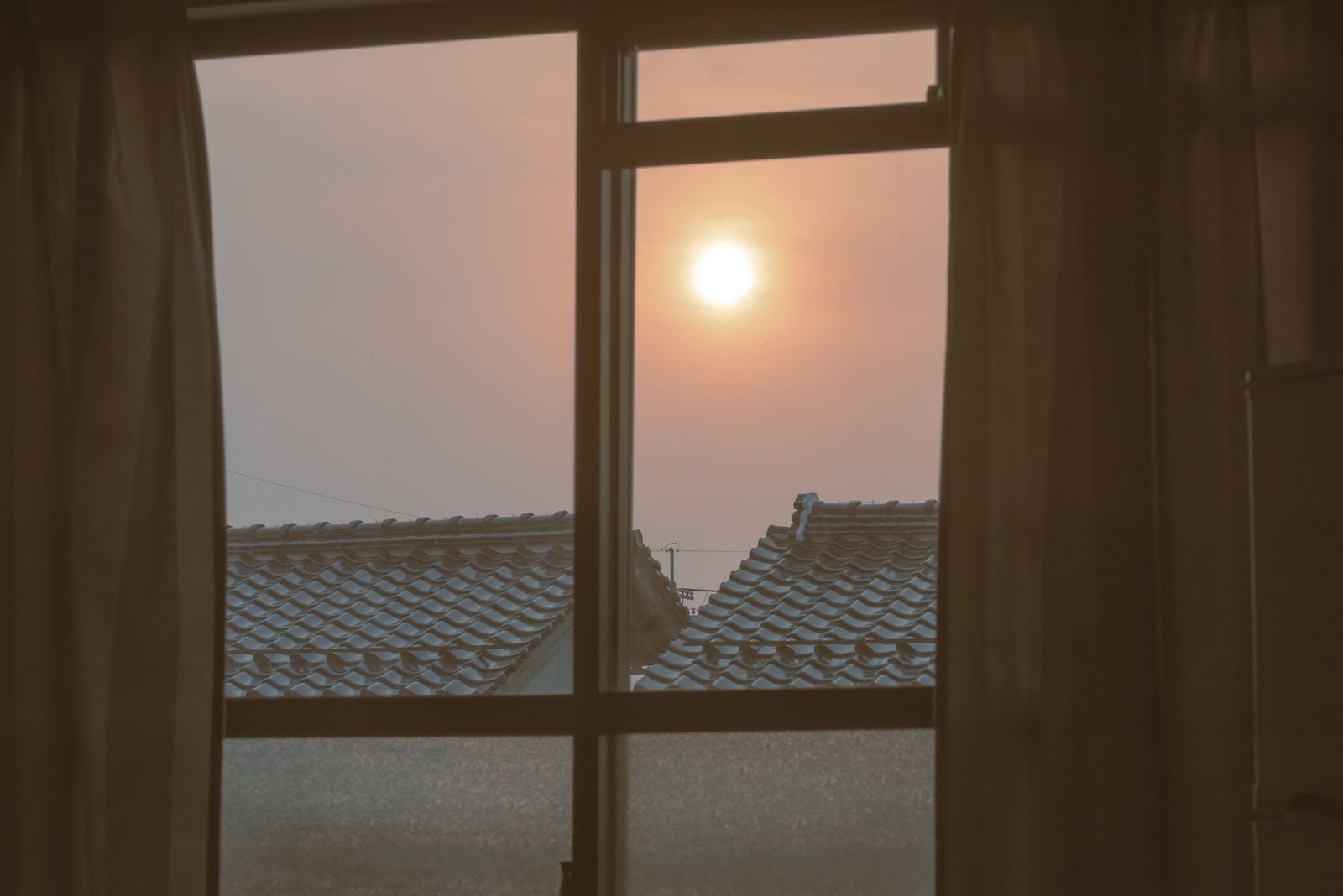
Growth in the response, not the situation
Frankl’s philosophy suggests that personal growth and freedom emerge from how we choose to respond to circumstances, not from the circumstances themselves. This is a specific and slightly uncomfortable claim. It locates development not in what happens to a person but in what they do with what happens. It refuses the modern instinct to sort experiences into helpful and unhelpful, and instead insists that growth is a byproduct of how one meets whatever arrives.
Frankl returned to this idea in another observation often attributed to him: when we can no longer change a situation, we are challenged to change ourselves. The two statements are the same thought approached from opposite directions. Both point to the response as the site of freedom. Both refuse to make circumstance the final word.
This is a hard doctrine because it forecloses the escape route most people rely on: the belief that a better life is waiting once the current problem resolves. Frankl’s position is that the current problem is not the obstacle to the life. It is the material of it.
What the space actually looks like in practice
Reading Frankl’s line, it is easy to imagine the space as a serene pause, the kind depicted in meditation app illustrations. In real life it is usually messier. It might be the moment a parent notices the shape of a shout forming in their throat and swallows it. The moment a person reads an infuriating email and closes the laptop instead of replying. The moment someone realises they are about to explain themselves to an in-law who has heard the explanation twenty times, and chooses to stay quiet.
None of these look like freedom in the poetic sense. They look like small, unglamorous exercises in self-command. But repeated over years, they compound. People who have practiced entering the space regularly develop what looks, from outside, like unusual composure. It is not composure exactly. It is a habit of not being fully collapsed into whatever just happened.
This habit is closely related to what psychologists call the inner peace that comes from valuing one’s own judgment. It is not indifference to the world. It is the refusal to be automatically defined by the world’s momentary pressure.
Why the quote resonates for therapists
Clinicians frequently name Frankl’s sentence as central to their work. A therapist’s professional profile on the Psychology Today directory describes drawing directly on the quote as an organising principle for practice. This is not surprising. Almost every therapeutic modality — cognitive behavioural, dialectical behavioural, acceptance and commitment, psychodynamic — is, at bottom, teaching clients to notice and expand the space Frankl described.
Cognitive behavioural therapy names it the gap between the activating event and the automatic thought. Dialectical behavioural therapy calls it the wise-mind pause. Acceptance and commitment therapy talks about defusion, the ability to observe a thought without being merged with it. Different vocabulary, same territory. All of them are trying to help people spend more time in the interval that Frankl said was the only real location of freedom.
The quiet challenge in the sentence
What makes Frankl’s line durable is that it does not promise anything. It does not claim that finding the space will make life easier. It does not suggest that choosing well will produce a good outcome. It says only that the space is there, and that what happens in it matters more than what happens outside it.
For a man who lost his wife, his parents, and his brother to the camps, and who wrote his book in nine days after liberation, this was not a philosophical position. It was the residue of what he had watched people do under conditions that stripped everything else away. The stimulus took everything from them. The response was the one thing that remained theirs.
Which is why, seventy years later, the quote still lands. People sense in it the outline of something true about their own smaller lives — that the day at work, the argument at the dinner table, the difficult diagnosis, the disappointment about a life that did not turn out as planned, all sit inside the same basic architecture Frankl mapped. There is what happens. There is what one does about it. And in the gap between them, whether it lasts a heartbeat or a decade, sits the only freedom that circumstance cannot take away.