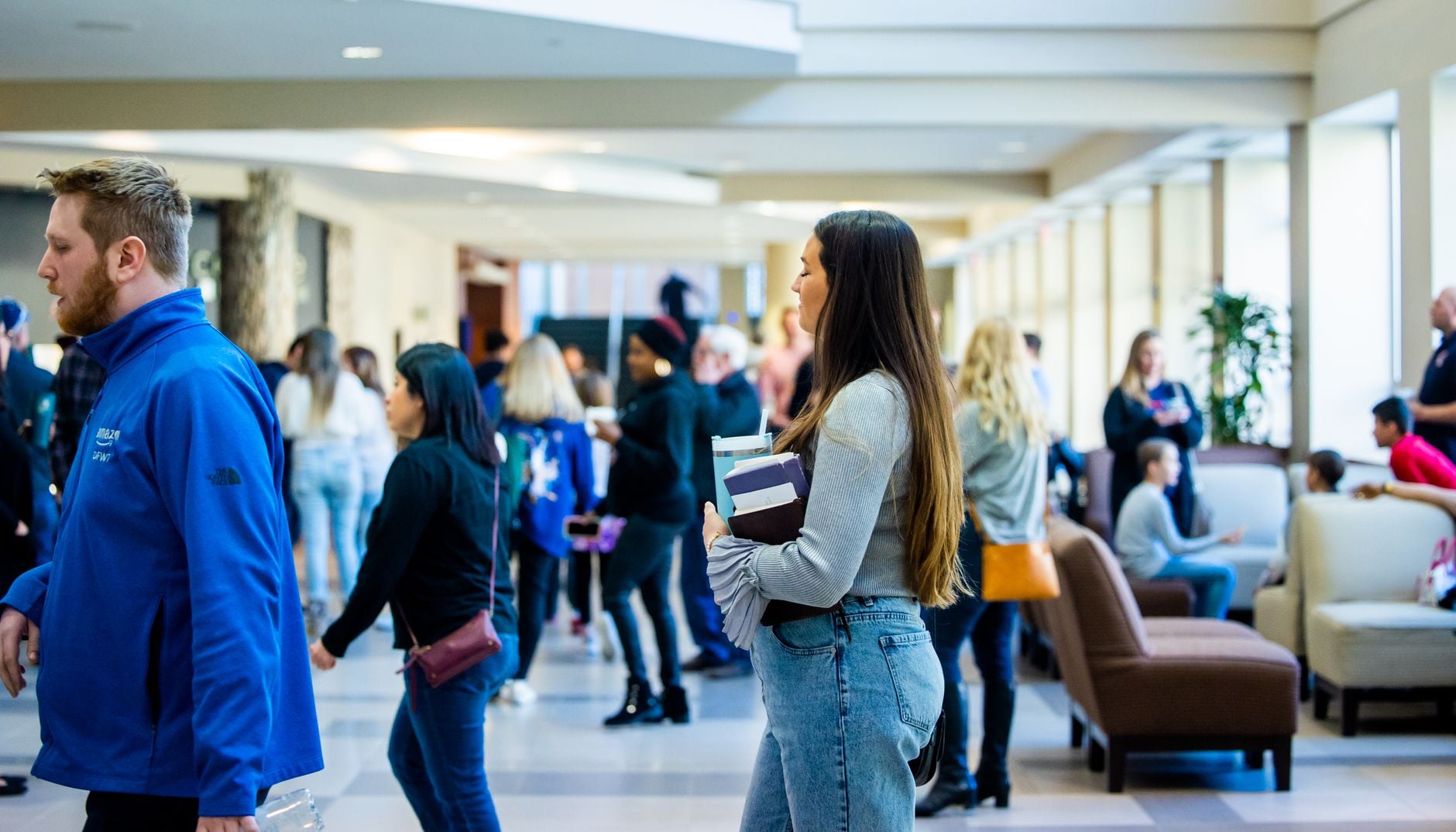
College may be the last environment in adult life designed to place thousands of potential friends within walking distance. Roommates share walls. Clubs advertise themselves at the same tables. Dining halls, libraries and lecture rooms keep putting similar-aged people in one another’s path. Yet physical proximity can be abundant while friendship remains hard to form.
This is not clinical advice. I am reading survey evidence and reporting what it can, and cannot, show.
The arresting comparison comes from an analysis by UCLA’s Higher Education Research Institute, reported by The Atlantic. In 1994, 74 per cent of college seniors said they spent more than six hours a week socialising with friends. In 2026, 65 per cent did. In this context, seniors means graduating or final-year college students, not older adults. The surveys are not nationally representative, and HERI has not yet released the public 2026 participating-institution reports. This is one analysis, not settled consensus.
The headline number is a threshold, not a headcount of lonely students
A fall from 74 to 65 per cent is nine percentage points, equivalent to a relative decline of about 12 per cent from the 1994 share. It is meaningful, but it does not say that 35 per cent of seniors have no friends. The public HERI response band begins at six hours, so the precise threshold is six hours or more rather than literally more than six. The remaining 35 per cent reported five hours or less socialising in a typical week.
The dividing line hides a lot. A student reporting five hours sits in a different category from one reporting seven, while someone spending 20 hours with a loose group sits alongside a person giving seven hours to two close friends. The measure tells us nothing directly about reciprocity, intimacy, conflict, satisfaction or whether the time felt chosen.
Nor did HERI follow the same people for 32 years. These are successive cohorts of graduating students, surveyed at participating institutions. HERI describes the College Senior Survey as an exit survey, and says campuses can download preliminary data while an administration is still under way. Its page currently says reports for institutions that participated in the 2026 survey will be available soon. The 65 per cent figure is therefore an early analysis reported through another publication, not a number readers can yet reproduce from a public 2026 national table.
The public record suggests a long decline followed by a plateau
Two earlier HERI releases help put the endpoints in context. Its 2008-09 report recorded 70.7 per cent of seniors spending more than five hours a week socialising with friends. A decade later, the 2019 public codebook put the share spending six or more hours with friends in person at 64 per cent.
Those snapshots produce a less dramatic timeline than the endpoints alone. The share moved from 74 per cent in 1994 to 70.7 per cent in 2008-09 and 64 per cent in 2019, before the reported 65 per cent in 2026. On these figures, the recent period looks closer to flat, or perhaps a small rebound, than to an uninterrupted annual collapse. Different institutions and response patterns mean even that reading needs caution.
Question wording adds another uncertainty. The 1994 codebook asked about hours spent “socializing with friends”. The 2019 item said “socializing with friends in person”. The extra words match what the 2026 analysis is trying to capture, but they were not present in the original item. A public technical account should explain how the measures were harmonised and whether any other wording, sampling or weighting changed.
None of that erases the trend. It changes the degree of certainty we should attach to it.
Socialising time is not the same thing as loneliness
The title’s “loneliness crisis” is an interpretation, not the variable measured by this HERI item. Loneliness is usually defined through a perceived gap between the connection a person wants and what they experience. Time with friends is a behaviour. The two can overlap without moving together perfectly.
A student can spend many hours around classmates and still feel peripheral. Another can prefer a small circle, log fewer social hours and feel secure. College can also supply institutional belonging without supplying the particular relationship someone misses.
A separate benchmark makes that distinction visible. The American College Health Association’s Fall 2025 undergraduate report covered 16,410 students at 42 institutions. On its recoded three-item UCLA Loneliness Scale, 48.3 per cent were classified as positive for loneliness. That is a survey classification, not a clinical diagnosis, and this participating-school sample was not a census of US undergraduates.
The item-level results were narrower: 17.5 per cent said they often lacked companionship, 17 per cent often felt left out, and 19.7 per cent often felt isolated. Meanwhile, 70.5 per cent agreed or strongly agreed that they belonged at their university, with another 20.5 per cent somewhat agreeing. The report does not give the cross-tabulation needed to know how those answers overlapped within individuals. At aggregate level, it shows why belonging, loneliness and time spent socialising cannot be substituted for one another.
A crowded campus can still produce thin contact
The HERI comparison does not identify what caused the change. The reporting around it has raised smartphones, remote and recorded classes, paid work, commuting, more selective or career-focused clubs, and the social after-effects of the pandemic. Each is plausible. The 74-to-65 statistic tests none of them.
I find the structure of daily contact more useful than a simple story about students choosing screens over people. A campus can contain thousands of people while giving a student few reasons to encounter the same ones repeatedly without an agenda. A recorded lecture removes one shared hour. A tight commuter or work schedule narrows the spaces between classes. A club organised around applications, leadership titles and career preparation may generate useful contacts while leaving little room for ease.
Phones can affect an interaction without explaining a generation-long trend. In a cafe experiment I covered earlier, groups asked to keep phones available used them for only about a tenth of the meal, yet reported slightly less enjoyment and more distraction than groups whose phones were put away. That result concerns the quality of one meal. It cannot establish why seniors’ weekly social time changed across decades.
Friendship depends on repeated, ordinary time
Roommates and clubs create opportunities for contact. They do not guarantee that two people will keep meeting, disclose anything real or start depending on one another.
In a study of recently relocated adults that I examined in an earlier article, friendship crossed into close territory at an estimated 219 hours together. The precise number belongs to that sample and method, but the accumulation is useful to think about. College has traditionally supplied exactly those recurring, lightly structured hours.
The first approach can also be harder than it looks from outside. Experiments pairing strangers for unusually deep conversations found that people expected more awkwardness and less interest than they actually encountered. As I wrote when looking at those experiments, participants enjoyed the exchanges more and felt more connected than predicted. That does not explain the HERI decline either. It does suggest a way a campus full of available people can remain socially quiet: everyone can be waiting for evidence that someone else wants contact.
A recent two-week experiment with first-year students offers an adjacent result. Among a supportive AI friend, daily journalling and a randomly assigned human texting partner, only the human pairing significantly reduced loneliness. It was one short Canadian study, not a rule about every student or chatbot. Still, it separated the availability of responsive language from the knowledge that another person was choosing to reply.
What the 2026 report still needs to answer
When HERI publishes its 2026 materials, the useful details will be the sample size, participating institutions, response rates, any weighting, the exact item wording and the full distribution across hour bands. A threshold alone cannot distinguish a senior who moved from 20 hours to eight from one who moved from seven hours to five. Both changes matter, but they describe different social lives.
Explaining the trend would require more than a better table. Researchers would need to connect socialising time with residential status, commuting, paid employment, online course load, club participation and phone use, while also measuring loneliness and belonging directly. Ideally, representative repeated samples would make it possible to see whether the pattern differs across institution type and student circumstances.
If loneliness has become persistent, severe or is affecting daily life, a GP, counsellor or licensed therapist can offer support that an article cannot.
The unresolved question is whether colleges still organise enough ordinary time for students to become familiar to one another.