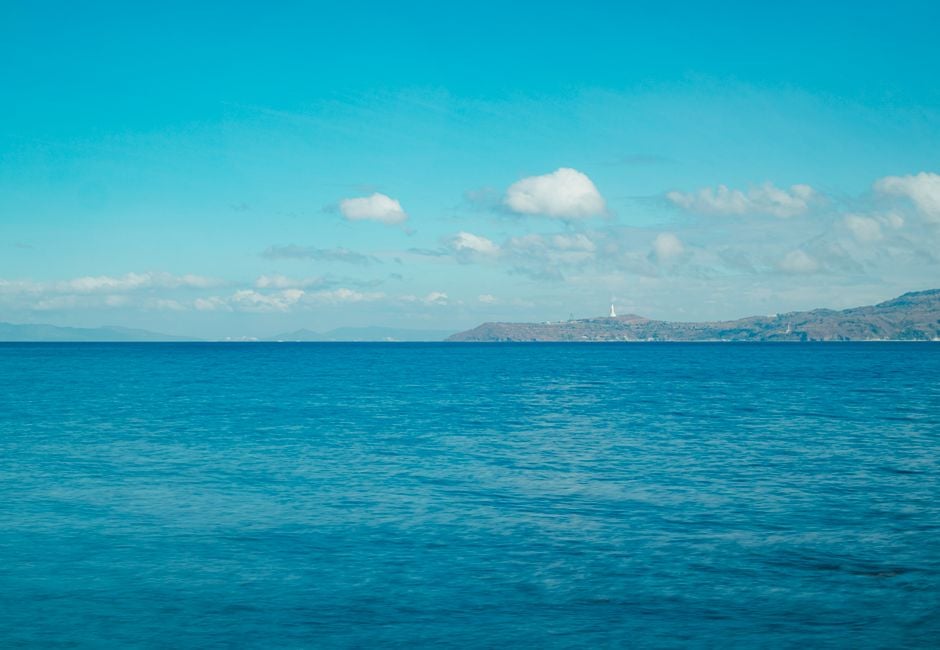
Almost everyone has a version of the same feeling. You walk down to the water, the noise in your head drops a notch, and you leave lighter than you arrived. We tend to file that away as a pleasant mood, the kind of thing that is true for you but proves nothing.
What I find interesting is that over the past decade it has stopped being just a feeling. A lot of careful research now points the same way, and some of what it has turned up is stranger and more useful than the folklore.
I am a writer with an interest in this material, not a psychologist, so take this as a careful reading of the evidence rather than a set of instructions.
From folklore to data
The Victorians sent patients to the seaside on instinct. The modern version is a large European research programme called BlueHealth, run between 2016 and 2020 and coordinated by the University of Exeter. Across more than twenty studies in eighteen countries, researchers set out to test whether so-called blue spaces, meaning seas, lakes and rivers, actually do anything measurable for the people near them.
The broad finding was that they do. People who live closer to the coast tend to report better general and mental health, and they tend to be more physically active. That last point matters, because some of the benefit is not mystical at all. The sea gives people a reason to walk, swim and simply be outside, and the movement does part of the work.
None of this is a single miracle number. It is a pattern that keeps recurring across different countries and methods, which is what makes it worth taking seriously.
The finding that surprised me
The result I keep coming back to is about who benefits most. You might assume the sea is a luxury good, something that mainly rewards people wealthy enough to live beside it. The data suggest close to the opposite.
BlueHealth researchers found that the link between coastal proximity and better mental health was strongest in England’s poorest urban communities. For people in the lowest-earning households, living near the coast was associated with noticeably better mental health, to the point where it appeared to narrow the usual gap between rich and poor.
The likely reason is straightforward. A wealthier person already has gyms, gardens and holidays. For someone with fewer of those, a free, open, walkable coastline is a far larger share of the good things available to them. The sea, on this reading, is less a luxury than a public resource that quietly does the most for the people who have the least. That is an unusual thing for a wellbeing intervention to manage.
The memory effect
The other finding that stuck with me reaches back into childhood. A study published in the Journal of Environmental Psychology, reported by the University of Exeter, found that adults who recalled more time spent around water as children tended to place a higher value on natural settings and to seek them out more often as grown-ups. Those habits, in turn, were linked to better wellbeing in adulthood.
In other words, a childhood spent near the water seems to leave a kind of standing preference, a pull towards blue and green places that keeps paying out decades later. It is a good argument for making coasts and rivers genuinely accessible to children, rather than something families have to be able to afford.
Why the sea in particular
Parks and forests are good for us too, and the research is clear on that. But the scientists behind this work, including the Exeter academic Matt White, have noted that the evidence for coastal blue spaces is currently stronger than for inland water.
Nobody can fully explain why yet, and it is worth being honest about that. The plausible ingredients are familiar: the openness of a horizon that gives the eye somewhere restful to go, the steady unpatterned sound of waves that is easy to tune out and hard to be irritated by, and a scene that is gently interesting without demanding anything. Add the walking and the daylight, and you have a setting that seems almost designed to lower the mental temperature. How much is the water itself and how much is everything that surrounds it remains an open question.
What to make of it
I would be wary of overselling any of this. These are population-level patterns, mostly correlational, and living by the sea is not a treatment for anything. Plenty of people who live inland are perfectly happy, and moving house is not on the table for most of us.
The more modest and more useful takeaway is that the pull you feel towards the water is not sentimental nonsense. It lines up with a decent body of evidence, it appears to help the hardest-pressed people the most, and it seems to start early and last. For city planners that is an argument for protecting and opening up coastlines and waterfronts. For the rest of us it is a small piece of permission. When you feel the urge to go and stand by the sea for no particular reason, the reason is better than you thought.