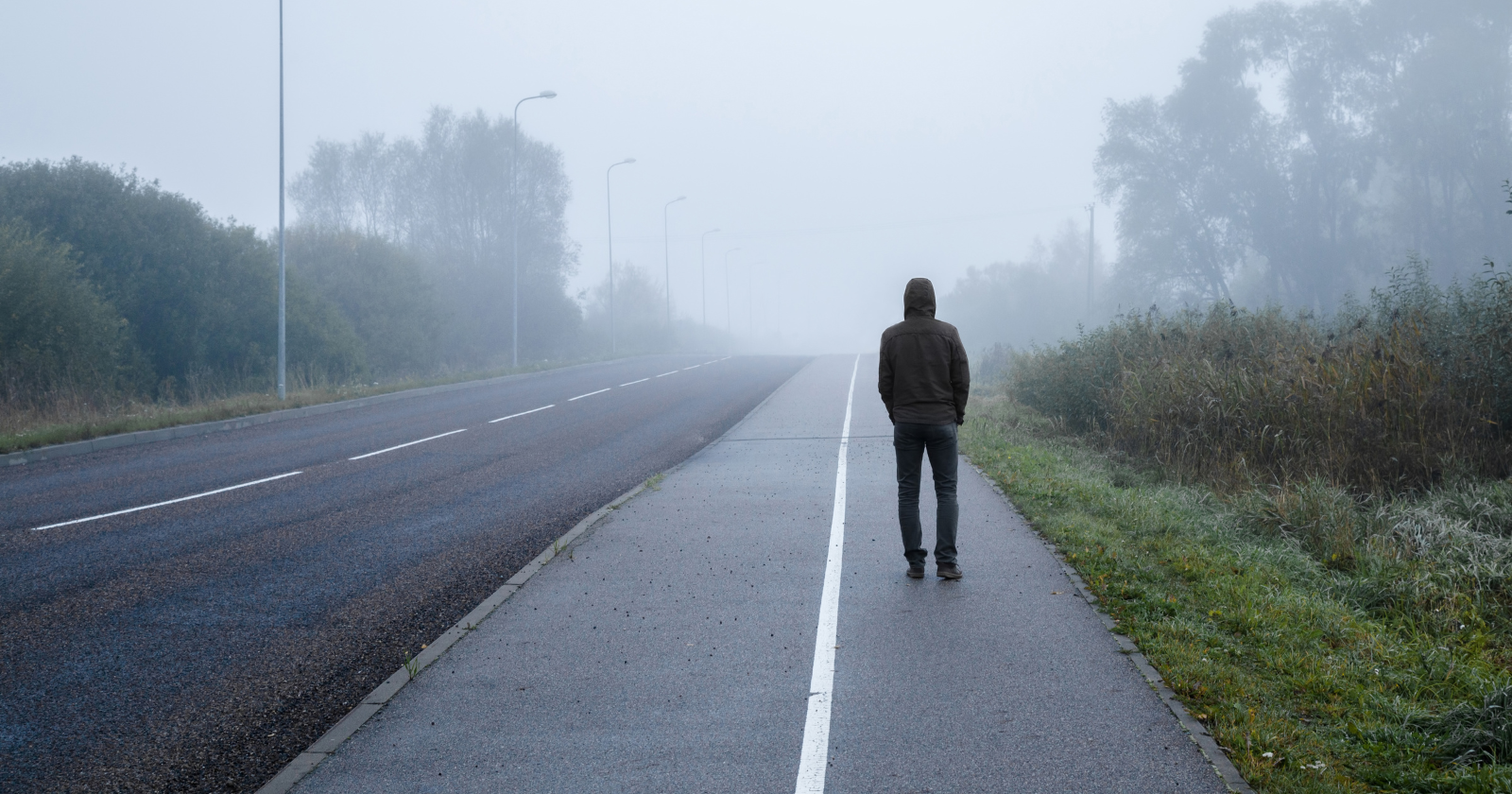
Saturday night, about three years ago. I’m at a friend’s birthday party, surrounded by maybe twenty people I’ve known for years, and I’m standing near the kitchen pretending to be very interested in a bowl of pretzels. Not because I didn’t like anyone there. I just couldn’t figure out how to step into a single conversation without it feeling like I was performing a version of myself I’d rehearsed in the car on the way over.
I left early. Walked home. Got into bed and scrolled through my phone for an hour, looking at all these people I supposedly knew, feeling further from them than I had at the actual party. And somewhere in that scroll I came across Carl Jung’s line that “no one is more sensitive to companionship than the lonely man,” and it landed in my chest like a small, unwelcome diagnosis.
Because that’s the cruel little riddle, isn’t it? The more isolated you feel, the more desperately you want connection, and the harder it becomes to actually reach for it. The sensitivity Jung describes isn’t just emotional — it becomes almost physical, like exposed nerve endings that make every interaction feel too intense, too risky. Each unanswered text feels like rejection. Each declined invitation feels personal. You start curating yourself out of your own life.
What I didn’t understand then was that my loneliness was creating a feedback loop. The more I retreated, the more sensitive I became to the quality of interactions when they did happen. A friend canceling plans would send me spiraling. A conversation that felt slightly off would replay in my head for days. This hypersensitivity, I’ve come to realize, is loneliness’s defense mechanism gone haywire. It’s like our social antennae become so finely tuned in isolation that they pick up static as clearly as signal.
The perfectionism I struggled with only made things worse. I’d convinced myself that I needed to be the ideal friend, the perfect conversationalist, the most interesting person in the room before I deserved real connection. Growing up as the quieter brother, I’d always preferred observation to participation, but somewhere along the way, that preference morphed into a prison. I watched others connect effortlessly while judging myself for every awkward pause, every joke that didn’t land, every moment I couldn’t think of the right thing to say. Honestly, it was exhausting in a way I didn’t have language for at the time. Like being the guy in High Fidelity making mental top-five lists about everyone in the room while never actually being in the room.
It wasn’t until I started really sitting with Eastern philosophy and mindfulness that I began to understand what was happening. There’s this Buddhist idea of “hungry ghosts” — beings with enormous appetites but tiny mouths, unable to satisfy their cravings no matter how much they consume. The lonely person’s sensitivity to companionship works the same way. We become so starved for connection that when it appears, we either consume it too quickly or push it away, afraid of the vulnerability it requires.
The path out of loneliness isn’t about becoming less sensitive to companionship. It’s about something harder, and I’ll get to that.
Look, think about how we typically respond to loneliness. We either withdraw further, protecting ourselves from potential rejection, or we desperately grasp at any interaction, overwhelming others with our need. Both responses come from that heightened sensitivity Jung identified, and here’s where I’ll stop pretending to be neutral about it: I think the withdrawal is worse. The grasping at least keeps you in the room. Withdrawal is the one that quietly rewires you, that convinces you the door was locked from the outside when really you locked it yourself. We’re trying to solve loneliness from the outside in, when the work needs to happen from the inside out.
The breakthrough — if I can even call it that — came when I realized my sensitivity to companionship wasn’t entirely a problem. That acute awareness of connection and disconnection, that deep appreciation for genuine interaction, that ability to recognize authentic presence in others. These aren’t weaknesses, exactly.
But first, I had to learn to be my own companion. This sounds like a self-help cliché, I know, stick with me. The lonely person is sensitive to companionship because they’ve abandoned themselves. Every moment spent scrolling instead of reflecting, every decision to distract rather than sit with discomfort, every choice to perform rather than simply be — these are all small acts of self-abandonment that accumulate into profound loneliness.
I started with just five minutes a day of sitting with myself. No phone, no book, no podcast. Just me and whatever thoughts and feelings arose. It was excruciating at first. The sensitivity I’d developed toward others’ companionship turned inward, and I became acutely aware of how uncomfortable I was in my own presence. But gradually, something shifted. I began to recognize the difference between being alone and being lonely.
This practice revealed something unexpected: the quality of my connections with others directly reflected the quality of my connection with myself. When I was at war internally, every external interaction felt fraught. When I found peace within, conversations flowed naturally.
Now, when I feel that familiar pang of loneliness creeping in, I try to recognize it as a signal. Not that I need to immediately seek out others, but that I need to check in with myself. Am I present? Am I trying to escape something? What am I really craving beneath the surface desire for company?
Sometimes the answer is genuine human connection. Other times, it’s pointing to something deeper — a need for purpose, for creativity, for rest, for movement. And sometimes, honestly, I still don’t know what it’s pointing to. I just sit with it until it gets quieter, or until it doesn’t.
That’s the part of Jung’s observation I keep coming back to. He doesn’t offer a way out. He just names the trap — that the lonely man is the one most attuned to what he can’t quite reach. I used to want to argue with him about that. Find the loophole. Write the ending where the sensitivity becomes a superpower and the lonely person walks off into a wide circle of friends.
But I don’t think it works like that. Some nights I still stand near the pretzel bowl. The difference now is I’m a little less afraid of it.