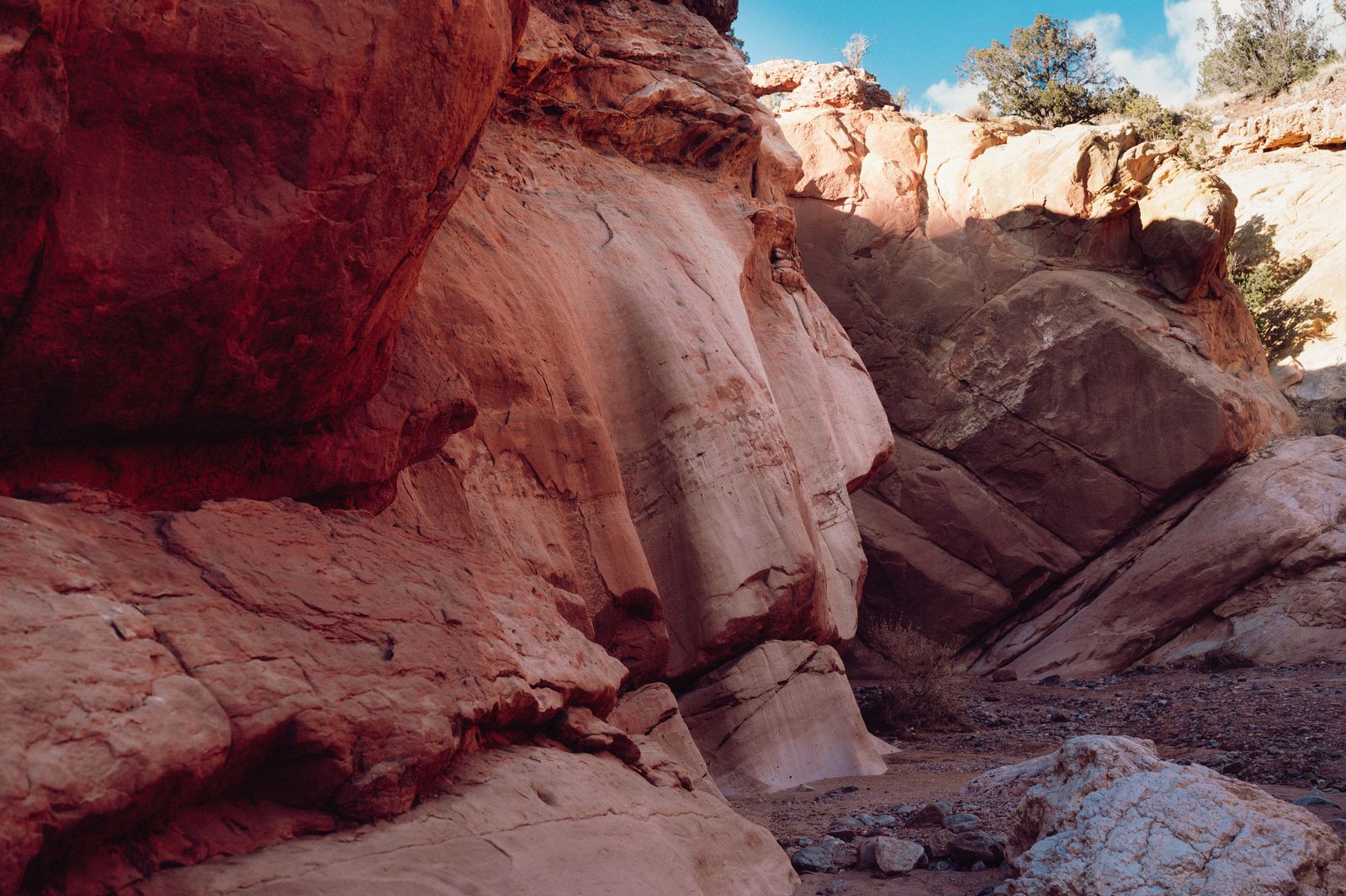
Fewer than 100 mature Wollemi pines grow in the wild. Their exact location is a state secret, withheld from maps and guarded by a small circle of Australian rangers who reach the site by helicopter, in sterilised boots, on terms set by biosecurity protocols rather than convenience.
The tree is called *Wollemia nobilis*. It was known only from compression fossils and pollen grains until 1994, when a New South Wales National Parks ranger named David Noble abseiled into a narrow sandstone canyon northwest of Sydney and walked past a stand of trees he did not recognise. They were tall, dark-trunked, with bubbled bark that looked like boiling chocolate and ferny foliage that seemed to belong to a different geological era. Noble took a few cuttings home. When botanists at the Royal Botanic Garden Sydney examined them, the verdict was that the species had last appeared in the fossil record from the Cretaceous period, when Tyrannosaurus rex still walked the Earth.
A fossil that turned out to be breathing
Before Noble’s descent, the Wollemi pine was known only through compression fossils and pollen grains pressed into Australian and Antarctic rock. Palaeobotanists had catalogued the genus Wollemia from sediments dating back to the Cretaceous and assumed the lineage had quietly ended sometime around the extinction event that finished the non-avian dinosaurs. The fossil leaves matched living conifers nowhere on Earth. The story was closed.
Then a ranger went canyoning on a weekend off.
The grove Noble found sits inside Wollemi National Park, a vast wilderness of slot canyons and sandstone plateaus on the edge of the Greater Blue Mountains. The trees were growing in a microclimate at the bottom of a gorge, shaded, damp, sheltered from the bushfires that periodically sweep the ridges above. The underground root systems sprout new trunks when old ones die or burn, and may be vastly old.
What a 90-million-year-old conifer actually looks like
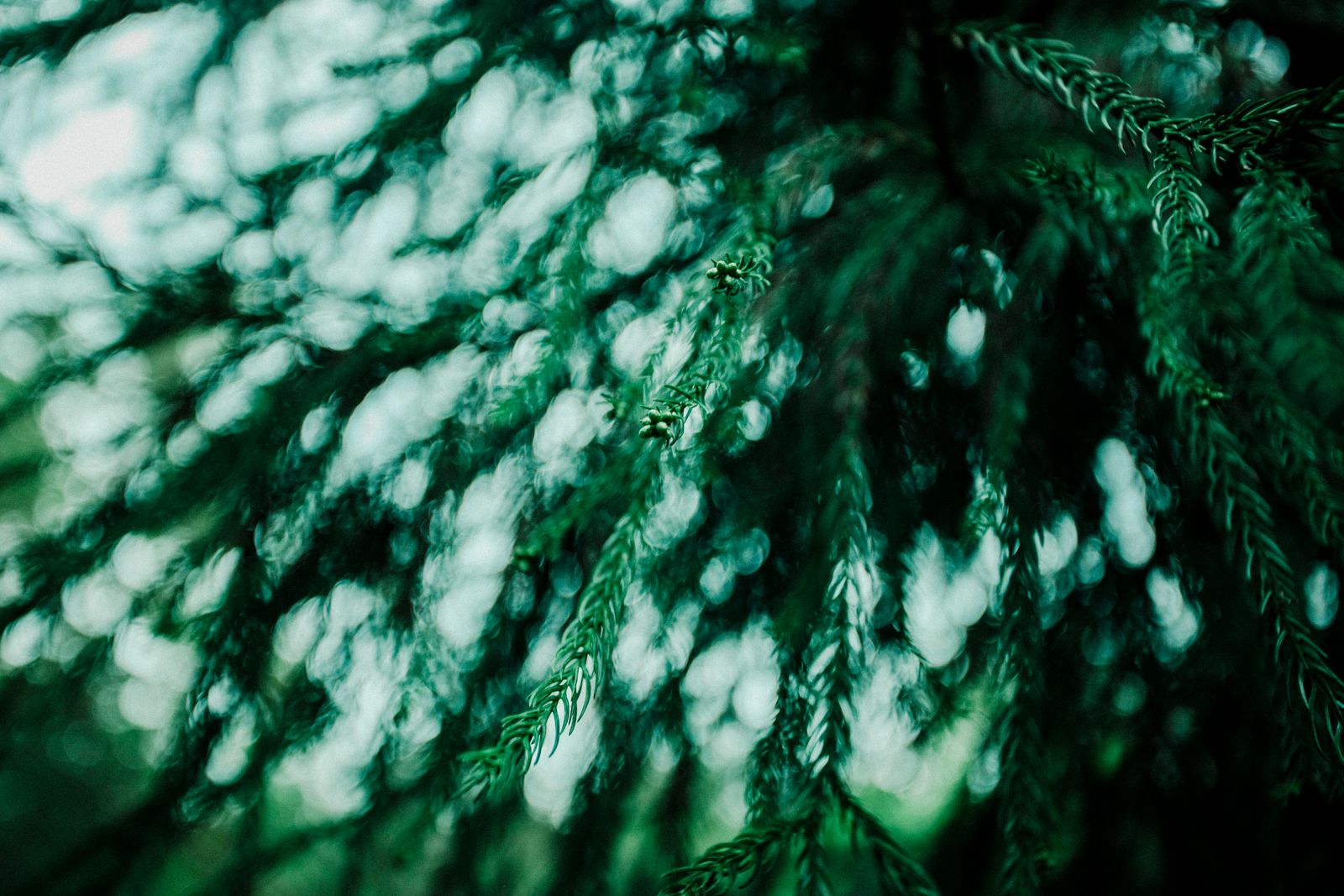
A mature Wollemi pine can grow to around 40 metres tall. The bark has a strange, nodular texture that botanists describe as resembling Coco Pops or bubbling lava. Young foliage is bright apple-green; older foliage shifts to a deep blue-green. A single tree often has dozens of trunks emerging from one root mass, all genetically identical. When researchers sequenced the wild population, they found something startling: the trees were almost genetically uniform. Every Wollemi pine in the canyon is, in effect, a clone of every other. The species has been through such a severe genetic bottleneck that scientists initially had trouble finding any meaningful variation at all between individuals. A population of fewer than 100 trees with almost no genetic diversity is a population one bad season away from disappearing.
The secret address
The New South Wales government has never publicly disclosed the exact GPS coordinates of the wild grove. Park rangers operate under access protocols that require sterilised boots, decontaminated clothing, and helicopter insertions rather than overland routes that might leave a trail. The reason is not theatrical. It is biological.
Phytophthora cinnamomi, a soil-borne water mould sometimes called cinnamon fungus, poses a deadly threat to Wollemi pines. A single contaminated boot print could carry enough spores to devastate the wild population. Unauthorised visitors who tracked down the location and bushwalked in have threatened the site’s biosecurity.
The threat is not hypothetical. Traces of Phytophthora have been detected in the canyon soil. Containment work has been ongoing.
The 2019 fires
Then the canyon almost burned.
During the Black Summer bushfires of 2019–2020, the Gospers Mountain fire tore through Wollemi National Park and bore down on the canyon. New South Wales National Parks and Wildlife Service mounted an operation that involved waterbombing helicopters laying retardant lines along the canyon rim, specialist firefighters winched into the gorge to set up irrigation systems, and large air tankers running sorties through smoke so thick that pilots reported flying largely on instruments.
The grove survived. A few trees were scorched. The majority came through intact. Photographs released afterwards by the New South Wales government showed firefighters standing next to blackened sandstone walls with green, untouched Wollemi pines rising behind them. It was, by most measures, one of the most targeted plant rescues in the history of conservation.
The insurance plan
While the wild grove remains hidden, the Wollemi pine has, by deliberate strategy, been scattered across the planet. Beginning in the early 2000s, the Royal Botanic Garden Sydney launched a commercial propagation programme. Cuttings were rooted, raised in nurseries, and sold by the thousand to home gardeners, botanic gardens, and arboretums. The logic was straightforward: the more Wollemi pines growing in pots in Kew, in Edinburgh, in Brooklyn, in Tokyo, in Auckland, the harder it becomes for the species to actually go extinct.
A Wollemi pine now grows in the Coal Forest at Kew Gardens. Another stands at the entrance to the Jardin des Plantes in Paris. Hobbyist gardeners in temperate zones from Cornwall to Vancouver have planted them in backyards. Each of those trees is a hedge against the loss of the original 100.
This approach, preserving a species outside its natural range, often in cultivation, as insurance against catastrophe in the wild, has been pursued with unusual aggression for the Wollemi pine precisely because the in situ population is so vulnerable.
What it does to people
There is a particular psychological texture to standing in front of a living thing that was supposed to have ended with the dinosaurs. The emotion of awe, a state characterised by perceived vastness and a need to mentally restructure one’s understanding of the world, appears particularly responsive to encounters with the deep past.
The Wollemi pine reliably triggers that response. Visitors to the propagated trees at botanic gardens often spend extended time observing them. The information label does the work: this lineage is older than flowering plants. This branching pattern is what the Cretaceous looked like.
The accident that found it
David Noble was not searching for a lost species. He was canyoning, descending slot canyons with ropes for recreation, in an obscure corner of a park he knew well. The grove was within helicopter range of Sydney the entire time. Bushwalkers had probably passed within kilometres of it for decades. The trees were hidden in plain sight because nobody was looking for something that was not supposed to exist.
The science of serendipity examines how prepared observers discover the unexpected. Noble was a trained ranger with botanical knowledge. He knew the local species well enough to know when he was looking at something that did not fit. A weekend hiker without that frame of reference would have walked past.
The same dynamic shows up across the history of biology. The immunologist Caetano Reis e Sousa, profiled in The Scientist on the role of chance in research, has argued that the most important findings in his lab were the ones that interrupted the planned experiment. The Wollemi pine, in its own way, interrupted Australian botany.
Other Lazarus species
Biology has a term for species rediscovered after long apparent extinctions: Lazarus taxa. The coelacanth, the deep-sea fish identified from a South African trawler catch in 1938 after a 66-million-year fossil gap, is the most famous. The Wollemi pine is its botanical equivalent, with a fossil gap larger than the entire mammalian radiation.
Australia, isolated for tens of millions of years and full of stable refugia in its sandstone country, seems to specialise in this kind of survival. The Queensland lungfish, the mountain pygmy possum, and the night parrot all spent stretches presumed extinct before being relocated. The continent has a way of holding onto deep-time lineages in pockets that human surveyors simply have not reached.
What sets the Wollemi pine apart is the time gap. Ninety million years is not a misreading or a footnote. It is older than the Atlantic Ocean in its current configuration. It is older than the grasses. The tree in the canyon has been growing, in some form, since before the chalk cliffs of Dover were laid down on the seabed.
The future of the grove
The conservation plan for the wild population now runs on several parallel tracks. The location stays secret. Helicopter access is limited to monitoring and Phytophthora testing. Cuttings are taken periodically to maintain the ex situ collection. Researchers are studying whether the population’s genetic uniformity is actually a strength, a sign that the surviving genotype has been filtered for resilience, or a fatal weakness.
Recent work on the immortal jellyfish and other organisms with unusual longevity strategies, including a recent Silicon Canals piece on Turritopsis dohrnii, has highlighted how species achieve persistence through mechanisms that look nothing like the standard reproductive model. The Wollemi pine’s strategy of clonal trunks rising from an effectively ageless root system sits in that same odd category.
Climate projections for the Blue Mountains region forecast more severe and frequent fire seasons through the rest of the century. The 2019 operation showed that the grove can be defended once. Whether it can be defended every decade, indefinitely, against fires of escalating intensity is a separate question.
And there is a harder one underneath it. Secrecy has kept the grove alive so far, but it has also placed the survival of an entire lineage in the hands of a small number of officials, accountable to nobody who can verify what they are doing. Is that really conservation, or is it a confession that the public cannot be trusted with what is left of the Cretaceous? If a species this old can only persist by being hidden from the species that found it, what does that say about the relationship between knowledge and care?
Two hundred metres above the trees, hikers walk past on marked trails, unaware that the Cretaceous is still going on beneath their boots. Whether that arrangement holds for another generation, or quietly fails on a bad afternoon in a bad fire season, nobody on the surface gets to know.