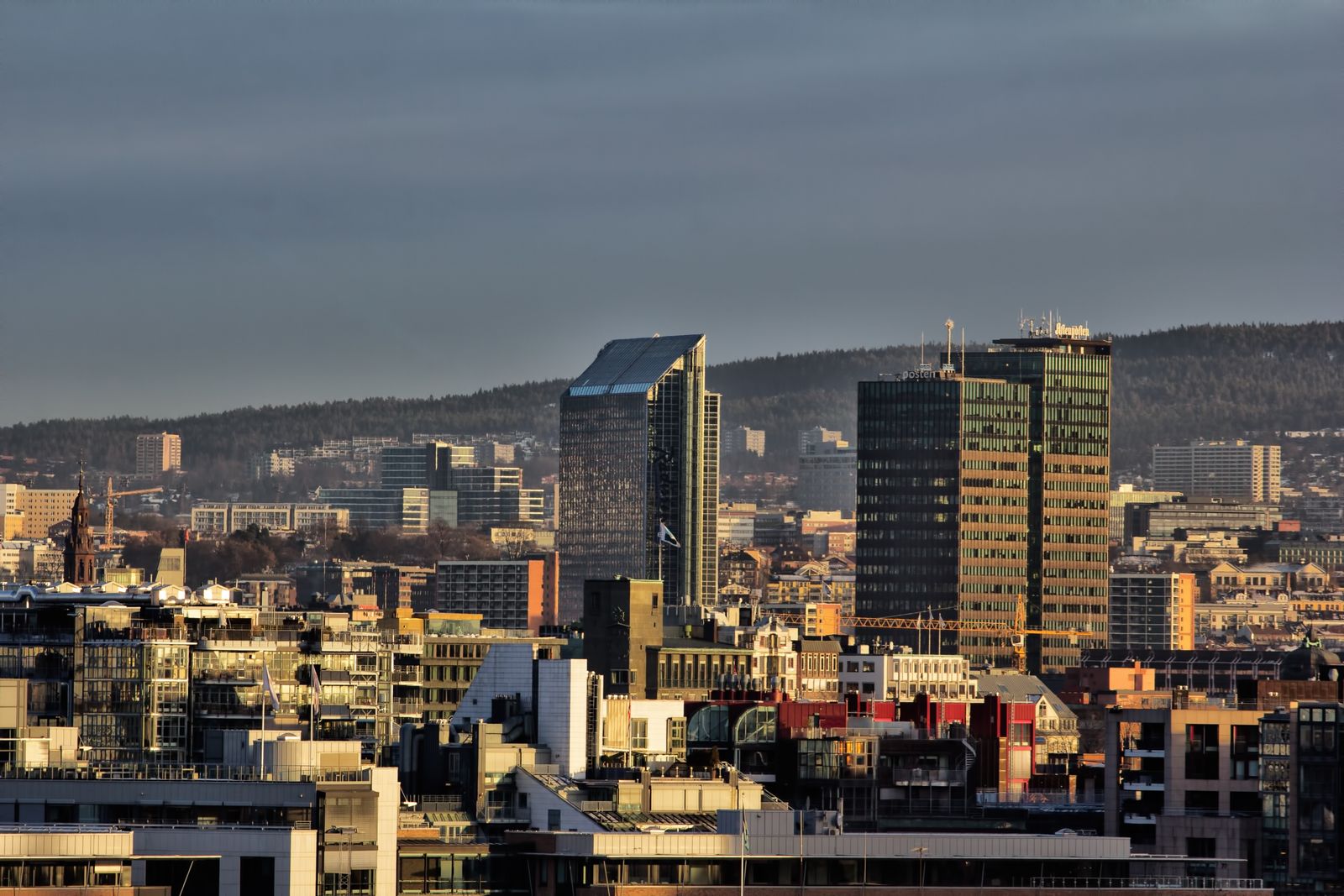
Norges Bank Investment Management, the body that runs Norway’s Government Pension Fund Global, controls roughly 1.5% of every listed company on the planet. A portfolio spread across more than 8,600 companies in 63 countries, worth somewhere north of $1.8 trillion. The team inside that body responsible for casting votes at shareholder meetings, for deciding whether a Japanese conglomerate’s CEO deserves another term, whether Exxon should publish a climate transition plan, whether Samsung’s board chair should keep his job, numbers around 20 people. A mid-sized Oslo restaurant employs more.
Those 20-odd analysts process more than 9,000 shareholder meetings a year. The math, if you bother to do it, is absurd. Five hundred meetings per person, per year. Two a working day. Each meeting can contain a dozen or more separate ballot items: director elections, auditor ratifications, compensation plans, climate resolutions, anti-takeover provisions, related-party transactions.
Roughly 70,000 individual votes a year, cast in the name of every Norwegian citizen, by a team smaller than the cabin crew on a single long-haul flight.
How a fishing country ended up owning the world
The fund’s origin is famously dull. Norway found oil in the North Sea in 1969. By 1990, parliament had passed a law saying petroleum revenues should not be spent. They should be saved, invested abroad, and treated as a one-time geological windfall rather than a permanent income stream. The first transfer into the fund happened in 1996. The balance was zero one year, then $300 million, then a few billion. Three decades later, the fund holds the equivalent of roughly $330,000 for every Norwegian alive.
To put the scale somewhere a human can grasp: if the fund liquidated tomorrow and distributed everything evenly to Norway’s 5.5 million citizens, each person would receive enough to buy a modest house in Oslo outright and still have change for a car. The fund is larger than the GDP of Saudi Arabia. It is larger than the market capitalisation of every company listed in Spain and Italy combined.
The structural decision that mattered, though, wasn’t the saving. It was the diversification rule. The fund cannot own more than 10% of any single company. It is mandated to be a passive, broad-market investor. So the money fans out: a slice of Apple, a slice of Toyota, a slice of TSMC, a slice of LVMH, a slice of Saudi Aramco, a slice of nearly every supermarket chain, mining company, and pharmaceutical giant in the public markets.

The voting problem
Owning 1.5% of everything sounds passive until proxy season arrives. Every spring, the world’s listed companies hold annual general meetings. Shareholders vote on directors, executive pay, audit firms, capital raises, mergers, environmental disclosure, political spending, lobbying transparency, and increasingly, AI governance and human rights policy. As the 2026 proxy season analysis from JD Supra notes, the volume and complexity of resolutions has climbed steadily, with regulators, activists, and stewardship frameworks all pulling in different directions.
Most institutional investors hand this work to proxy advisors, firms like ISS and Glass Lewis, that produce voting recommendations on industrial scale. A pension fund in Texas or a mutual fund in Boston typically rubber-stamps the proxy advisor’s recommendation. It’s cheap, it’s defensible, it’s quick. Norway’s fund does the opposite. NBIM publishes its own voting guidelines, makes its decisions in-house, and discloses every vote on its website within five days of casting it. The team reviews every resolution against its own standards on board independence, executive pay, climate risk, tax transparency, and human rights. They explain controversial votes publicly. They sometimes vote against the recommendations of both proxy advisors and company management, and the world’s largest single shareholder voting “no” tends to be noticed.
The regulatory shift has made this approach look prescient. As recent legal analysis documents, US regulators have moved to curb the influence of proxy advisors, and large institutional investors are being pushed to take voting decisions back in-house. Norway has been doing this for two decades.
What 20 people can actually read
The cognitive load is the part nobody quite wants to talk about. A single proxy statement for a large US company runs 80 to 150 pages. Executive compensation tables alone can take hours to parse. A contested director election in Japan requires understanding cross-shareholdings, keiretsu relationships, and decades of board history. A climate resolution at a Brazilian miner requires reading the company’s own sustainability report, the proponent’s argument, the company’s response, and ideally some independent assessment of whether the proposal is reasonable.
Multiply by 9,000 meetings. The team cannot read everything. They cannot possibly read everything.
What they do instead is build systems: voting guidelines that automate the obvious cases, flagging mechanisms that surface the controversial ones, sector specialists who cover banks or oil majors or tech platforms, and a triage process that decides where human judgement actually goes. Harvard Business Review’s research on strategic delegation describes exactly this kind of structure, how high-stakes decisions get filtered down to a small number of judgement calls while the rest is handled by rule. The team’s job is less to read every page than to design the funnel that decides which pages get read.
The funnel does most of the work. Routine director elections at companies with no governance flags get the default vote. Compensation plans below a certain threshold of excess get waved through. The contested cases — a CEO with a $200 million golden parachute, a board rejecting a credible activist, a refinery refusing climate disclosure — are where the analysts spend their hours.
The Nestlé vote, the Volkswagen vote, the Shell vote
Specific cases give the abstraction weight. In recent years NBIM has voted against compensation packages at Tesla, against board nominees at Meta, against governance arrangements at Alphabet that concentrate voting power in founders’ hands. It has supported climate resolutions at Shell, Exxon, and Chevron that company management opposed. It has voted to remove directors at companies it judges to have failed on human rights due diligence in their supply chains.
None of these votes, on their own, change a company. The fund holds 1.5% of Tesla, not 51%. But when 20 people in Oslo publicly explain why they voted no, other institutional investors notice. Pension funds in the Netherlands, Canada, Australia, and California read NBIM’s published rationale and use it as cover for their own decisions. The fund’s voting record functions as a kind of public governance commentary, and because it covers thousands of companies, it shapes the conversation more than any single shareholder ever could.

The psychology of being everywhere
There is a strange cognitive position involved in owning a slice of everything. A regular investor who buys Apple shares is rooting for Apple. A regular investor who buys both Apple and Samsung has a mild internal conflict but mostly wants both to do well. The Norwegian fund owns Apple, Samsung, TSMC, Foxconn, the shipping companies that move their components, the mining companies that supply their cobalt, the advertising agencies that sell their phones, and the banks that finance the whole chain.
For NBIM, externalities are not externalities. If Apple harms Samsung, the fund loses on Samsung. If a mining company pollutes a river, the fund owns the agribusiness downstream that suffers. If a tech platform’s algorithm damages teenage mental health, the fund owns the healthcare companies that treat the consequences. The fund is, structurally, a universal owner, and universal ownership creates an economic logic for caring about systemic harm that a focused investor doesn’t have.
This is partly why the fund’s voting record skews toward climate disclosure, supply chain due diligence, and long-horizon governance reform. It is not because Norwegian civil servants are unusually virtuous. It is because their portfolio mathematically internalises costs that other shareholders externalise. The moral psychology literature on impartial beneficence, the idea that some decision-makers are structured to weigh aggregate welfare across populations they cannot meet, describes a position the fund occupies almost by accident of its diversification rule.
The accountability question
None of this is uncontroversial. The Council on Foreign Relations published an extended policy debate on sovereign wealth funds that worked through the obvious anxieties: what happens when a state-owned investment vehicle accumulates real influence over the governance of foreign companies? Even Norway, the most transparent fund on Earth, disclosing its holdings, its returns, its outside managers, its voting record, raises the question that economist Willem Buiter put bluntly: should government-owned funds have voting rights at all?
The argument for restricting sovereign funds to non-voting shares is that no foreign democracy should have a state actor with influence over its corporate boards. The argument against is that a passive shareholder is a worse shareholder than an engaged one. The alternative, where 1.5% of every listed company is owned by an entity that says nothing and votes nothing, would be a corporate governance disaster.
NBIM has effectively chosen the engaged version. The 20-person team is the operational expression of that choice. They are the human firewall between Norway’s parliament and the boardrooms of the world. Close enough to act, far enough that no minister can pick up a phone and tell them how to vote on, say, an Israeli technology company or a Russian mining stake.
What the size tells you about the work
The most counterintuitive thing about the operation is its smallness. NBIM as a whole employs around 670 people across offices in Oslo, London, New York, Singapore, and Shanghai. The corporate governance and voting team is a sliver of that. Compared to BlackRock’s stewardship operation, which runs into the hundreds, or Vanguard’s, which is similarly large, the Norwegian team is tiny.
The smallness is design, not accident. A large team would generate political pressure to use the fund as an instrument of Norwegian foreign policy. A small team focused on a narrow mandate, long-term financial return, with governance as a tool to protect that return, is harder to weaponise. Forbes’s survey of governance trends for the 2026 proxy season highlights how stewardship teams that scale too fast often lose the clarity of their own voting standards. The Norwegian model holds the line by keeping the team unable to grow.
Earlier this year an article on the Wirecard investigation at the Financial Times made a similar point about institutional inertia, that large organisations protect themselves from inconvenient findings by smothering them in process. The Norwegian fund’s design is the opposite: small enough that a decision can actually be made, transparent enough that the decision has to be defensible.
The room in Oslo
The team sits in a building on Bankplassen in central Oslo, a short walk from the harbour. The fund publishes a list of every company it owns and every vote it casts. A retired teacher in Tromsø can, in principle, log on and see how the money invested in her name was voted at the annual meeting of a Brazilian utility she has never heard of.
The numbers, stacked end to end, describe the machinery plainly. Twenty analysts. 9,000 shareholder meetings a year. Roughly 70,000 individual ballot items. More than 8,600 portfolio companies in 63 countries. $1.8 trillion in assets. 1.5% of every listed company on Earth. Five days from vote cast to vote disclosed. Ten percent the legal ceiling on any single holding. Six hundred and seventy total NBIM staff across five offices. The proxy calendar runs heaviest from March through June, with Japan clustered in late June, the United States across April and May, continental Europe through April, and the southern hemisphere filling in the gaps. The next cycle opens in March.