
In a Bristol courtroom this month, a judge reached for a sentencing tool that had never before been applied to protest-related criminal damage in British legal history. Four Palestine Action activists, already convicted only of damaging Israeli-made military drones at an Elbit Systems factory, stood as the judge attached a “terrorist connection” to their offences. They had not been tried for terrorism. No jury had been asked whether they acted with terrorist intent. They were sentenced as terrorists anyway.
The case, as reported by The Intercept, redraws the threshold for what counts as terrorism under UK law. It does so through a sentencing mechanism rather than a jury trial.
The mechanism: section 69 of the Sentencing Act
Section 69 of the Sentencing Act 2020 allows a judge to apply a “terrorist connection” enhancement to a non-terrorism offence at the sentencing stage. The enhancement does not require a jury to find that the defendant acted with terrorist intent. It does not require the prosecution to bring terrorism charges. It is determined by a judge after conviction. It triggers extended terrorist notification requirements, obliging those convicted to report personal details, finances and travel plans to police long after release.
Until now, the enhancement has been used alongside offences such as bomb hoaxes or weapons charges.
Its application to criminal damage at a protest site is unprecedented.
How the enhancement was applied to the Filton 25
A judge applied the section 69 enhancement to four members of the so-called Filton 25 for their role in the August 2024 raid on the Bristol-area Elbit factory, a site that manufactures components for the drones the Israeli military flies over Gaza. The activists face additional years in prison on top of time already served on remand. One defendant received a further sentence for striking a police officer during the raid.
Crucially, as Novara Media first reported, the jury was not told that a guilty verdict on criminal damage would expose the defendants to terrorism sentencing. Reporting restrictions kept the issue out of British media until 12 May.
The trial itself was hemmed in by judicial orders. The defence was narrowed to almost nothing. Defendants could not tell the jury about Elbit Systems’ role supplying the majority of drones used by the Israeli military. They could not describe how quadcopter drones have been used against Palestinian civilians. They could not reference events in Gaza after 7 October 2023. The defence was also barred from invoking certain legal doctrines. Most defendants ultimately chose to self-represent. The jury had already cleared them of heavier charges.
The institutional architecture around Palestine Action
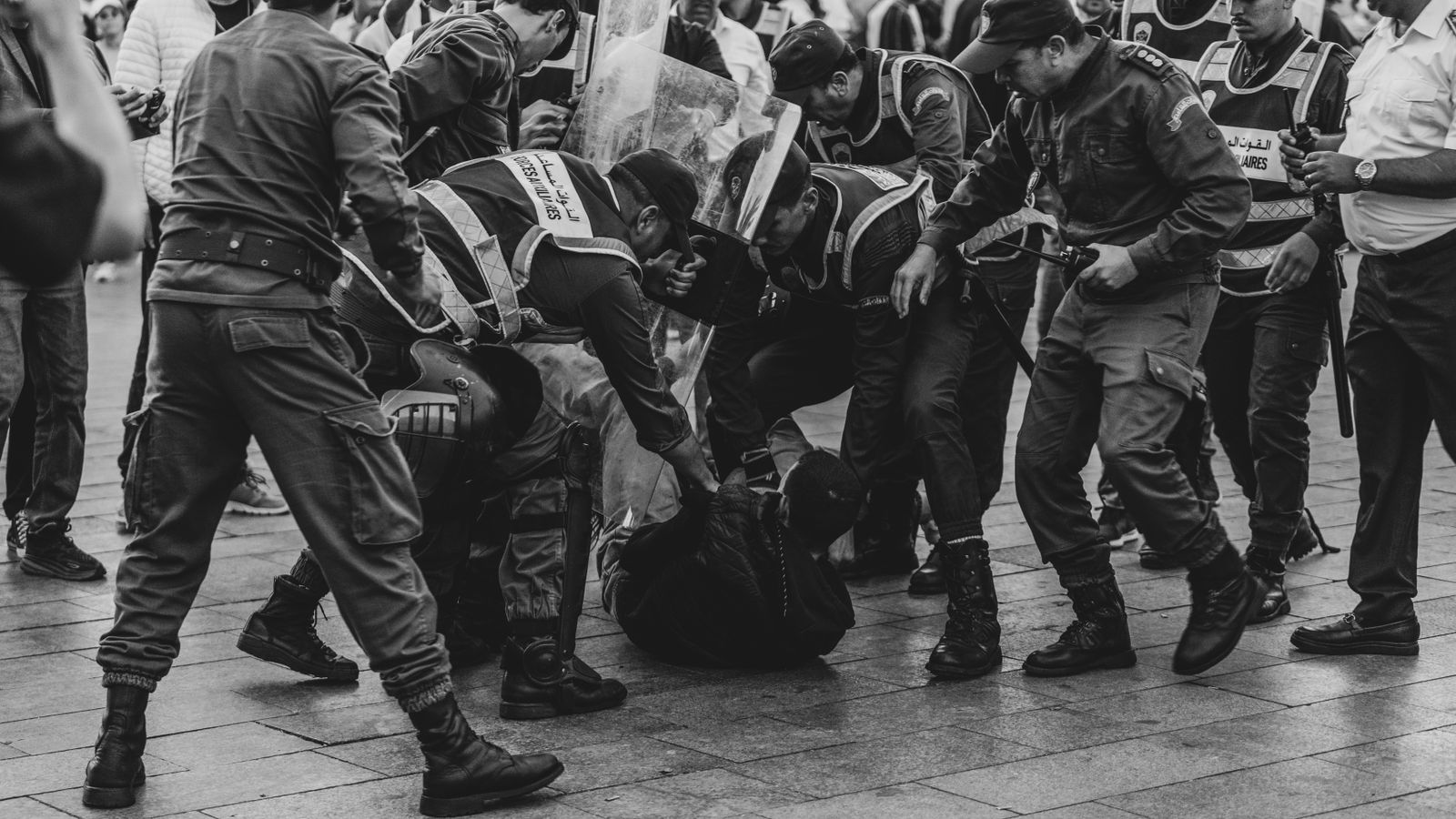
The sentencing sits inside a wider enforcement structure. Thousands of people have been arrested at rallies for carrying signs expressing support for Palestine Action, after the group was proscribed under the Terrorism Act. A British High Court ruled the proscription unlawful in February. The ban remains in force pending government appeal. Over 100 people were arrested outside the sentencing hearing itself.
Huda Ammori, Palestine Action’s co-founder, told Novara Media that the case represents an attempt to treat activists as terrorists through what she characterized as a manipulated court process. Amnesty International UK called the sentencing disproportionate, noting that criminal damage has never been treated as terrorism within the UK justice system before.
What the precedent enables
The structural significance lies in what comes next. The section 69 framework now reaches property damage at protest sites without the procedural safeguards of a full terrorism prosecution. No jury determination of terrorist intent. No requirement to disclose the stakes to jurors. Judicial discretion to exclude the political and humanitarian context that would normally inform sentencing.
In practice, that means a person who smashes a window at a factory linked to a foreign military can now leave court with a terrorist-connection label attached to their record, required for years afterwards to file their travel plans and bank details with the police. The same mechanism is available next time. The jury, again, need not be told.