

At 10:58 in the morning on 28 September 1969, residents of Murchison, a farming town of a few hundred people in Victoria, Australia, heard a series of loud booms and watched a fireball trail orange smoke across the sky. Fragments rained over a stretch of paddock. Some of the pieces, smelling faintly of methylated spirits, landed in cow pastures and on tin roofs. Inside those black, carbon-rich stones were grains of silicon carbide that had drifted through interstellar space for hundreds of millions of years before being swept into the cloud of gas and dust that would eventually collapse to form the Sun. The oldest of those grains, dated in 2020 by a team led by cosmochemist Philipp Heck at the Field Museum in Chicago, formed around 7 billion years ago. That is roughly 2.5 billion years before the Sun, the Earth, or anything else in this solar system existed.
They are the oldest solid materials ever held in a human hand.
The morning a fireball broke over Victoria
The event itself was, by meteorite standards, generous. According to a record kept by Astronomy magazine, locals in Murchison and the neighbouring towns of Toolamba and Mooroopna heard the sonic boom around 10:58 AM and saw the bolide break apart before it hit the ground. The strewn field stretched across farmland.
A large piece punched through the roof of a hay shed. In total, a substantial amount of meteorite was recovered, much of it picked up by farmers and schoolchildren in the days that followed and posted, sometimes in shoeboxes, to the Smithsonian and to laboratories in Melbourne and Chicago.
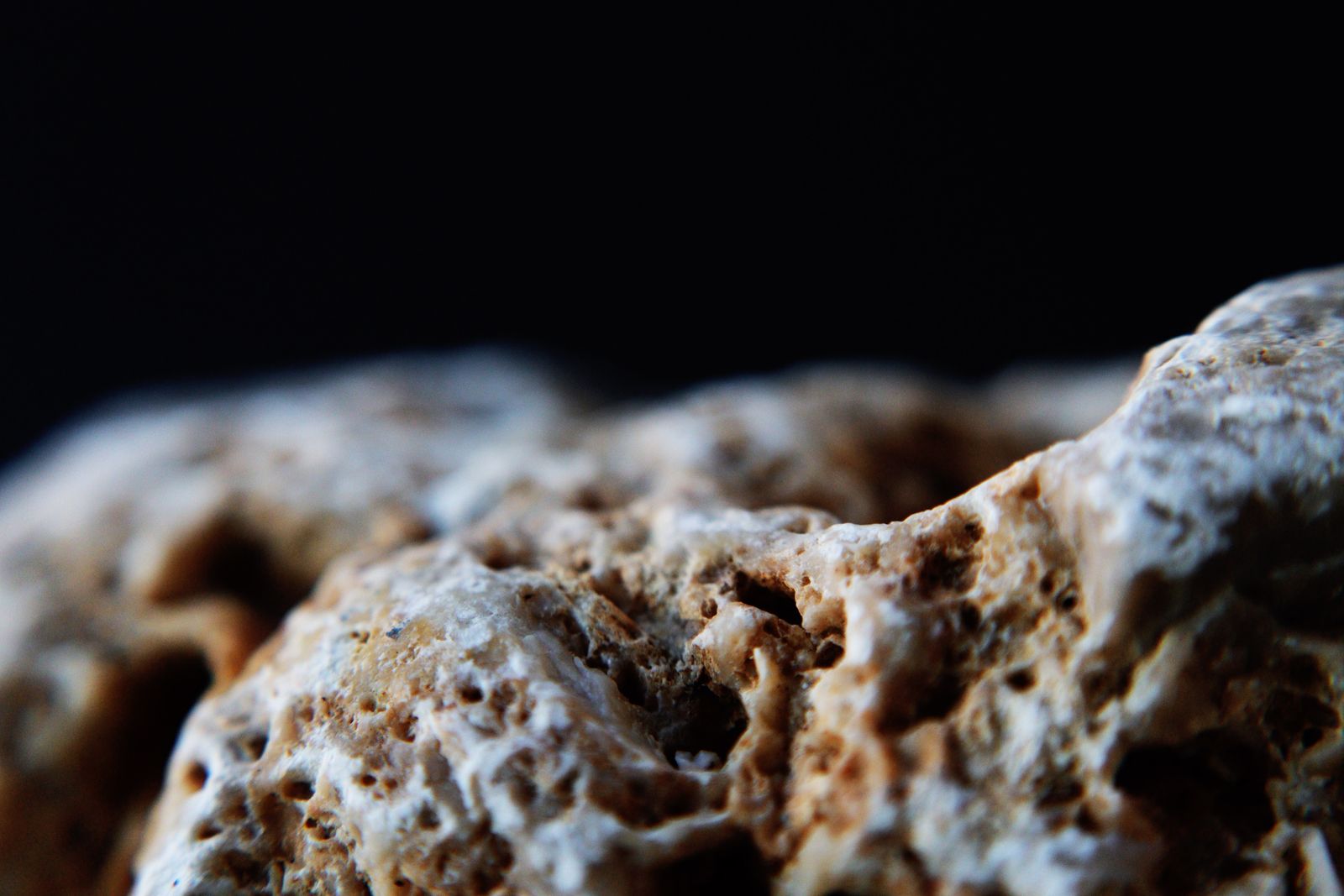
The rocks smelled strange. Sharp, alcoholic, vaguely organic. That smell turned out to matter. Murchison is what cosmochemists call a CM2 carbonaceous chondrite, a primitive class of meteorite that never melted or fully recrystallised after the solar system formed. The organic compounds it carried, including amino acids, nucleobases, and sugars, have made it one of the most studied stones in scientific history.
What a presolar grain actually is
Embedded in the matrix of the Murchison stone, mixed with clay minerals and water-bearing silicates, are tiny crystals of silicon carbide, graphite, and corundum. Most are smaller than a micrometre. Under a scanning electron microscope they look like soot. They are individually heavier in certain isotopes, including silicon-29, carbon-13, and nitrogen-15, than anything ever produced inside the Sun.
That isotopic mismatch is the fingerprint. The grains formed in the outflows of stars that died before the Sun was born, mostly red giants shedding their atmospheres, with some traces from supernovae. Each grain carries the chemical signature of the specific kind of star it condensed around. Those stars are long gone. The grains outlived them.
To get them out of the meteorite, researchers crush small pieces of Murchison, then dissolve away everything except the grains using a sequence of acids strong enough to eat the silicates around them. The silicon carbide survives. What’s left at the bottom of the beaker is, almost literally, stardust.
How you date a piece of stardust
Heck’s team, working with colleagues at the Australian National University, ETH Zurich, and the Max Planck Institute for Chemistry, used a method built on the steady drizzle of cosmic rays through the galaxy. When a high-energy cosmic ray particle slams into a grain floating in interstellar space, it shatters atoms inside the crystal and produces small quantities of new isotopes, particularly neon-21.
The longer a grain sits exposed in interstellar space, the more neon-21 it accumulates. By measuring how much of that neon is locked inside each grain, the team could calculate how long each one had drifted before being swept up into the cloud that became the solar system.
The 2020 study examined dozens of grains using refined techniques. The bulk of the sample sat between 4.6 and 4.9 billion years old. A subset clustered around 7 billion years. One grain may be older.
A baby boom of stars before the Sun
The clustering told the team something they hadn’t quite expected. If presolar grains formed at a steady rate across galactic history, ages should be spread evenly. Instead, the Murchison sample showed a pile-up around 7 billion years ago.
The most plausible explanation: a burst of star formation swept through this part of the Milky Way roughly 7 billion years ago. Stars born in that surge lived for a few hundred million to a couple of billion years, swelled into red giants, and shed dust into the surrounding interstellar medium. That dust drifted until a separate event, perhaps a nearby supernova shockwave, pushed it into the molecular cloud that collapsed to form the Sun about 4.6 billion years ago.
Astronomers had argued for decades over whether star formation in the galaxy is constant or punctuated by bursts. The grains in a stone that fell on a Victorian dairy farm gave them physical evidence for the burst hypothesis.
The scale of the comparison
Numbers help. The Earth is about 4.54 billion years old. The Sun is roughly 4.6 billion. The oldest mineral grains ever dated from Earth itself, zircons from the Jack Hills in Western Australia, are about 4.4 billion years old. The universe is approximately 13.8 billion years old.
A 7-billion-year-old silicon carbide grain from Murchison is therefore older than the Sun by more than half the Sun’s current age. It existed when the Milky Way was roughly half its present mass. It drifted through interstellar space for longer than complex multicellular life has existed on Earth before it was ever swept into the cloud that became our solar system.
And it is small enough that several thousand could fit on the head of a pin.
Why Murchison, specifically
Not every meteorite carries presolar grains in usable quantities. Most have been heated, shocked, or chemically altered enough to erase the isotopic fingerprints. Carbonaceous chondrites — and CM2 chondrites in particular — preserve them because their parent asteroid never got hot enough to melt.
The Murchison stone has been studied so intensely that its mass-recovery ratio is exceptional. Pieces sit in nearly every major cosmochemistry lab on Earth. A 2021 study by Russian and German researchers at Skoltech used high-resolution mass spectrometry to catalogue the insoluble organic matter inside Murchison and the Allende meteorite, mapping the kinds of complex carbon chemistry that may have seeded the early Earth.
Within the Murchison matrix, scientists have identified dozens of different amino acids, many of which do not occur naturally on Earth. The same stone carries components of RNA bases, sugars including ribose, and the silicon carbide grains older than the Sun. One rock, several billion years of cosmic history.
Confirmation from a different rock
The Murchison result no longer stands alone. NASA’s OSIRIS-REx spacecraft collected samples from the asteroid Bennu and returned them to Earth. When researchers analysed those samples, they found the same kind of presolar grains. Silicon carbide and other minerals carrying isotopic signatures from stars that died before the Sun ignited.
The Bennu samples are a time capsule of the material that existed throughout the solar system in its earliest stages. The samples include grains that, like Murchison’s, survived extreme heat, water interaction, and multiple generations of impact events, including the catastrophic collision that broke their parent asteroid apart.
Other ancient minerals turn up in unexpected places. The mineral krotite, identified in a calcium-aluminium-rich inclusion in the NWA 1934 meteorite, is among the oldest minerals in the solar system, though it formed during the early solar nebula, not before it. The presolar grains in Murchison and Bennu are in a different category. They predate the solar nebula entirely.
What it means to hold something that old
The numbers around old objects on Earth tend to flatten with familiarity. A Greenland shark from the 1700s. A bristlecone pine from before the pyramids. A zircon from the Hadean. These are extraordinary in human terms, but they belong to the same planet that produced the people measuring them.
The Murchison grains belong to nothing in particular. They condensed in the atmosphere of a star whose remnant, if any survived, is now a white dwarf or neutron star somewhere in the galaxy, possibly thousands of light-years from where the Sun sits today. They drifted in cold, empty space for longer than the Earth has existed. They were swept into a collapsing cloud, baked into an asteroid, broken loose by a collision, and fell onto a paddock in Victoria where a child found one and brought it home.
Curators at the Field Museum and the Smithsonian keep fragments under nitrogen to slow weathering. Researchers crush small pieces, dissolve them in acid, and pick out grains a thousand times thinner than a human hair. Under the microscope, the oldest of them look like nothing. Small, dark, irregular flecks. They formed when the Milky Way was younger and the Sun was not even an idea in a molecular cloud.
The next time a meteorite from a CM2 chondrite is recovered intact — and one will be, somewhere, eventually — the procedure will be roughly the same. Crush, dissolve, sort. Look for the silicon carbide. Read the neon. Some of what comes out of the beaker will have been drifting in the dark for longer than the Sun has been burning.
