

In mathematical notation, a horizontal line drawn above a letter means something specific: take the time-averaged value of the quantity beneath it. Without that bar, the same letter means the raw, instantaneous value. The difference between the two, in 1962, was the difference between a smoothed signal and pure radar noise. It was also, as it turned out, the difference between reaching Venus and exploding over the Atlantic.
That single missing overbar lived inside the guidance equation for Mariner 1, America’s first attempt to reach another planet. Hand-transcribed from a coding sheet onto a punched card, the bar was simply left off. The ground computer at Cape Canaveral, reading the instruction it had been given, dutifully treated noisy radar twitches as real motion and began commanding the rocket to chase a velocity that did not exist.
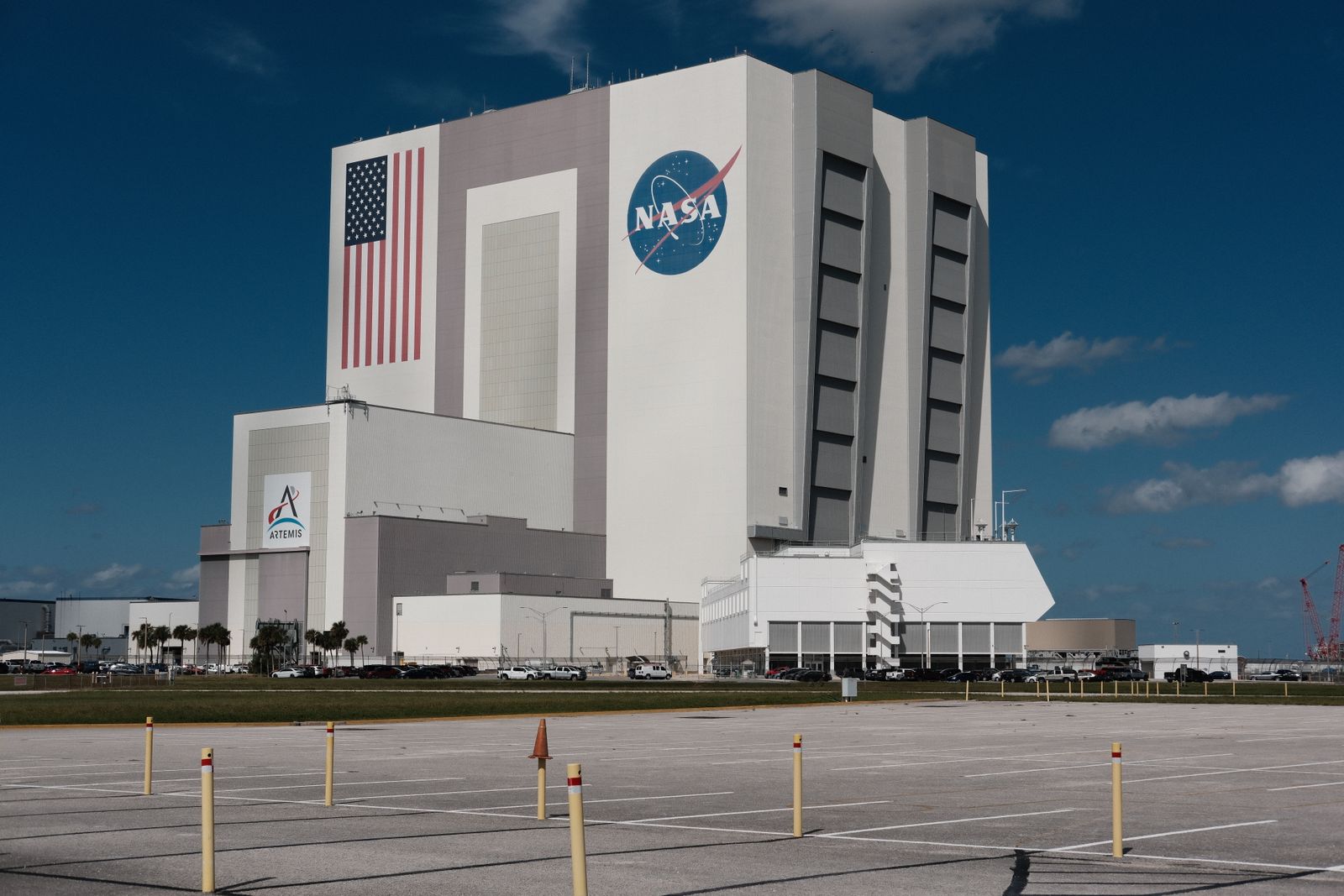
At 9:21:23 GMT on July 22, 1962, an Atlas-Agena rocket cleared the pad carrying the probe. Two hundred and ninety-three seconds later, the range safety officer pressed the destruct button, and Mariner 1, along with the rocket lifting it, exploded over the Atlantic. The probe had been built to fly past Venus and beam back the first close measurements of another world. It never made it out of low altitude.
The 293 seconds
The flight began cleanly. The Atlas rose off the launch pad on a column of kerosene flame, and for the first four minutes the booster behaved exactly as predicted. Then, somewhere in the final phase of powered flight, the rocket began responding to ghost steering commands. Small, jerky pitch corrections that should not have been there.
The guidance system on the ground, which was tracking the Atlas by radar and sending course corrections up by radio, had lost its lock on the rocket’s rate beacon. That happens. There is a backup. The backup is a smoothing routine inside the ground computer, which is supposed to ignore brief radar dropouts and continue commanding the rocket along its planned trajectory. The smoothing routine, that day, was not smoothing.
Instead, it was treating raw, noisy, unfiltered radar data as if every twitch were a real motion of the rocket. Each twitch generated a correction. Each correction made the Atlas pitch harder. By T+293 seconds, the trajectory had deviated enough that the range safety officer destroyed the rocket. What was left of Mariner 1 fell into the Atlantic.
The bar that wasn’t there
NASA’s official post-flight report traces the failure to two compounding problems. The first was a hardware fault: a malfunctioning rate beacon on the Atlas itself, which meant the ground computer kept losing its smooth velocity data and had to fall back on the smoothing equation. That alone would not have doomed the flight. The smoothing equation was designed precisely for these dropouts.
The second problem was the equation. When the guidance specification was hand-transcribed into the ground computer’s program (this was 1962, and aerospace software was still being written by humans copying mathematical notation onto coding sheets) someone left off an overbar. In the original equation, a symbol with a bar over it meant take the time-averaged value of this quantity. Without the bar, the same symbol meant take the raw instantaneous value. The averaged value would have smoothed out the radar noise. The raw value amplified it. The rocket, obediently following commands generated from amplified noise, began chasing a velocity signal that was not really there, a trajectory that existed only as numerical jitter in the ground computer’s memory.
How a missing line cost millions
The loss was significant, equivalent to hundreds of millions in today’s dollars. The misnaming traveled faster than the correction, with some calling it a hyphen rather than an overbar.
What stayed accurate was the lesson aerospace engineers took from the failure. A single typographic omission in a piece of code, copied from a piece of paper, had been enough to bring down a planetary mission. The same year the Beatles released their first single, the United States lost its first interplanetary probe to a punctuation error.
The era of handwritten code
To understand how a missing bar could escape every layer of review, it helps to remember what “writing software” meant in 1962. The Atlas ground guidance computer took its instructions on punched cards. Before the cards were punched, the equations were written out by mathematicians on coding sheets, then transcribed by keypunch operators, then verified by hand against the original sheet. Mathematical notation does not punch cleanly. A bar over a variable has no key on a keypunch. It had to be encoded as a separate instruction, a flag that told the computer to apply the smoothing operator to whatever variable came next. If the flag was missing from the coding sheet, the keypunch operator had nothing to encode. The card came out clean. The compiler accepted it. The simulation, run against the same flawed code, produced results consistent with the same flawed code. Nothing flagged the error because the error was in the specification itself.
This was the same era when Grace Hopper’s team at Harvard pulled a literal moth out of the Mark II’s relay fifteen years earlier. The word “bug” still carried the flavor of physical objects jamming physical contacts. The Mariner 1 failure marked a quieter shift: the bug was now made of ink, or rather the absence of ink, and it lived in the gap between a mathematician’s notation and a programmer’s transcription.
Mariner 2 and the recovery
The response inside JPL was fast. Mariner 1 had been one of a pair. A backup vehicle, designated Mariner 2, was already built and waiting. Engineers re-examined the ground guidance code, restored the overbar (and audited the rest of the program for similar omissions), and rolled Mariner 2 to the pad.
On August 27, 1962, thirty-six days after Mariner 1’s destruction, Mariner 2 launched on the same trajectory. This one worked. On December 14, 1962, Mariner 2 flew past Venus, becoming the first spacecraft to successfully encounter another planet. Its radiometers confirmed that the Venusian surface was extremely hot and that the planet had no measurable magnetic field. The mission rewrote what humans knew about Earth’s nearest neighbor.
None of that data would have existed if the overbar had not been restored. And the overbar would not have been restored if the engineers had not been forced to find it.
Why the story keeps getting told
Software-failure folklore is full of these moments. The ARPANET’s first transmission in 1969 was supposed to be the word LOGIN; the system crashed after the letter O, so the first message ever sent across the internet was the accidental “LO”. Both stories work the same way: a tiny thing, a missing letter or a missing bar, derails an enormous machine.
The reason Mariner 1 keeps surfacing in computer-science syllabi is that it is the cleanest possible example of specification error. The hardware worked. The compiler worked. The radar worked, mostly. The code did exactly what it was told to do. The instruction itself was wrong. And no amount of testing the code against the specification would catch it, because the specification was the bug.
Modern formal-verification research, the field that tries to mathematically prove software correct before it runs, traces a direct line back to failures like this one. So does the discipline of double-blind transcription in aerospace coding, where two independent teams encode the same equation and compare outputs character by character. The overbar that wasn’t there in 1962 is the reason those checks exist.
Venus, still waiting
Mariner 2’s success bought Venus decades of attention, then decades of neglect. After the Soviet Venera landers of the 1970s and 80s and NASA’s Magellan radar mapper in the early 90s, the planet went quiet. Mars took the budget. Venus, hot and hostile and harder to land on, was left to the European Venus Express and Japan’s Akatsuki.
That is changing. NASA’s DAVINCI mission, Deep Atmosphere Venus Investigation of Noble gases, Chemistry, and Imaging, now targets a launch in December 2030, earlier than previously planned, with its descent probe scheduled to plunge through the Venusian atmosphere in January 2033. The VERITAS orbiter and ESA’s EnVision are meant to follow, joined by ISRO’s Shukrayaan-1, now planned for March 2028, and Russia’s long-delayed Venera-D.
The budget arithmetic is brutal. Louise Prockter, director of NASA’s planetary science division, told the Lunar and Planetary Science Conference in March that the 2026 appropriations bill gave her division $2.54 billion, about $200 million less than the previous year. According to reports, a NASA official indicated the division was doing its best with Venus missions despite budget constraints, but it is a tough environment, and not everything can move forward. NASA’s contribution to EnVision, a high-resolution radar instrument called VenSAR, is under renegotiation, and ESA is exploring whether member states could build the radar themselves to keep the 2033 launch window.
The descent probe DAVINCI will release is, in a sense, the spiritual successor to what Mariner 1 was supposed to be: an American instrument falling toward Venus, transmitting data continuously during its descent through clouds of sulfuric acid to a surface hot enough to deform aluminum.
The trace it left
It is tempting to file Mariner 1 as a quaint failure of the punch-card era, a problem we have engineered our way past. We have not. The Boeing 737 MAX’s MCAS software was specified correctly and coded correctly and killed 346 people because the specification asked the wrong question. Ariane 5’s maiden flight in 1996 exploded over French Guiana because someone reused Ariane 4’s perfectly working code in a vehicle with different physics. The mythology of aerospace precision rests on a quiet lie: that more layers of review, more redundancy, more formal verification eventually drive the error rate to zero.
They do not. They drive the visible errors out, which leaves only the invisible ones. The errors that sit inside the assumptions, in the gap between what the equation says and what the engineer meant the equation to say. Mariner 1 was destroyed by a mark of ink that nobody made. Every spacecraft that has flown since has carried, somewhere in its code, the equivalent. The ones that work are simply the ones whose missing marks happened not to matter on launch day.
That is the actual lesson, and it is not a comforting one. The overbar restored to the equation in 1962 fixed exactly one bug. The rest, presumably, are still there.
