

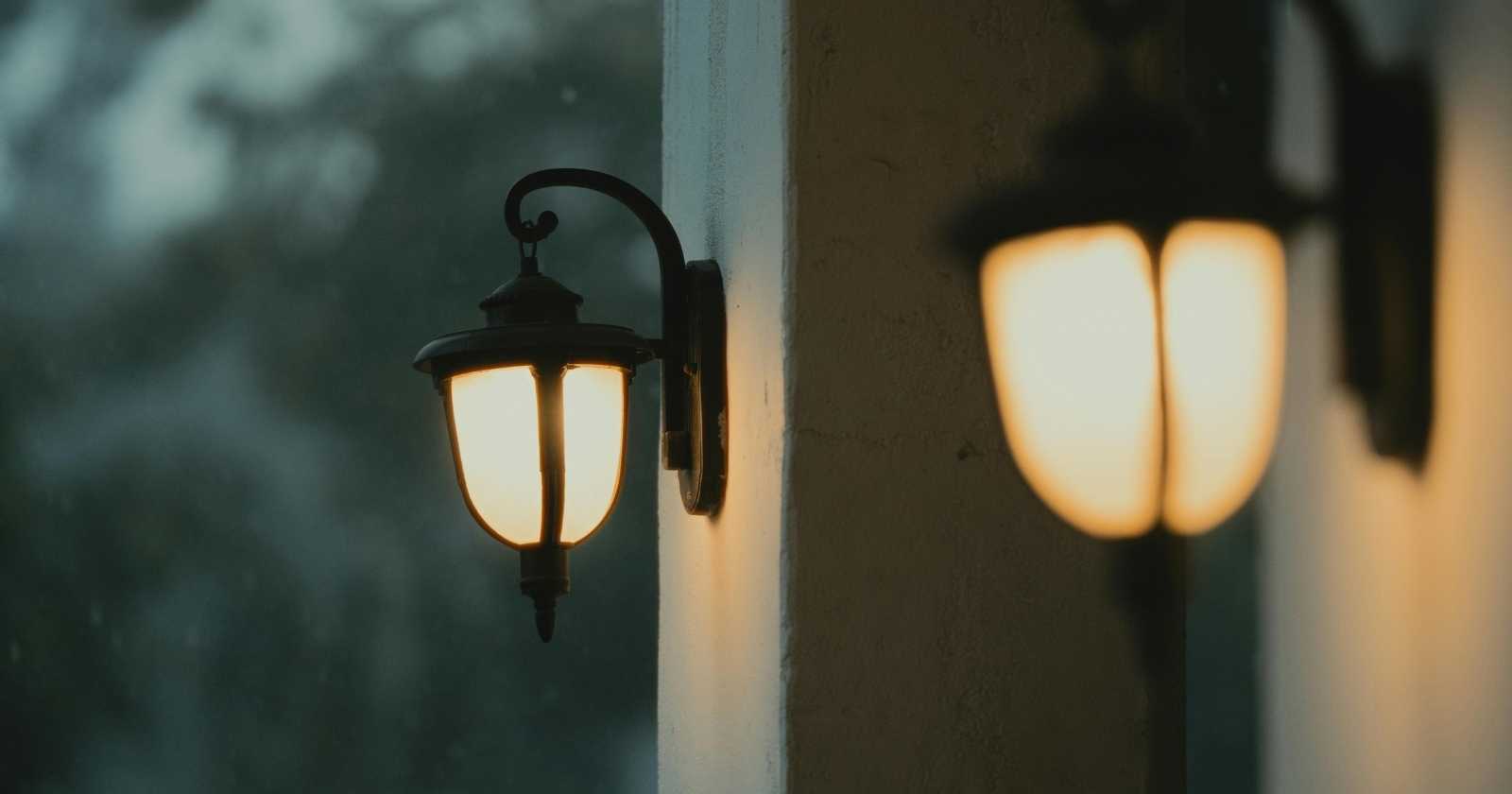
Walk through any residential street after midnight and you’ll notice something. A handful of porch lights are still burning, long after the last car has pulled into the driveway and the last bedroom window has gone dark. The houses are quiet. The bulbs are not.
If you ask the person who left it on, you’ll get the usual answers. Forgot. Habit. Doesn’t really cost much. None of those answers are the real one.
The real one is older than the house, older than the marriage, older than the children sleeping upstairs. It traces back to a porch light somewhere else, decades ago, that meant something very specific to a child who used to wait by a window.
The bulb that does the emotional work
For most adults, a lit doorway is a utility. For some, it is a signal. The difference between those two relationships to the same fixture is almost always traceable to what the light meant in childhood.
That distinction matters more than it sounds.
For the child who grew up watching for a parent who came home late, came home unpredictably, or sometimes did not come home at all, the porch light became something closer to a nervous system. It was the visible, external proof that the wait was still in progress. When the light went off, it meant the door had opened. It meant the count was complete. It meant the body in the bed could finally unclench.
Forty years later, the same person flips the switch at dusk and somehow forgets to flip it back. The hand will not do it. The hand learned a long time ago that turning that light off prematurely was a kind of giving up.
What memory does with safety cues
The brain is unusually good at holding onto the sensory details that surrounded relief. Researchers studying emotional memory consolidation have found that the cues attached to emotionally charged experiences get strengthened during sleep, embedded more deeply than ordinary information. A 2025 study published in Communications Biology showed that emotional memories benefit more from sleep-based reactivation than neutral ones, with slow wave sleep playing a key role in locking them in.
In practical terms: the night you were eight years old and finally heard the car door at 1 a.m. is encoded differently than the night you were eight and ate cereal. The porch light is filed under the cereal night’s opposite category. It is filed with the relief. And the brain does not retire that file. It waits for the next dusk.
Conventional wisdom calls it a quirk
Most people interpret these small adult behaviours as harmless eccentricities. Leaves the light on. Always checks the locks twice. Texts everyone when they land. Quirk, quirk, quirk.
But the language of quirk is too flat for what is actually happening. A regulatory system designed in childhood for one purpose — tracking whether the people you love are physically safe right now — never got the memo that the assignment ended. The system keeps doing the job. The porch light is one of its tools.
This is the territory that therapist Patrick Teahan was pointing to when he went viral describing how childhood trauma shows up in adults: not as obvious dysfunction, but as a hundred small competencies that look like personality and are actually leftover safety strategies.
Who tends to keep the light on
There is a particular childhood profile that produces porch-light adults. It is not always a dramatic one.
It might be a parent who worked nights and whose return was the metronome of the household. It might be a parent whose drinking made arrival a coin flip between relief and dread. It might be a sibling who ran with a difficult crowd, or a mother who drove long distances in bad weather, or a father whose job involved risk that nobody in the family was allowed to name out loud.
In each version, the child became unusually attuned to the threshold. To the sound of tyres on gravel. To headlights sweeping the ceiling. To the click of a key in the lock that meant the watching could stop.
The research on adverse childhood experiences consistently finds that environments where a child cannot count on caregiver availability shape the stress response system in lasting ways. The CDC estimates that about 64 percent of adults have experienced at least one such event before age 18, and roughly one in six report four or more. The child learns to track, to scan, to maintain vigilance even when nothing is visibly wrong. Decades later, the vigilance has been domesticated into rituals so ordinary that nobody questions them.
The grammar of small rituals
The porch light is part of a wider grammar. The same adult often does several other small things: leaves a hallway lamp on for a partner who is already home, sleeps with the bedroom door open in case someone needs them, wakes up briefly at the hour their teenager used to come in, even though that teenager is now thirty-four and lives in another city.
None of these behaviours are inefficient. They are efficient — just for a problem that no longer exists.
Other patterns belong to the same family. The morning ritual of the candle, the made bed, the open curtains is another version of the same instinct: a small physical act that says this space is mine, this day is safe, the count is right. Different bulb, same circuit. The adult who keeps the kitchen spotless and the car a disaster is operating on a related logic: a childhood map of which spaces had to be controlled and which could be allowed to fall apart. The porch light, like the kitchen, is a public-facing space. It is what the world sees first. It is, in some old part of the brain, still the place where the rescue happens.
Why partners sometimes misread it
The partner of a porch-light adult often interprets the behaviour wrongly. They read it as fussiness, or as a controlling streak, or as an inability to let go of unnecessary worry.
What they are actually watching is regulation. The light is doing something for the person who left it on. It is keeping a part of the body calm that would otherwise start scanning for trouble. Turning it off too early does not just dim the porch. It removes a small but real support from a nervous system that has been using it.
This is the same misreading that happens when someone goes quiet when they are angry and gets accused of giving the silent treatment. The behaviour looks like one thing to the observer and is doing entirely different work for the person doing it.
Recognising the difference is most of what makes long relationships livable.
The neurology of the wait
Children who spent significant time waiting — for a parent to come home, for a fight to end, for a door to open — develop a specific kind of attentional muscle. The brain learns to hold a question open for hours, to keep a tab running in the background of every other activity, to never quite fully settle. This is not metaphor. Functional imaging studies of adults with histories of early adversity show altered baseline activity in regions tied to threat monitoring, including the amygdala and anterior cingulate. The scanning becomes the default setting. It runs whether or not anything is actually wrong, and it costs energy the person never quite registers spending. What looks from the outside like worry or overinvestment is often just a long-standing operating mode, one that was useful at age nine and has never been formally retired. The porch light is one of the more benign expressions of it. The harder ones show up in sleep quality, in resting heart rate, in the inability to fully exhale in a quiet room.
Early relational experience shapes adult patterns by creating an internal blueprint for intimacy: the template the child built from the caregivers who taught them what to expect. A child who learned that love involved waiting for someone to come back will, as an adult, often build a life around small rituals of arrival and return.
The porch light is one of those rituals. So is the unanswered text that gets checked every six minutes. So is the strange relief of hearing the garage door at the expected time. So is the way some adults cannot fully fall asleep until everyone they love has reported in.
When the wait was for someone who didn’t make it
For some porch-light adults, the original wait ended badly. A parent who never came home that night. A sibling who died in the kind of accident the household had spent years bracing for. A friend whose disappearance was never resolved.
In these cases the light takes on a different weight. It is not just regulation. It is a small refusal to give up the post. It is the body still standing watch for a person who is no longer expected, because standing watch is the last form of love available.
In grief work, these are sometimes understood as continuing bonds: the small ongoing rituals by which the bereaved keep the relationship metabolically alive. A porch light, in this register, is one of the gentlest possible versions.
The wider literature on childhood neglect and its effects on adult attachment describes how early experiences of absence can produce adults who organise their inner lives around proof of presence. Lights, lists, check-ins, photographs on the fridge. Anything that says: they were here, they are accounted for, the room is still occupied.
The light is not the problem
Reading these patterns this way can tip easily into something joyless: a tendency to treat every small adult habit as a symptom that needs to be cured. That misses the point.
The porch light is not a problem. It is a translation — the adult version of a child’s solution to a real situation, carried forward and reshaped into something that costs almost nothing and provides a quiet kind of comfort. Not every leftover from childhood needs to be excavated and removed. Some of them are how people stay tender.
What is worth noticing is the cost. The light itself is fine. The hypervigilance it represents, applied to a forty-year-old’s work emails or a partner’s twenty-minute lateness, is more expensive. The question is not whether to turn the light off. The question is whether the same nervous system is also lit up at noon, on a Tuesday, when nothing is wrong at all.
For adults working through the residue of early experiences, the patterns rooted in childhood usually need to be met with curiosity before they can be met with change. Leave the porch light on. Just notice why.
What the light is really saying
So here is the harder question. Walk through your own house tonight and count the lights you leave on for nobody. The hallway lamp. The kitchen under-cabinet strip. The porch bulb that has been burning since dusk for a household that is already home and asleep.
Each one is a small confession. Each one is a piece of your history rendered in wattage, a sentence your nervous system is still speaking out loud because it never learned another language for love. The utility bill is the cheap part. The expensive part is what those lights are telling you about who you are still waiting for, and whether that wait is keeping anyone safe or just keeping you tired.
Turn one of them off tonight. See what your body does. If something in you flinches, you have your answer about whose childhood the switch belongs to — and whether it might finally be time to let that child go to bed.
