

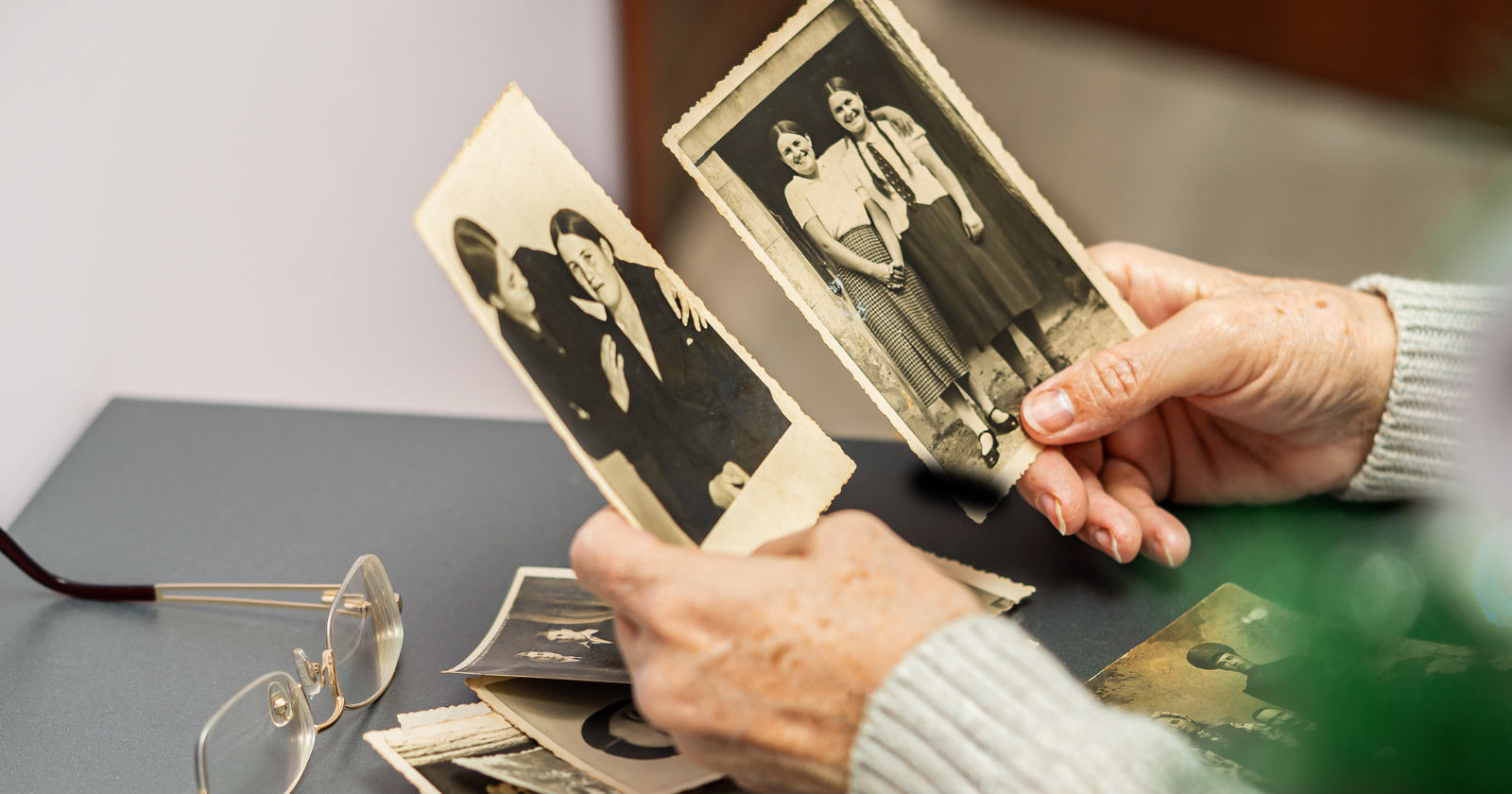
Somewhere in their seventies or eighties, some older adults begin quietly giving things away. The drawers get emptier over the course of a year. The good silver — the set nobody ever used because it was the good silver — gets sorted into piles, one for each grandchild. Linen, jewellery, tools, and photographs start migrating toward the people they were always meant for, sometimes with a name written on a bag in pencil. The person doing this is not dying, and often not even sick. They are making sure that when the day comes, whoever loves them most won’t have to spend a weekend in February sorting through a lifetime alone.
Most people who watch this process from the outside read it wrong. They see a parent shrinking their world and assume the parent is shrinking. They worry. They ask if everything is okay. They use words like morbid and premature.
That’s not what’s happening.
The misread gesture
The conventional wisdom says that late-life downsizing is a kind of soft surrender, a quiet acknowledgement that the end is near. Adult children sometimes find it unbearable for this reason. A father packing up his workshop, labelling tools for his sons, can look like a man giving up. The instinct is to push back, to insist he keep everything, to tell him there’s plenty of time.
But the impulse to downsize late in life is rarely about the self at all. It is about the people who will be left with the boxes. It is one of the most clear-eyed acts of love available to a person who has watched their own parents die and remembers what came after the funeral.
The grief researcher’s quiet observation, repeated in family caregiving studies for years, is that the worst part of losing a parent is often not the death. It is the house. It is the four weekends of sorting, the disagreements between siblings over who gets what, the guilt of throwing away a birthday card from 1978, the slow exhausting archaeology of someone else’s existence performed in a fog of grief. Anyone who has done it once will do almost anything to spare their own children from doing it.
What downsizing actually is
Psychologists who study late-life behaviour have a name for the broader category this falls into: generativity. It is the developmental task, first described by Erik Erikson, of investing in the wellbeing of those who come after you. In younger adults it shows up as parenting, mentoring, building institutions. In older adults it often shows up materially, in the careful redistribution of objects, money, photographs, and stories.
The act of going through a lifetime of possessions and deciding what to keep, what to give away now, and what to label for later is cognitively demanding in a way that outsiders rarely appreciate. It requires a person to handle each object, remember its origin, decide its meaning, and then choose its future. Research on psychological resilience in older adults consistently finds that the capacity to face age-related losses with intention, rather than avoidance, is one of the strongest predictors of mental health in the final decades of life.
Downsizing is the physical form of that intention. It is grief work done in advance.
The weight that gets left behind
A useful way to understand the gesture is to look at what happens when it doesn’t occur. Forbes’ practical guide for surviving families spends considerable space on the logistics of sorting through a lifetime of possessions and papers after a parent dies, alongside inherited IRAs and estate taxes. The reason it gets that much space is because most families are unprepared for it. The average estate cleanout takes months. Siblings who got along fine for forty years find themselves arguing over a set of dishes nobody actually wants but everyone feels guilty discarding.
The objects themselves are usually the smaller problem. The bigger problem is what they represent: every undocumented decision, every unfiled paper, every half-finished project, every box labelled misc. The cognitive load of going through it falls on people who are also grieving, also working, also raising children, also trying to keep their own lives intact.
The parent who downsizes early removes that load. Quietly, without asking for credit, they spend their own remaining energy so their children can spend less of theirs.
The caregiver context
This becomes more pointed when you consider the demographic backdrop. Pew Research Center’s recent report on family caregiving in an aging America documents the scale of unpaid family care being absorbed by adult children, particularly daughters. According to estimates referenced by clinical social workers at the University of Nevada, Reno, more than 41 million Americans are caring for a loved one aged 50 or older, an increase from previous AARP and National Alliance for Caregiving surveys.
The same is true across most of the world, though the texture differs. In low- and middle-income countries, caregiving research summarised by Nature finds that family members, predominantly female relatives, provide the vast majority of elder care while juggling domestic responsibilities, paid work, and health tasks without formal training or institutional support.
An older adult who has watched their own life carefully knows this. They know which child will end up doing most of the work. They know that child is already stretched. The decision to start giving things away while still healthy is, in part, an act of solidarity with that future caregiver — a way of saying: I will not add the storage unit to the list of things you have to manage.
The independence paradox
There is a counterintuitive piece to all of this. The instinct of adult children is often to resist a parent’s downsizing because it feels like an early ceding of independence. Why would you give away the dining table you’ve had for forty years? You still host Thanksgiving.
But maintaining independence in old age, as geriatric researchers have repeatedly observed, depends on a sense of agency and control over one’s own life rather than the accumulation of stuff. Psychological independence — the ability to make choices, set priorities, and direct one’s own life — is what most older adults are actually trying to preserve. Choosing what to keep and what to release is an expression of that independence, not a surrender of it.
The parent who decides which grandchild gets the rocking chair is exercising authority. They are still the one making the call. Once they are gone, those calls will be made by other people, in worse circumstances, with less information about what mattered to whom.
The narrative work hidden in the boxes
Something else happens during late-life downsizing that rarely gets discussed. The process forces a kind of life review. Each object is a prompt. The cufflinks from a first job. A child’s report card. A letter from a sister who died in 1994. The act of handling these things, deciding their fate, and often telling someone the story behind them is a structured way of putting a life in order narratively, not just physically.
Geriatric psychologists have written for decades about the therapeutic value of life review in older adults — the process of revisiting and integrating one’s history. Downsizing is life review with a job to do. It produces a narrative as a by-product. The granddaughter who receives the cufflinks gets the story about why her grandfather wore them to his first interview in 1962. That story would have been lost if the cufflinks had been found in a drawer six months after the funeral.
This is part of why the gesture is so often misread by people watching from the outside. From inside the process, it does not feel like ending. It feels like authoring.
What the resistance is really about
When adult children push back on a parent’s downsizing — Dad, you don’t need to do this yet, stop being morbid — the resistance usually has little to do with the parent. It is the child’s own anticipatory grief surfacing. The empty drawer is a preview of an empty house, which is a preview of a world without that parent in it. To accept the gift of the labelled silverware is to acknowledge that one day the labelling will matter.
This is a hard thing for an adult child to sit with. But pushing the parent to stop is, in effect, asking the parent to absorb the child’s discomfort by leaving everything for the child to handle later. It transfers the emotional cost across time, from the parent (who can spend the cost now, deliberately) to the child (who will spend it in grief, under deadline).
Clinicians who work with families during these transitions often note something similar to what social workers at the University of Nevada have observed: the parent’s wishes and the child’s wishes do not always align, and one of the kindest things a family can do is name the disagreement out loud rather than pretend it isn’t there.
The cultural shape of the gesture
The form this takes varies by culture, but the underlying impulse is remarkably consistent. In Japan, the practice of danshari — a deliberate, often spiritual practice of releasing possessions — has long been associated with aging. In many South Asian families, the careful distribution of jewellery, saris, and household goods to daughters and daughters-in-law is a multi-generational tradition. In Scandinavian countries, the Swedish concept of döstädning, or death cleaning, has been popularised by Margareta Magnusson as the considerate act of clearing one’s own life before others have to.
Different vocabularies. Same gesture. The recognition that a life accumulates more than the people who loved it can reasonably be asked to sort through.
How to receive it well
If you are on the receiving end of this — if a parent or grandparent has started quietly handing you things — there is a way to receive it that honours what is actually being offered.
The first is to take the object. Even if you don’t want it, even if it doesn’t fit your house, take it for now. Refusing the gift refuses the larger gesture. The negotiation about whether you keep it can happen later.
The second is to ask about it. The story behind the object is the real inheritance. The object is just the container. A parent who has decided to start giving things away is, almost without exception, hoping to be asked.
The third is to resist the urge to reassure. You’ll be around for ages, you don’t need to do this is a common reflex and a poor response. It tells the parent that their carefully chosen act of love is making you uncomfortable, and that they should stop. Most will. And then the silverware will be found in a drawer in February by someone who has to guess which grandchild it was meant for.
The oldest act
There is something worth noticing about the deep continuity of this behaviour. Long before estate lawyers and inheritance tax, before storage units and self-help books on tidying, human beings were doing some version of this — passing on tools, weapons, beads, blankets, before death rather than after. The deathbed bequest is dramatic, but the slow, deliberate, years-long downsizing is older and quieter and, in its way, more generous. It is not theatrical. It does not ask for thanks. It absorbs into itself the unglamorous middle work of dying so that the people who come after only have to do the part that cannot be done in advance, which is missing the person.
An older adult who is methodically emptying a house is not preparing for the end in any frightened sense. They are doing one of the last things a parent gets to do. They are protecting their children from a weekend that hasn’t happened yet, a weekend they themselves remember too well from when their own parents died. They are taking that weekend off the calendar.
If you are lucky enough to have someone in your life doing this for you, the right response is not to talk them out of it. The right response is to come over, sit at the kitchen table, and ask them where it all came from.
