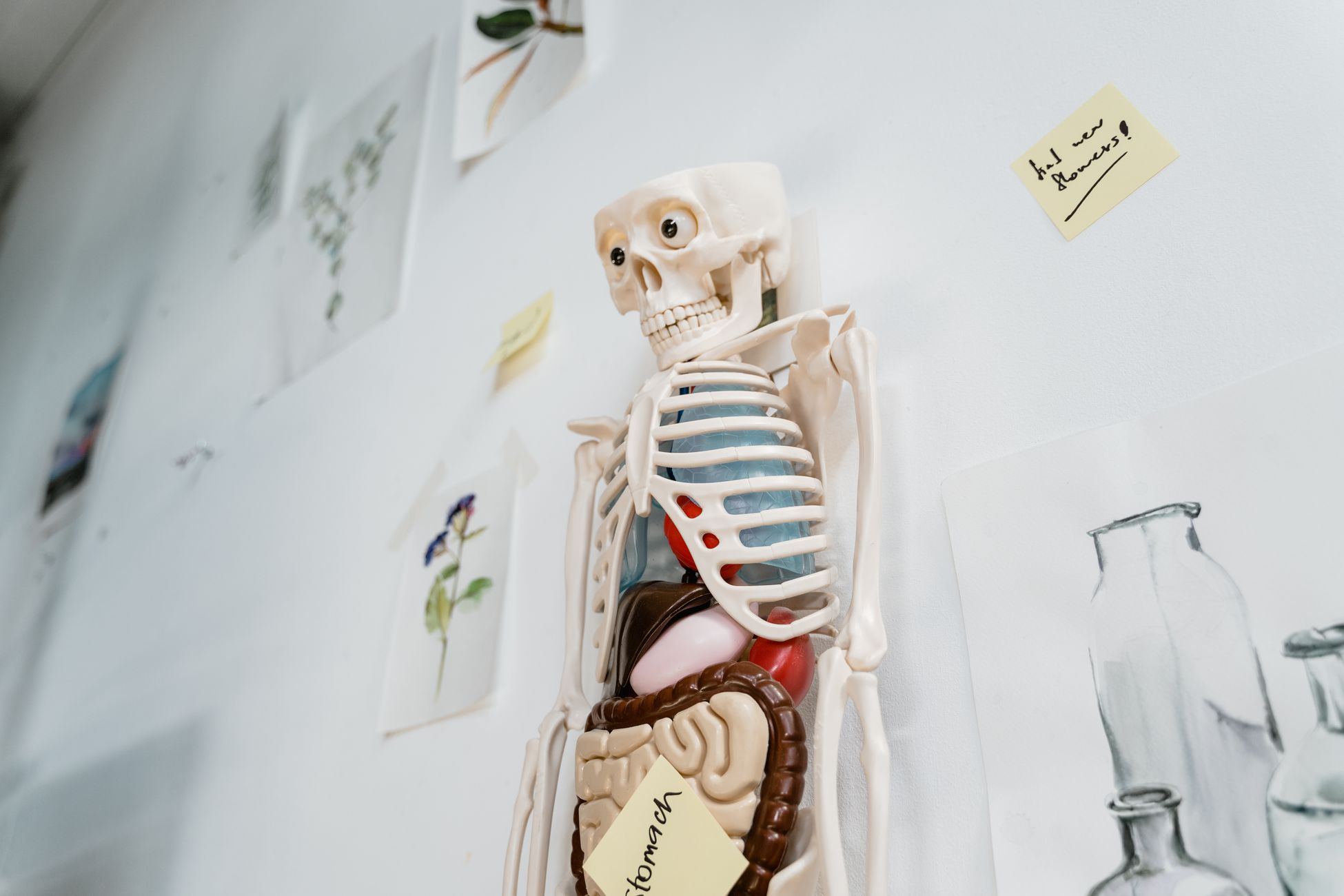
In December 2017, a Reuters investigation documented a body-broker warehouse in Portland, Oregon, where workers priced out donated human remains. A donated head, severed at the neck, went for around $300. A torso with the head still attached fetched $3,300. A whole body, intact, topped out near $5,000. Taken apart and sold in pieces, a knee here, a spine there, a foot in a freezer in Las Vegas, the same donor could generate many times that figure. The arithmetic is grim and entirely legal: in the United States, a person disassembled is worth far more than a person whole.
The trade is called non-transplant tissue banking, and almost no one outside the industry has heard of it.
The price list nobody talks about
Reuters obtained price sheets from body brokers during their investigation. The numbers were specific enough to feel like a hardware catalog.
A cervical spine: $300. A foot: $200. A pelvis: $400. A shoulder: $375. A whole brain: $600. A knee, prepared and shipped overnight on dry ice: roughly $375 to $650 depending on condition.
Add it up across a single donor and the totals climb past $10,000. Reuters documented cases where a single body produced gross sales of around $80,000 across multiple buyers.
Why this is legal at all
The legal architecture is a quirk of mid-twentieth-century American law. Organs meant for transplant, hearts, livers, kidneys, fall under the National Organ Transplant Act, which makes it a federal crime to buy or sell them.
Bodies and body parts donated for research, education, or medical-device testing are a different category entirely. They are not regulated by the FDA the way transplant organs are. There is no federal registry, no required licensing, no inspection regime in most states. A body broker can operate out of a strip-mall warehouse with no medical credentials and ship a frozen torso across state lines by FedEx.
Brokers cannot legally sell the bodies themselves. They can charge fees described by law as reasonable for recovery, processing, storage, and transportation. In practice, those fees are the price.
How the donors arrive
Most donors are people who could not afford a funeral. Cremation in the United States can cost thousands of dollars. A body broker offers to take the body at no cost, cremate whatever isn’t used, and return the ashes to the family in a small box, usually within four to six weeks.
The consent forms families sign are often broad and vague. Reuters found donors whose families believed their loved one would help cure Alzheimer’s, only to learn the head had been shipped to a surgical training course and the torso sold to a Department of Defense contractor for improvised explosive device testing.
In one Arizona case, a donor’s family was told their father’s body would advance medical science. His head was later strapped to a chair and detonated in a blast test.
The customers
Medical device companies need cadaver knees to test new artificial joints. Orthopedic surgeons need spines to practice screw placement. Dental schools need jaws. The U.S. military buys bodies and parts for ballistics and blast research. Cosmetic surgery training programs need faces.
A single hip joint, used in a one-day surgeon training course at a hotel ballroom in Las Vegas, might be billed to the device manufacturer at $900 to $1,200. The course attendees pay tuition. The hotel charges for the room. The dry ice supplier invoices for delivery. Everyone in the chain bills somebody, except the donor’s family, who receive ashes and a thank-you letter.
The Detroit warehouse
The FBI raided Arthur Rathburn’s Detroit warehouse in 2013. Rathburn ran a body brokerage that supplied parts to medical conferences. Agents found severed heads stacked in coolers, bodies cut in half with chainsaws, and remains stored alongside one another with no labels indicating cause of death.
Some of the heads tested positive for HIV and hepatitis. Rathburn had been renting them out to dental and surgical training seminars without disclosing the infections. He was convicted on wire fraud charges, not on any law governing the body trade itself, because no such federal law exists, and sentenced to prison.
The Reuters investigation that ran in parallel documented that Rathburn was not an outlier. He was the version of the industry that got caught.
What a body is worth, itemized
The grim accounting works like this. A donor weighing roughly 70 kilograms, processed at a typical broker, breaks down into sellable units across maybe a dozen buyers.
Two knees. Two shoulders. Two hips. A lumbar spine, a cervical spine, a thoracic spine. A pelvis. Two feet. Two hands. A heart for cardiac device testing. A brain. Sometimes the eyes, sold separately to ophthalmology programs. The skin can go to burn research. The long bones to orthopedic study.
Reuters tallied donors whose pieces sold for thousands of dollars across multiple buyers. Some generated more than $10,000. The whole-body price of around $5,000 was, in effect, the wholesale floor. Disassembly was where the margin lived.
The cadaver shortage that isn’t
This trade exists in part because traditional medical-school anatomy labs are shrinking. STAT has reported on how medical schools are eliminating the use of cadavers, replacing dissection with virtual reality, 3D-printed models, and digital atlases. Some students now graduate having never held a human heart in their hands.
The schools are pulling back partly because whole-body donation is logistically expensive and partly because the educational consensus has shifted. STAT also documented the closure of long-running cadaver programs at institutions that had run them for a century.
The non-transplant tissue brokers stepped into the gap. Industry training, device testing, and continuing medical education kept demanding cadaver parts even as universities backed away. The brokers serve a market the academic sector chose to leave.
The Catholic objection
The piecemeal commercialization of human remains has drawn objections from theologians and ethicists. In March 2026, Pope Leo addressed participants at an event organized by the Italian National Transplant Network and praised altruistic organ donation while warning against the commodification of the body. The distinction he drew, gift versus commerce, is exactly the line that American non-transplant tissue banking blurs.
A donor family signs a consent form believing they are giving a gift. The broker treats the body as inventory. The two understandings of the same act never meet.
What reform looks like
A handful of states have tried to regulate body brokers. Some require licensing. Others have banned certain shipping practices after scandals involving body parts mailed in cardboard boxes. Most states have done nothing.
The Uniform Anatomical Gift Act, the model state law governing body donation, has not kept pace with the for-profit broker model that has grown around it. Federal legislation has been introduced more than once and has died in committee each time.
Industry trade groups have proposed voluntary accreditation. Some certification programs exist, but participation is not mandatory and many brokers do not bother.
The boxes that come back
What a donor family receives, eventually, is a small cardboard or plastic box containing cremated remains. The ashes are mostly bone fragment, ground to coarse sand in a cremation processor.
Whether the ashes are actually the donor’s is sometimes unclear. Reuters documented brokers who cremated commingled remains and divided the results by weight. A family grieving in a quiet living room in Tennessee, holding a box, has no way to know whether the powder inside ever belonged to the person they loved.
The receipt in the file says the donation was a gift. The price sheet in the warehouse, four states away, says otherwise. Three hundred dollars for the head, three thousand three hundred for the torso, five thousand for the whole, and far more, for anyone willing to do the math, in the pieces.