

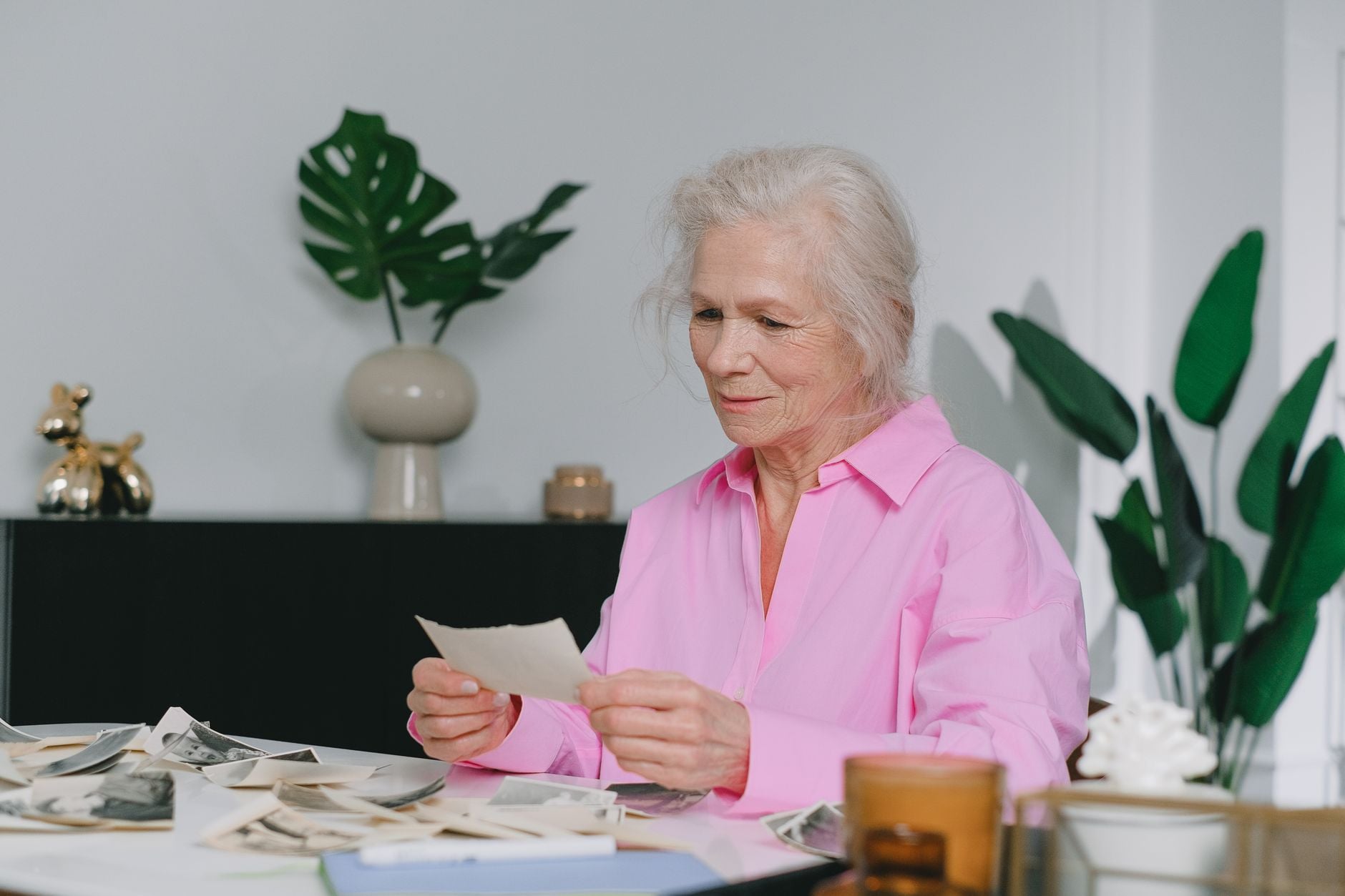
A woman in her late eighties once said it like this, almost as an aside: “There’s no one left who remembers me as a girl.” She had outlived two husbands, a sister, the neighbours from the street she grew up on. Her body was, by the standards of her age, doing fine. What had gone was something else.
That is the loss almost no one warns you about. We brace for the joints, the hearing, the slow surrender of independence we used to take for granted. We do not brace for the silence that follows when the last person who knew the younger version of you is gone.
That kind of loss is one part of ageing that deserves more attention.
We travel through life with witnesses
The psychologists Robert Kahn and Toni Antonucci described our relationships as a convoy, a group of close companions who move through life alongside us, some in an inner circle and others further out. They are the people you never have to introduce yourself to, who hold the context of who you have been, who still carry the version of you that existed before the present one.
A convoy is not permanent. With age it thins, and it thins faster than it can be refilled. The friends who knew you at twenty, the sibling who shared the house you grew up in, the partner who was there for the decades in between, one by one the witnesses leave, and the new people who arrive only ever meet whoever is left.
And the arithmetic, in the end, runs only one way.
Other people are holding your memory
This matters more than it first sounds, because a self is not stored entirely inside one head.
In the 1980s the psychologist Daniel Wegner described what he called transactive memory, the way close partners come to store knowledge inside each other. Over years together, couples and old friends divide up the work of remembering without noticing they are doing it. One keeps the names, the other keeps the dates, and “ask her, she’ll know” becomes a way of life. Think about what that actually contains. The nickname only your brother used. The way your mother laughed at something nobody else found funny. The summer you almost dropped out, the argument that ended a friendship, the small private nonsense between you and someone now gone. Research on long-married couples suggests the system is real enough that when one partner’s memory begins to fail, the other’s hold on their shared past weakens too. The remembering was shared work, and now half the workforce is missing.
So when the people who knew you young die, you do not only lose them. You lose the parts of your own life they were keeping for you, the quiet corroboration that the younger version happened at all. There is eventually no one left to say: I was there, I remember, that is really how it was.
The part nobody puts on the list
Losing an ability is, in an odd way, a well-supported loss. There are ramps and hearing aids, routines and carers, a whole vocabulary for it, and the people around you expect it and make room. Losing your witnesses comes with none of that scaffolding. Where is the equivalent of a hearing aid for that?
It also tends to arrive in clusters. Gerontologists use the blunt phrase bereavement overload for what happens when losses come faster than a person can absorb them, which is close to the ordinary condition of late life. Outliving a whole peer group is a particular kind of grief, bound up with a shared history that now exists nowhere outside one person. Some respond by pulling back, declining new close ties precisely because they cannot face losing them again, which quietly deepens the isolation.
The longevity paradox
This is the part the technology industry, with its considerable appetite for living longer, tends to skip.
An enormous amount of money now flows into extending the human lifespan, on the assumption that ageing is essentially a biological problem, a matter of cells and clocks. Suppose it works. The body lasts longer. The convoy does not. Living well beyond the people who knew you does not solve this particular hardship; it enlarges it, because more of your witnesses end up on the far side of the line.
Adding years is the funded problem. Staying known is the harder one, and almost nobody is working on it.
What can actually be done about it
The obvious consolation is that new people can be told. New friends, grandchildren, a younger neighbour who likes the stories — they can be handed the older version of you, if you are willing to tell it and they are willing to listen.
But it is worth being honest about what that exchange actually is. A story told is not the same as a life witnessed. The grandchild who hears about the summer of 1962 has not seen you in it, and never will. They receive a portrait; the people who are gone held the original. Reminiscence helps, intergenerational connection helps, letting new people in helps more than refusing to, and the loneliness that follows the loss of a peer group eases, in practice, mostly by letting new people in anyway. None of that fully replaces what was lost. It is not meant to.
The people you were born among will go. What remains is partial — a version of you assembled from what you can still say out loud, in the company of people who have to take your word for it. Whether that is enough is not really a question anyone gets to answer in advance.
