

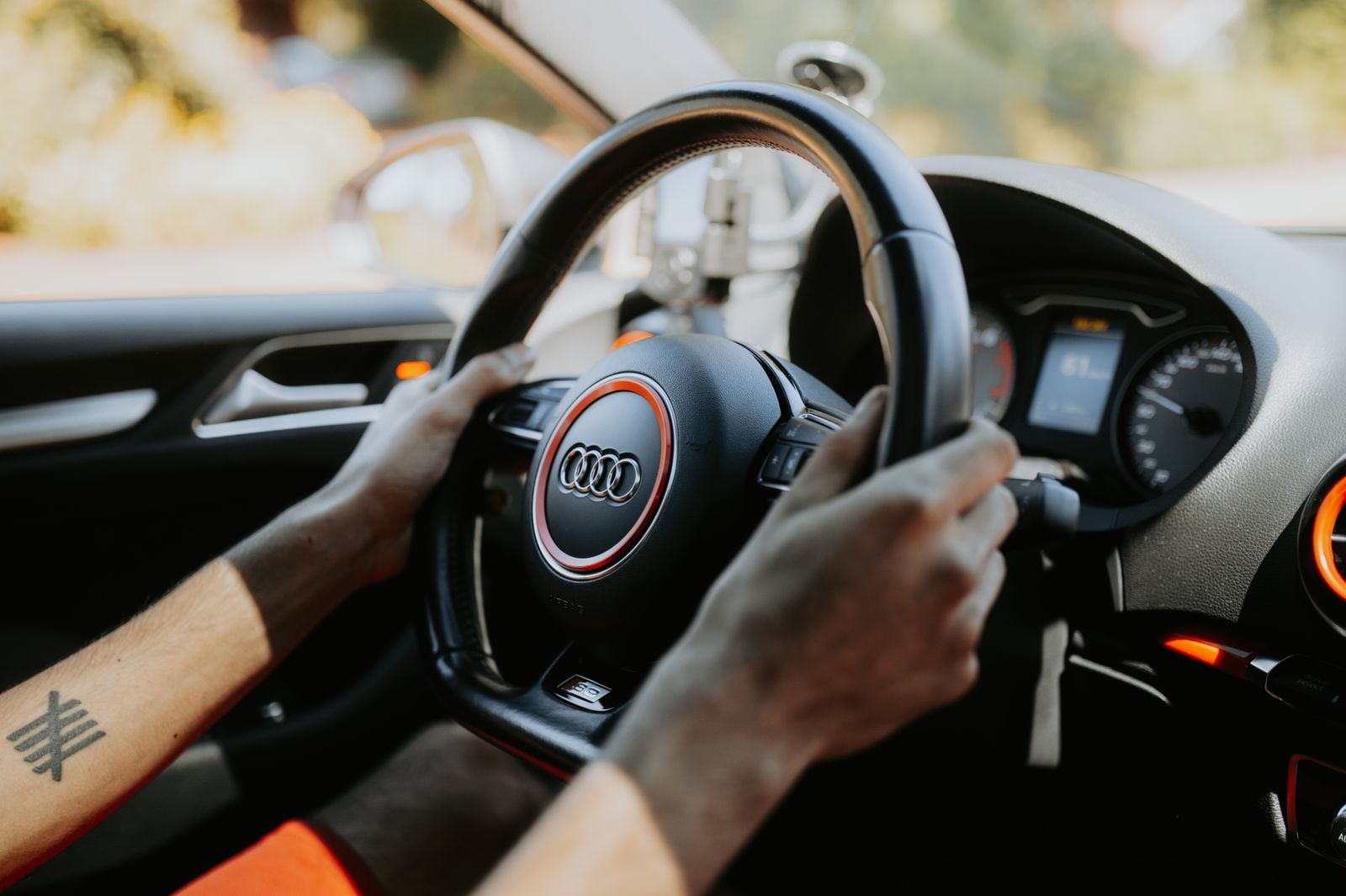
The person who always volunteers to drive is rarely volunteering for the reason they say. They claim it’s about gas money, or knowing the route, or being a control freak about parking. What’s actually happening is more interesting: they have figured out that the driver is the only person in the car who is unambiguously useful. The driver doesn’t have to wonder if they’re taking up too much space, if their music is annoying, if their being there at all is a favor someone else is reluctantly granting. The driver is, by definition, providing. Everyone else is receiving.
For people who grew up uncertain whether their needs were welcome, that distinction is everything.
The hidden math of who gets to be in the car
Most analyses of generosity treat it as a single thing: someone has more than they need, so they give some away. But there is a quieter category of giving that has almost nothing to do with abundance. It has to do with the giver’s discomfort at the alternative. If you cannot tolerate the feeling of being a passenger, you become a driver. If you cannot tolerate the feeling of being hosted, you become the host. The behavior looks like generosity. The internal experience is closer to relief.
This is not generosity in any meaningful sense of the word.
Conventional wisdom holds that chronic helpers are simply kind people, perhaps to a fault. The clinical literature on early caregiving suggests something else. Many of the adults who can’t stop offering are not overflowing with care so much as managing a long-standing anxiety about what it means to need anything from anyone.
Where the reflex comes from
Building on attachment theory’s framework of secure, anxious-preoccupied, avoidant-dismissive, and disorganized patterns that tend to persist into adulthood, internal working models shape how people understand themselves and others in relationships. Those models do not stay confined to romance. They shape how you behave in a carpool.
A child who learned early that their needs were inconvenient, that asking for a ride, a snack, a moment of attention triggered irritation or withdrawal, often grows up to find any receiving posture quietly intolerable. Sitting in the passenger seat means someone is doing something for you. For some adults, that simple fact is enough to make the seat feel uncomfortable.
Counselor Victoria Kress, president-elect of the American Counseling Association, has noted that disorganized attachment in particular leaves people desperate to feel seen, heard, understood, and have intimacy, while also fearing what closeness might cost them. Driving solves part of that equation. You are present. You are needed. You are not, however, being looked after.
The role you were assigned before you could read
Children take on functional roles inside their households. There is the responsible one, the peacekeeper, the funny one, the invisible one. The role is rarely chosen. It is what works. Clinicians Jason Sadora and Steven Szykula, writing in their “Ask Dr. Steve” column, have described how every family develops its own unique emotional ecosystem, with children taking on roles to help the family function and secure their place within it.
The child who became useful early, who learned that being the one who helps is the most reliable way to belong, does not stop being that person at eighteen. They become the friend who picks everyone up from the airport. The colleague who stays late. The relative who hosts every holiday. The roommate who runs to the store. They are not consciously bargaining. The exchange happened so long ago they no longer remember signing the contract. What they do remember, somewhere below language, is the feeling of being needed and the feeling of needing. Only one of those felt safe.
Why the offer is doing more work than it looks
If you watch a chronic driver closely, you’ll notice that the offer is usually preemptive. It arrives before anyone has had a chance to suggest splitting the ride, taking turns, or calling a car. The speed matters. A genuinely flexible offer would sit with the ambiguity for a moment, let the group decide, see what other people prefer. The preemptive offer is doing something else: it is closing off the possibility that the driver might end up in the passenger seat.
The offer usually comes with language minimizing any burden, phrases like saying they don’t mind or that it’s no trouble at all. This is not manipulation. It is regulation. The nervous system has identified a threat, the prospect of being a recipient, and routed around it.
Childhood emotional abuse and neglect are associated with elevated lifetime risks of depression, anxiety, and a range of interpersonal difficulties. The mechanism is not mysterious. Children who learn that their needs are unwelcome become adults whose nervous systems treat needing as dangerous. Psychotherapist Susan Forward and her co-author Donna Frazier, in their work on emotional manipulation, described how patterns of fear, obligation, and guilt installed in childhood continue to shape adult choices long after the original family is gone.
The driver, the host, the over-orderer
The same reflex shows up in dozens of small social situations. The person who insists on hosting because being a guest feels like an unpayable debt. The friend who always orders an extra appetizer for the table so that, technically, everyone is eating something they brought. The colleague who picks up the coffee on the way in every morning, not because they want coffee, but because walking in empty-handed feels like asking to be tolerated.
None of these people would describe themselves as anxious. They would describe themselves as thoughtful. And they are. The thoughtfulness is real. It is also a finely tuned avoidance system.
You can see the same pattern in the way some adults handle the simple act of receiving a compliment. They deflect, they redirect, they immediately compliment back. Receiving sits poorly with them. So they convert the transaction into a giving one as fast as they can. The car is just a bigger version of this. A two-hour drive is a two-hour-long compliment they don’t have to receive.
The cost of always being the one who provides
There is a paradox at the center of compulsive helping. The person who cannot stop providing often ends up feeling profoundly unseen. They are surrounded by people who appreciate them, who genuinely do, and yet something is missing. The appreciation arrives in the form of gratitude for what they do, not curiosity about who they are. Because they have arranged every relationship to flow in one direction, no one ever has the occasion to ask whether they need anything. They’ve made that question structurally unnecessary.
It’s a version of the loneliness that arrives in crowded rooms. We’ve written before about how adults who feel loneliest in a full room have often learned that being understood and being surrounded are two completely different things. The chronic driver lives near this same line. They are wanted at every event, included in every plan, thanked constantly. None of it touches the underlying question of whether they could ask for something and receive it without apologizing.
The same protective architecture appears in the small habit of keeping a phone face-down on every table, another reflex built in childhood that quietly governs adult life.
What “imposing” really means
The word that keeps surfacing in conversations with compulsive helpers is imposing. They do not want to impose. They will go to remarkable lengths to avoid imposing. If you press them on what imposing actually means, the answers are usually vague. Taking up too much room. Being a bother. Being the kind of person someone has to make space for.
That last definition is the revealing one. Somewhere in their history, they learned that the people responsible for making space for them did so grudgingly, or inconsistently, or with a sigh. Clinical work on how childhood trauma shapes adult relationships suggests that this is one of the most stubborn legacies of early relational stress: the conviction that one’s presence is a thing other people have to absorb rather than enjoy.
Driving solves the problem at a deep, almost cellular level. The driver is not being absorbed. The driver is the vehicle, almost literally. There is no question of imposition. The driver is the answer to the question of how anyone is getting anywhere.
The version of generosity that costs something
None of this is a reason to stop being helpful. The world needs the people who show up early, drive everyone home, host the holidays, and make sure no one walks back to their car alone at night. Reflexive helping, even when its roots are anxious, produces real care. The friend who picks you up from the airport at 1 a.m. is still picking you up at 1 a.m. The motive matters less than the kilometres.
What’s worth paying attention to is the other side of the ledger. The chronic driver, the chronic host, the chronic helper, they often have a much harder time letting other people drive them. Letting someone else cook. Letting someone else pay. Letting someone show up for them in the same way they show up for everyone else. The discomfort that arises in those moments is the actual growth edge.
One of the more uncomfortable exercises in attachment-informed therapy is the deliberate practice of receiving. Not arranging, not reciprocating, not converting it back into a gift you can return. Just sitting in the passenger seat. Letting someone else navigate. Letting yourself be driven.
For some adults this feels almost unbearable. Which is, of course, the point. The discomfort is the map.
A small experiment
If you recognize yourself in any of this, the cheapest experiment is also the most revealing. The next time a group is figuring out logistics, wait three full beats before offering anything. Notice what happens in your body during those three seconds. Notice the impulse to fill the silence. Notice the small wave of relief if someone else speaks first, and the small wave of anxiety underneath it.
You don’t have to stop driving. You don’t have to stop offering. The point is to find out whether you can tolerate not doing it, to learn what’s actually there underneath the reflex. Most people discover, eventually, that what’s there is not selfishness. It’s a child who once decided that being useful was the safest way to be loved, and who never quite got the memo that the rules have changed.
Somewhere along the way, you came to believe you had to be holding the keys to be welcome in the car.
