

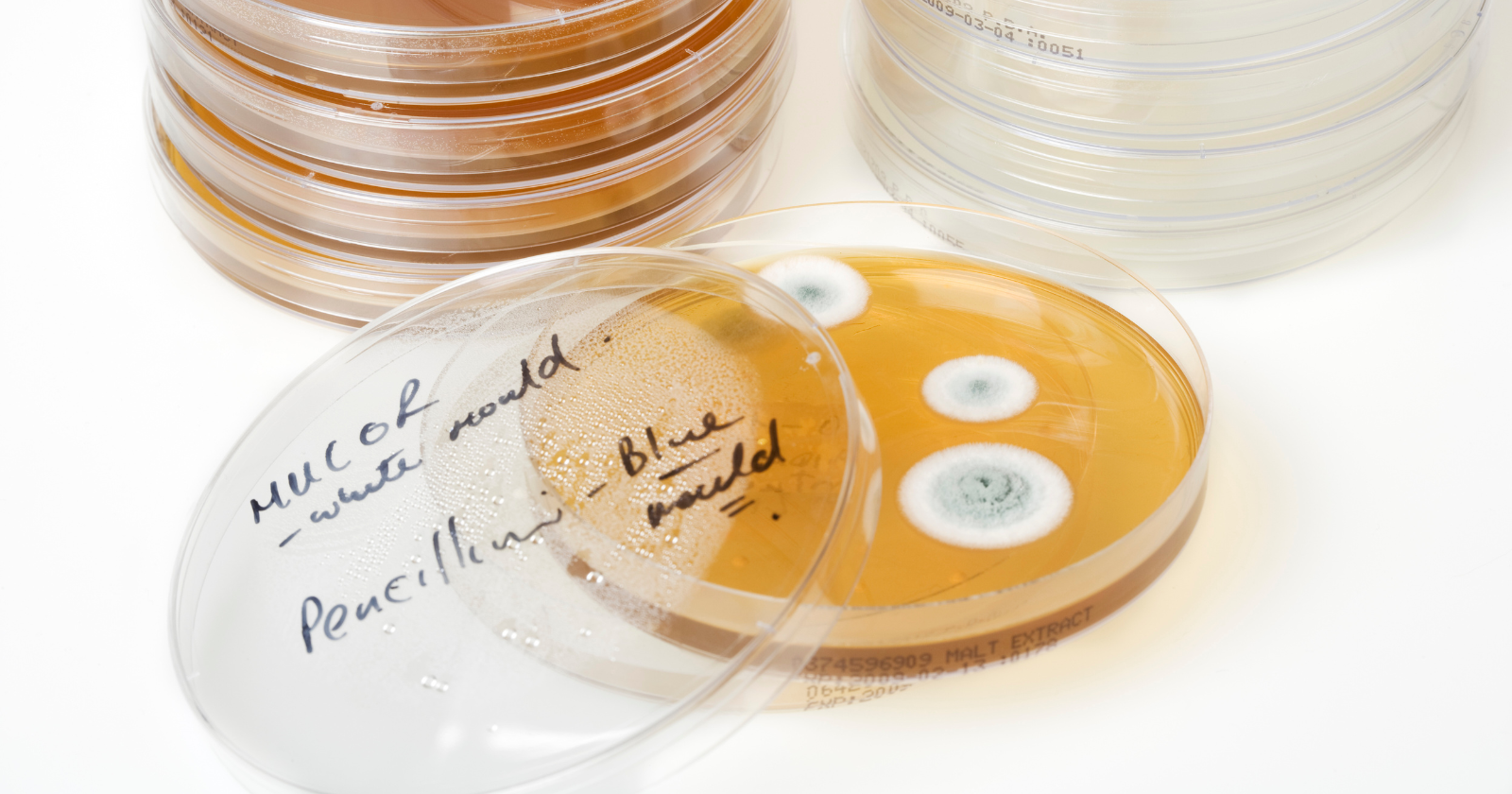
Alexander Fleming was in his late forties, the Scottish son of a pig farmer, and notoriously untidy. In September 1928, he returned to his cramped laboratory at St. Mary’s Hospital in London after a two-week holiday with his family, walked over to a stack of glass petri dishes, and began the dull chore of inspecting each one before dropping it into a tray of cleaning solution. He picked up a plate of Staphylococcus. He stopped. According to later accounts, Fleming paused when he noticed the unusual contamination on the plate.
A blue-green fuzz had bloomed on the surface of the agar. Around the fuzz, the bacterial colonies he had painted onto the plate days earlier had been wiped clean, as if someone had taken an eraser to a field of dots.
That single observation, on that single ruined plate, would eventually save an estimated 500 million lives.
The messy bench that changed medicine
Fleming had returned to St. Mary’s after the First World War with a specific obsession. He had watched soldiers die from infected wounds in field hospitals in France, and he had concluded that bacteria killed more men than artillery. He wanted a chemical that could stop the killing.
His first hit had come years earlier, in 1921, when he hung his nose over a petri dish and let his own mucus drip onto the agar to see what would happen. The mucus killed the bacteria. He had stumbled onto lysozyme, an enzyme the human body produces in tears, saliva and snot, with a mild antibacterial effect. Useful against weak germs. Useless against the ones that filled the hospital wards.
So he kept looking, and he kept his bench a wreck. Plates stacked on plates. Cultures left untended for weeks. As Smithsonian magazine documented, Fleming also painted with bacteria in his spare hours: ballerinas, soldiers, stick figures, mothers feeding children. He inoculated petri dishes with pigmented microbes and timed the growth so the colours matured together. He had an artist’s eye for the odd.
The contaminated plate
The contaminating mould on that Staphylococcus plate was long identified as Penicillium notatum, a name later folded into modern Penicillium taxonomy. Later historical accounts have traced the likely source of the mould to work being done elsewhere in the St. Mary’s building. The London weather that season also mattered: a cool spell followed by warmth favoured first the fungus, then the bacteria.
What Fleming saw when he held the dish up to the light looked like one of his microbial paintings gone wrong. The blue-green colony sat on the plate. Around it, instead of the dense lawn of yellow staph he expected, there was a wide halo of nothing. The fungus was leaking something into the agar, and that something was punching a hole in the bacteria.
He took a sample. He grew the mould in broth. He filtered the broth and tested the liquid against other germs: streptococcus, pneumococcus, meningococcus, diphtheria. The clear juice killed them all. He called it, for the first months, simply “mould juice.” By March 1929 he had given it a proper name: penicillin.
The mechanism nobody understood yet
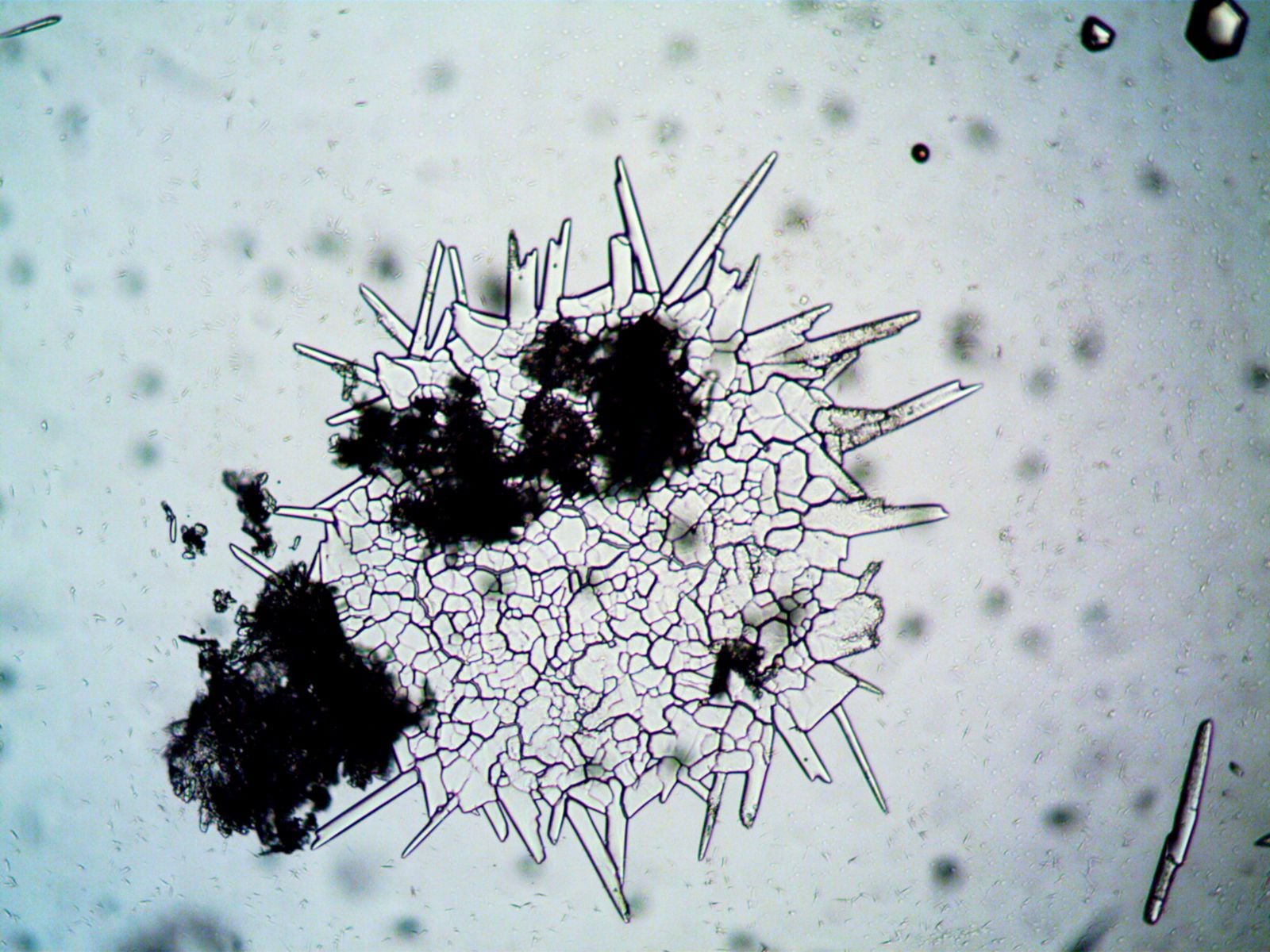
Fleming did not know how penicillin worked. Nobody would, for another two decades. The molecule he had stumbled onto contains a four-atom ring called a beta-lactam, a tense, strained little knot of carbon and nitrogen that wants very badly to break open. When it meets the enzymes that bacteria use to build their cell walls, it jams them. The bacterium tries to divide, fails to seal the new wall, and bursts under its own internal pressure like an over-inflated balloon.
Human cells have no such walls. The drug ignores them entirely. That is why penicillin can flood a bloodstream and kill the pneumococcus tearing through a patient’s lungs without touching the patient. It is one of the cleanest pieces of selective toxicity in medicine.
Fleming did not need the mechanism to publish. He wrote up his findings in the British Journal of Experimental Pathology in 1929. The paper landed with a thud. He presented the work to the Medical Research Club in London the same year. The audience asked almost no questions.
Twelve years in a drawer
The problem was that Fleming was a bacteriologist, not a chemist. Penicillin was unstable. It broke down in water within days. Extracting enough pure compound to treat a sick human required industrial fermentation tanks, vacuum drying, freeze concentration and a chemistry programme he had no funding or training to run. He worked on it sporadically through the early 1930s, then largely set it aside.
The drug sat in the literature like a sealed envelope until 1938, when a German-born biochemist named Ernst Chain, working at Oxford under the Australian pathologist Howard Florey, was paging through old papers on lysozyme and came across Fleming’s penicillin report. Chain later wrote that he came across Fleming’s paper in early 1938 and became immediately interested.
The Oxford team did what Fleming could not. They purified the compound. They injected it into mice infected with lethal doses of streptococcus. On May 25, 1940, with German bombers crossing the Channel, eight mice received the streptococcus. Four also got penicillin. By the next morning, the four untreated mice were dead. The four treated mice were grooming themselves.
From a rotting cantaloupe in Peoria
By 1941, Britain was at war and could not spare the sugar, the steel or the manpower to scale penicillin production. Florey flew to the United States and ended up, of all places, at an agricultural research station in Peoria, Illinois, where fermentation chemists had perfected techniques for growing yeast on corn-steep liquor, a sticky waste product of the maize industry that was abundant in the American Midwest and absent in Britain.
The mould loved corn-steep liquor. Yields jumped roughly 500-fold. Then came the famous cantaloupe story. A mouldy melon from a Peoria market carried a far more productive strain, later known as Penicillium chrysogenum. The story is often attached to a lab worker nicknamed “Moldy Mary,” but the attribution is messier than the legend: Smithsonian reports that Mary Hunt was a real Peoria technician, while the true donor of the cantaloupe was probably an anonymous local woman. What matters scientifically is that the melon strain helped make industrial-scale production possible.
The work of culturing penicillin fell heavily to women. As Smithsonian has documented in its history of the “Penicillin Girls”, female technicians at Oxford and later in the United States tended fermentation vessels, separated tiny quantities of the active drug and helped turn an accidental laboratory observation into a wartime medicine. By the time the war ended, American factories had dramatically scaled production to meet wartime demand.
The arithmetic of saved lives
Before penicillin, a soldier with an infected gut wound died. A child with bacterial meningitis died. A woman with puerperal fever after childbirth died. A pinprick on a rose thorn could turn septic and kill a gardener in a week. Pneumonia was called “the old man’s friend” because it ended long illnesses by drowning the patient.
By the Normandy landings in June 1944, Allied military medicine had entered a different era. Penicillin was being rushed into wartime use, and death rates from bacterial infection fell as the antibiotic became available. As Popular Science noted in its history of the discovery, the cumulative count of lives saved by penicillin is now estimated at more than 500 million.
Fleming, Florey and Chain shared the 1945 Nobel Prize in Physiology or Medicine. In his Nobel lecture, Fleming warned about something the audience was not ready to hear: that bacteria exposed to sub-lethal doses of penicillin in the lab quickly became resistant, and that the same thing would happen in patients who took the drug carelessly. He was reading the next eighty years of medicine before they had begun.
The shape of the discovery
Other bacteriologists had almost certainly seen Penicillium contaminate their plates before 1928. They had thrown the plates away. Chinese and Greek physicians had been pressing mouldy bread and soybean curd onto infected wounds for thousands of years without knowing why it sometimes worked. The fungus had been waiting.
What Fleming had, and what the others lacked, was an eye trained by his strange bacterial paintings to see a ruined plate as a composition. The blue-green colony. The dark halo around it. The killed staph receding outward like a tide going out. He looked at the dish the way he looked at his microbial ballerinas: as something arranged, not something spoiled.
The same instinct for noticing the anomalous, the failed experiment, the contaminated culture, the unexpected result, runs through almost every major leap in modern biology. It runs through the messenger-RNA vaccines that came out of decades of “failed” cell-fusion experiments. It runs through the work Silicon Canals covered when MIT engineers compressed a liver transplant into a syringe injection, an advance that began with researchers asking why hepatocyte cultures kept dying in ways nobody could explain. The pattern is the same. The interesting result is the one that does not fit.
What is left of the discovery
Fleming photographed the original contaminated culture and preserved it with formaldehyde vapour. Later museum collections preserved samples, replicas and commemorative mould preparations connected to Fleming’s work, including mould medallions made from the original Penicillium culture. The physical remnants are small, almost disappointingly plain: glass, agar, faded mould, a halo where bacteria failed to grow.
Fleming kept returning to the discovery for the rest of his life. When he died in March 1955 at the age of 73, United Press reported at the time that he had died of a heart attack, a seizure against which his miracle drug was no match.
The mould lineage that powered wartime production is still part of the industrial story of antibiotics, from the Oxford mice to the Peoria melon to the fermentation tanks that made penicillin ordinary. Every dose pulled from those tanks traces its ancestry back through a chain of people who noticed what others missed: Fleming with the ruined plate, Chain with the old paper, Florey with the experiment, Heatley with the production method, the women tending the cultures, and the unknown person in Peoria whose mouldy cantaloupe helped turn a halo of nothing into modern medicine.
