

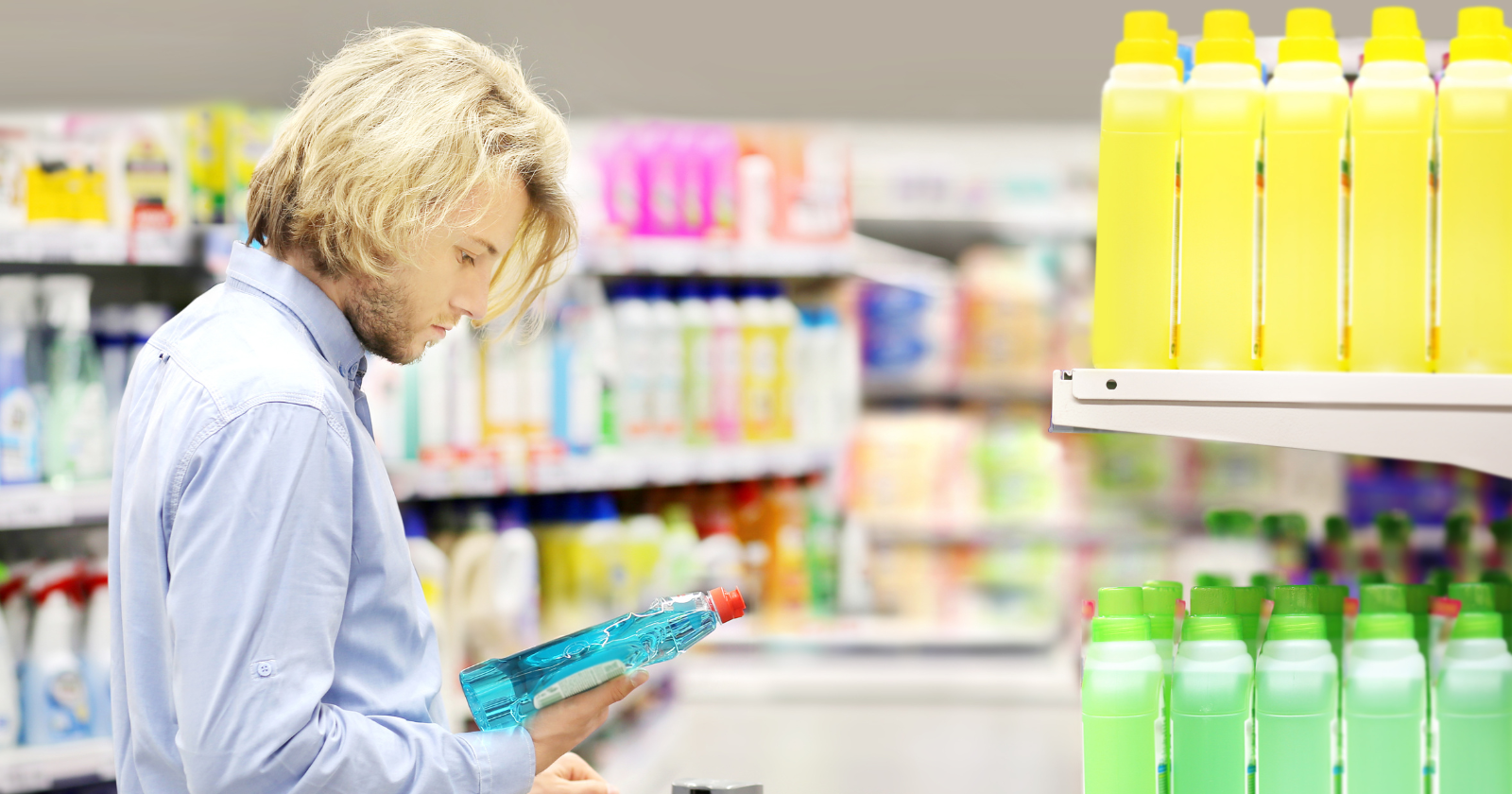
Walk down the cleaning aisle of any Tesco or Whole Foods and pick up a bottle of shampoo. Somewhere on the back, in 4-point type, you will probably find sodium lauryl sulfate, the foaming agent that gives the suds their squeak. What the label does not say is that the molecule almost certainly began its life on a palm oil plantation in Sumatra or Sarawak, where rainforest was cleared a decade or two ago to plant the oil palm Elaeis guineensis. The same crop, processed into a different derivative, sits inside the Kit Kat in the checkout queue and the Magnum in the freezer two aisles over. Palm oil hides behind more than 200 different ingredient names on supermarket packaging, and almost none of them contain the word “palm”.
That single agricultural commodity ends up in around half of all packaged products sold in a Western supermarket. Shoppers who deliberately try to avoid it, because of orangutans, because of peat fires, because of carbon, face a near-impossible cross-referencing task at the shelf. The chemistry has been split, hydrogenated, sulfated and re-named so many times that the trail back to the fruit is effectively invisible.
One fruit, a thousand derivatives
The oil palm produces two distinct oils: crude palm oil from the orange flesh of the fruit, and palm kernel oil from the seed inside. Both are extraordinarily versatile because they are semi-solid at room temperature, cheap, odourless once refined, and high-yielding. A hectare of oil palm produces roughly four to ten times more oil than the same hectare of soy, rapeseed or sunflower. That yield is the reason it spread. The chemistry is the reason it hides.
Refineries fractionate the raw oil into stearin and olein, then run those fractions through hydrolysis, esterification, sulfation, ethoxylation and saponification. Each step produces a new molecule with a new name and a new use. Glycerol stearate emulsifies ice cream. Sodium palmate hardens soap. Cetyl alcohol thickens conditioner. Tocopherol is added back into chocolate as a preservative. Stearic acid coats vitamin tablets. None of them sound like a tropical fruit, because by the time they reach the mixing tank, they are not really a fruit anymore. They are an industrial feedstock.

The 200-name problem
Conservation groups including the Orangutan Alliance and Rainforest Rescue publish running lists of palm-derived ingredient names that consumers can cross-check. The lists keep getting longer. Anything beginning with stear-, palm-, laur-, glyc- or cetyl- is suspect. So is anything ending in -ate from a fatty acid family: palmitate, myristate, oleate, laurate. Vegetable glycerin, vegetable oil, emulsifier E471, emulsifier E472e, sodium kernelate, elaeis guineensis oil, octyl palmitate, isopropyl palmitate, hydrated palm glycerides. All of them can be, and usually are, palm.
A single chocolate bar can carry four or five of these names at once without ever printing the word palm. A bottle of body wash can carry eight. The cumulative effect is that a shopper who reads every ingredient on every package would still walk out with a basket full of the thing they thought they were avoiding.
Research on review and label complexity finds that beyond a fairly low threshold of information, shoppers stop processing detail and fall back on simpler decision rules: the front-of-pack picture, the brand, the price. Two hundred chemical synonyms sits far past that threshold.
How the names got there
The naming convention is not a marketing trick invented by food companies. It is the standard nomenclature of industrial chemistry. Sodium lauryl sulfate is sodium lauryl sulfate whether the lauric acid came from coconut, palm kernel or, historically, whale blubber. The International Nomenclature of Cosmetic Ingredients (INCI) system, which governs what cosmetics labels must say, identifies the molecule, not its agricultural origin. From the regulator’s point of view, that is a feature. A chemist in Düsseldorf and a chemist in Jakarta agree on what cetyl alcohol is.
From the shopper’s point of view, it is a wall. The label tells you exactly what the molecule does in the product and nothing about where the carbon atoms came from. Coconut, palm, soy and tallow can all yield the same fatty-acid derivative, and the label will read identically in all four cases. In practice, because palm kernel oil is by far the cheapest source of the C12–C14 fatty acids used in surfactants, most of what you are buying when you buy sodium lauryl sulfate is palm.
Why the food industry leans on it
Palm oil’s physical properties are unusually convenient. It is solid enough at room temperature to give a chocolate bar its snap without the partial hydrogenation that creates trans fats, which is one reason it surged in food formulations after the United States and European Union began phasing out partially hydrogenated oils in the 2010s. It has a neutral taste, a long shelf life, and resists oxidation at frying temperatures. Replacing it with sunflower or rapeseed would require roughly four to ten times more land for the same volume of oil, a substitution problem that conservation groups themselves acknowledge has no clean answer.
So it ends up in Nutella, in Oreos, in instant noodles, in margarine, in non-dairy creamer, in pizza dough, in birthday-cake frosting, in protein bars. Frozen pastry uses it because butter is expensive and rapeseed is too liquid. Ice cream uses palm-derived emulsifiers because they keep ice crystals small. Chocolate coatings on supermarket ice cream bars are often pure palm fractions chosen for the exact melting point that creates the crack-and-melt feel in the mouth.
Labels that tried to fix it
The European Union’s Food Information to Consumers Regulation, in force since December 2014, was the first major reform to require the specific vegetable oil to be named in food ingredient lists. Before that, manufacturers could write vegetable oil and stop there. The change forced “palm oil” onto thousands of European labels almost overnight and triggered a measurable drop in sales for several brands that had not realised how much consumers cared.
The reform stopped at the food aisle. Cosmetics, household cleaners and detergents are still governed by INCI naming and disclose the molecule, not the source crop. And inside food itself, the rule only catches the bulk oil. Derivative ingredients — the emulsifiers, the tocopherols, the stearates — are still listed by their chemical names with no obligation to disclose the parent crop. New York State’s 2025 diaper-ingredient disclosure law, which forces manufacturers to list every material used in disposable nappies, is part of a wider regulatory drift toward forcing transparency on categories that have historically been allowed to stay vague.
The US Food and Drug Administration’s 2016 redesign of the Nutrition Facts panel, which forced added sugars to be separated from naturally occurring sugars, is a reminder that what a label is required to make legible, and what it is allowed to leave vague, is itself a policy decision rather than a fact of chemistry. A January 26, 2026 FDA request for information on gluten disclosure is moving in the same direction for cross-contact ingredients, where grains like barley and rye can currently hide under umbrella terms.
The certification problem
The Roundtable on Sustainable Palm Oil (RSPO), founded in 2004, certifies palm oil produced without clearing primary forest or peatland after a fixed cut-off date. RSPO-certified oil now makes up roughly 19 to 20 per cent of global supply. The trouble is that certification only travels with the bulk oil. Once the oil is fractionated into a derivative like sodium lauryl sulfate, the chain of custody is usually lost in mass-balance accounting, where certified and non-certified streams are mixed at the refinery and tracked on paper rather than physically separated.
That means a shampoo bottle marked as containing certified sustainable palm oil is making a statistical claim about the supply chain, not a physical claim about the molecules in the bottle. Most shoppers never learn the distinction between segregated certification, where the certified oil is kept physically separate, and mass-balance certification, where it is reconciled only on paper. The industry has little commercial incentive to teach them the difference.
What the rainforest sees
Indonesia and Malaysia together produce roughly 85 per cent of the world’s palm oil. The expansion of plantations across Borneo and Sumatra over the last forty years has been one of the most concentrated land-use changes in modern history. The orangutan population on Borneo has fallen by more than 100,000 individuals since 1999, according to surveys published in Current Biology. Peat fires set to clear plantation land released so much carbon dioxide during the 2015 Indonesian fire season that, on the worst days, the country’s daily emissions briefly exceeded those of the entire United States.
None of that is visible at the supermarket shelf. The shopper sees sodium lauryl sulfate and reaches for the bottle. The cognitive load of decoding 200 synonyms in a 90-second aisle visit is, in any meaningful sense, infinite. Ordering online is one of the few contexts in which a determined shopper has the time to search an ingredient list at all before the basket closes, and even then, the synonyms have to be known in advance.
The fruit that became a chemistry set
A single oil palm fruit is about the size of a small plum, red-orange when ripe, with a fibrous outer flesh and a hard inner kernel. Held in the hand on a plantation in Riau Province, it is unmistakably a piece of fruit. By the time its carbon atoms reach the shelf, they are spread across the bath aisle as cetearyl alcohol, across the bakery as mono- and diglycerides, across the freezer as polysorbate 80, and across the confectionery aisle as ammonium lauryl sulfate in the soap powder you used to wash the chocolate off your hands.
Ask yourself who benefits from a labelling system that requires a chemistry degree to read. It is not the orangutan, and it is not the shopper standing in aisle four trying to do the right thing in ninety seconds. A label that lists 200 different names for the same fruit is not a disclosure. It is a dare, and the industry is betting you will not take it.
