

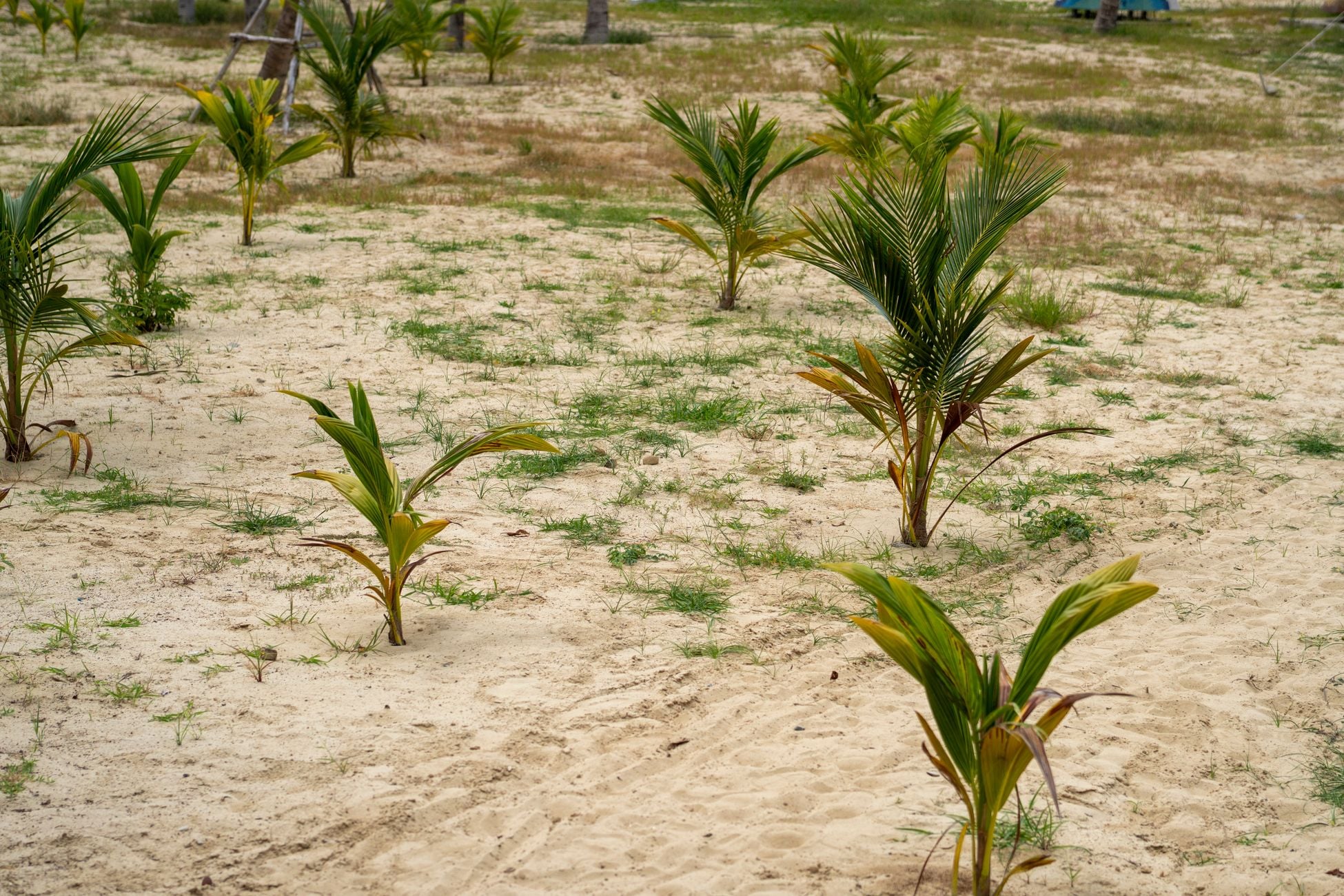
In Riau province on Sumatra, a harvester walks between rows of oil palms with a long aluminium pole tipped by a curved blade. He angles it up into the crown of a tree, hooks the stem of a fruit bunch the size of a watermelon, and pulls. The bunch — orange-red, spiked, weighing perhaps forty kilograms — thuds onto the soil. He moves to the next tree. Within hours, the bunches will be on a truck heading to a mill where steam, pressure, and centrifuges will separate out the oil that ends up in biscuits in Birmingham, instant noodles in Jakarta, and shampoo in São Paulo.
The tree he is harvesting, Elaeis guineensis, is one of the strangest success stories in modern agriculture. Native to West Africa and now grown at industrial scale across Indonesia and Malaysia, it produces far more oil per hectare than soybeans, rapeseed, sunflower, or almost any other commercial oil crop humans have managed to cultivate. That biological edge is the reason palm oil has become so difficult to escape.
According to Our World in Data’s overview of palm oil production, oil palm accounts for a large share of the world’s vegetable oil while using a much smaller share of the land devoted to oil crops. In plain terms, it gives humanity more fat from less land than its major rivals. It is also the reason the crop is so controversial. The same tree that makes the global cooking-oil system more land-efficient has also helped push plantations deeper into the rainforests and peatlands of Sumatra, Borneo, and other tropical regions where the ecological cost is unusually high.
The yield gap nobody can close
The basic arithmetic is hard to get around. Oil palm can produce several tonnes of oil per hectare each year, while soybeans, sunflower, and rapeseed produce far less oil from the same area. That is why campaigners who call for a simple palm oil boycott often run into an uncomfortable substitution problem: replacing palm with another oil can mean using far more land overall.
The International Union for Conservation of Nature’s 2018 report on oil palm and biodiversity made that dilemma clear. Palm oil has caused serious biodiversity damage where plantations replace tropical forest, but because oil palm is so productive, switching demand to lower-yield crops could spread land pressure elsewhere.
No other oil crop closes that gap cleanly. A hectare planted with soybeans produces only a fraction of the oil a hectare of mature oil palm can produce. Rapeseed and sunflower perform better than soy in some systems, but they still do not match oil palm’s tropical, year-round output.
The tree itself explains much of the advantage. Oil palms photosynthesise through the year in equatorial heat, fruit continuously rather than seasonally, and store oil in both the flesh and the kernel of the fruit. Soybeans, by contrast, are annual crops that must be planted, harvested, and replanted, and they devote much of their biomass to protein rather than oil.
Why it ended up in everything
Palm oil did not become dominant only because it is productive. It also has the exact physical qualities food manufacturers wanted. It is semi-solid at room temperature, stable, relatively cheap, and easy to use in processed foods without the hydrogenation process that created industrial trans fats.
That mattered after public health authorities began pushing manufacturers away from partially hydrogenated oils in the 2000s. Palm oil could step into biscuits, spreads, instant noodles, frozen foods, and confectionery because it delivered structure, shelf life, and mouthfeel without requiring the same hydrogenation step.
Price reinforced the shift. Crude palm oil futures on the Bursa Malaysia Derivatives Exchange have been trading above 4,200 ringgit per tonne through mid-2026, while the Malaysian Palm Oil Council expected prices to hold around 4,400 ringgit per tonne as biofuel demand absorbed supply. In Indonesia, the KPBN benchmark recently settled at 15,450 rupiah per kilogram.
That combination explains its ubiquity. Palm derivatives are used in food, cosmetics, detergent, soap, shampoo, biodiesel, and industrial ingredients. As WWF explains in its guide to everyday products that contain palm oil, the ingredient can appear in many forms across packaged foods, toiletries, cosmetics, and cleaning products, which is one reason shoppers often do not realise how many products rely on it.
The forest problem
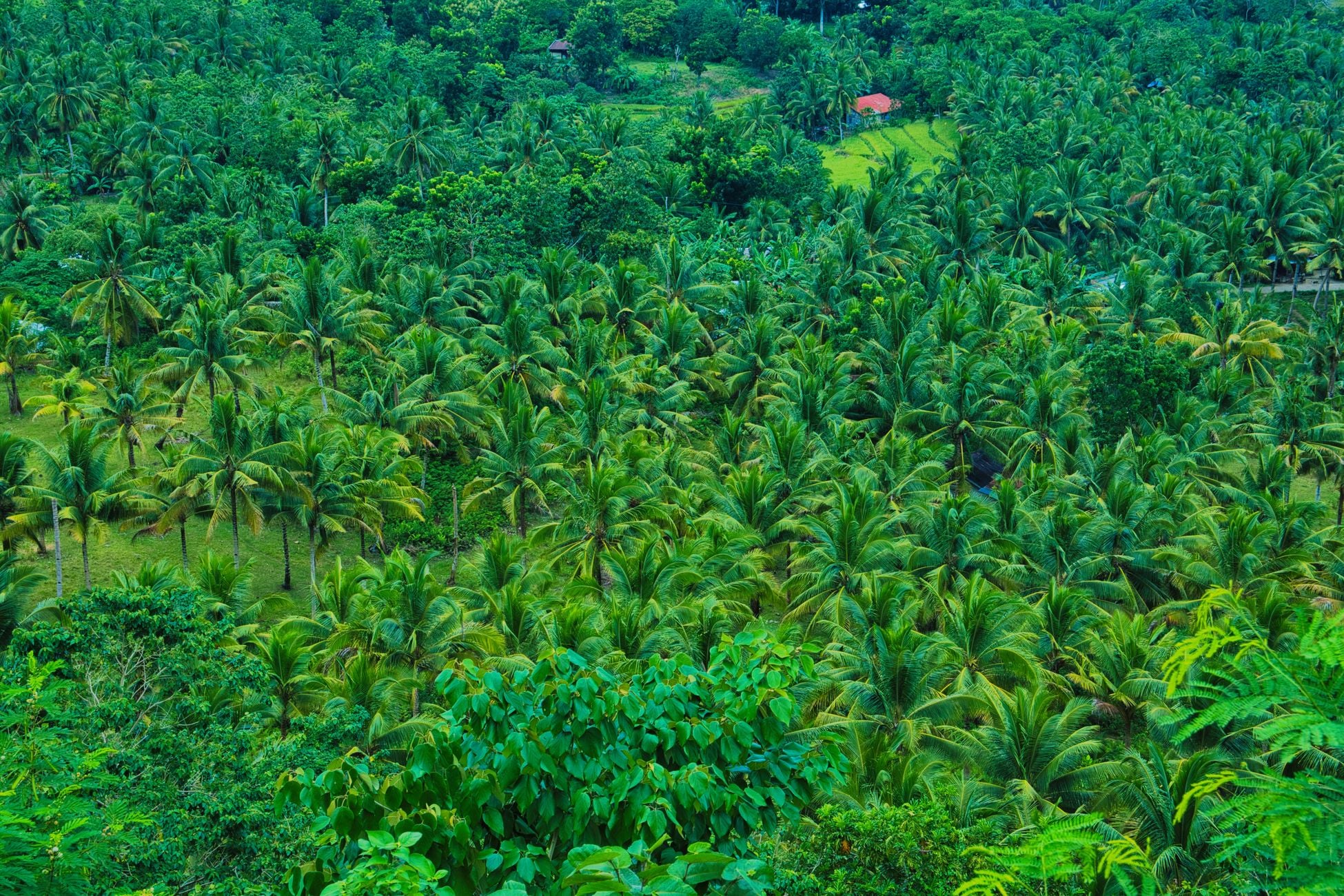
The problem is not that oil palm is an inefficient crop. The problem is where it grows. The tropical conditions that make the tree so productive also overlap with some of the most biodiverse forests on Earth, including habitats for orangutans, Sumatran tigers, pygmy elephants, hornbills, and plant and insect species that remain poorly catalogued.
Indonesia has lost tens of millions of hectares of tree cover since the start of the century, according to Global Forest Watch’s Indonesia dashboard. Not all of that loss is caused by palm oil, but oil palm expansion has been one of the major agricultural pressures on forest landscapes in Indonesia and Malaysia.
The carbon damage can be even worse when plantations are established on peat. Peatlands store vast amounts of carbon in partially decomposed organic matter accumulated over thousands of years. When they are drained for agriculture, that stored carbon begins to oxidise, and when fires follow, the emissions can be enormous.
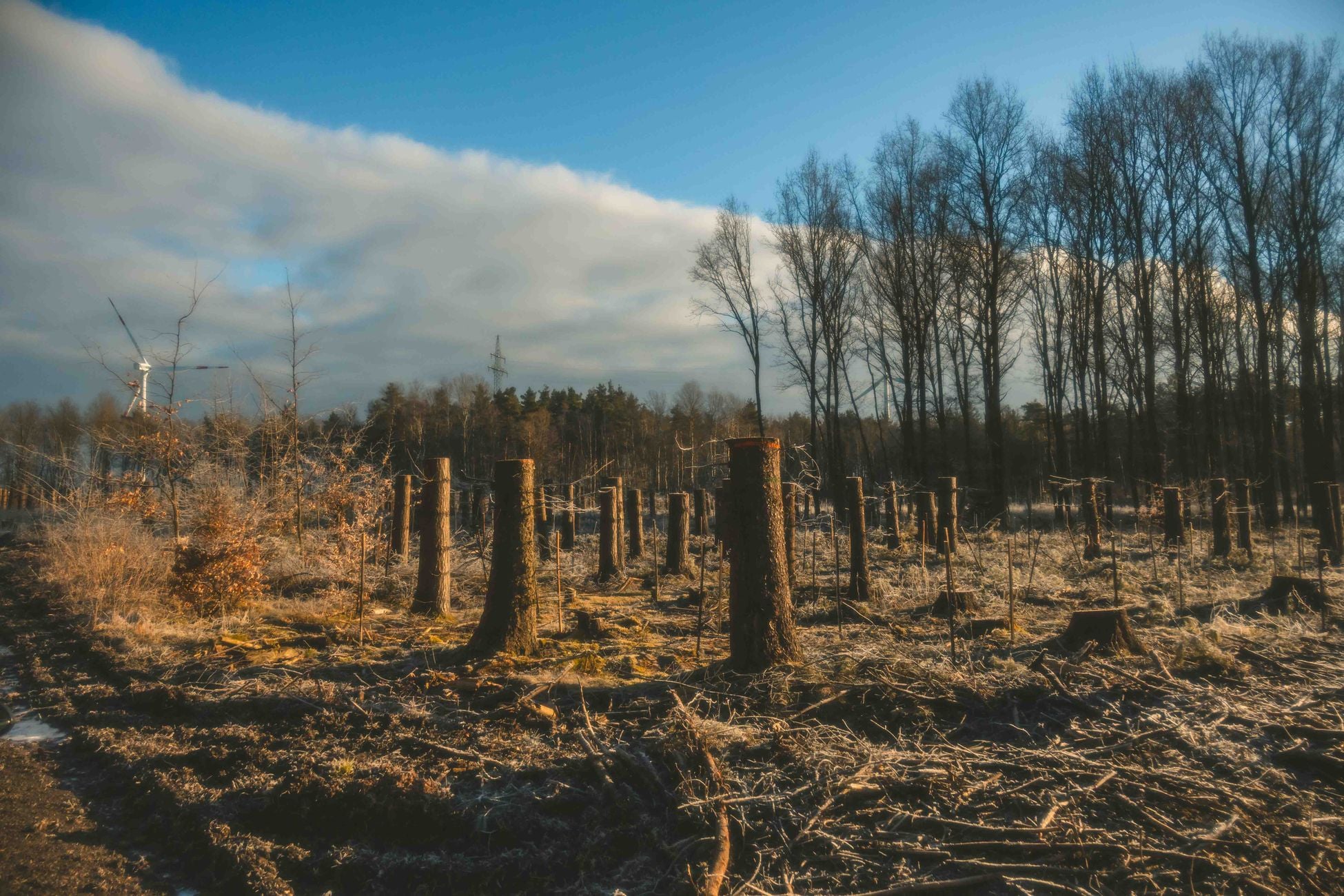
That is why palm oil became one of the defining environmental fights of the last two decades. The crop can be grown efficiently, but when expansion comes through rainforest clearance or peat drainage, its land-efficiency advantage does not erase the ecological damage.
The industry’s response has been built around No Deforestation, No Peat, No Exploitation commitments, often shortened to NDPE. More than a decade after those pledges became common among major buyers and traders, Mongabay reported in May 2026 that loopholes still allow deforestation-linked palm oil to move through parts of the supply chain, especially where indirect sourcing and smallholder networks make traceability harder.
The substitution trap
The obvious consumer response is to say: stop using palm oil. The harder question is what replaces it. A global switch from palm to lower-yield oils would not make demand for fats disappear. It would simply move that demand into other crops, other landscapes, and often much larger areas of land.
This is the substitution trap. If palm oil is replaced with soybean oil, more land is needed for the same amount of oil. If it is replaced with sunflower or rapeseed, the land requirement still rises. That extra land has to come from somewhere, and agricultural expansion is already one of the biggest pressures on forests, grasslands, wetlands, and savannas worldwide.
That does not excuse destructive palm oil. It does mean the environmental question cannot be reduced to palm versus no palm. The more useful question is whether existing plantations can produce more without clearing more land, and whether buyers can keep deforestation-linked oil out of their supply chains.
The crop is biologically efficient. The places it has often expanded are ecologically irreplaceable. That tension is the heart of the controversy.
The certification maze
The Roundtable on Sustainable Palm Oil was founded in 2004 to create standards for palm oil that avoids the worst environmental and labour abuses. Its certification system is now the best-known sustainability framework in the industry, although critics argue that certification has not fully solved deforestation, peatland damage, labour problems, or supply-chain opacity.
The European Union has gone further with regulation. Its deforestation regulation requires companies placing certain commodities on the EU market, including palm oil, to show that products are not linked to recent deforestation. That shifts part of the burden from voluntary pledges to legal due diligence.
Certification still works imperfectly. Smallholders, who produce a significant share of Indonesian palm oil, often lack the documentation, capital, and infrastructure needed to qualify. Traceability is also difficult because palm fruit moves from farms to mills, refineries, traders, and manufacturers, and certified and uncertified oil can become physically mixed along the way.
Even so, the market signal has started to matter. Major buyers have adopted procurement standards, some brands now publish traceability dashboards, and regulators are beginning to demand stronger proof that palm oil is not linked to new forest clearing. The pressure is no longer only reputational. It is becoming commercial and legal.
The lab alternative
A small wave of biotech companies is trying to build a different answer: palm-like fats without palm plantations. One of the clearer examples is C16 Biosciences, a New York-based company developing a fermentation-made alternative to palm oil.
The promise is a functional fat made in tanks rather than grown through new tropical plantations. If the technology can scale, it could give food, beauty, and consumer-goods brands a way to reduce reliance on palm oil without simply shifting demand to lower-yield crops.
The economics are still the open question. Palm oil is cheap because the tree is extraordinarily productive, the infrastructure already exists, and the supply chain has been optimised over decades. Any fermentation-based alternative has to compete not only with palm oil’s chemistry, but with the cost structure of one of the world’s most efficient oil crops.
That leaves alternative-fat companies betting on two things. First, that brands will pay more to reduce reputational and regulatory risk. Second, that fermentation costs will fall as production scales. Both could happen. Neither is guaranteed.
A 40-kilogram tree
A single oil palm planted in the 1990s in Riau province on Sumatra may still be producing fruit today. Every couple of weeks, a harvester can cut another heavy bunch of orange-red fruit from its crown. The tree will continue until it grows too tall to harvest economically, at which point it will be felled and replaced.
Across its productive life, one tree can generate hundreds of kilograms of oil. Matching that output with soybeans would require far more land over many growing seasons. That is the brutal efficiency of palm oil, and also the reason the world cannot simply pretend the crop will disappear.
Somewhere on the edge of a plantation in Sumatra, a strip of forest still stands where the rows of palms end. An orangutan moves through the canopy on one side of the line. On the other, a harvester hooks down another bunch of fruit. The mill will run tonight. The shampoo bottles will be filled next month. And the line between the two — that thin, contested edge — is where the arithmetic of the most efficient fat on Earth is actually being decided.
