

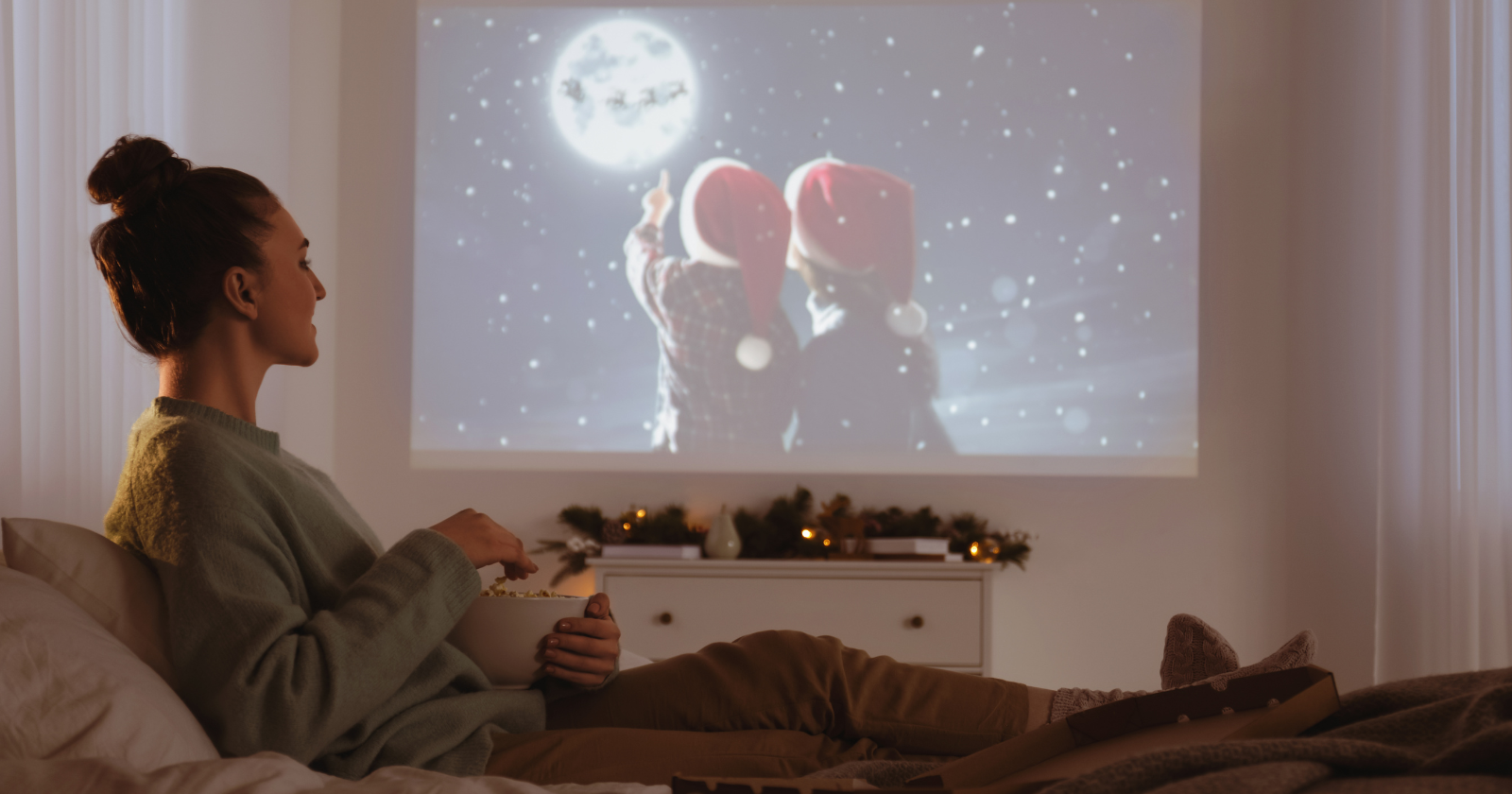
It’s December 17th, somewhere past nine, and a forty-year-old is standing in front of the television with a blanket already over their shoulders. They scroll past three new releases their friends have recommended. They put on the same film they’ve put on every December since they were twelve. The opening credits start, and something in their chest settles in a way it hasn’t all week.
Most people would call this stuck. Sentimental. A quiet avoidance of the wave of new releases everyone else is talking about. The psychology suggests something almost opposite. Reaching for the same opening credits in the same weather, year after year, is one of the more sophisticated forms of emotional self-regulation a person can practise without realising it.
The films themselves are almost beside the point. What’s being replayed is a version of the room. The light from a different lamp. A specific kind of cold pressing against a specific window. Someone’s voice in the kitchen who is no longer in the kitchen.
The myth of the comfort rewatch
Conventional wisdom treats the winter rewatch as low-effort escapism, the cultural equivalent of mashed potatoes. The assumption is that the viewer is too tired, too anxious, or too overwhelmed to face a new story, so they default to a known one. The evidence points elsewhere. Nostalgic media consumption is increasingly understood as an active psychological tool, not a passive retreat, and the people who reach for it most consistently are often the ones doing the hardest emotional work underneath.
A 2026 piece in Psychology Today on why nostalgia is reshaping pop culture argues that nostalgia functions less like an escape hatch and more like a regulator, helping people stabilise mood during stretches when the present feels uncertain or thin. The same films, watched the same way, every year, are doing something specific. They are reintroducing the viewer to a self that existed before certain losses.
That’s a different activity than avoidance. Avoidance turns away from feeling. The rewatch walks straight into it.
Why winter, specifically
There’s a reason this pattern clusters in the cold months and not, say, mid-July. Seasonal cycles are powerful triggers for autobiographical memory. The brain encodes context as part of any memory, including light levels, temperature, and the smell of a particular kind of air. When those cues return, the memories return with them, often unbidden. This is also the season when daily life contracts. The light goes early. Energy drops, schedules shrink, and the radius of the week narrows to the rooms you can keep warm. You don’t have to put a name to it to feel the dimming that arrives with shorter days.
Reaching for a familiar film in that narrowing isn’t a failure of imagination. It’s the mind looking for something that has steadied it before. Predictability is its own small comfort when the days feel uncertain, and an annual rewatch is, among other things, a self-administered ritual of predictability.
What the film is actually doing
The mechanism is closer to a re-entry than a replay. When someone puts on the same December film for the eleventh year in a row, they aren’t watching it the way a stranger would. They are running a kind of overlay. Their twelve-year-old self is in the room. So is their mother, or their college roommate, or the apartment they couldn’t afford. The film is the carrier signal. The lived footage is what’s actually being played.
The same pattern shows up in adjacent habits. People who return again and again to old photographs often describe feeling more connected and more like themselves afterwards, not more stuck. The photo isn’t the destination. It’s a doorway back into a felt sense of belonging.
The rewatched film operates the same way. Two hours of a known plot is two hours of guaranteed company.
The people on the couch
Almost every adult who has a December film has a corresponding December room. A grandmother who is gone now. A sibling who lives across an ocean. A partner who used to fall asleep against their shoulder before the third act. The film is doing the work of holding a seat at the table that has otherwise been cleared.
This is the part that gets misread as morbid. It isn’t. Returning to media that was loved by people who are no longer reachable is, for many adults, the only way to sit with them again that doesn’t require pretending the loss isn’t real. The film knows. The viewer knows. The room is half-full in a way that is, briefly, bearable.
This is also why recommendations to try something new tend to fall flat. A new film, however excellent, has none of those ghosts in it. It can entertain. It cannot reconvene.
Smaller worlds, softer stakes
The films people return to year after year tend to share a structural quality that has nothing to do with their genre. The world inside them is small. The cast is finite. The problems get resolved within the runtime. There may be heartbreak in act two, but by the time the credits roll, somebody has been forgiven, somebody has come home, and the snow has started doing whatever it was meant to do.
Adult life rarely cooperates this way. Most real problems do not resolve in 108 minutes, and most relationships do not get neatly forgiven in the final scene at the train station. The rewatched film offers a structural break from open-endedness. It is a closed system. It cannot be ruined by news.
There’s a connection here to something we’ve explored before about how some adults find weekends harder than weekdays, because structure was what kept them from noticing how much of their life ran on momentum. The annual rewatch is a small, self-imposed structure that performs a similar function inside the loose, dark sprawl of winter. It puts brackets around a few hours. It says: from now until then, nothing new is allowed to happen.
The difference between nostalgia and avoidance
There’s a useful line to draw here. Nostalgia, when it works well, leaves a person more connected to others and more grounded in who they are afterwards. Avoidance leaves them flatter, more isolated, more reluctant to step back into the present once the credits roll. The same film, watched by two different people, can do either. The signal isn’t the rewatch itself. It’s what happens in the hour after. Someone who finishes their annual film and calls a sibling, writes to an old friend, or sleeps better that night is using nostalgia well. Someone who finishes it and feels worse, who finds the present harder to re-enter, who uses the film to seal themselves off from the people still here, is doing something else, and it may be worth noticing. A 2026 study in Scientific Reports found that emotional outcomes are tied less to how much time people spend with media than to how they engage with it. Meeting the past with acceptance and a generous reading tends to leave people steadier; turning the same hours into comparison or brooding tends to do the opposite. A nostalgic rewatch can go either way, depending on what the viewer brings into the room.
Why the same film, not just any old one
There is also a question of why this particular pattern, the exact same title every year, rather than a rotation of vintage films from the same era. The answer is that the specific film is doing identity work. It is reaching back to a particular version of the self, not to a general mood.
The viewer who watches the same film every December at the age of forty-three is briefly meeting the eight-year-old who first saw it on a couch they no longer own. That eight-year-old believed certain things. About people. About how stories ended. About whether the adults in the room were going to be okay. Returning to the film returns the adult, briefly, to a self that existed before life asked them to be reliably useful to everyone around them.
This is one of the reasons there’s been a cultural surge in what’s been called grandma-coded comforts: quilting, slow cooking, the same novels read in the same chairs. The pattern isn’t regression. It’s people deliberately accessing the parts of themselves that felt unrushed, unwatched, and unobligated.
Holding seats that have been cleared
The hardest part of this practice, for the adults who do it, is that the cast on the couch keeps changing. Children grow up and stop sitting still. Parents die. Partners leave or fall asleep earlier. The film stays exactly the same length, but the room around it keeps reorganising itself.
For some viewers, this is precisely the point. The rewatch is one of the only annual rituals that doesn’t require the original cast to participate. The grandfather doesn’t have to be alive for the film to start at 8 p.m. The marriage doesn’t have to have lasted. The kids don’t have to be home from college. The viewer presses play, and for two hours, the seating chart of a previous era is reinstated, in memory if not in fact.
This is grief work, even when no one calls it that. It’s also love work. The two are harder to separate than the culture admits.
What to make of it
Notice what the question was, the whole time. Not why these adults can’t move on. Why a culture that prizes novelty above almost everything else has decided that returning to what steadies you is a character flaw.
Stability gets coded as stagnation. Repetition gets coded as fear. The adult who watches the same December film for the twentieth year is suspected of hiding from life, while the one who chases every new release is praised for staying current — as if currency were the same as presence. It isn’t. The rewatch is a person practising the opposite skill: showing up, on purpose, for something that asks nothing of them and gives them back a room.
The film ends the same way every year. That’s the whole gift. Almost nothing else in an adult’s life is willing to do that, and the people who’ve figured out how to use it don’t owe anyone an explanation.
