

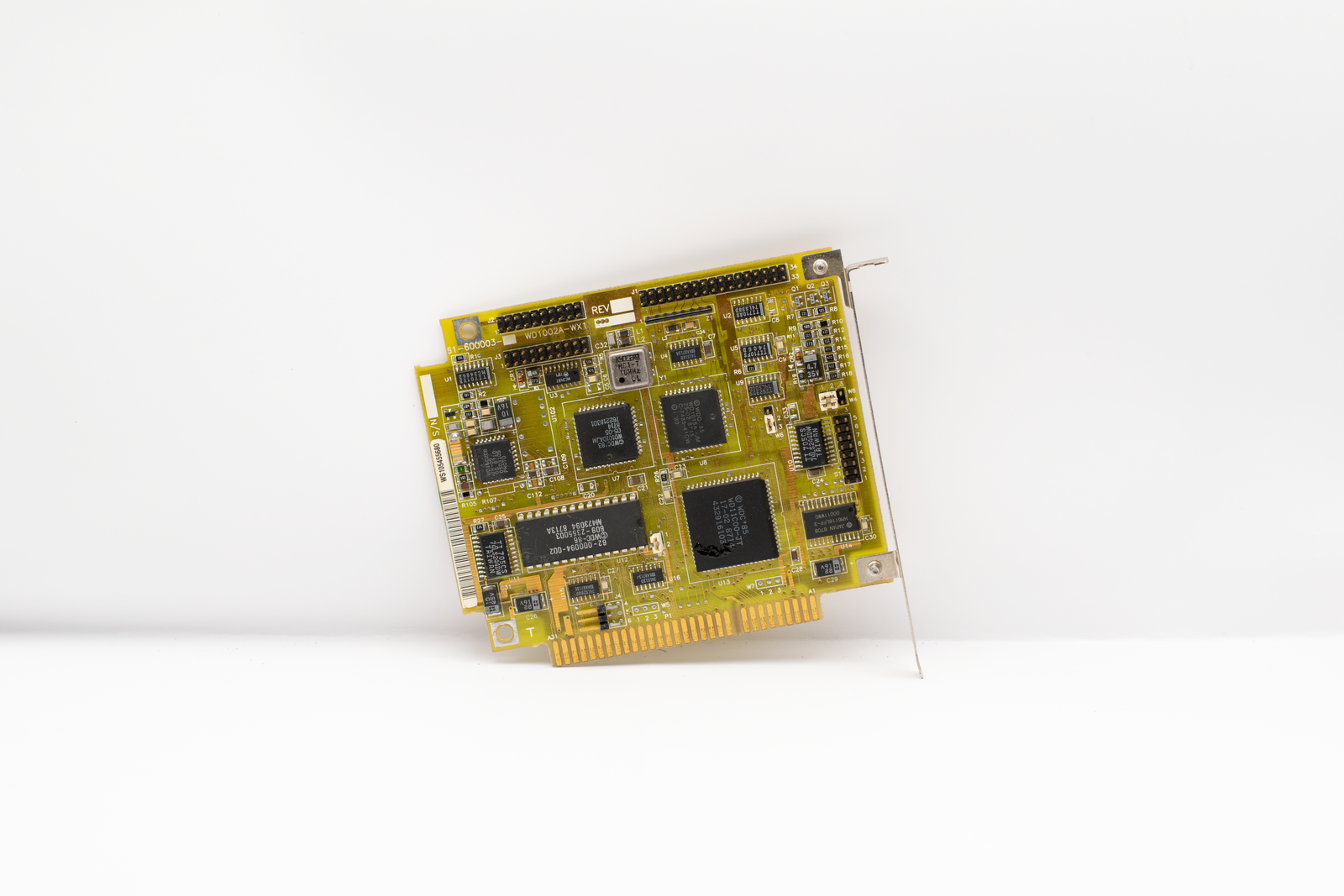
The hyperscalers are not abandoning Nvidia. They are trying to make sure they are never trapped by one supplier again.
OpenAI’s unveiling of Jalapeño, its first Intelligence Processor built with Broadcom, marks the latest escalation in a structural shift across the AI hardware stack. The chip is designed for large-language-model inference, which is the layer where AI systems answer prompts, serve agents, and turn expensive models into everyday products.
The structural problem with one vendor
Nvidia has dominated the AI accelerator market because its hardware, software ecosystem, and supply position are extremely difficult to replicate. That dominance has created a strategic problem for the companies commercialising AI at the largest scale. A significant portion of their capital expenditure still runs through a supplier whose chips are expensive, scarce, and central to the pace of product deployment.
Custom silicon offers three things the merchant market cannot fully provide: control over roadmap, hardware tuned to specific workloads, and better long-term leverage over unit economics. Apple’s transition to its own Mac silicon showed the consumer version of that logic. The company did not simply swap one component for another; it rebuilt more of the product around hardware it controlled.
Why the timing matters
The timing matters because OpenAI is not moving alone. Google’s Tensor Processing Units are already part of Google Cloud’s machine-learning infrastructure. Amazon’s Inferentia and Trainium chips split the problem into inference and training. Meta has worked on MTIA, Microsoft has worked on Maia, and the broad direction is unmistakable: the largest AI buyers want more of the compute stack under their own influence.
This does not mean Nvidia is suddenly weak. It means the biggest buyers have learned that compute supply is too strategic to leave entirely to a merchant market. When one supplier can shape cost, allocation, delivery timing, and software lock-in, custom silicon becomes less of a moonshot and more of an institutional hedge.
The Broadcom equation
OpenAI’s choice of Broadcom as a co-design partner is itself a tell. Broadcom has become one of the most important ASIC partners for companies that want custom chips without recreating the entire semiconductor supply chain internally. That role does not displace Nvidia’s training dominance overnight, but it does give hyperscalers another route for workloads where bespoke hardware can improve margins.
The key layer is inference. Training is the large upfront capital expense; inference is the recurring operating cost every time a product answers a prompt, generates code, processes a document, or serves an agentic workflow. Owning more of that layer changes the long-term margin structure of AI products deployed at scale.
The deeper alignment
Silicon Canals has previously examined the $100B Nvidia-OpenAI infrastructure arrangement, which sits in useful tension with OpenAI’s custom-chip ambitions. The two moves are not contradictory. They are the same hedge viewed from different angles: secure capacity from the incumbent while building the option to route some workloads around it later.
That is the real pattern. Google, Apple, Amazon, Meta, Microsoft, and OpenAI are not all making the same chip, and they are not all attacking Nvidia from the same direction. But they are all responding to the same bottleneck: in an AI economy, compute supply is no longer a back-office procurement issue. It is a strategic dependency.
Whether all this actually buys back leverage is the open question. Designing a chip is one thing; sustaining a roadmap, a software stack, and a supply chain to rival Nvidia’s is another. Each custom programme adds its own engineering overhead, its own vendor relationships, its own dependencies on a narrow set of foundries and packaging suppliers. The hedge has a cost, and that cost compounds.
So the picture that emerges is not a tidy one. The biggest buyers may end up with more options and lower per-token costs, or they may end up running parallel silicon strategies that quietly absorb much of the margin they hoped to recover. The transition is underway. Where it actually lands is still unsettled.
