The fossil record had the Wollemi pine filed under extinct for roughly 90 million years. Pollen grains identical to those produced by the species turn up in Cretaceous sediments across Australia, Antarctica and New Zealand, then vanish from the rock around the time Tyrannosaurus rex still had tens of millions of years left to evolve. By any reasonable read of the geological record, the genus had been gone since before flowering plants dominated the planet.
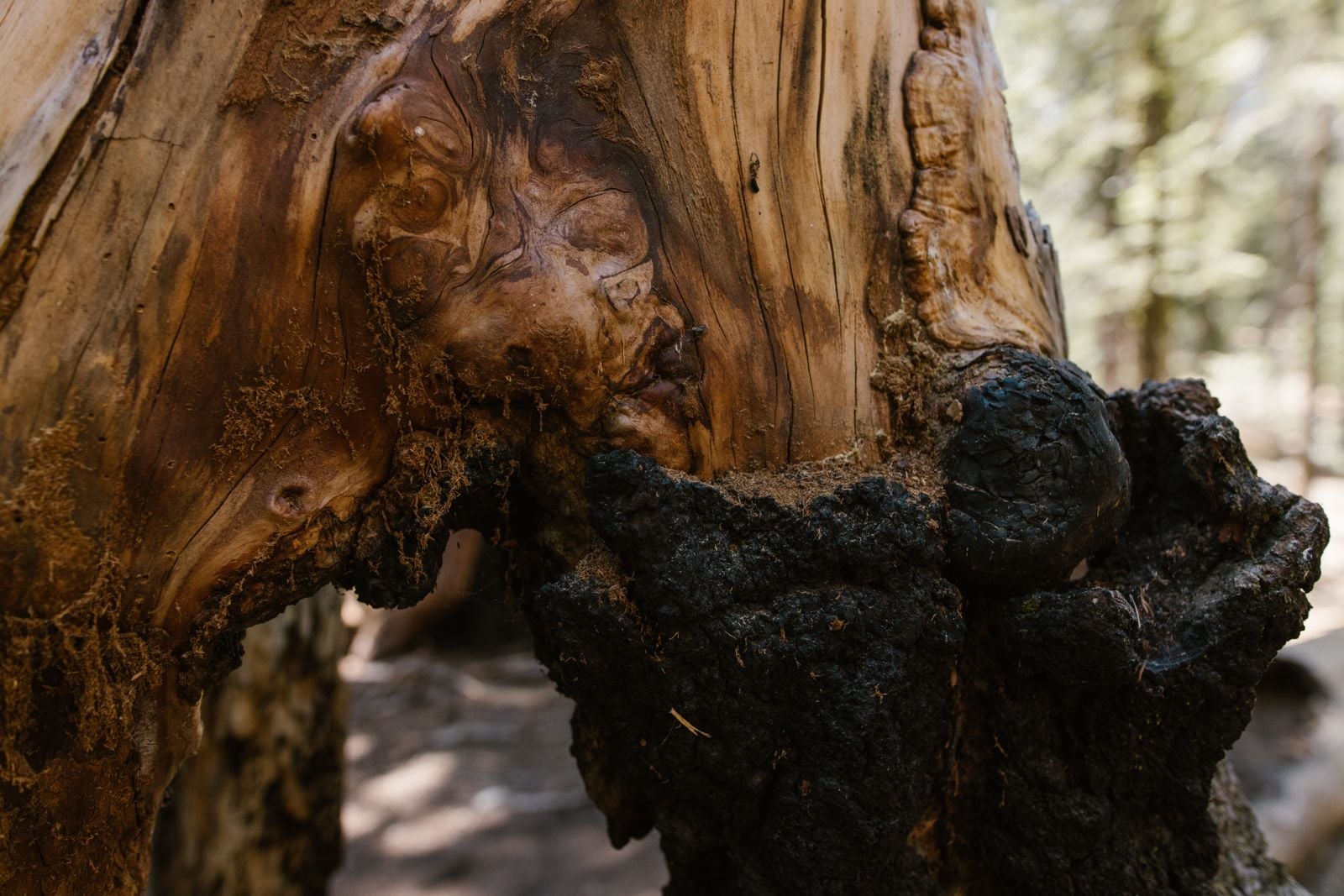
On 10 September 1994, a field officer with the New South Wales National Parks and Wildlife Service named David Noble dropped on a rope into a narrow slot canyon in Wollemi National Park, about 150 kilometres northwest of Sydney. At the bottom, in a microclimate of permanent damp and deep shade, he found roughly 100 trees he could not identify. The bark looked, in his own description, like bubbling chocolate. The leaves came in flat, ferny sprays. He took a sample back to Sydney, and within weeks, botanists at the Royal Botanic Garden confirmed the trees belonged to a genus known only from fossils dated to the age of the dinosaurs.
The species was given the name Wollemia nobilis, after Noble and the park. It was the botanical equivalent of finding a small herd of stegosaurs grazing in a paddock outside town.
A tree out of deep time
The Wollemi pine belongs to the Araucariaceae, an ancient family of conifers that dominated the forests of Gondwana when the southern continents were still joined. Its closest living relatives are the monkey puzzle of Chile and the kauri of New Zealand. Pollen grains identical to those produced by today’s Wollemi pines show up in Cretaceous sediments across what is now Australia, Antarctica and New Zealand. Then, in the fossil layers, they stop. The last grains date to roughly 90 million years ago.
The genus had been described from fossils long before Noble dropped into the canyon. No one expected to meet one in person.
The trees he found were tall, the largest around 40 metres, with trunks coated in that strange knobbly bark. Several were multi-stemmed, sending up new trunks from a coppicing base. Some of the individual root systems are now estimated to be more than 1,000 years old, even though the visible trunks may be younger.
![]()
How a forest hides for 90 million years
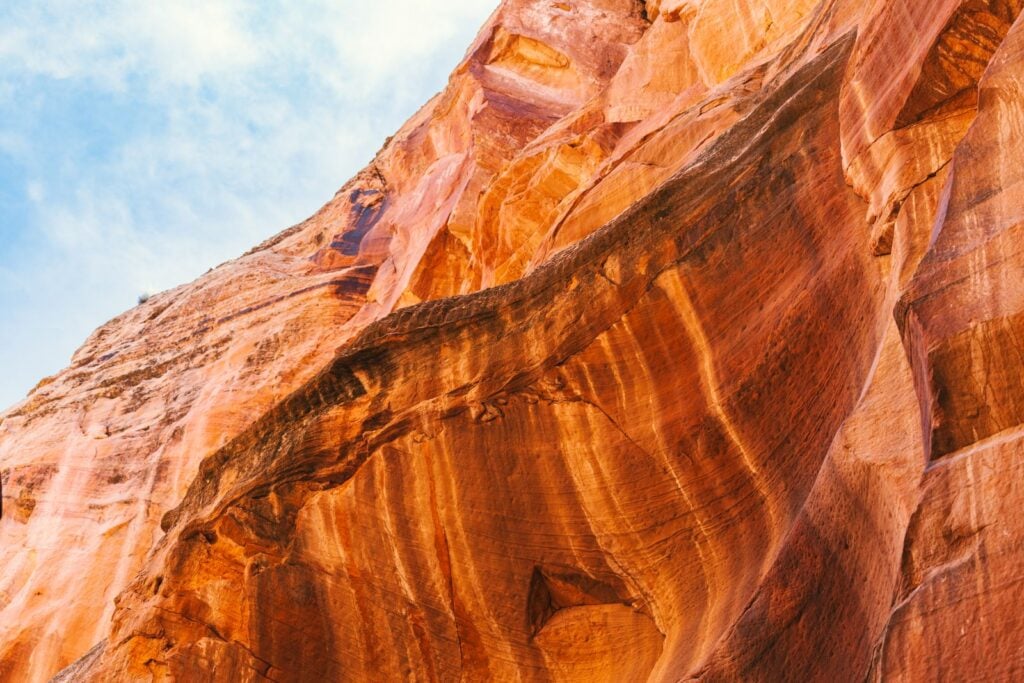
The gorge that shelters the pines is a slot in Triassic sandstone, narrow at the top and widening into a damp basin below. Cold air pools at the bottom. Mist hangs there for much of the year. The walls block wind and most direct sun. The canyon sits within a 500,000-hectare wilderness that is itself one of the least-visited parts of the Greater Blue Mountains.
Those conditions matter. The Wollemi pine is extraordinarily fussy. Outside its tiny natural range, it grows fine in cultivation if conditions are mild and damp, but the wild population sits inside a refuge that has barely changed since the Pleistocene. Pollen cores from nearby swamps suggest the species was more widespread in the last interglacial and contracted to this canyon as the climate dried.
The total wild population, across the original site and two satellite groves discovered later, numbers fewer than 100 mature trees.
The genetic flatness
When researchers at the Royal Botanic Gardens Sydney sequenced samples from across the wild stand, they found something close to a botanical curiosity in its own right: the trees were genetically almost identical. Studies of microsatellite and chloroplast markers turned up effectively no variation between individuals. For a sexually reproducing tree, that is unusual to the point of being strange.
The leading explanation is a long population bottleneck. Possibly tens of thousands of years of inbreeding among a handful of survivors, possibly clonal reproduction through coppicing, or both. Whatever the cause, every wild Wollemi pine carries effectively the same genome. A single new pathogen could, in theory, take the entire wild species in a season.
That is part of why the location is secret.
Why the coordinates are classified
The New South Wales government has never published the GPS coordinates of the wild stand. The access route is restricted under the National Parks and Wildlife Act 1974. Rangers fly in by helicopter. The few researchers permitted to visit are required to change clothes, disinfect boots, and decontaminate equipment before approaching the trees. The reason is a water mould, Phytophthora cinnamomi, which has been detected at the site at least once and which kills Wollemi pines readily.
In 2005, hikers reached the canyon and posted photographs online. In 2014, a separate group was prosecuted for trespass; one was fined under conservation legislation. Each incident raised the same fear: that a single muddy boot might carry the spore that finishes what the last 90 million years did not.
The strategy of withholding location data has become a recognised tactic in protected-area management. Research on conservation effectiveness in protected areas has found that protected areas generally show higher species richness and abundance than unprotected land, though many vertebrate species remain poorly represented in current networks or are vulnerable to legal downgrading. For a species with one wild grove, suppressing the coordinates is the cheapest possible reserve design.
The 2019 fire
In the summer of 2019-2020, the Gospers Mountain fire, the largest forest fire ever recorded from a single ignition in Australia, burned more than 500,000 hectares of the Greater Blue Mountains, including the Wollemi catchment. As the fire front approached the canyon, the NSW National Parks and Wildlife Service mounted a covert operation. Specialist firefighters were winched in. Large air tankers laid retardant along the rim. An irrigation system was rigged inside the gorge to keep the canopy wet.
When the smoke cleared, the operation was made public. Almost all of the mature wild trees had survived. A small number were scorched. The cold microclimate at the canyon floor had done much of the work; the human intervention did the rest. The mission was conducted without ever disclosing where the canyon was.

Insurance populations on six continents
Within a few years of Noble’s discovery, the Royal Botanic Gardens Sydney began propagating Wollemi pines from cuttings and seed. By 2006, saplings were on commercial sale through a managed programme, with proceeds funding wild-population research. Insurance plantings, small genetically representative stands intended to outlive any disaster in the home canyon, were established at botanic gardens in Tasmania, Britain, the United States, Japan and elsewhere.
Buy a Wollemi pine at a nursery in Melbourne or Manchester today and you are buying, in effect, a genetic photocopy of a tree that has been waiting in a Sydney slot canyon since before flowering plants dominated the planet.
The propagation programme is also a case study in what works when the wild population is genetically uniform and physically inaccessible: redundancy across many sites, none of them advertised as the original. Comparable techniques are emerging across rediscovery science. A Hawaiian flower thought extinct was rediscovered when a drone spotted plants growing on a near-vertical cliff face in Kauai’s Kalalau Valley. The drone was later modified to take cuttings.
What an umbrella canyon protects
One of the quieter consequences of the discovery is that the Wollemi pine became a flagship for the wider Wollemi wilderness. Funding, ranger time and political attention followed the trees. The canyon also shelters a population of brush-tailed rock-wallabies, several threatened frog species, and the only known stand of Eucalyptus copulans. The pine, in conservation parlance, has acted as an accidental surrogate species: a charismatic specialist whose habitat needs pull other less photogenic species along for the ride.
Whether that effect can be planned rather than stumbled into is an active research question. A study analysed more than 892,000 hours of bird recordings across 25,000 square kilometres of California’s Sierra Nevada to test the umbrella-species idea at landscape scale. The team found that 95 per cent of the forest birds they studied showed positive associations with at least one of six surrogate species, including the California spotted owl. The effect varied with latitude. What worked in the north sometimes failed in the south.
The lesson translates. The Wollemi pine is an excellent umbrella for one canyon. It is also a reminder that any plan to protect a wider area through a single charismatic species needs to be tested where it is applied. As Silicon Canals has explored elsewhere, the Wollemi case is unusual because the umbrella was put up over an area before anyone realised what was underneath it.
Borders, secrecy and the politics of a hidden grove
Conservation strategy increasingly turns on jurisdiction. A species whose range crosses a political line can fall through it; one whose location is withheld inside a single jurisdiction can be defended with a small ranger budget. Writing in The Conversation, researchers have noted that political boundaries themselves can undermine effective conservation, with resources spent on species that are abundant on the other side of a border. The Wollemi pine sits at the opposite extreme: one population, one country, one state agency, one canyon, one secret.
What Noble found, in the end
Noble was not looking for a living fossil. He was on personal leave with two friends, exploring slot canyons in a part of Wollemi that had no marked tracks. The samples he carried out fit in a daypack. He has spoken publicly about the find but has never disclosed the location.
The trees themselves continue, slowly. A Wollemi pine grows perhaps a few centimetres a year in the wild. The oldest trunks in the canyon were already mature when Captain Cook charted the Australian coast. The root systems beneath them were sending up new shoots when the Romans were building roads.
The deeper question the Wollemi case leaves behind is uncomfortable for conservation orthodoxy. If a 40-metre tree from the age of dinosaurs can hide 150 kilometres from a city of five million people for 90 million years, the assumption that the extinction column in our records is anything more than a list of species we have failed to find begins to wobble. The Wollemi government’s answer to that uncertainty has been to make secrecy itself a conservation tool: to decide that some coordinates are worth more locked in a filing cabinet than published in a journal. It is a strange position for a science that built its credibility on open data, and it may also be the only thing standing between one canyon of trees and a muddy boot.