

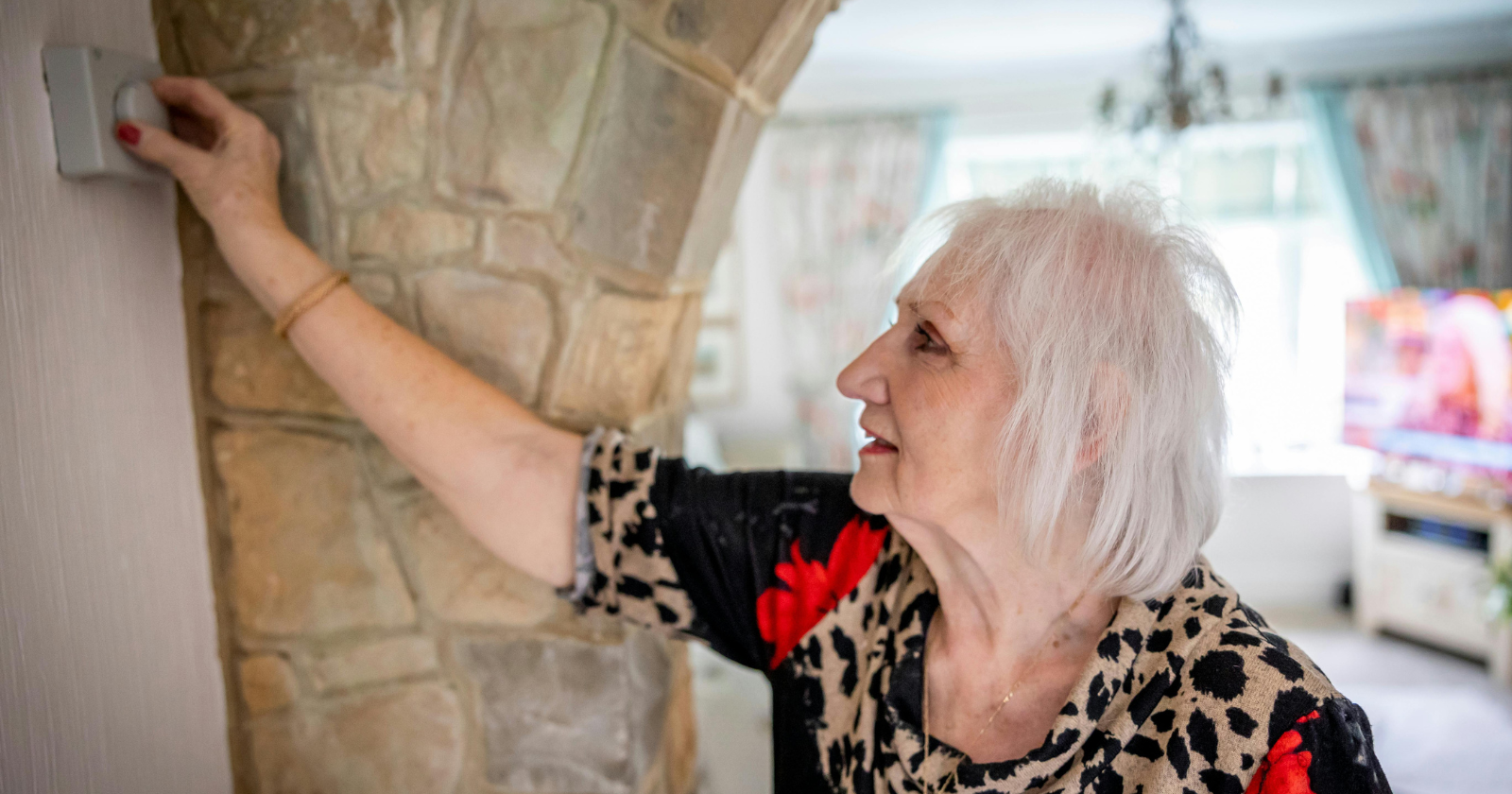
The person who keeps the thermostat two degrees lower than anyone else in the household finds comfortable isn’t cheap. They’re not stubborn either. They learned, somewhere early on, that comfort isn’t a baseline you’re entitled to — it’s a reward you access after tolerating a small amount of not-quite-enough.
This is a distinctly generational habit, and it shows up in ways most families never bother to decode.
The common read on the low-thermostat person is that they’re being difficult. Sometimes petty. Occasionally righteous about the electric bill. But that framing misses what’s actually happening in the nervous system of someone who grew up when heat was rationed, sweaters were the first response to a chill, and turning the dial up was a decision that required a reason.
The house rule that never got rescinded
Most families operate on invisible temperature contracts written decades before anyone in the current household was born. A parent grew up cold. That parent enforced cold on their children. Those children now live in warmer economic conditions but still reach for the thermostat with the same reflexive restraint.
The person who keeps their thermostat at the same temperature their parents kept theirs may not just be frugal — they may still be living inside a household rule that ended thirty years ago. The rule isn’t about degrees. It’s about the moral weight the family attached to warmth.
Warmth cost something. Not just money. Effort. Attention. Consciousness of the meter running.
A child raised inside that framing doesn’t lose it when they eventually pay their own bill. The bill was never the point.
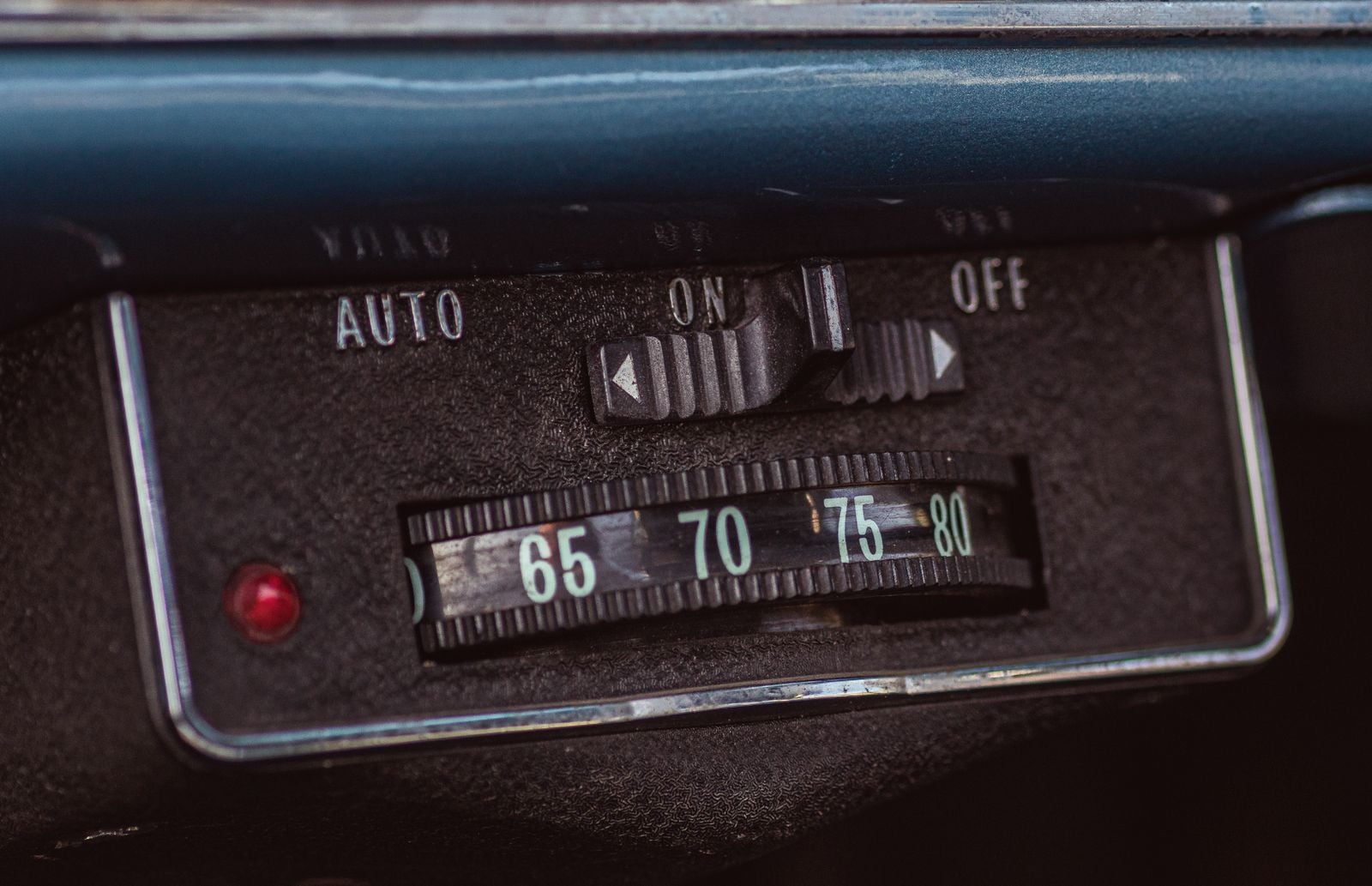
Comfort as something you earn
There’s a specific psychological posture that develops in people who came of age during scarcity or perceived scarcity: the belief that comfort tastes better when it follows a stretch of mild discomfort. You put on the sweater first. You wait until it’s genuinely cold, not just chilly. You let the body do some of the regulating before you ask the house to do it for you.
This isn’t asceticism. It’s a learned pleasure architecture.
Research on early-life adversity has consistently found that childhood conditions reshape how adults process reward and comfort. A 2025 review published in Neuron by researchers at the University of California, Irvine examined how early environments alter neuronal gene expression through epigenetic mechanisms, changing how the brain responds to subsequent experiences well into adulthood. Lead author Dr. Tallie Z. Baram noted that early stress can “reprogram” the brain at multiple levels, from individual molecules to entire neural circuits.
None of this means the cold-house adult is damaged. It means their baseline for what counts as comfortable was calibrated on a different scale than the person raising the thermostat behind them.
Habituation and the moving comfort baseline
The nervous system is astonishingly good at recalibrating. Whatever you tolerate for long enough starts to feel like the norm. This is habituation, and it operates far below the level of conscious choice.
A paper in The Quarterly Review of Biology described habituation and neural adaptation as fundamental properties of how sensory systems respond to repeated stimuli, with implications that reach far beyond the original context of the research. What the brain encounters often, it stops noticing. What it never encounters becomes shocking.
A person who spent formative years at 62°F in winter has a nervous system that reads 68°F as luxuriously warm. A person raised at 72°F reads 68°F as an emergency requiring blankets and complaints.
Both are correct. Neither is malingering. Their bodies simply learned different definitions of the word “cold.”
The generational fault line
Age groups approach resource consumption and comfort differently, and some of that difference lands, quietly, on the thermostat.
The political scientist Ronald Inglehart spent decades tracing how much of what looks like inherent generational personality is really the residue of the economic conditions people absorbed in their formative years. His “scarcity hypothesis” held that people place the highest value on whatever was in short supply when they were young — and a generation that came of age when warmth was rationed carries that calculus long after the shortage ends.
Which is another way of saying: the sixty-year-old at the thermostat isn’t cheap. They’re carrying the 1970s energy crisis in their bones. The oil shocks. The line-at-the-pump anxiety. The parental panic about the utility bill arriving in January.
The twenty-two-year-old shivering on the couch grew up in a house where climate control was ambient and continuous. It didn’t require a decision. It simply was.
Two different people. Two different physiologies. One thermostat between them.
Why the argument never resolves
Household thermostat fights are famously unwinnable. The cold-preferring person can point to the bill, the environment, the health benefits of slightly cooler sleep. The warm-preferring person can point to their actual body, which is actually uncomfortable, right now, in this room.
Both are telling the truth. That’s what makes it exhausting.
People who keep the thermostat colder than everyone else prefers often grew up in houses where the heating bill was a monthly argument and warmth felt expensive. The bill wasn’t just numbers. It was tension. It was a parent doing math at the kitchen table with a pinched face. Warmth got associated, permanently, with anxiety about money.
Turning the dial up as an adult, even when you can afford it, requires overriding a decades-old alarm.
Some people never quite manage the override. Not because they’re stingy. Because the reflex was installed too early and too deep.
The pleasure of the earned degree
There’s something else at play, though, and it’s harder to explain to someone who wasn’t raised inside it.
The cold-house adult often actively enjoys the small tolerance ritual. The moment of stepping into a warm shower after a cold morning. The specific satisfaction of a hot drink held in cold hands. The way a bed feels when you’ve been just slightly underdressed for the evening.
Comfort tastes different when it’s a contrast rather than a constant.
This is what people who grew up warm often can’t quite hear. The low-thermostat person isn’t depriving themselves. They’re preserving a texture of experience that flat, ambient climate control quietly erases.
Take away the small discomforts and you take away the small pleasures that were their reward.
Adversity, adaptation, and the long shadow
The science on early adversity has moved past the simple story that hardship damages you. Research on the long-term effects of early-life stress has documented that adversity in early life can produce permanent physiological adjustments, even when later circumstances dramatically improve. The system that was calibrated during the hard years continues to run on those settings during the easier ones.
Some of those adjustments are costly. Some are neutral. Some are quietly protective.
A slightly cooler house is not a wound. It’s a preference shaped by a nervous system that learned, correctly, that resources were not unlimited and that a body could handle more than the current culture assumes.
The 62-year-old at the thermostat isn’t punishing anyone. They’re living inside a body that still believes in tolerance as a form of self-respect.
The children who inherit the dial
Here’s what makes it complicated: the pattern usually skips a generation, then resurfaces.
Children raised by cold-house parents often overheat their own homes as young adults in what looks like rebellion but is really just permission. Then, sometime in their forties, many of them find themselves quietly reaching for the thermostat and dialling it down. Not because their parents were right, but because their own body eventually settled into a version of the same equation.
The pattern isn’t ideology. It’s physiology plus memory plus the slow arrival of one’s own tolerance for small privations.
You start to notice you sleep better cool. That you like the weight of a heavier blanket. That the sweater, actually, feels good.
What the thermostat actually measures
A dial on a wall is a strange place to find so much biography, but it holds a surprising amount. It holds the family’s relationship to money. Its relationship to complaint. Its relationship to what a body is supposed to handle before help is called in.
It holds the difference between growing up assuming the room would meet you and growing up assuming you’d meet the room.
Both are legitimate ways to live. Neither person at the thermostat is wrong about their own body.
The fight isn’t about temperature. It’s about whether comfort is a right or a reward, and whether the small daily practice of tolerating a little cold is a kind of discipline worth keeping, or a leftover anxiety worth finally letting go of.
Most households never say any of this out loud. They just keep adjusting the dial, back and forth, each person quietly convinced the other is being unreasonable.
Ask the low-thermostat person what a comfortable room feels like and they’ll often describe something with a faint edge to it. A place where you’re aware of your own body. Where you notice the warmth of the mug in your hand. Where a blanket is a small event rather than a permanent condition.
They’re not describing suffering. They’re describing the version of comfort they earned the right to enjoy, one degree at a time, over the course of a whole life.
