

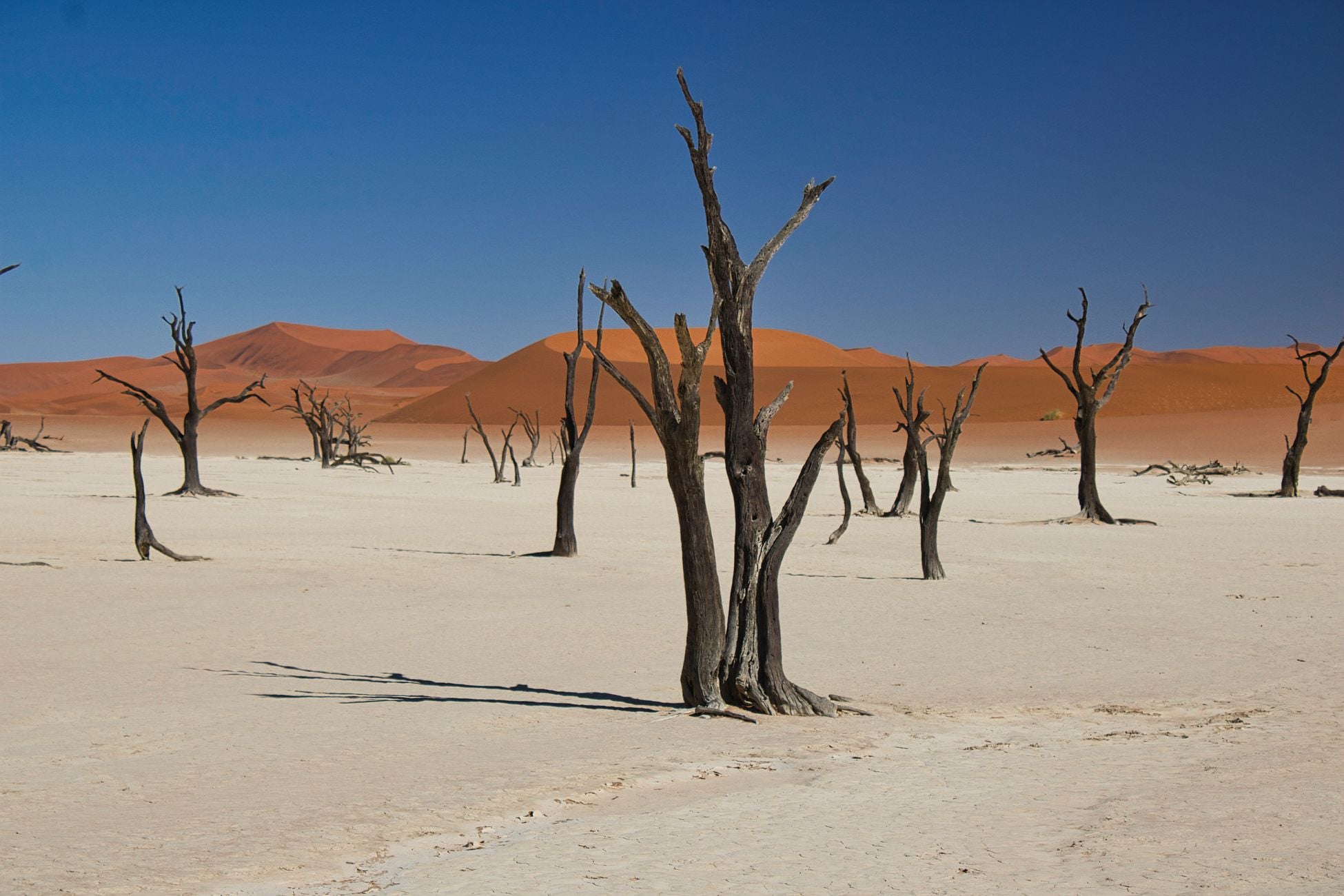
In the arid valley of Kourtimale in southern Djibouti, a farmer named Abdi Guelleh once tended crops behind a chain-link fence that now marks nothing but dust. His farm is one waypoint on the route of the Great Green Wall, an 8,000-kilometre band of intended forest, grassland, and farmland that the African Union has been trying to grow across the continent’s entire width since 2007 — from Senegal on the Atlantic coast to Djibouti on the Red Sea. Laid end to end, the belt is long enough to cross the continental United States nearly twice.
The idea is almost absurdly literal. Push back the Sahara with a wall of trees.
The corridor runs through eleven countries — Senegal, Mauritania, Mali, Burkina Faso, Niger, Nigeria, Chad, Sudan, Eritrea, Ethiopia, and Djibouti — hugging the southern edge of the Sahara along a strip roughly 15 kilometres wide. It crosses savannah, dune fields, dry riverbeds, and villages where the oases have been shrinking for a generation. When the African Union endorsed the plan in 2007, the pitch was simple: by 2030, restore 100 million hectares of degraded land, sequester 250 million tonnes of carbon, and create 10 million jobs in some of the poorest rural districts on Earth.
A wall you can walk through
The name is misleading, and that is part of the problem. Early renderings, produced for donor conferences in the late 2000s, showed a continuous ribbon of tall trees marching across the Sahel like a hedgerow drawn with a ruler. Reality has been messier. Roughly two decades in, the project is less a wall than a scattered patchwork of nurseries, community woodlots, restored pastures, and half-dead sapling plots — some thriving, many not.
Women in the village of Kaou, in Chad, still install brushwood barricades by hand to hold back the shifting dunes that threaten to bury their oasis. The oasis feeds the only farmland for kilometres. When it goes, the village goes with it.
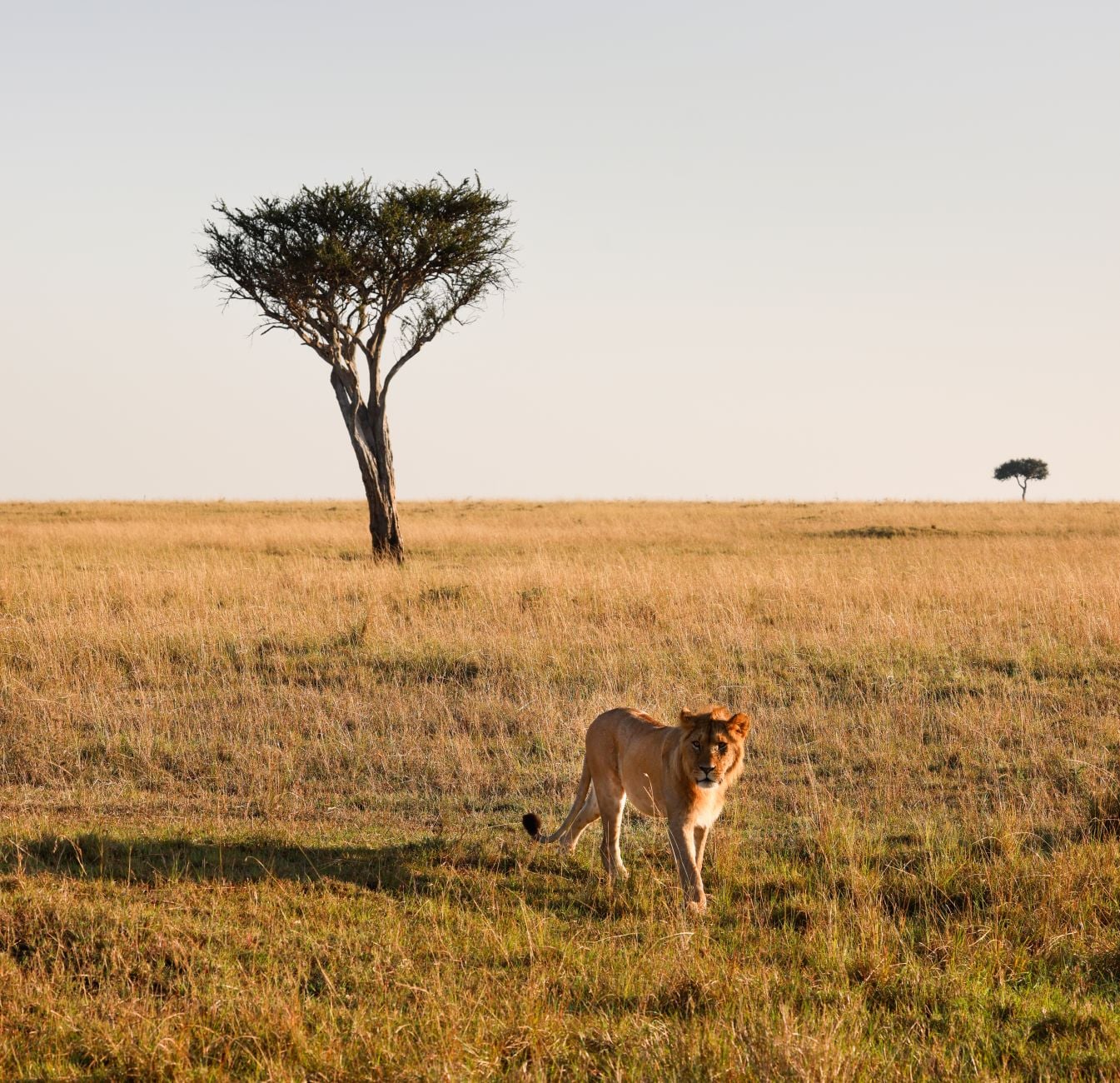
The width of the corridor — 15 kilometres — sounds thin against a Sahara that spans more than 9 million square kilometres, an area larger than the continental United States. That is the honest scale of it. The wall is not meant to stop the desert the way a seawall stops the tide. It is meant to stitch a living seam along the desert’s southern edge, where more than 100 million people already live in a climate that has warmed faster than the global average since 1950.
The species doing the work
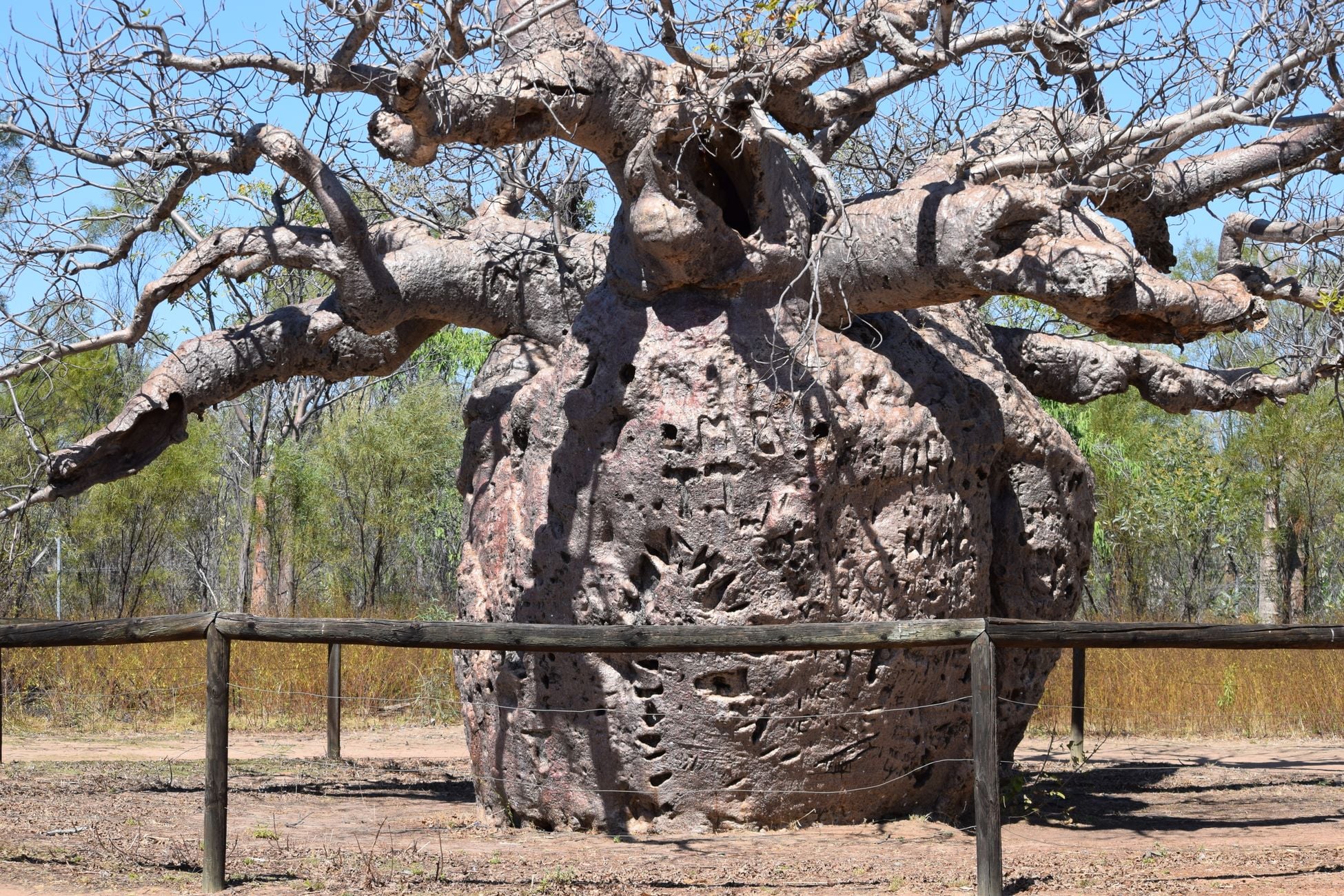
The trees planted along the corridor are not the postcard palms of tourist Sahara. They are the drought-hardened natives that have always survived here: Acacia senegal, which bleeds the gum arabic used in soft drinks and other products; Faidherbia albida, an acacia that inverts its growing season and drops its nitrogen-rich leaves onto the soil just as farmers plant millet beneath it; the desert date, Balanites aegyptiaca, whose fruit is edible and whose roots reach deep to tap groundwater; and the baobab, which can live more than a thousand years and store enormous volumes of water in its trunk.
Where the project has worked, it has often worked without planting. In Niger’s Zinder region, farmers rediscovered an old technique — farmer-managed natural regeneration — of pruning and protecting the stumps and shoots that already exist in their fields rather than importing seedlings. Satellite surveys have documented millions of hectares of restored tree cover in southern Niger, most of it from this method. No nursery. No irrigation. Just a decision to let what was already there grow back.
How much of it actually exists
This is where the numbers get uncomfortable. Progress reports have found that only a small fraction of the 2030 target had been restored by 2020. The project needed to accelerate its pace dramatically to hit the finish line on time. Donors pledged fresh money at the One Planet Summit in Paris in January 2021, bringing total commitments to more than $20 billion, including a headline $14.3 billion package.
The money has not translated cleanly into trees. A 2025 remote-sensing study of planted sites in Senegal found that very few of the areas identified for restoration showed measurable canopy progress a decade after planting. Seedlings die in droughts. Livestock chew them. Fences fail. Village councils lose interest when the NGO’s field office closes.
Why straight lines fail in the Sahel
The original Great Green Wall concept borrowed heavily from China’s Three-North Shelter Belt, a Chinese reforestation drive launched in 1978 that planted billions of trees along the country’s northern deserts. Chinese state media celebrated it for decades. Then ecologists began measuring more carefully, and the picture grew complicated. Monoculture plantations of fast-growing poplar and pine drained aquifers, died in outbreaks of pest infestation, and in some cases left the ground drier and more degraded than before planting began.
The Sahel poses the same trap and worse. Rainfall varies wildly from year to year — a village might get 400mm one season and 150mm the next. Trees planted in a wet year die in the dry one that follows. The corridor also cuts across land held under many overlapping systems of ownership: nomadic pastoralist routes, village commons, national forests, private smallholdings. A tree that survives the climate can still be felled by a herder who was never consulted about why it was planted.
What is working
The project’s most honest chapter began around 2019, when the African Union Pan-African Agency of the Great Green Wall shifted its metrics away from tree counts and toward hectares under any form of sustainable management — regenerated fields, restored pasture, agroforestry, protected regrowth. That reframing was uncomfortable for donors who had been sold the image of a wall, but it matched what was actually delivering results on the ground.
Ethiopia’s Tigray region, before the war that began in 2020, had restored substantial areas through community-managed exclosures — patches of hillside fenced off from grazing for a decade at a time, then reopened with rules on how much biomass could be cut. Groundwater tables rose. Springs that had gone dry in the 1980s began flowing again. Similar approaches in Burkina Faso and Mali have used zaï pits, half-metre-wide holes dug in bone-dry soil and filled with manure to catch the first rains, turning abandoned crust into millet fields within two seasons.
New satellite tools have made the accounting more honest. Since 2022, the project has used a monitoring platform combining Landsat, Sentinel-2, and drone imagery to track site-level progress in near-real time. Countries can no longer claim hectares that do not exist. The uncomfortable side is that some reported figures have been quietly revised downward.
The scale on a map
Stretched taut, the Great Green Wall route is longer than the Great Wall of China at its most generous measurement. The African wall’s 8,000 km is a single continuous line, cutting across time zones from GMT to GMT+3. A traveller driving the length of the corridor, if the roads existed, would pass through more than 200 languages and dialects, and cross the Niger and the Nile.
Studies of fragmented forest landscapes suggest that connectivity — corridors linking otherwise isolated patches — matters more for biodiversity and carbon storage than raw area planted. In that sense, the Great Green Wall’s ambition is not really its 100-million-hectare target. It is the linkage. A migrating bird species, a seed-dispersing bat, a spreading root system — all of these benefit from a continuous 8,000-kilometre thread far more than from the same hectares scattered as disconnected islands.
What Abdi Guelleh sees now
Back at the tattered fence in Kourtimale, the farmer whose plot NPR visited in early 2026 said the rains had failed three years running. The Great Green Wall project had planted acacia seedlings on the ridge above his valley. Some had survived. Most had not. He still walks up the ridge in the mornings to check on the ones that made it.
The wall was never going to arrive as a hedge you could photograph from a satellite. It is arriving, where it arrives at all, as a slow return of stumps to trees, of crusted fields to grass, of dry wells to shallow water. On maps, the corridor is drawn as a bold green stripe from ocean to sea. On the ground, it is a scatter of surviving saplings, spaced far enough apart that a person standing among them can still see the desert on the horizon, and still see the desert closer than it was the year before.
The strange endurance of specific trees — a Wollemi pine grove hidden for 90 million years, an acacia clinging to a ridge in Djibouti — carries the same quiet lesson. What survives is rarely what was planned. It is what was left alone long enough to grow back.
