

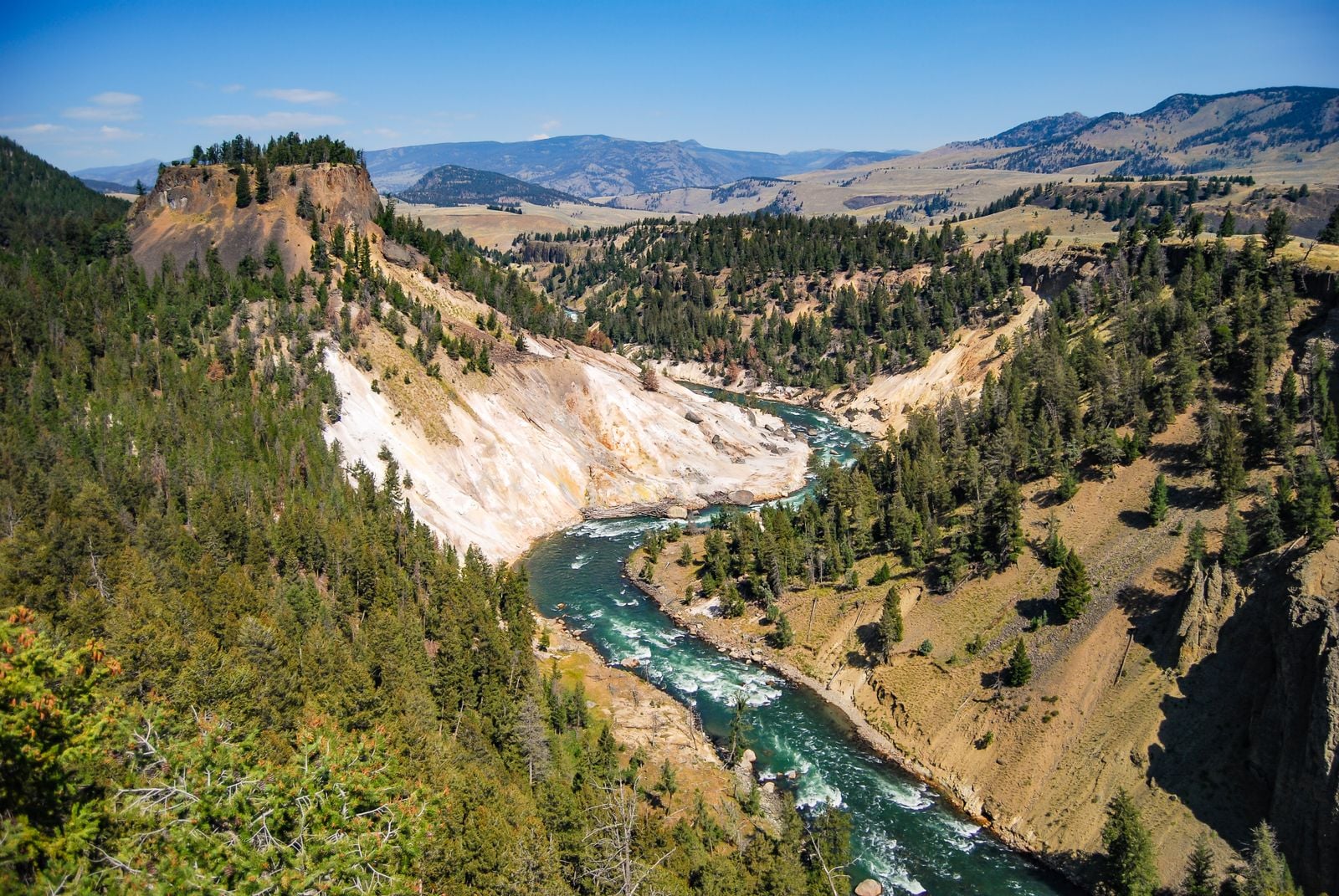
The last wolf pack in Yellowstone was killed by federal employees carrying out government policy. The year was 1926, the park was America’s oldest, and predators were widely treated as vermin. What followed was a 69-year demonstration of how removing an apex predator can alter a landscape in ways that take decades to recognise.
The consequences did not look like a disaster at first. Tourists kept arriving, elk remained abundant, and photographs from the 1930s still showed the park’s familiar valleys and geothermal steam. The changes accumulated more slowly than a camera could capture them. They appeared in the age of trees, the condition of streambanks, and the animals that could no longer find suitable habitat.
The bounty economy that emptied a park
During the early 20th century, federal predator-control programmes targeted wolves across the American West. The Bureau of Biological Survey and early park managers regarded large carnivores as threats to livestock and desirable game animals. Traps, poison, shooting, and campaigns to destroy dens were widely used. Yellowstone, founded in 1872, was not exempt, and park personnel killed wolves within its boundaries.
By 1926, the campaign had destroyed Yellowstone’s last known wolf pack, although individual wolves were occasionally reported afterward. Gray wolves, Canis lupus, were eradicated from Yellowstone in the 1920s as a result of hunting programmes run by the government. An intensive survey in the 1970s found no evidence of an established wolf population in the park.
The logic extended far beyond Yellowstone. Wolves were treated as an economic cost that could be removed without losing anything valuable in return. Once they were gone, however, managers were left to discover how many relationships had depended on their presence.
What went missing that nobody noticed
Elk populations and browsing pressure became central management problems on Yellowstone’s northern range. The story was not a simple uninterrupted rise after 1926 because the park later culled and relocated thousands of elk. When those removals ended in the late 1960s, elk numbers increased rapidly and heavy browsing again became a defining force on the landscape.
Willows along some streams remained short or disappeared. Aspen stands continued producing shoots, but elk repeatedly browsed many of them before they could grow into replacement trees. Researchers documented decades with little successful recruitment in numerous northern range stands. Rather than vanishing as a species from Yellowstone, aspen increasingly appeared as ageing overstory trees with few young trees reaching maturity beneath them.
Other species were affected as their habitat changed. Beavers depend heavily on willow and aspen for food and construction material, and colonies declined sharply in parts of the northern range during the 20th century. Birds that use mature aspens, cavities, and dense riparian shrubs also lost portions of their preferred habitat. These effects varied across the park, but the underlying vegetation decline was substantial.
The loss of beaver dams and riparian vegetation also left hydrological legacies. In affected areas, stream channels became incised, fine sediments eroded, and nearby water tables fell. Young trees struggled to mature as streambanks lost stabilising root systems and some sites experienced greater erosion. The hydrology of parts of the northern range shifted, making recovery difficult even after browsing pressure later eased.
The failed workaround
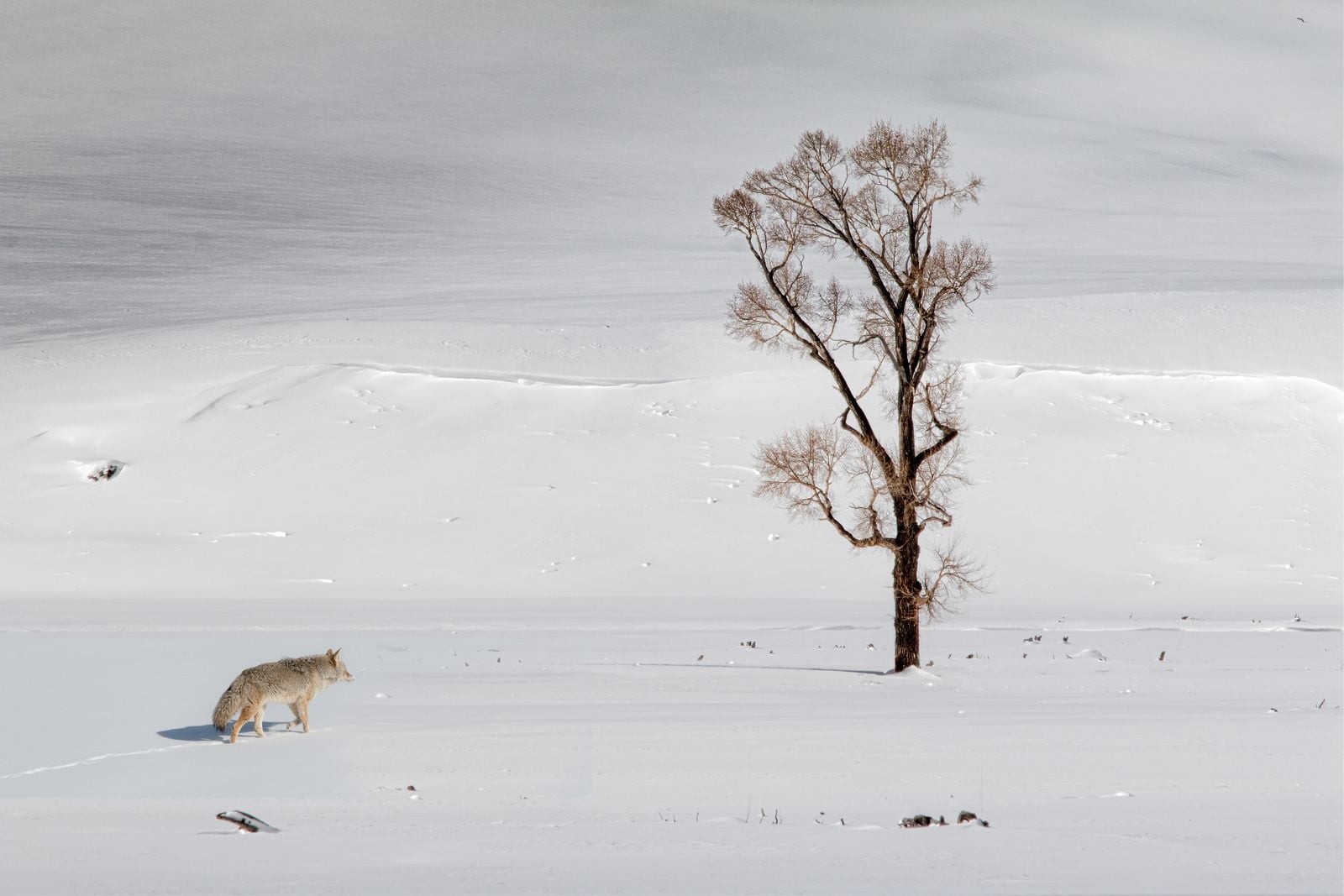
The National Park Service recognised that the northern range was under pressure. From the 1930s through the 1960s, managers killed, captured, or relocated thousands of elk in an effort to reduce their numbers. The programme pushed annual counts sharply downward. Public and political pressure eventually helped bring the removals to an end in the late 1960s.
Lowering elk numbers temporarily was not the same as restoring the park’s complete predator community. Nor could culling immediately reverse stream incision, low water tables, or the loss of beaver activity. A ranger-led removal programme created a different and more intermittent pressure than predators operating throughout the year. Vegetation recovery therefore depended on more than a single population count.
After the culling programme ended, elk numbers rebounded. Willows and aspens did not immediately regain the mature structure recorded in earlier decades. By then, some ecological changes had become self-reinforcing, particularly where incised streams and lower water tables limited plant growth.
Fourteen wolves in wooden crates
In January 1995, wildlife officials transported 14 gray wolves captured in Canada to Yellowstone. A second group of 17 followed in 1996. The animals spent time in acclimation pens before release, and each wolf was fitted with a radio collar. The programme restored breeding packs to the park after nearly seven decades without them.
The 69 years between the destruction of the last pack and the first releases were not ecologically blank. During that period, managers recorded changing elk numbers, deteriorating woody vegetation, disappearing beaver colonies in some watersheds, and persistent arguments over what was driving the northern range. The wolves’ return created an unusual opportunity to observe how those relationships might change again.
A compelling version of the story soon spread through textbooks, documentaries, TED talks, and viral videos. Wolves reduced elk pressure, willows and aspens returned, beavers built dams, and streams became more stable. The example introduced millions of people to the concept of a trophic cascade. It also compressed a complicated ecological argument into a sequence that appeared far tidier than the evidence.
The rebuttal from Utah State
Three decades after reintroduction, the most dramatic version of the Yellowstone story has come under sustained scientific challenge. The critics are not arguing for renewed wolf eradication, but questioning how confidently researchers can assign the park’s changes to wolves alone.
In 2025, Daniel MacNulty of Utah State University, David Cooper of Colorado State University, and two colleagues published a comment in Global Ecology and Conservation challenging a highly publicised analysis of willow growth. MacNulty then led a different group of co-authors in a 2026 Forest Ecology and Management comment examining reported aspen recovery. The two papers addressed related claims, but Cooper was an author only of the 2025 willow critique.
The willow debate centred on a reported 1,500 percent increase in willow crown volume. MacNulty and his co-authors argued that the estimate came from a model that used plant height to calculate crown volume and then used height again to predict that volume. They described the relationship as circular and said mismatched plots and other modelling assumptions further exaggerated the apparent effect.
The 2026 aspen comment raised a separate set of concerns. A reported 152-fold increase in sapling density between 1998 and 2021 became approximately 17.5-fold when the baseline was recalculated, according to MacNulty’s team. The authors also argued that repeated measurements had been treated as independent and that averages allowed a small number of unusually dense stands to dominate the result. Their conclusion was not that no recovery occurred, but that its magnitude had been overstated.
In a statement accompanying the 2025 willow critique, MacNulty said predator effects in Yellowstone were real but context-dependent and that strong claims required strong evidence. Cooper, who co-authored that paper, said the available data did not demonstrate a large or system-wide increase in willow growth. He described the response as more modest and spatially variable, with hydrology, browsing, and local conditions all contributing.
The finding that survives the fight
The critiques do not establish that wolves made no ecological difference. MacNulty’s 2026 team concluded that the evidence still supported a trophic cascade, but not one as strong as the most publicised estimates suggested. The dispute concerns its magnitude, distribution, and causes.
Most researchers agree that restored predators contributed to changes in Yellowstone’s elk population, alongside human hunting, recovering bear and cougar populations, weather, and other influences. Predator presence may also affect where and how prey feed, but the strength of that behavioural pathway remains debated. Vegetation responses differ between valleys and watersheds because water tables, snowpack, drought, bison browsing, and site history also matter. A trophic cascade in a landscape this large is not an on-and-off switch.
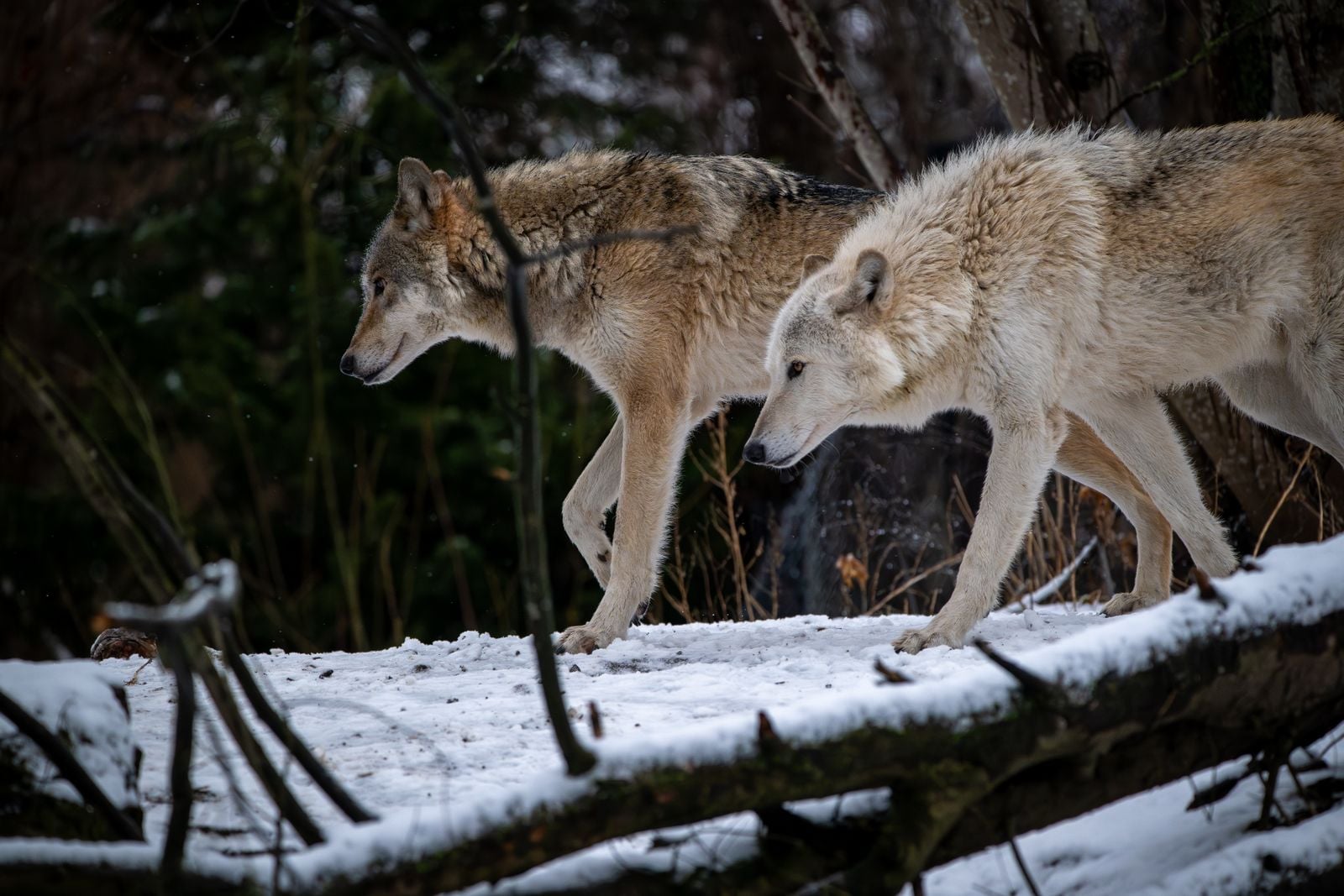
That complexity brings the story back to 1926. The extermination programme removed more than a population of wolves because it removed one source of predation from a network that also contained elk, plants, streams, beavers, bears, cougars, hunters, and climate. Elk browsing helped suppress woody plants, and declining willow and beaver activity contributed to lasting changes in some stream systems. Each relationship looked manageable in isolation, but together they shaped the northern range for decades.
The policy lesson the numbers still argue about
Colorado is now carrying out a related restoration programme, having released its first group of gray wolves in December 2023 under a voter-mandated plan. Ranchers, ecologists, and state wildlife officials are watching for effects on livestock, elk, other predators, vegetation, and public attitudes. Whether those effects approach anything like the Yellowstone precedent may take decades to determine.
Colorado will not reproduce Yellowstone exactly. Its wolves move through a more extensively developed and actively hunted landscape, and its vegetation, waterways, livestock operations, and management rules are different. The dispute over Yellowstone therefore matters because it limits what officials can responsibly promise. Predator restoration may produce ecosystem benefits without recreating every stage of the popular Yellowstone story.
The 69-year Yellowstone gap did not produce one clean measurement. It produced documented losses of woody vegetation in parts of the northern range, sharp declines in some beaver populations, altered stream conditions, and a long-running argument over causation. The extent of the later recovery remains contested, but the historical record shows how slowly ecological damage can emerge and how difficult it can be to reverse.
For readers who have followed this beat, an earlier piece explored how memory judges an experience by its worst moment and its ending rather than by its full duration. Yellowstone’s wolfless decades offer a landscape-scale version of that problem because no single season looked like a complete collapse. The consequences became visible only across generations of trees, animals, and management decisions. The officials who killed the wolves believed they were subtracting a nuisance, but it took most of a century to describe everything else they had removed.
