
Some of the most striking relationship research does not point to grand gestures or constant contact. It points to something quieter. At Purdue University, clinical psychology professor Susan South, whose Relationships and Mental Health Lab studies attachment styles in marriage, has found that trust — not the frequency of contact — is what holds couples together, and that partners who feel securely attached report the happiest relationships. Look at ordinary life through that lens and a pattern emerges. The partners and parents people return to, decade after decade, are rarely the ones sending three-paragraph texts asking where you are. They are the ones who left the door unlocked, kept the phone line open, and never once required you to show up scrubbed, employed, and emotionally photo-ready before you were allowed inside.
Purdue University research on attachment styles in marriage, based on surveys of about 100 newly married couples, points to trust as the factor that matters most, with securely attached partners reporting the happiest relationships. The everyday version of that trust is easy to recognise. Secure relationships tend to be quiet. They do not audit. They do not demand proof of life on a schedule. They tolerate long silences and pick up mid-sentence when the silence breaks.
That is the counterintuitive part. The relationships that feel closest are usually the ones that ask for the least performance.
The mother who never asked how the job hunt was going
Ask adults in their thirties and forties which parent they still call unprompted, and a strange pattern emerges. It is often the parent who did not interrogate. The one who would invite them for dinner without expectations, meaning it when they said to bring nothing. The one whose calls were three minutes about the dog and never a status report on your career.
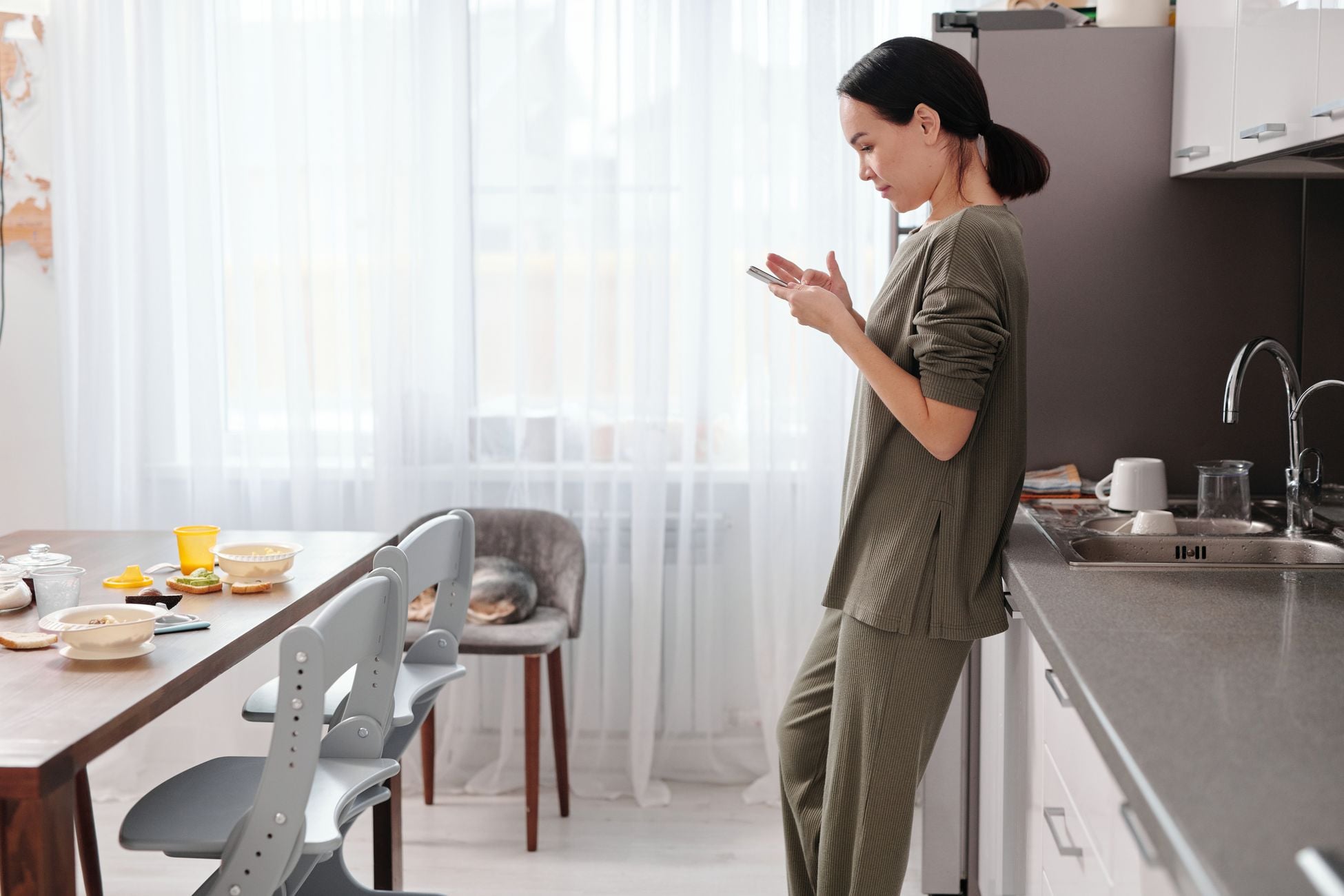
Attachment research has a name for this. It is what psychologists call a secure base — a person whose availability is not contingent on your current output. John Bowlby described it in the 1960s in children; the concept is now described almost identically in adult romantic and family attachment. The defining feature is not warmth or frequency of contact. It is the absence of a toll booth at the entrance.
You do not have to pay to get in. You do not have to bring an update. You do not have to have news.
Why the demanding relatives feel further away
The relative who complains about not being called is doing something specific, even if they do not know it. They are setting a price on contact. To open the conversation, you must first absorb the accusation, then reassure them, then offer a reason, then apologise, then arrive with something worth reporting.
That is a lot of admission fee for a phone call.
Attachment researchers describe this under the umbrella of anxious attachment — the pattern where closeness is pursued through pressure, monitoring, and reproach. The outcome tends to be self-defeating: anxious pursuit produces the exact distance it fears. The person on the receiving end starts routing around the demand. They call less, not more. They visit on holidays only. They screen.
Meanwhile the aunt who extends an open invitation to stop by on Saturdays gets the drop-in visit that lasts four hours.
The friction test
There is a useful way to measure this. Think about which contacts in your phone you can text at 11pm on a bad Tuesday without composing the message in your head first. That number is almost never large. Five, maybe. Sometimes two.
Those are the low-friction relationships. The ones where the cost of initiating contact is close to zero. You do not have to be interesting, resolved, or okay. You can send a photo of the ceiling and get back a photo of a different ceiling.
When each interaction requires emotional preparation — rehearsing what to say, anticipating what will be asked, bracing for the follow-up questions — the relationship starts to carry a tax. The tax is invisible but cumulative. Eventually the account goes dormant.

What researchers might call easy contact actually looks like
It is not always warmth. Sometimes it looks almost cold from the outside. A father who answers the phone with yeah? and hangs up after ninety seconds can be, functionally, one of the easiest people in the world to call. He does not require the ritual. He picks up. He does not extract a report. He gets off the phone quickly. You can call him again tomorrow without it being a Big Conversation.
A partner who says you don’t have to tell me about your day if you don’t want to is offering something similar. The offer is not indifference. It is the removal of an obligation. You are welcome to talk. You are also welcome to sit on the couch in silence and eat crackers.
Both are versions of the same message: the relationship does not require you to produce anything to remain in it.
The performance problem
Most people are, by mid-adulthood, exhausted from being the working version of themselves at their job, their kids’ school, their group chats, and their own social media. The relationships that survive this exhaustion are the ones that let the working version log off at the door.
Research on self-disclosure in intimate relationships suggests that satisfaction may rise when people feel they can share authentically — the tired, contradictory, half-formed self — without editing. What is quieter in that research, but consistent, is the reverse: relationships where every interaction requires the polished self tend to drain, even when they look impressive from outside.
The Instagram-worthy marriage where both people always look coordinated is often the marriage where nobody has cried in front of the other in eight months.
Why parents get this wrong most often
Parents of adult children have a particular temptation, and it is one of the loneliest patterns in family life. They confuse frequency of contact with quality of contact. They believe that a weekly phone call is intimacy. They measure the relationship by response time and call duration.
Their adult child, meanwhile, is measuring something else entirely: whether calling home makes them feel more like themselves or less. Whether they can hang up feeling lighter or heavier. Whether the parent asked one question too many.
The parents who stay closest to their grown children are the ones who figured out, sometimes accidentally, that the goal is not to be updated. The goal is to be reachable. They send the occasional photo of the garden. They mention that the leftovers are in the fridge if anyone happens to be driving through. They do not ask about the job, the money, the dating, or the plan.
And so their kids come by. Not because they are summoned. Because there is nowhere else where showing up requires so little.
The partner version
In romantic relationships the same dynamic operates on a shorter timescale. The partner who greets you at the door asking about your day and wanting to hear everything is asking for something. The partner who greets you with an offer of soup is offering something.
Both can be love. But over ten thousand evenings, the second one is easier to come home to.
This is not an argument against curiosity or attention in relationships. It is an observation about timing. The partner who waits — who lets you take your coat off, drink some water, decompress for twenty minutes, and then talks — is calibrating to the reality that you have just spent nine hours performing. They are letting you land before they ask anything.
People who have spent time sitting in parking lots between obligations understand this intuitively. The buffer is not avoidance. It is the transition from performing self to actual self, and the people who allow that transition inside the relationship are the ones you keep