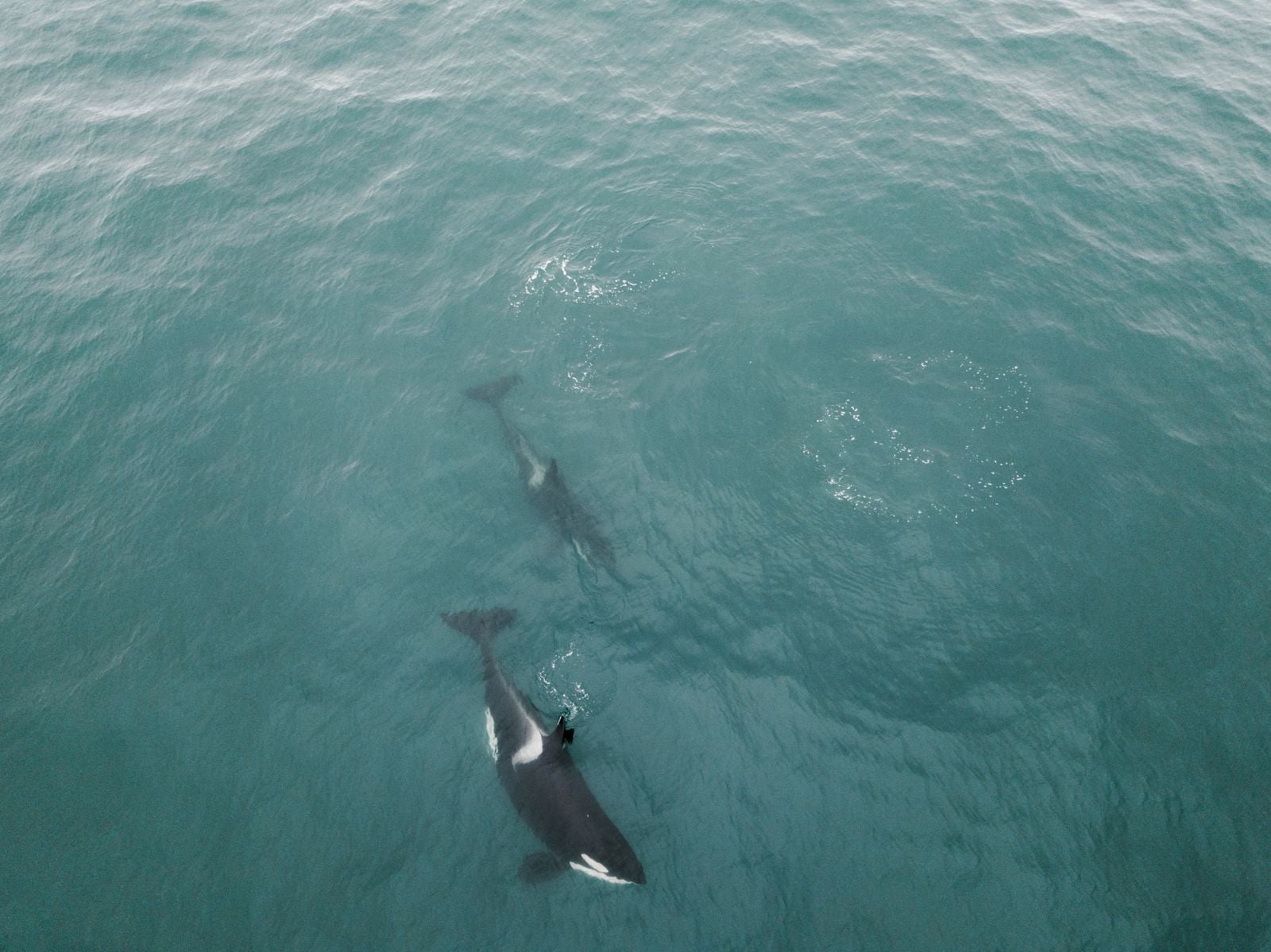
A sperm whale sleeps standing up. Not on the seafloor, not tucked into a cave, but suspended vertically in open ocean, head pointed toward the sky, tail hanging into the black water below. It floats motionless in a small cluster with others of its kind, all of them aligned the same way, all silent, all drifting just beneath the surface for roughly ten to fifteen minutes at a stretch before someone stirs and the pod resumes its life. No other mammal is currently known to sleep this way.
The posture was not documented on film until the late 2000s, when a research crew happened onto a pod of drifting sperm whales and the animals didn’t react — a strong sign they were unconscious. Before that footage, the behaviour had been inferred from acoustic tags but never seen with human eyes.
The accidental discovery
The encounter was chance. A group of biologists studying Physeter macrocephalus nudged their boat close to what looked like a raft of logs on a calm sea. The logs turned out to be whales, arranged nose-up in a loose cluster, unresponsive to the vessel until it accidentally bumped one. Only then did the pod wake and scatter.
What the footage confirmed was already suspected from digital acoustic tags — small suction-cup recorders that log a whale’s movement, orientation, and sound production. When those tags went quiet and the accelerometers showed a vertical hang, researchers had long guessed the animals were sleeping. Seeing it was another matter.
Ten to fifteen minutes, and that’s the whole night
Sperm whales appear to sleep significantly less than most other mammals. They take their rest in short vertical drifts of about ten to fifteen minutes each. A human trying to run on that schedule would collapse inside a week.
The naps happen in the upper twenty metres of the water column, close enough to the surface that the whale can rise for a breath without effort when it wakes. During those minutes, the animal produces no echolocation clicks, makes no calls, and holds its body almost perfectly still. If you swam past one, it would look dead.
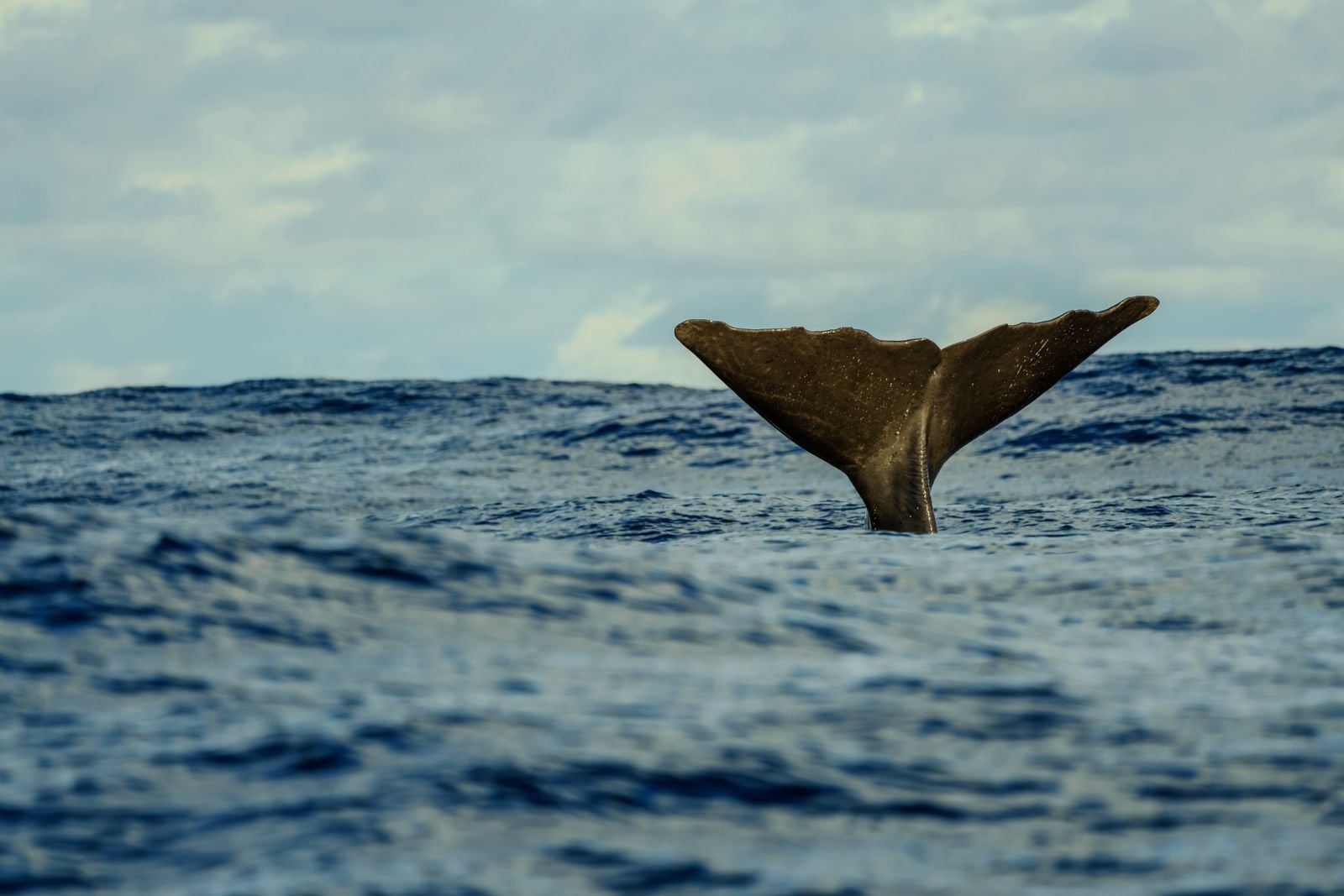
Why vertical, and why together
The orientation is a puzzle of physics. A sperm whale’s head is enormous and packed with spermaceti, a waxy oil once hunted for candles and lamp fuel. That head is buoyant. Left to its own devices, it wants to rise. The tail is denser and wants to sink. Hang the animal vertically and the forces roughly balance, letting the whale idle in the water column without burning energy.
Recent tagging work off Norway has added a twist. Researchers found that sleeping sperm whales actively release small bursts of gas from their blowholes while suspended, essentially deflating themselves to keep their heads from bobbing to the surface. In some naps the whales released bubbles up to 36 times during a single rest period, fine-tuning their buoyancy the way a scuba diver adjusts a vest.
Grouping matters too. The pods that sleep this way are usually made up of related females and their calves, aligned in the same direction like pencils in a jar. The clustering may help with predator detection — a killer whale approaching from any angle is more likely to be spotted by at least one animal — and it may serve a social function that biologists still don’t fully understand.
Half a brain at a time — but maybe not here
Most cetaceans get around the problem of sleeping underwater by using unihemispheric slow-wave sleep: one half of the brain shuts down while the other stays awake, controlling breathing and watching for danger. Dolphins do it. Belugas do it. It’s how a whale keeps from drowning while asleep.
Sperm whales seem to be different. The stillness, the total lack of response to approaching boats, and the pattern of the acoustic recordings suggest that both hemispheres may sleep at once during those short vertical drifts. If confirmed, that would make them the only cetacean known to do full bilateral sleep — and it would explain why the naps are so brief. You can only be that unconscious in open ocean for so long before something goes wrong.
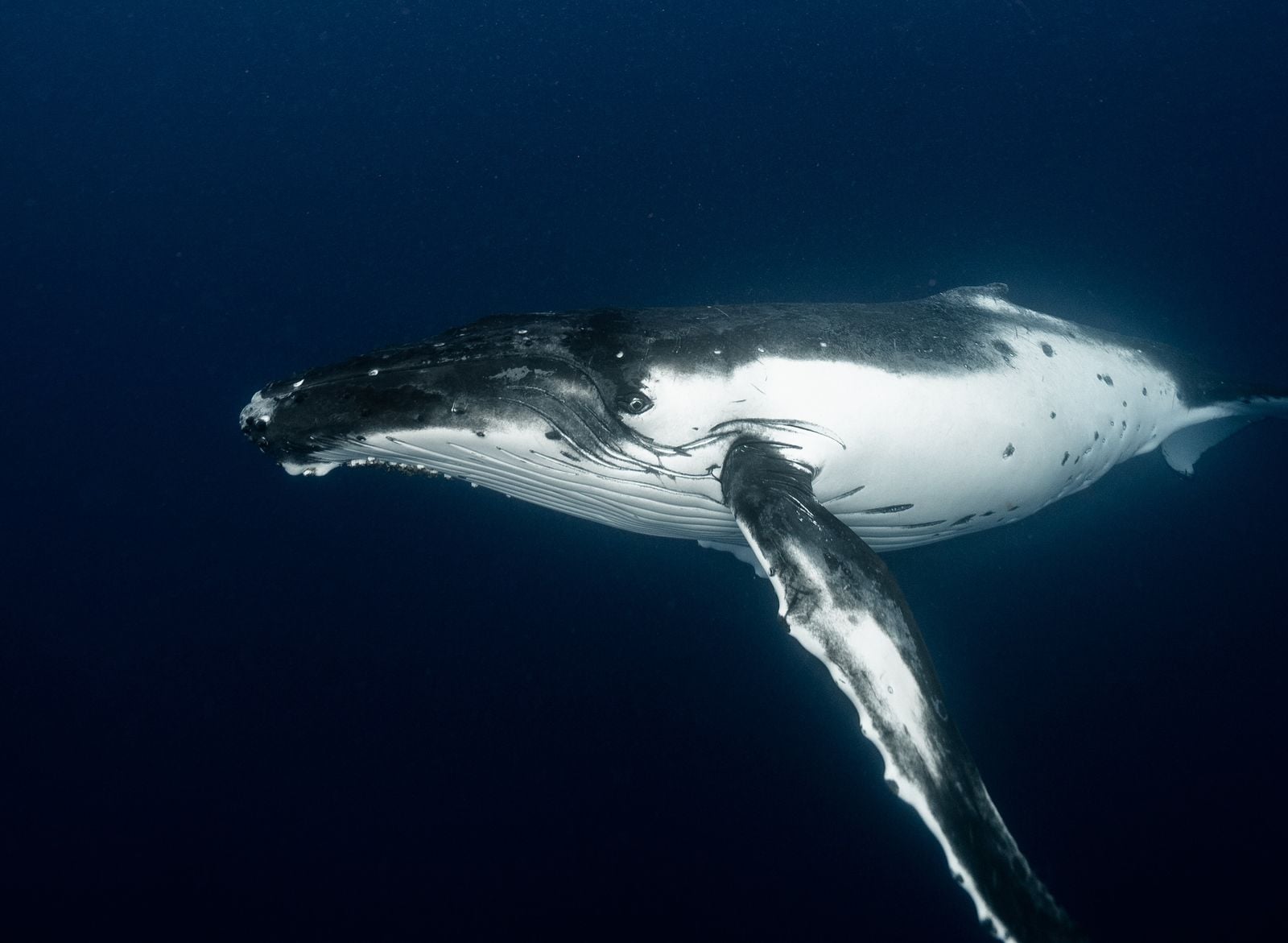
The gas-release trick, in more detail
The Norwegian tagging study recorded the fine mechanics of the drift. As a whale settles into its vertical hang, it exhales just enough gas to sink slowly through the top twenty metres of water. As it drifts down, the surrounding pressure compresses the air remaining in its lungs, making the animal denser and pulling it deeper. To arrest the sink, it releases another burst of bubbles, or subtly shifts posture.
The behaviour resembles what a freediver does with a lungful of air, only in reverse and while asleep. And it happens in coordinated groups. A pod of six or eight animals will begin drifting at nearly the same moment, sink together, and wake together, sometimes within seconds of each other. Whether that synchrony is chemical, acoustic, or purely social is an open question.
Why it took so long to see
Sperm whales are the largest toothed predators on Earth. They dive routinely to great depths below the surface, hunting giant squid in near-total darkness. They spend most of their lives in places humans cannot easily follow.
Studying deep-diving cetaceans is a discipline built almost entirely on indirect evidence. Beaked whales — Mesoplodon species and their relatives — have been tracked in the Gulf of Mexico using passive acoustic arrays on the seafloor, the same kind of listening approach that first hinted at sperm whale rest behaviour. The 2026 study led by Héloïse Frouin-Mouy at the University of Miami’s Rosenstiel School reconstructed 50 deep foraging dives of three beaked whale species from click patterns alone, without ever putting eyes on the animals. That’s the norm for this branch of biology. You listen. You infer. You wait.
The footage in the late 2000s was one of the rare moments when the inference and the sighting lined up in the same frame.
The shape of a sleeping pod
From a small boat, a sleeping sperm whale pod looks like something has gone wrong. The animals sit motionless. Their skin, wet and dark, catches the light in slabs. There is no breath, no fluke slap, no click. The heads all point in the same direction, tilted maybe five or ten degrees off true vertical, and the tails vanish downward into deep blue.
Then one animal twitches. The others follow within seconds. A blowhole opens. A fluke lifts. The pod, without any signal a human observer can detect, agrees to be awake again, and drifts back into the ordinary business of being a whale — descending toward the squid, calling to distant relatives, moving through the water in the coda patterns that some researchers think may function like a spoken language.
What the head is for
The sperm whale’s oversized head is the reason the vertical sleep works, but it is also the reason the whale exists in the form it does. The spermaceti organ is a resonating chamber. When the animal produces its echolocation clicks, the pulse is generated at the front of the head and reflected off an air sac at the back, focused, and fired forward through the melon. The whole head is a sonar gun.
That same organ, filled with waxy oil that can shift phase between liquid and solid depending on temperature, may also help the animal manage buoyancy on deep dives. When it comes time to sleep, the head’s natural tendency to float becomes the mechanism that keeps the animal upright.
How much of ocean life we still haven’t seen
The gap between what marine biologists suspect and what they can film is enormous. Sperm whales have been hunted, painted, and written about for more than three centuries — Melville published Moby-Dick in 1851 — and yet a fundamental behaviour, the way they sleep, sat undocumented on video until the late 2000s. The bubble-release trick that keeps them from bobbing to the surface was only tagged in detail recently, off Norway, using instruments that didn’t exist a generation ago.
Silicon Canals has covered the acoustic tagging work that first documented the posture, and the story keeps getting stranger. Each new tag deployment reveals another small trick the animals use to make the ocean liveable — a subtle exhale here, a synchronised drift there, a whole grammar of rest that evolved out of sight of anything with legs.
A hundred and fifty seconds in, everyone wakes
Ten to fifteen minutes. That is the entire window. In that stretch, a massive animal hangs suspended above the deep ocean, half or possibly all of its brain switched off, its head balanced against its tail by a slow leak of gas from its lungs, close enough to a dozen relatives that a fluke tip could brush a neighbour’s flank. Then it wakes, and dives, and is gone.