

Relationships & Society
The American dream can be put in a number, and that number has halved: 9 in 10 children…
About 90 percent of American children born in 1940 grew up to earn more than their parents did at the same age.

Popular topics

About 90 percent of American children born in 1940 grew up to earn more than their parents did at the same age.

For most of the twentieth century, finding a partner in America was a community project.

Roughly 300 million people live along the Sahel, the semi-arid belt on the Sahara's southern edge where rainfall is scarce, soils are thin, and a single failed harvest cascades into crisis because there is almost no safety net to catch it.
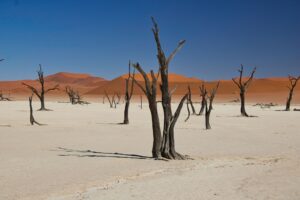
The African Union's Great Green Wall is meant to run 8,000 kilometres from Senegal's Atlantic coast to Djibouti's Red Sea shore — a belt of restored land long enough to cross the continental United States twice. Nearly two decades in, only a fraction has actually taken root, and the project has quietly redefined what a wall of trees can be.

In 1991, two researchers at the University of Cambridge Computer Laboratory pointed a grey-scale camera at a coffee jug to save themselves a wasted trip down the stairs — and accidentally built the world's first webcam, watched by 2.4 million people before it was switched off in 2001.

There is a familiar misreading of quiet people in loud rooms.
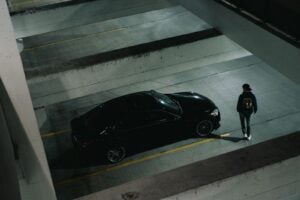
The twenty-minute parking lot pause looks like poor time management. It is actually a self-engineered threshold ritual — a small, defended pocket of autonomy in a day otherwise structured by other people's demands.
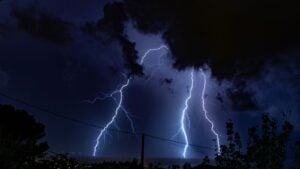
The 1989 geomagnetic storm is remembered as Quebec's nine-hour blackout. The more revealing casualty was a transformer at Salem nuclear station in New Jersey, quietly destroyed the same night — a warning about how solar storms actually damage a modern grid.

We are writers and editors, not clinicians, psychologists, or therapists.

In 1991, Cambridge computer scientists Quentin Stafford-Fraser and Paul Jardetzky pointed a grayscale camera at a coffee pot outside the Trojan Room to spare themselves three flights of stairs — and accidentally built the world's first webcam. Here's how a 128×128 pixel workaround for a mundane annoyance turned into the template for every livestream on the planet.

Some friendships don't end in conflict — they simply thin until neither of you is quite sure when the last real conversation happened. Psychologists call this ambiguous loss, and it may be one of the most under-grieved experiences of adult life.

For roughly a billion years — from 1.8 to 0.8 billion years ago — Earth's oceans went chemically stagnant, oxygen stalled, and life did nothing much except reproduce as microbial slime. Geologists call it the Boring Billion, and it is the longest uneventful chapter in the planet's history.