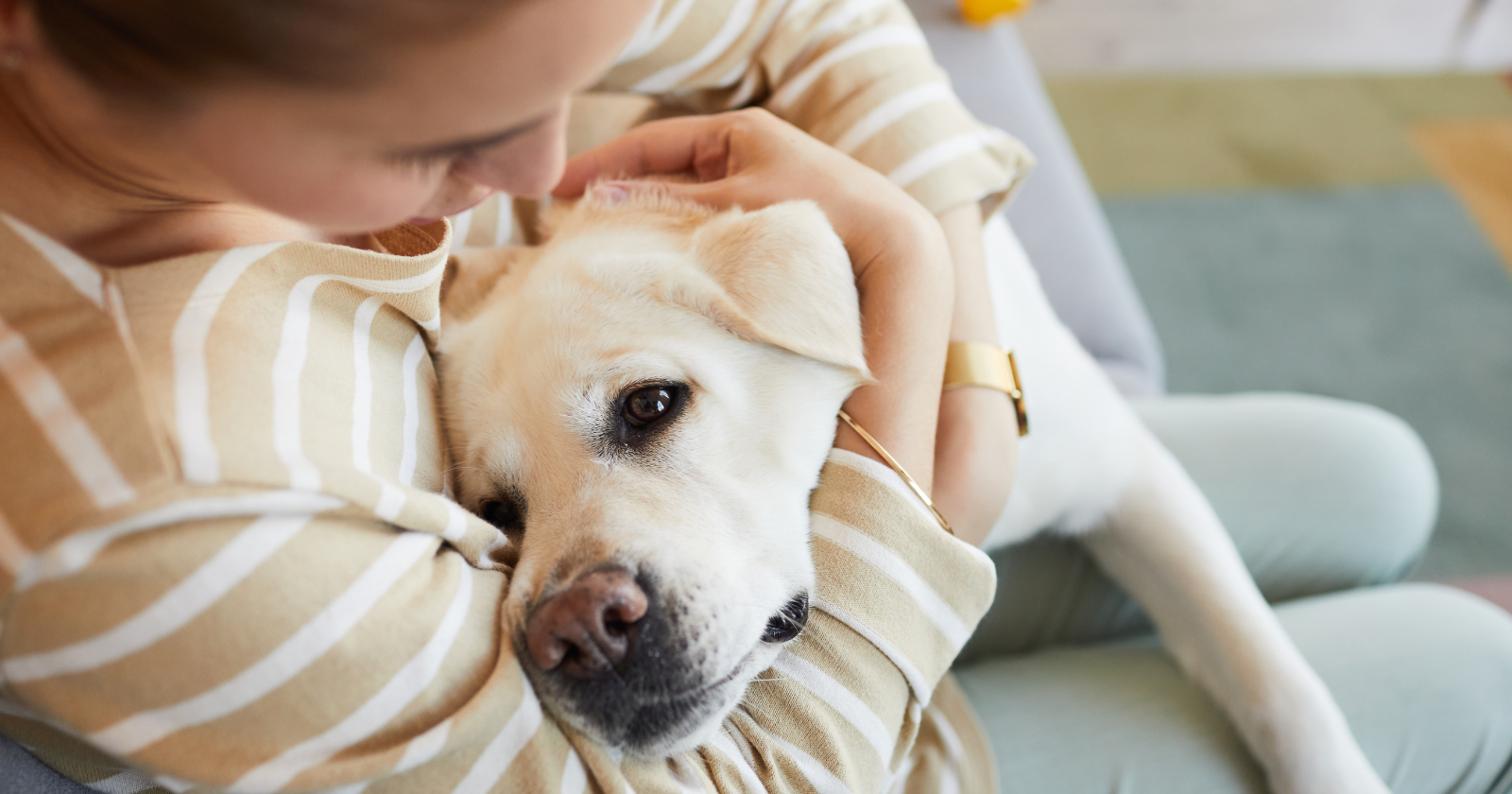
Every dog forms a bond with its person. Whether that bond runs deep or stays light depends mostly on the individual animal, on how it was raised, and on how the person treats it day to day. Breed is one factor among many. On the specific question of attachment, one study found no significant difference in the main attachment dimensions between the working-breed groups it compared, and within-breed variation can be substantial. Two dogs of the same breed can land in different households and grow into very different relationships.
With that said, certain breeds have been shaped, over generations of selective breeding, toward closer pair-bonding with humans. Cavalier King Charles Spaniels were literally bred to sit on laps. Vizslas were bred to work close to a single hunter. Some breeds, like Akitas and Shibas, have been documented in cross-breed studies to score lower on attachment measures than modern European-origin breeds. The list below is not a ranking. It is a curated set of breeds whose history, breed standards, and reputation among trainers and breed clubs converge on close human attachment as a defining feature.
1. Cavalier King Charles Spaniel
If there is one breed that exists specifically to bond with humans, this is it. Cavaliers were developed as companion dogs from the start, not adapted from working stock. The result is a dog with very little independent drive and an extraordinary appetite for proximity. Cavaliers do not do well left alone for long stretches, and they tend to follow their person from room to room without being asked.
2. Vizsla
The Vizsla has earned the nickname “velcro dog” honestly. Bred in Hungary as a close-working pointer that hunts within a few yards of its handler, the Vizsla carries that wired-for-proximity history into the living room. A Vizsla that does not get plenty of exercise and contact with its person is, by most accounts, a difficult dog. A Vizsla whose needs are met is one of the most devoted animals a household can have.
3. Golden Retriever
The Golden’s reputation for affection is so well established it has become a cliché, but the reputation is largely deserved. Goldens were bred as retrievers for sport, which required them to be intensely focused on their handler’s signals, biddable, and gentle. Those traits transferred to pet life and produced a breed that orients to its people with unusual openness. Goldens tend to bond broadly with the whole family rather than to a single person.
4. Labrador Retriever
The Lab is similar to the Golden in its breeding history and in its affectionate temperament, though slightly more independent and food-driven. Labs bond strongly with their households but are typically more comfortable being briefly left alone than Cavaliers or Vizslas. The breed’s consistent appearance at the top of family-dog rankings is partly about size and health and partly about the steady warmth of the typical Lab personality.
5. German Shepherd
The German Shepherd is often described as a one-person dog. The breed forms a strong primary bond with one member of the household, often the person who does the most training and handling, while remaining loyal but less intensely attached to the rest of the family. This is a breed where the bond is not casual. A well-socialised German Shepherd is deeply devoted to its handler in a way that some owners find moving and some find demanding.
6. Standard Poodle
Poodles are sometimes underestimated because of the show-ring grooming, but they are among the most cognitively engaged and human-oriented breeds. Standard Poodles in particular tend to form intense, alert, intelligent bonds with their people, paying close attention to mood and routine in a way that many owners find slightly uncanny. The breed reads human signals exceptionally well and uses that reading to stay closely tuned in.
7. Italian Greyhound
A small breed with an oversized attachment instinct. Italian Greyhounds were bred as companion dogs for European nobility and have spent centuries being selected for staying close. They tend to bond intensely with one or two people in the household, prefer warm laps to almost any other location, and can develop separation anxiety more readily than larger sighthounds. For the right household, the level of attachment is exactly what is wanted.
8. Doberman Pinscher
The Doberman’s reputation for one-person devotion has been part of the breed’s identity since it was developed in the late nineteenth century as a personal protection dog. The bond is not diffuse. A Doberman tends to choose its person, watch that person with sustained attention, and respond to subtle changes in their mood and routine. Well-socialised Dobermans are warm and affectionate within the household and discerning outside it.
9. Boxer
Boxers wear their attachment more openly than most breeds. They are demonstrative, physically affectionate, and prone to leaning bodily into their people in a way that some dogs avoid. The breed’s working history as a guard and companion dog produced a temperament that combines loyalty with a kind of cheerful insistence on being part of whatever the household is doing. Boxers do not, as a rule, do aloofness.
10. Bichon Frise
Like the Cavalier, the Bichon was developed primarily as a companion breed rather than from working stock. The result is a small dog with very little independent purpose and a strong preference for being where its person is. Bichons tend to be cheerful, attentive, and physically affectionate, and they generally tolerate being part of a family group rather than fixating on a single person, which makes them well-suited to households with several adults or children.
What actually matters more than breed
The breeds above have histories and reputations associated with close human contact, so general temperament can still be relevant when choosing a dog. But this list cannot predict the attachment of an individual animal. Socialisation, health, experience and the relationship built in the household all matter. A Cavalier raised by an inattentive owner can be less attached than a mixed-breed shelter dog whose person is consistent, present, and warm. The breed brings the predisposition. The household decides what to do with it.