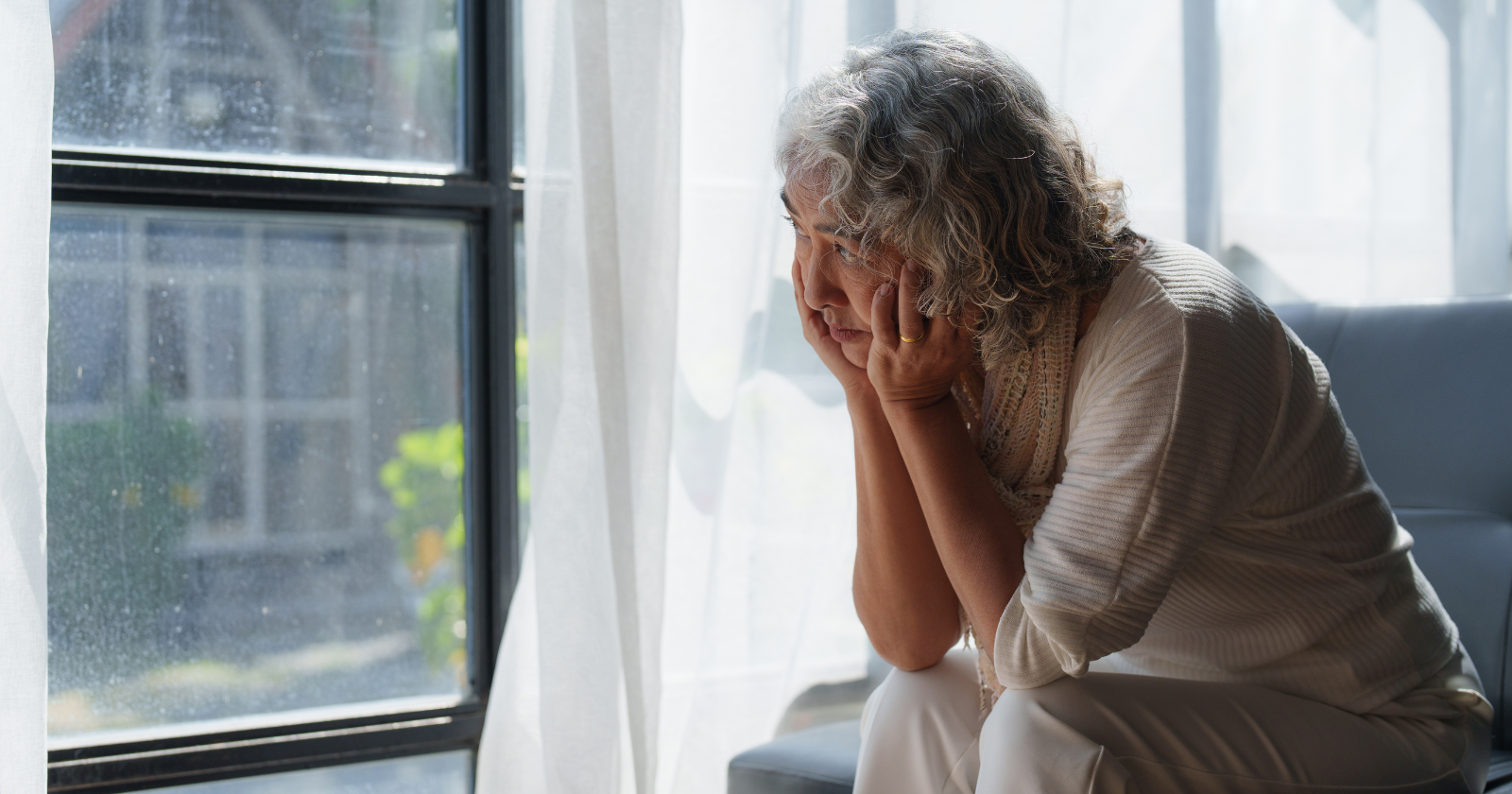
My mum is sitting at her kitchen table with a cup of tea going cold in front of her. It’s a Saturday. Her phone is face-up next to the sugar bowl, and it has not made a sound all afternoon. She isn’t waiting for it exactly. She’s just near it, the way you are near a thing you’ve stopped expecting anything from but haven’t quite given up on.
She is sixty-five. She has no close friends. Not one she’d ring on a bad Tuesday, not one who’d ring her. What gets me, what I keep turning over on the train home, is that it was not always this way. For most of her life she had more friends than anyone I knew. She sat at the centre of a crowd of them, and somewhere along the line the crowd thinned and scattered and left her standing alone in the spot where it used to be.
The part that’s hardest to sit with is how she lost them, because she did nothing wrong. If anything she did everything right, by every rule we’re handed about friendship. She was the reliable one. And being the reliable one, it turns out, is among the loneliest things a person can become.
She was the one who held it all together
My mum was the organiser. She booked the table, sent the reminder, knew whose child had exams and whose mother was in hospital. She carried the birthday list in her head, every date, and never once missed one. When the group hadn’t seen each other in too long, she would notice and do something about it. For decades she was the engine that kept a dozen friendships running, the person without whom the arrangement would simply have stopped happening. Everyone adored her for it, or said they did. She was forever being told how wonderful she was, how organised, how she was the glue, the heart of it all, the person holding them together. She wore those words like medals. She believed they meant she was loved.
She was wrong. She mistook being indispensable for being treasured, and the two are a very long way apart.
Nobody keeps the person who does the keeping
What I’ve slowly come to understand about her situation is this. When you’re the one who organises everything, all the relationships in a group flow through you. Everyone else’s connection runs inward, to the centre, to you, and not necessarily across to each other. You aren’t really one of the friends. You’re the infrastructure the friendships are built on. And nobody, in the entire history of the world, has ever thought to take the infrastructure out for its birthday.
Her labour only ever travelled one way. She did the remembering, so no one else had to learn how. She did the organising, so no one else ever built the habit. She kept everybody, so thoroughly and so well that not a single one of them developed the muscle of keeping her. Why would they? She was always there, always fine, always the one reaching out first. You don’t check in on the person who checks in on everyone. You don’t arrange a thing for the arranger. That’s the trap. The very reliability that made her the heart of the group also made her the one person in it who could be taken utterly for granted, because that is what reliability is, the part you stop needing to think about.
What happens when the organiser stops
So when she slowed down, the structure came apart faster than anyone, my mum included, could have pictured. I’m not entirely sure why she stopped. Some of it was age. Some of it was tiredness. Some of it, I suspect, was a slow dawning sense that she was the only one ever putting coal in the fire. She arranged one fewer dinner, then another, and waited to see whether anybody would take up the slack. No one did. The group didn’t share out the work of staying in touch. It just stopped staying in touch, because the only force that had ever held it together was her, and she’d finally run dry.
Those friendships, the ones she’d spent thirty years tending, turned out to have no engine of their own. They had run entirely on her, and the moment she stopped feeding them, they rolled to a halt and went cold, and not one of the people she had remembered and gathered and held together for three decades thought to turn round and keep her. She had made herself essential to the machine and somehow never essential to a single one of their hearts. The reliable one became, in the end, the one none of them thought to keep.
Being needed is not the same as being loved
This is what I most want people to take from her story, because plenty of them are living in its early chapters without any idea how it ends. Being needed feels almost exactly like being loved. It’s warm, it’s flattering, it fills your days and your calendar and your sense of who you are. But it’s a different currency, and it does not convert on its own. You can be the most needed person in a whole circle and find out, the day you stop being useful to them, precisely how much of what you felt was love and how much was only convenience in love’s coat.
The people who leaned on my mum were not villains. I want to be fair to them, though some days I don’t especially want to. They were ordinary, busy, a little thoughtless, in the way most of us are most of the time. They didn’t plot to drop her. They simply never had to think about keeping her, because she had arranged things so that they never had to think about anything, and by the time the thinking became necessary, none of them had ever learned how to do it.
What I try to do now
I can’t hand my mum a new circle of friends. You can’t manufacture that for someone, however much you’d give to be able to. What I can do, and have started doing, is be the one who keeps her. I organise now. I hold the dates. I make the calls she used to make for everyone else, except I make them to her.
I rang her last night. She picked up on the second ring, the way she always does now, and her voice had that particular brightness people get when the phone has not gone for a while. We talked about nothing much. The weather, a programme she’d watched, a neighbour’s dog. I could hear her stirring something on the hob, and I could hear, underneath it, how glad she was that it was ringing at all.
I don’t know if it’s enough. I don’t think it is. A son is not the same shape as a friend, and a phone call on a Wednesday is not the same as a life full of people who chose to stay. I sat with the phone in my hand after she’d gone, and I thought about all those years she was told she was the heart of the group, and I wondered whether what I’m doing now counts, or whether it only looks like it does, from the outside, in the right light.