

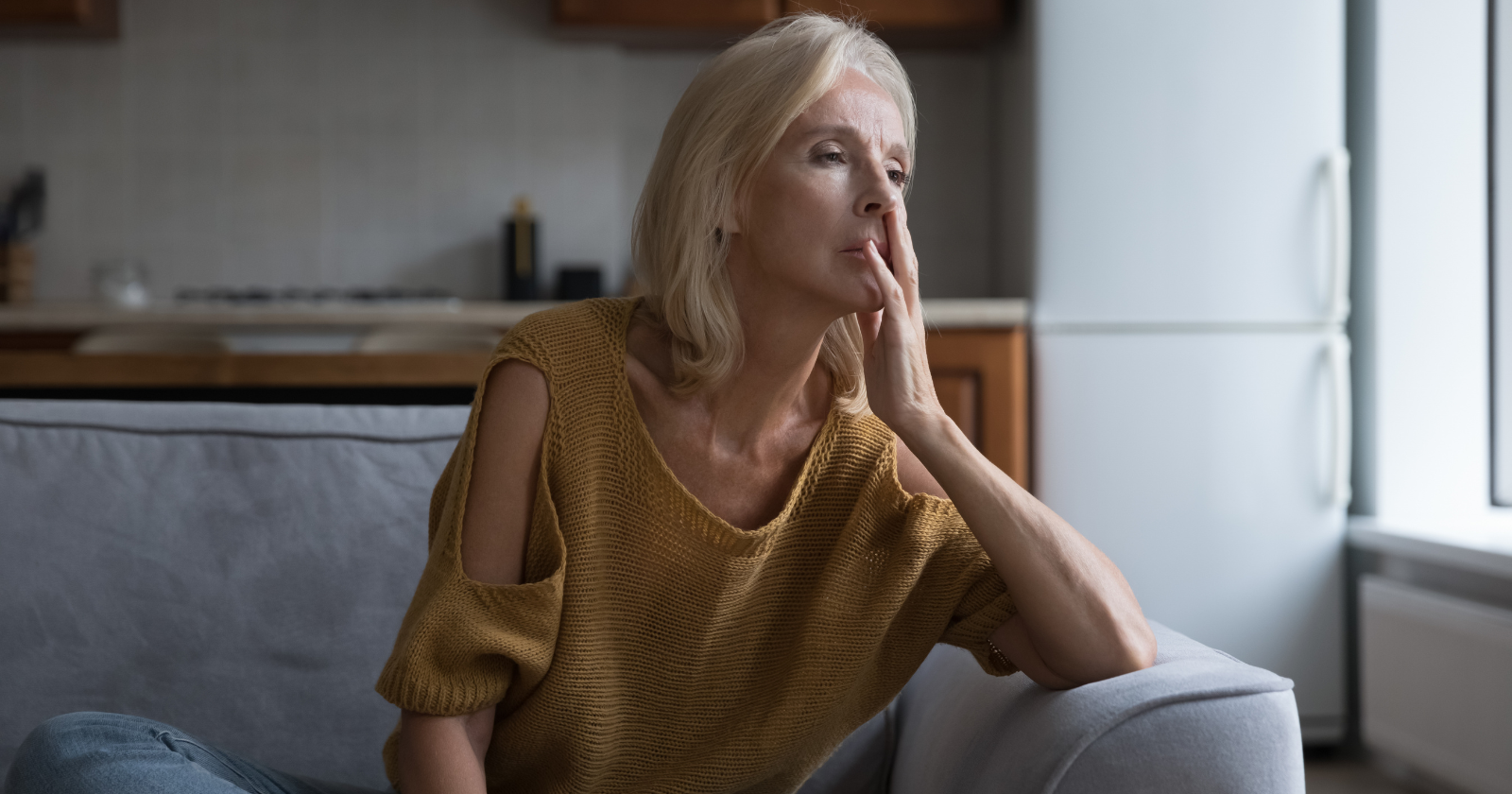
The standard reading of a friendless sixty-year-old is that something went wrong inside them — a personality too prickly, a temperament too withdrawn, social skills that never developed or quietly atrophied somewhere around the second mortgage. The diagnosis is almost always individual, almost always character-based, and almost always wrong. Or at least incomplete.
Because when you look closely at the people who arrive at their seventh decade without a single person they would call at 2 a.m., a different pattern keeps surfacing: not absence of social capacity, but exhaustion of it. They are not the ones who never learned how to be close. They are often the ones who were close to everybody, in one direction, for forty years.
Conventional wisdom treats adult friendship as a skill. Something you maintain through effort, like a garden, and lose through neglect. That framing assumes a level playing field where everyone begins adulthood with the same emotional reserves and simply allocates them differently. What it misses is that some people enter adulthood already in deficit, having spent their childhood as the steady one in an unsteady house, and then spend the next four decades quietly running the emotional infrastructure of every room they walk into.
The arithmetic of one-way support
Friendship, in its functional form, is reciprocal. A reaches out to B. B reaches back. Over years, the ledger balances roughly, with seasons of imbalance forgiven on both sides. The people who reach sixty without close friends often have ledgers that never balanced in the first place. Not because their friends were exploitative, but because the role they took on, very early, was the one who gives. They were the cousin who listened. The colleague who absorbed. The sibling who managed the parents. The spouse who held the household’s anxieties so the household could keep functioning.
A recent piece on this site about people who grew up in the 1960s and struggle to open up touched on one side of this. The cultural conditioning that taught a whole generation to keep private things private. But the pattern under discussion here is different. It isn’t about not knowing how to share. It’s about having shared, repeatedly, in the only direction the relationship would accept: outward.
The Forbes coverage of a new psychologist-developed tool for measuring emotional labour makes a quiet point most people miss: the work of regulating other people’s feelings is rarely visible to the people receiving it. The person doing it knows. Everyone else experiences it as the room being calm, the family being okay, the team holding together. The labour disappears into the result.
What forty years of carrying actually does
Compassion fatigue is usually discussed in the context of nurses, social workers, first responders. Professionals exposed to acute suffering on a daily basis. The long-term effects of that exposure include emotional numbing, withdrawal from intimacy, and a reduced capacity to take in other people’s distress without flinching. The clinical literature is built on the workplace version, but the domestic version exists too. It just doesn’t get a job title.
The person who spent their twenties stabilising a fragile parent, their thirties absorbing a partner’s anxieties, their forties managing a teenager’s collapses, and their fifties sitting beside a dying friend has accumulated something. Not a diagnosis. Just a depleted reserve, a quiet aversion to one more person’s pain, a body that tightens when the phone rings after 9 p.m. By the time the immediate demands lift, with children launched, parents buried, careers winding down, the capacity to reach out has often gone somewhere it cannot easily be retrieved from.
This is not the same as not wanting connection. It is closer to not having the bandwidth to start the kind of relationship that would require receiving it. Receiving care is its own skill, and people who spent four decades being the giver often never developed it. The mechanics are unfamiliar. The vulnerability feels exposing rather than relieving. The instinct, when someone asks how they are, is to deflect and ask back. Not from politeness, but from a nervous system that has learned that “how are you” is an invitation to perform fineness so the other person can keep talking.
The midlife inflection point
Recent research summarised in coverage of middle age as a breaking point in the United States found that Americans born in the 1960s and early 1970s are reporting higher levels of loneliness and depression than earlier cohorts at the same age. The conventional explanation reaches for the usual suspects: smartphones, suburban sprawl, the erosion of civic life, longer working hours. Those factors are real. They are also incomplete.
What they don’t capture is the cohort effect of being the generation that was simultaneously the first to professionalise emotional labour at home (the “you can talk to me about anything” parents, the “I want to be your friend not just your boss” managers, the “tell me what you need” spouses) and the last generation expected to absorb the unprocessed feelings of the one above them. They held both ends of the rope. The grandparents who would never say the word therapy and the children who said it constantly. They translated between them. Translators get tired.
Coverage of men’s social isolation in particular describes a population reporting fewer and less supportive friendships than women. But the framing usually focuses on what men failed to do, not what they spent four decades doing instead. For a significant subset, the answer is providing — financially, logistically, emotionally to spouses and children — in ways that left no surplus capacity for the lateral, peer-level intimacy that friendship requires. The same logic applies, with different texture, to many women who held the family’s emotional centre for decades.
Attachment, but not the version on Instagram
The popular discussion of attachment styles has flattened a genuinely useful framework into a personality quiz. The actual literature is more interesting. People who learned, very early, that their job was to manage other people’s emotional states tend to develop relational habits that look competent from the outside and feel hollow from the inside. They become the friend everyone calls. They rarely call anyone. They feel slightly resentful that no one calls them, and slightly relieved, because the call would mean having to receive something.
That pattern doesn’t disappear in midlife. It calcifies. By sixty, it presents as a person with a long contact list and no close friends. A description that, from the outside, reads as social failure, and from the inside, often reads as a kind of quiet protection. The people who would have been close didn’t fail to show up. They were held at a polite, useful distance for forty years because closeness was structurally one-directional and the giver couldn’t keep absorbing without something giving way.

What the cellular data is starting to show
Recent longitudinal work covered under the headline that strong friendships may slow aging at the cellular level is worth reading carefully. The finding isn’t that friendship is a vitamin you take. It’s that the quality of reciprocal relationships across the life course, including childhood, predicts measurable biological outcomes decades later. The implication runs both ways. People who had reciprocity early tend to have it later. People who had to provide early often keep providing later, and their bodies register the cost.
This is one strand of research, not settled consensus, and the mechanisms are still being mapped. But the directional claim, that the texture of your earliest relationships shapes your later capacity for connection in ways that show up in tissue, not just mood, should change how a friendless sixty-year-old gets read. The question is not what is wrong with this person. The question is what they were asked to carry, and for how long, and whether anyone was carrying them.
The mistake of reading depletion as deficiency
An earlier piece on this site about small morning rituals as acts of jurisdiction argued that some everyday behaviours that look like wellness theatre are actually the nervous system staking a quiet claim on the day. The pattern under examination here is the inverse: behaviours that look like social deficiency are often the nervous system, after four decades of asymmetric output, declining to start one more relationship it would have to fund.
That’s a meaningful distinction. The first framing, socially deficient, locates the problem in the person and prescribes effort: join a club, take a class, reach out, put yourself out there. The second framing, depleted, locates the problem in the history and suggests something different. Not effort. Restoration. The slow, uncomfortable work of learning to receive, which for someone who has been the giver since they were eight years old is not a skill they lack so much as a posture they have spent a lifetime avoiding because, the first time they tried it, nobody caught them.
What the absence is actually saying
So here is the harder question, and it is not a question about the friendless sixty-year-old. It is a question about the rest of us. What does it say that we built a culture in which the people doing the most relational work are also the people most likely to end up alone? What does it say that we only notice emotional labour when it stops, and usually not even then, because by the time it stops the laborer has gone quiet enough to be mistaken for someone who simply isn’t very social?
We treat their absence as a personal failing because the alternative is uncomfortable. The alternative is admitting that every calm room, every functioning family, every team that held together was being subsidised by someone whose account we never checked. And when that person finally runs out, we diagnose them instead of ourselves.
The friendless sixty-year-old isn’t a warning about the importance of maintaining your social calendar. They are a question being asked of everyone who benefited from their work and never thought to ask how they were doing. The honest answer is that most of us didn’t ask because we didn’t want to know. And that is not their failure to carry forward. It is ours.
