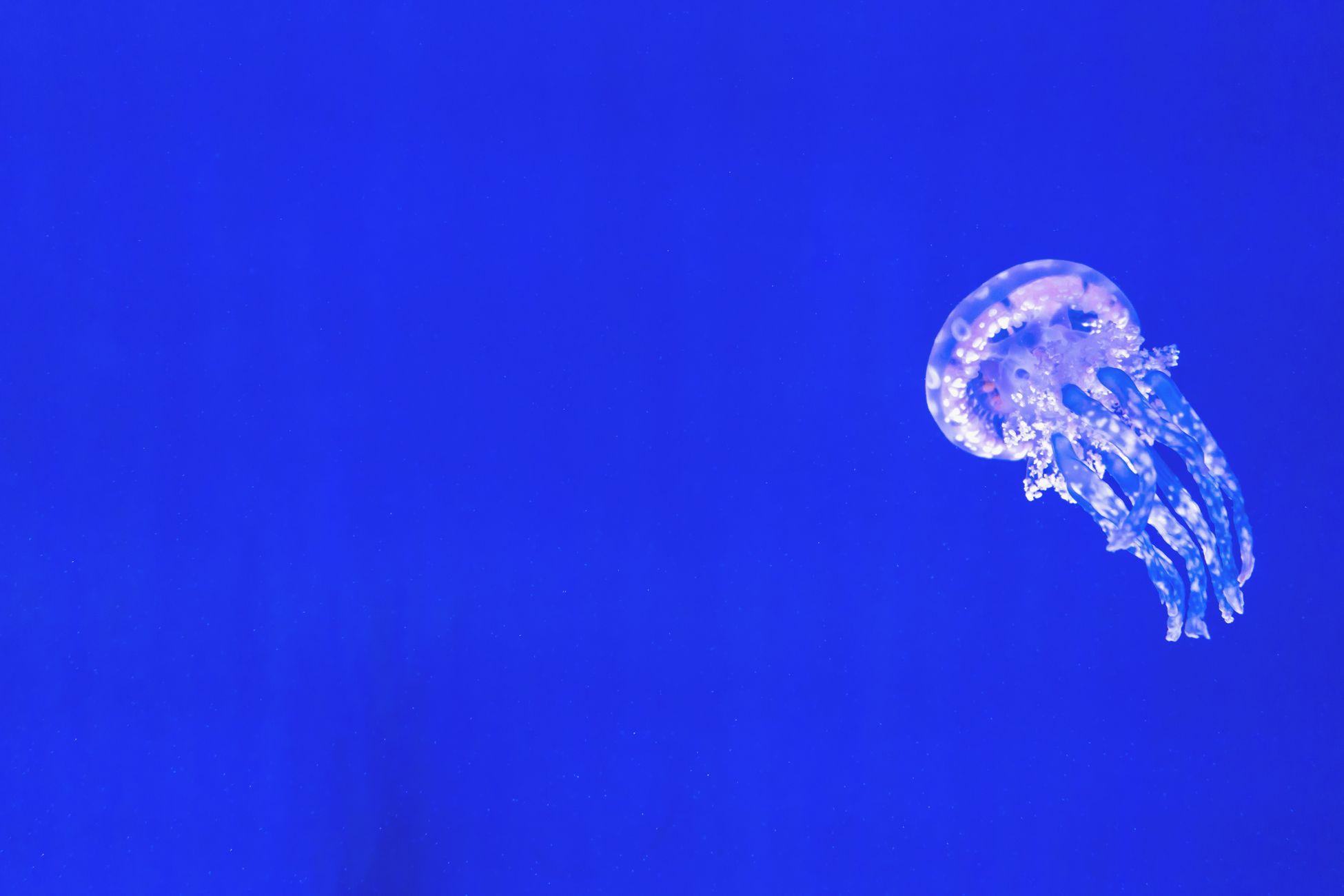
Off the coast of Rapallo, in the warm shallows of the Mediterranean, a jellyfish no bigger than the nail on your little finger is doing something no other animal can reliably do. When Turritopsis dohrnii is wounded, starved, or simply pushed past what its tiny body can tolerate, it sinks to the seafloor, balls up, and begins to dissolve its own tentacles and bell. Within days, the adult medusa has melted back into a blob of tissue, then into a stalk of immature polyps. This is the larval form it left behind when it first grew up. The clock has not been paused. The clock has been wound backward.
Biologists call this transdifferentiation. Aquarium guides and tabloids call it immortality. Both are sort of right.
Turritopsis dohrnii is the only known animal that can return to a sexually immature stage after reaching adulthood, then grow up again, then do it once more, and again, with no obvious ceiling on how many times the loop can run. In laboratory settings, individual specimens have been documented running the cycle more than ten times in succession.
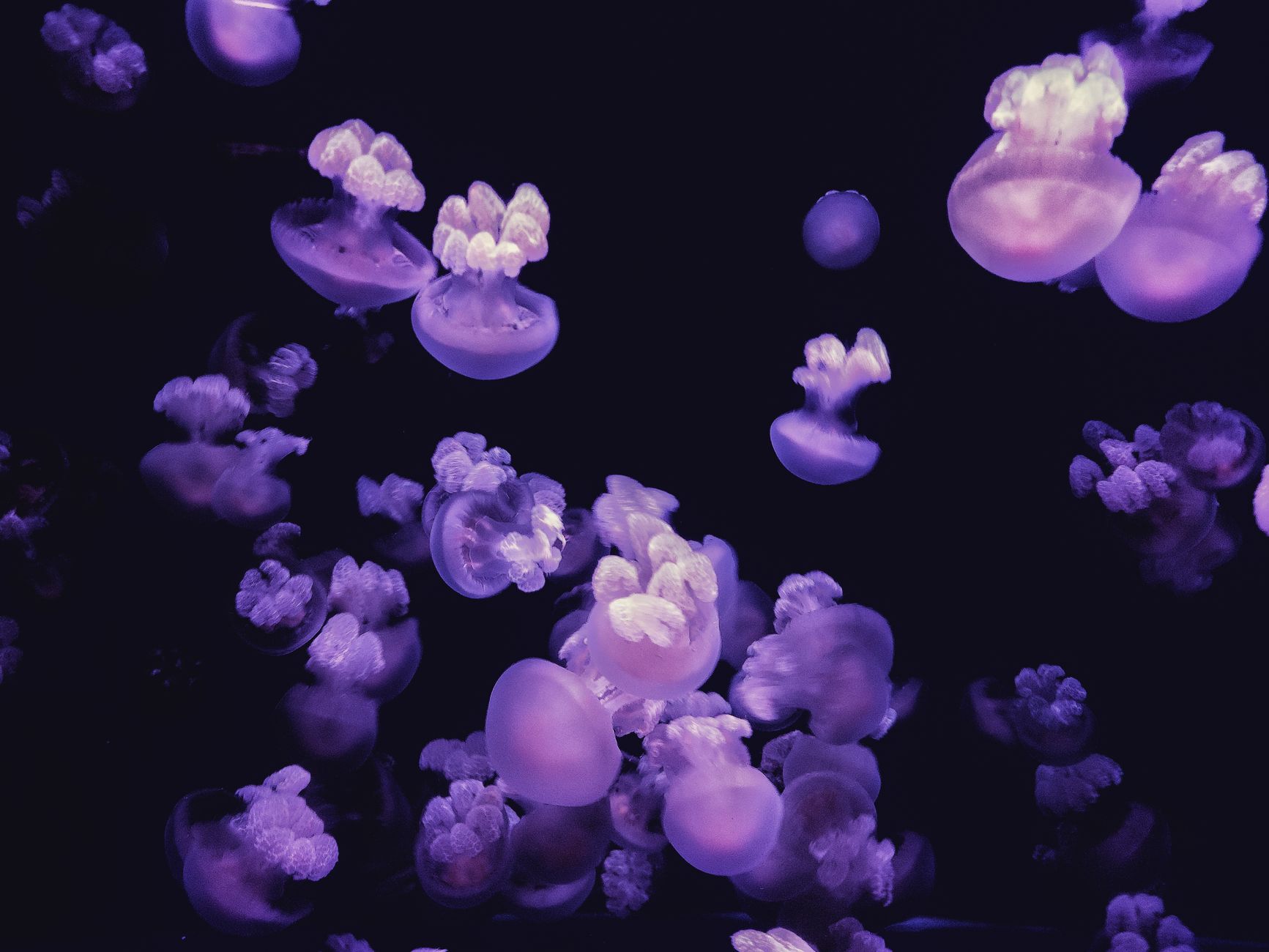
A fingernail-sized animal with a back button
The adult medusa is about 4.5 millimetres across. It has a transparent bell, a bright red stomach visible through the dome, and roughly 80 to 90 tentacles trailing from its rim. It eats plankton. It drifts. From the outside it looks like a thousand other hydrozoan jellies.
The trick lives inside its cells.
Most animals, once a cell has committed to being a muscle cell or a nerve cell, cannot send it back to being something else. Turritopsis dohrnii can. When the jellyfish is injured, sick, or starving, its specialised cells revert to a pluripotent state and reassemble into the polyp form. This is the squat, plant-like stage that all hydrozoans pass through on their way to adulthood. The medusa, in effect, becomes its own embryo.
Marine biologists who first described the reversal have compared it to a butterfly turning back into a caterpillar. The analogy is not quite right. Caterpillars and butterflies are stages of one life, and the jellyfish is restarting an entire one. But it captures the wrongness of the thing. It violates a rule we did not know we believed in.
How the rewind actually works
Under stress, the bell of the medusa contracts and the tentacles retract. Within hours, the animal settles onto a surface, a rock, a piece of shell, a researcher’s glass slide, and forms a cyst-like mass. Inside that mass, cells that were once striated muscle, once part of the nervous system, once part of the digestive lining, lose their specialisations.
Within 24 to 72 hours, the mass begins to extend stolons, the rootlike threads of a polyp colony. The polyps bud. Eventually, when conditions improve, the polyps release new medusae through asexual budding. Those medusae are genetic clones of the original adult. The same individual, in the only sense that genetic identity makes the word “same” meaningful, is now swimming again.
Genome studies have identified the genetic machinery behind the trick. Turritopsis dohrnii has expanded copies of genes involved in DNA repair, telomere maintenance, and stem-cell renewal, and downregulated versions of genes linked to cellular ageing. The cellular hardware that lets human bodies wear down is, in this jellyfish, tuned the other way.
Theoretically immortal, practically eaten
The word “immortal” needs an asterisk the size of a dinner plate.
Turritopsis dohrnii has no apparent intrinsic limit on how many times it can reset. In a laboratory tank, with stable temperature, no predators, and a reliable supply of brine shrimp, an individual could in principle persist indefinitely. The cellular machinery does not seem to accumulate damage the way ours does.
In the actual Mediterranean, or the Caribbean, or the waters off Japan, where the species has spread, possibly in ship ballast tanks, the jellyfish is approximately as durable as a grape. Fish eat it. Sea slugs eat it. Larger jellies eat it. Disease finds it. Storm surges crush its polyps. The reversal trick rescues the animal from senescence and starvation, but it does nothing about being swallowed.
As biologist Scott Travers has noted, the title “immortal jellyfish” describes a capability, not a life expectancy. Most individuals die young, in the usual ways that small soft animals die in the ocean. The point is not that any single jelly lives forever. The point is that, alone among known animals, this one has the option not to die of old age.
Why no other animal does this
Reversing development is not unheard of in nature, but most cases are partial. Hydra, the freshwater relative that gave Greek mythology its many-headed monster, can renew its tissues continuously through stem-cell cycling and shows what biologists call negligible senescence. It does not appear to age in any measurable way. But hydra does not rewind from adult to embryo. It just keeps replacing parts.
Some salamanders regrow limbs. Planarian flatworms can be cut into pieces, with each piece regenerating a whole worm. Certain sea squirts can rebuild themselves from fragments of blood vessel. None of these animals, however, takes the full adult form and rolls it back into a juvenile stage of the same individual, then grows up again.
Turritopsis dohrnii is doing something distinct: not regeneration, not cloning, but life-cycle reversal. The trait may rely on a combination of small body size, simple tissue organisation, and the hydrozoan habit of alternating between polyp and medusa forms in the first place. The species already had a back door between life stages. Evolution gave it a key.
Shin Kubota and the patient work of watching nothing die
Almost everything known about how often the reversal can happen comes from one laboratory. Researchers have kept Turritopsis dohrnii in culture for extended periods, feeding them by hand with brine shrimp eggs and documenting individual specimens cycling back to the polyp stage repeatedly, sometimes within weeks of reaching adulthood.
Maintaining a population of Turritopsis dohrnii requires constant temperature control, fresh seawater, hand-feeding, and the patience to notice when a 4-millimetre animal has melted onto the glass.
What this means for human medicine — and what it doesn’t
Every few years a press release suggests the jellyfish holds clues to reversing human aging. The honest version of that claim is narrower.
Genome work has identified specific gene families, those governing DNA repair, telomere upkeep, mitochondrial maintenance, and stem-cell pluripotency, that are differently regulated in Turritopsis dohrnii than in its close relatives. Many of those gene families have direct human counterparts. Studying how the jellyfish keeps its cellular hardware tuned could inform research on tissue regeneration, cancer (which is, in a sense, the wrong kind of cellular reversal), and degenerative disease.
It will not produce a pill that makes a sixty-year-old human into a teenager. Humans are not hydrozoans. We have hundreds of cell types organised into organs that cannot dissolve and reform without killing us. The jellyfish’s trick depends on being small, simple, and built from tissues that were already plastic.
A loop in warm water
Somewhere off the Italian coast tonight, in water about the temperature of a cooling cup of tea, a transparent disc the size of a lentil is contracting and settling onto a piece of rock. Its tentacles are pulling in. Its red stomach is going dim. Within a few days the disc will be gone and a fuzzy stalk of polyps will be in its place, indistinguishable from the polyps it grew out of when it first became an adult.
The jellyfish is not thinking about any of this. It has about a thousand neurons and no brain to speak of. It is just running a routine that the rest of the animal kingdom, for reasons evolution has not bothered to explain, decided not to keep.