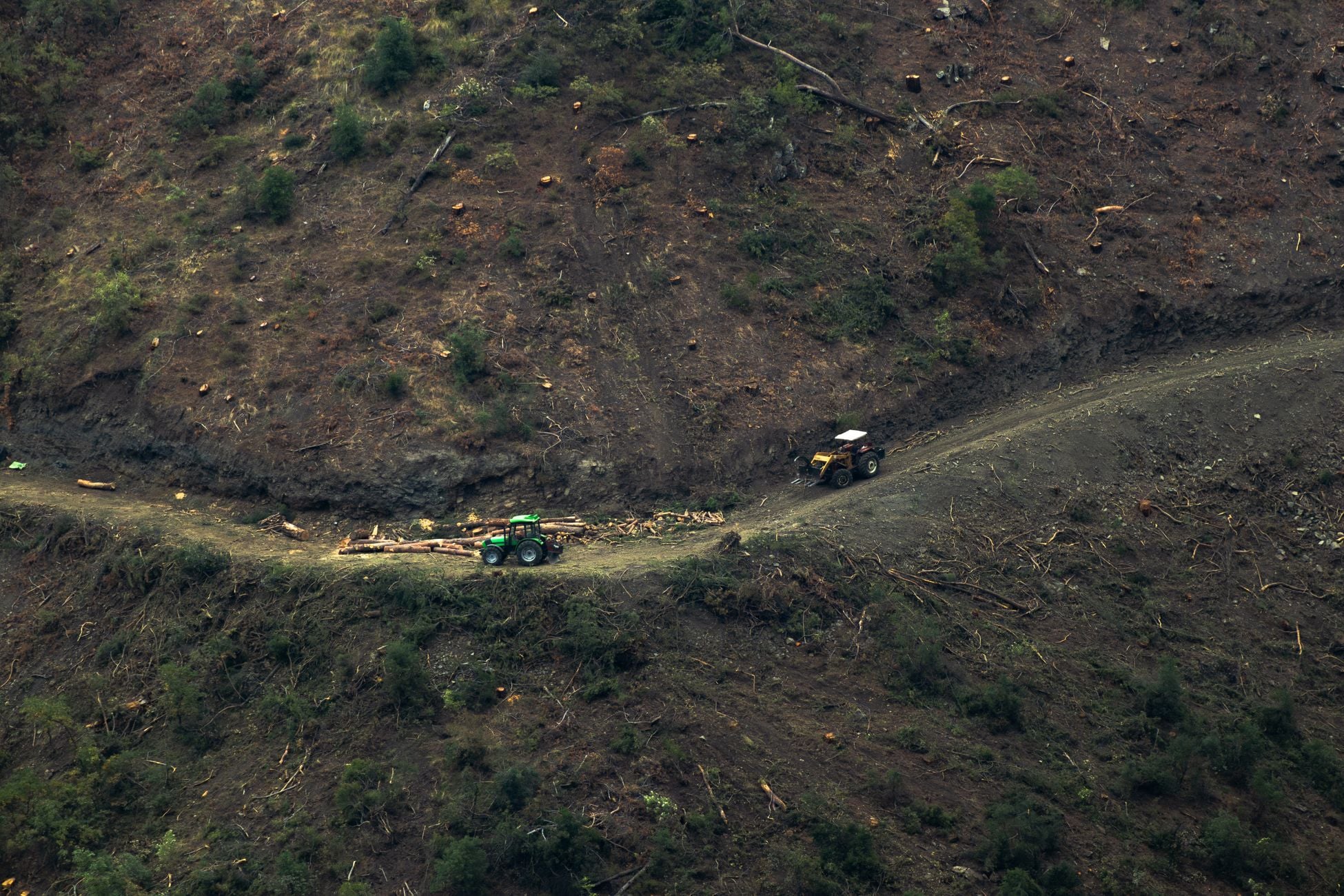
A logging road pushes into the upper reaches of a Sarawak watershed. Somewhere upstream, a Penan family hears the engines before they see the trucks. Somewhere far downstream, in an office in Kuching, a single signature has already moved the trees from forest to inventory. The licence, the budget line and the political authority behind both sat unusually close to one another for more than three decades.
Abdul Taib Mahmud became Chief Minister of the Malaysian state of Sarawak in 1981, and he did not give up the office until 2014. During that long run, he also retained the finance portfolio and the planning-and-resource-management portfolio, placing budget power and resource power unusually close to the same political centre.
Sarawak sits on the island of Borneo. Borneo’s rainforest is widely described as one of the oldest tropical rainforests in the world, with estimates often placing it at roughly 140 million years old. It is older than the Amazon, older than the Congo Basin, and old enough to make modern human politics look almost absurdly brief by comparison. That is what made Sarawak under Taib so consequential: for more than three decades, the same political office sat near the centre of timber concessions, state planning and public finance.

One office, two signatures
The structural fact is the one most people miss. Taib was not simply a long-serving politician. He was Chief Minister, Finance Minister, and Minister for Planning and Resource Management, three roles that, between them, shaped what a forest was worth, who could profit from it, and where public money moved after the timber was sold.
In most parliamentary systems, those portfolios are split between different ministers, or at least between people who have to answer to one another in cabinet. In Sarawak, for much of Taib’s rule, they sat around the same centre of authority.
That concentration of power is the point. A forest concession is not just an environmental decision. It is a land decision, a budget decision, a development decision, and, when the concession is valuable enough, a political decision.
What an ancient forest looked like from the ground
Sarawak’s interior is a place of canopy trees, clouded leopards, orangutans and Indigenous communities whose lives were shaped by the forest long before timber became an export industry. The forests are dominated by dipterocarps, the tropical hardwood family that helped feed the global plywood trade.
Japan was one of the major buyers during the timber boom. WIRED reported that tropical timber from Sarawak to Japan was, at the time, the largest such flow in the world by value, with plywood used heavily in construction formwork.
Global Witness, which investigated Sarawak’s timber trade, later wrote that less than 5% of Sarawak’s once vast rainforests had been spared from logging or conversion to plantations.
How the concessions worked
A timber concession in Sarawak under Taib was not always experienced by local communities as a transparent public contest. It could appear as a decision made from above, with vast tracts of forest moving into commercial hands through the machinery of state planning and land administration.
The scale was generational, not seasonal.
Global Witness alleged in its 2013 investigation that members of Taib’s family and their associates were involved in deals that helped sell off land and forests while hiding profits offshore. The organisation said its undercover investigators secretly filmed family members and lawyers discussing land sales and offshore payments.
Taib denied wrongdoing. Malaysian authorities did not bring corruption charges against him, and the Malaysian Anti-Corruption Commission later said it could not act against him on the available evidence. That legal fact matters. So does the political architecture that made the allegations possible in the first place.
The finance ministry sat in the same chair
Holding finance alongside resource planning mattered because timber royalties and land-linked development fed into the wider political economy of the state. When resource decisions and budget decisions sit too close together, oversight becomes harder to see from the outside.
Concentrating multiple portfolios in one office collapses the usual checks that come from having to negotiate with a rival. There is no internal friction, no second signature, no reviewing minister with a separate incentive.
That is the point of separating portfolios in the first place. Sarawak, during Taib’s long tenure, became a case study in what happens when the opposite arrangement lasts for a generation.
The Penan blockades
The Penan were among the communities who resisted the logging roads. WIRED reported that, in 1987, Penan communities blocked logging roads in a campaign of nonviolent civil disobedience after years of destruction and growing pressure on their land.
The blockades became one of the defining images of Sarawak’s forest conflict. They were not abstract protests about trees. They were physical attempts to stop roads from cutting into hunting grounds, river systems and customary land.
Bruno Manser, the Swiss activist who lived with the Penan, helped bring the issue to international attention. Manser disappeared during a journey to Sarawak in May 2000 and was later legally declared dead in Switzerland.
The allegations that came out later
Years after the height of the timber boom, Sarawak became the subject of repeated investigations by NGOs and journalists. Global Witness, Sarawak Report and the Bruno Manser Fonds all examined the relationship between political power, land concessions, logging companies and family-linked wealth.
The most explosive material came from Global Witness’s undercover work. Its 2013 investigation, Inside Malaysia’s Shadow State, alleged that Taib’s family and their associates bypassed Malaysian law to sell land and forests while using offshore structures to conceal profits.
Those findings were allegations, not court convictions. Taib consistently denied wrongdoing, and the absence of charges is part of the record. But the investigations remain central to understanding why Sarawak became an international shorthand for the risks of concentrated resource power.
The promotion that ended the run
Taib stepped down as Chief Minister in 2014. Adenan Satem, his former brother-in-law and political ally, became Sarawak’s next Chief Minister. Soon after leaving the Chief Minister’s office, Taib became Sarawak’s Yang di-Pertua Negeri, the ceremonial governor. The move meant that the man who had dominated state politics for 33 years moved from executive power into the formal headship of the state. Adenan died in office in January 2017. In the years that followed, Sarawak’s resource-planning machinery was gradually reshaped under later administrations.
Why the architecture matters more than the man
Discussions of corruption tend to focus on individuals. The Sarawak case is more useful as a study in architecture, what happens when the rule-maker, the rule-enforcer and the beneficiary can appear too close to one another.
Any serious oversight system depends on separation. The person making a decision should not be the only person reviewing it. That principle predates modern corporate-governance language by centuries.
Visible authority and traceable decision rights are the load-bearing parts of any oversight system. When a single chair sits close to both the licence and the cheque, the trail becomes harder for the public to follow.
That is why Sarawak still matters beyond Sarawak. It shows how resource extraction becomes politically dangerous when forests, budgets, land records and public contracts are pulled into the same tight circle.
What is left of the forest
Global Witness wrote in 2013 that less than 5% of Sarawak’s once vast rainforests had been spared from logging or conversion to plantations. Whether measured through satellite data, Indigenous testimony, or the visible spread of logging roads, the transformation was no longer theoretical.
Orangutan habitat shrank across the same broader period. Clouded leopards, hornbills and other forest species became increasingly dependent on fragmented habitat and protected areas.
The Penan, the people who blocked the roads in 1987, now mostly live in settled villages along the same development corridors that changed the forest around them. Some communities still fight to protect customary land in the upper Baram.
The trees that are still standing
Protected areas such as Mulu and Lambir Hills preserve fragments of the original forest. They matter because they show what Sarawak once held at scale: extraordinary density, deep ecological age, and species diversity that cannot simply be replanted once lost. Mulu’s limestone caves and forested ridges have drawn scientists for decades. Lambir Hills is one of the most species-rich plots ever surveyed by tropical botanists. Both parks sit inside a wider landscape that has been heavily cut, which is precisely why their boundaries matter. They are not the baseline of what Sarawak was, they are the remainder. Those parks were not gazetted by accident. They survived because scientists, Indigenous communities, campaigners and Sarawakian activists kept insisting that the forest was more than a timber inventory.
Abdul Taib Mahmud died on 21 February 2024, weeks after leaving the governorship, at the age of 87. He had held some form of state office in Sarawak, with interruptions, since the 1960s. No Malaysian court ever ruled on the allegations against him. That is a fact about the legal record, not a verdict on the architecture.
The harder question is the one Sarawak leaves for every resource-rich jurisdiction still standing. Who signs the licence, who signs the cheque, and who is allowed to ask whether those two signatures should ever belong to the same hand? A forest that took 140 million years to grow can be moved off the map inside a single political career. The accountability for that is either built into the architecture in advance, or it is not built at all.